
Views: 222 Author: Amanda Publish Time: 2025-10-04 Origin: Site


Content Menu
● AI-Powered Process Optimization
● Sustainable Materials and Closed-Loop Systems
● Hybrid 3D Printing Integration
● Micro-Molding Innovations for Healthcare
● Specialized Injection Molding Techniques
● Benefits of Injection Molding Innovations
● Frequently Asked Questions (FAQs)
>> 1. What is AI-powered process optimization in injection molding?
>> 2. How are sustainable materials incorporated into injection molding?
>> 3. What benefits does hybrid 3D printing bring to injection molding?
>> 4. How does IoT enhance injection molding factory operations?
>> 5. What are the key applications for micro-injection molding?
Injection molding remains a cornerstone manufacturing technology, essential for producing complex, high-precision plastic components at scale. In 2025, the field is undergoing transformative advances driven by artificial intelligence (AI), the Industrial Internet of Things (IIoT), novel sustainable materials, hybrid 3D printing integration, and micro-molding innovations especially for healthcare. This comprehensive article explores these cutting-edge innovations reshaping injection molding, showcasing how they boost efficiency, quality, sustainability, and customization.

Artificial intelligence has revolutionized injection molding by shifting from reactive to predictive and autonomous process control. Modern AI algorithms analyze vast historical and real-time production data to predict wear in critical machine components like screws and barrels up to 72 hours in advance, slashing unplanned downtime by nearly 40%. Advanced AI-driven controllers can automatically fine-tune melt temperature within ±1.5°C, compensating for incoming recycled material variability to maintain consistent part quality.
AI-powered vision systems equipped with convolutional neural networks (CNNs) inspect thousands of parts per hour to detect microscopic defects such as flash, sink marks, or warping invisible to human inspectors, reducing scrap rates from 2.1% to as low as 0.3%. This zero-defect production line capability enhances manufacturing efficiency and customer satisfaction.
Furthermore, AI's closed-loop integration with injection molding machines enables adaptive control: for example, when cavity pressure drifts due to environmental or raw material changes, the system autonomously adjusts injection speed and holding time mid-cycle to prevent defects. Predictive analytics also anticipates servo motor anomalies and heater degradation, enabling proactive maintenance that saves costs and improves uptime.
Sustainability has become a fundamental driver in injection molding innovation. Closed-loop recycling systems now recover up to 92% of sprues and runners, reducing virgin resin consumption and raw material costs by approximately 17%. More impressively, manufacturers increasingly utilize bio-based polymers like algae-derived bioplastics that capture CO2 during production and biodegrade safely in marine environments within 18 months, offering fully circular lifecycle solutions.
High-performance recycled composites are also making significant inroads—for instance, automotive companies like BMW incorporate 40% post-consumer PET plastic reinforced with glass fibers in structural vehicle components without sacrificing safety or durability. AI-optimized compatibilizers enable these recycled materials to match or exceed traditional resin performance.
Manufacturers are also embracing bio-resins derived from renewable sources such as corn, soy, and cellulose. These sustainable bio-based resins reduce carbon footprints and enhance biodegradability while meeting strict performance standards demanded by consumer electronics, automotive, and packaging sectors. This combination of closed-loop recycling and alternative materials firmly positions injection molding as an eco-friendly manufacturing paradigm.
Hybrid manufacturing combining 3D printing and injection molding is reshaping mold design and part complexity possibilities. Additive manufacturing now produces conformal cooling channels in mold inserts, which traditional machining cannot achieve. These fractal cooling channels improve temperature uniformity across molds while reducing cycle times by up to 22%. For example, medical device manufacturers achieve near-zero warpage (0.002mm) on difficult polymers like PEEK used for spinal implants thanks to conformal-cooled mold inserts printed by Direct Metal Laser Sintering (DMLS).
Hybrid overmolding processes synergize additive and injection molding capabilities by allowing multi-material parts to be produced in a single cycle. For example, thermoplastic polyurethane (TPU) grips can be printed directly onto 3D-printed polyoxymethylene (POM) handles during injection molding, eliminating expensive secondary assembly. This reduces production time for ergonomic power tools from 14 days to just 36 hours, greatly accelerating time-to-market.
Such hybrid techniques expand creative freedom for designers and engineers, enabling the manufacture of complex, multi-functional products previously deemed impossible or prohibitively expensive.
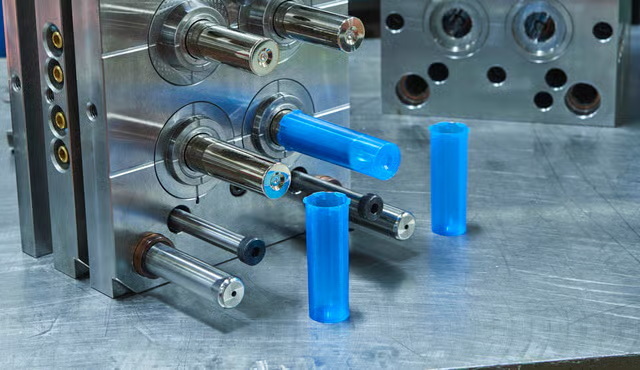
The injection molding industry is now fully embracing the Industrial Internet of Things (IIoT) to create smart, interconnected factories. Sensors embedded in molds capture 50+ data points per production shot, such as cavity pressure, ejection force, injection speed, and material viscosity. Edge computing nodes analyze this data in real-time, automatically adjusting machine settings to maintain optimal conditions and minimize defects.
This sensor-rich environment supports self-optimizing production lines that dynamically adapt to process irregularities without human intervention. For example, one Tier 1 supplier's system prevented 12,000 defective HVAC components by adjusting clamp tonnage mid-run when viscosity shifted.
Blockchain technology is also leveraged for end-to-end traceability. Medical device manufacturers, especially, use blockchain to track resin batch provenance from bioreactor production through sterilization certificates and final parts validation. Digital twins accompany each part, enabling rapid FDA approvals and simplifying audits—reducing regulatory approval times by over 30%.
This fusion of IoT, AI, and blockchain underpins the next generation of injection molding smart factories—dramatically improving quality, transparency, and operational efficiency.
Healthcare demands ultra-precise, miniaturized components, and injection molding innovations are addressing this with groundbreaking micro-molding advances. State-of-the-art 32-cavity micro-molds produce components weighing as little as 0.03 grams with tolerances as tight as ±5 micrometers—critical for neural implants and microfluidic devices.
Vacuum-assisted venting systems prevent air entrapment inside extremely narrow channels smaller than a human hair, achieving extraordinary yield rates of 99.8%. In addition, materials like liquid crystal polymer (LCP) are increasingly used due to their biocompatibility and mechanical strength.
Injection molding of nickel-titanium shape memory alloys (Nitinol) into self-expanding stent frameworks represents a revolutionary leap. Post-molding heat treatment activates their shape memory properties, allowing minimally invasive implant deployment inside blood vessels, greatly improving patient outcomes.
These micro-molding capabilities place injection molding at the forefront of advanced medical device manufacturing.
Alongside these headline innovations, specialized technologies continue to evolve:
- Gas-Assisted Injection Molding injects inert gas to hollow out thick sections, reducing weight and improving flow.
- Insert Molding embeds preformed inserts (metal, plastic) into injected parts for complex multi-material assemblies.
- Water-Assisted Injection Molding uses high-pressure water jets for hollow sections with consistent wall thickness.
- Reaction Injection Molding (RIM) enables reactive polymers to form lightweight, durable parts.
- High-Gloss Injection Molding produces mirror-finished surfaces using ultra-polished molds and special flow techniques.
These specialized approaches expand the injection molding toolkit to meet diverse application requirements in automotive, consumer goods, and electronics.
Together, these innovations deliver critical benefits to manufacturers and brands:
- Enhanced production efficiency through AI and hybrid manufacturing accelerates cycle times.
- Elevated product quality and consistency via real-time defect detection and adaptive controls.
- Reduced environmental footprint by using recycled and bio-based materials in closed-loop systems.
- Expanded design freedom and product customization enabled by hybrid and micro-molding techniques.
- Improved regulatory compliance and traceability from blockchain and IoT integration.
- Lower manufacturing costs due to reduced downtime, scrap, and assembly steps.
Injection molding in 2025 is a data-driven, sustainable, and highly versatile manufacturing technology. Advances in AI-powered automation, sustainable bio-materials, hybrid 3D printing integration, IoT-enabled smart factories, and micro-molding for healthcare are pushing the boundaries of precision, efficiency, and responsibility. These top innovations empower manufacturers to produce superior, complex components faster and greener, meeting the evolving demands of automotive, medical, electronics, and consumer sectors. For companies aiming to lead in this competitive landscape, adopting these cutting-edge injection molding technologies is essential.
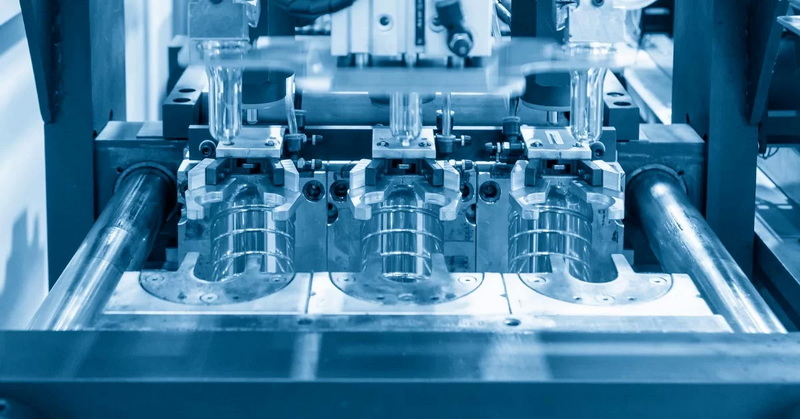
AI-powered process optimization uses machine learning algorithms and sensor data to predict equipment wear, automatically adjust process parameters, and detect defects in real time. This approach reduces downtime and scrap rates while improving part quality.
Sustainable materials include algae-based bioplastics, recycled composites, and bio-resins derived from renewable sources. These materials reduce environmental impact, support circular economy principles, and meet stringent performance standards.
Hybrid 3D printing allows conformal cooling channel fabrication, reducing cycle times and thermal warping. It also enables multi-material overmolding in single production cycles, shortening lead times and expanding design possibilities.
IoT integration provides real-time monitoring of multiple process variables, enabling self-optimizing production lines and predictive maintenance. Blockchain-based traceability ensures material provenance and regulatory compliance, particularly for medical applications.
Micro-injection molding serves fields like healthcare for producing neural implants, stent frameworks, and microfluidic devices. It achieves extremely tight tolerances and high yields essential for these critical components.
[1](https://www.makerverse.com/resources/injection-molding/the-biggest-injection-molding-trends-for-2025/)
[2](https://www.jaycon.com/5-injection-molding-trends-for-2025/)
[3](https://www.topstarmachine.com/injection-molding-trends-in-2025-ai-and-smart-production-workflows/)
[4](https://www.fictiv.com/articles/injection-molding-trends-2025)
[5](https://www.bh-med.com/blog/innovations-in-injection-mold-technology-in-2025)
[6](https://thriam.com/the-future-of-injection-molding-trends-and-predictions-for-2025-and-beyond.php)
[7](https://newji.ai/japan-industry/latest-trends-in-injection-molding-technology-and-the-benefits-of-implementation/)
[8](https://knaufautomotive.com/plastic-injection-moulding-innovative-solutions/)
[9](https://www.accio.com/business/2025-trending-molding-machine)
[10](https://flambeau.co.uk/industry-market-trends/the-future-of-plastic-manufacturing-in-the-uk-key-trends-and-innovations-for-2025/)

