
Views: 222 Author: Amanda Publish Time: 2025-08-02 Origin: Site


Content Menu
● What Are CNC Milling Services?
>> Key Benefits of CNC Milling
● Understanding the CNC Milling Process
>> Step 1: Design and Programming
>> Step 2: Material Selection and Preparation
>> Step 4: Multi-Axis Machining
>> Step 5: Quality Control and Inspection
● Applications of CNC Milling Services in Canada
● Leading CNC Milling Services Manufacturers and Suppliers in Canada
● How to Select the Right CNC Milling Supplier in Canada
● Advantages of Choosing Canadian CNC Milling Services Manufacturers and Suppliers
● Frequently Asked Questions (FAQ)
>> 1. What materials can Canadian CNC Milling Services handle?
>> 2. How do I request a quote from a CNC Milling Services Manufacturer in Canada?
>> 3. What is the difference between 3-axis and 5-axis CNC milling?
>> 4. Are Canadian CNC Milling Services Manufacturers certified for aerospace or medical work?
>> 5. Can Canadian CNC suppliers support both rapid prototyping and large-scale production?
CNC milling has revolutionized manufacturing by vastly increasing the precision, complexity, and scale at which parts can be produced. For companies seeking CNC Milling Services Manufacturers and Suppliers in Canada, this article offers a comprehensive guide, from technology basics and process explanations to a detailed look at leading Canadian companies, their capabilities, and tips for making the best supplier selection.
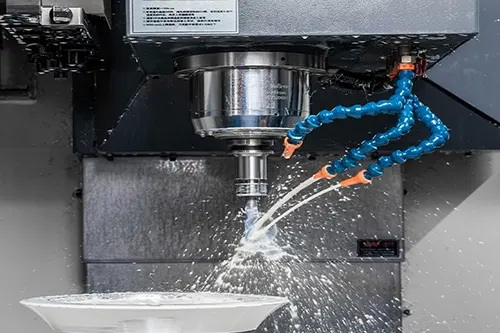
CNC (Computer Numerical Control) milling is a subtractive manufacturing process in which computer-controlled machines use rotating cutting tools to remove material from a solid workpiece, shaping it into precise parts and components. This process is essential in industries like aerospace, automotive, medical devices, electronics, and industrial manufacturing, delivering highly accurate, complex, and repeatable results.
- Unmatched Precision: CNC milling offers extremely tight tolerances, making it ideal for intricate or high-value applications that demand accuracy within microns.
- Versatility: It can be used for rapid prototypes, low-volume runs, and full-scale mass production, handling a diverse range of materials such as metals, plastics, and composites.
- Automation: The computer-controlled process reduces human error and increases efficiency, allowing complex parts to be produced consistently.
- Material Flexibility: CNC machines can work with aluminum, stainless steel, titanium, brass, copper, plastics, and composites, broadening application possibilities.
CNC milling involves several key stages from design to finished part delivery. Each step is crucial for achieving the highest quality and efficiency.
The process starts with a detailed 3D CAD (Computer-Aided Design) model of the desired part. Using CAM (Computer-Aided Manufacturing) software, the CAD file is translated into machine-ready instructions known as G-code. This G-code controls every aspect of the milling machine's operations – including tool paths, speeds, feeds, and tool changes.
Choosing the correct material is fundamental. Depending on the end-use and mechanical requirements, materials like aluminum are often preferred for their machinability, while titanium or steel is used when high strength or temperature resistance is needed. The raw stock is secured on the milling machine using custom vises or fixtures to prevent movement during machining.
The CNC milling process includes a variety of cutting operations:
- Face Milling: Produces flat, smooth surfaces by cutting perpendicular to the spindle axis.
- Plain Milling: Performs simple parallel cuts to shape material.
- Form Milling: Creates complex contours and curved surfaces.
- Angular Milling: Machines angled features relative to the workpiece.
- Profile Milling: Cuts along the edges or outlines of parts to achieve precise shapes.
Most CNC milling in Canada leverages multi-axis machining centers to tackle complex parts:
- 3-Axis Milling: Moves tools along the X, Y, and Z axes, allowing precise cuts on flat and simple contoured surfaces.
- 4-Axis/5-Axis Milling: Adds rotary axes, enabling machines to approach the workpiece from multiple angles. This is vital for undercuts, deep cavities, and intricate geometries impossible with simpler machines.
After milling, parts undergo rigorous inspection using Coordinate Measuring Machines (CMM), optical comparators, and surface finish testers to verify dimensional accuracy. Many Canadian suppliers deploy automated probing systems integrated into CNC machines to monitor tolerances in real time during production. Quality assurance ensures that parts meet industry standards and client specifications.
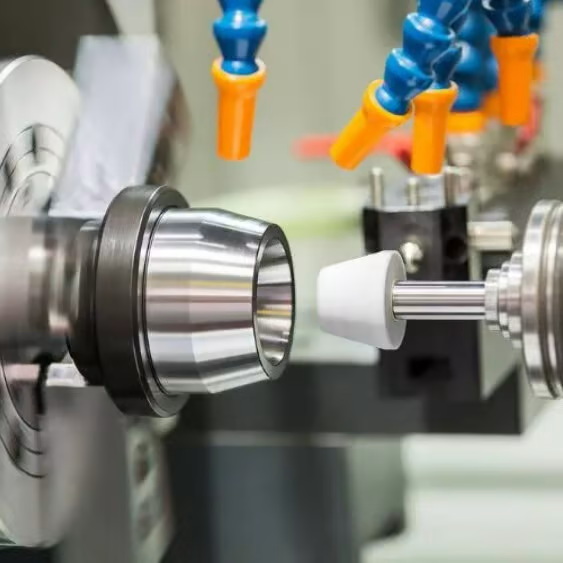
Canadian CNC Milling Services Manufacturers and Suppliers deliver precision parts and prototypes across numerous industries, addressing their unique needs:
- Aerospace: CNC milling produces turbine components, engine brackets, and structural airframe parts subjected to extreme stress and temperature.
- Automotive: Manufacturers rely on CNC milling for engine blocks, transmission components, fixtures, and molds.
- Medical Device: Critical implants, surgical tools, and diagnostic equipment components require the accuracy and biocompatibility that CNC milling can achieve.
- Electronics: Enclosures, heat sinks, connectors, and precision housings for electronic assemblies are efficiently produced.
- Industrial Machinery: Components such as gears, machine frames, valves, and molds.
- Rapid Prototyping: CNC milling enables quick turnaround for prototype development and functional testing.
- Precision Batch Production: Small to medium volume production runs benefit from CNC flexibility and tooling efficiencies.
Canada has an established manufacturing ecosystem supporting top-tier CNC milling specialists. Many suppliers have certifications such as ISO 9001, AS9100 (aerospace), and ITAR (defense), underscoring their commitment to quality and compliance.
- Protolabs, Toronto: Known for rapid CNC milling, turning, sheet metal fabrication, and 3D printing, supporting quick prototype to production workflows.
- BC Instruments, Schomberg: Specializes in precision machining with a focus on tooling and high-durability components.
- Quality Machining, Windsor: Provides CNC and manual machining, waterjet cutting, and comprehensive part fabrication.
- CMI Heavy Industries, Stoney Creek: Known for large-scale, multi-axis CNC machining for industrial and heavy equipment sectors.
- Advanced Machining Services, Waterloo: Offers integrated CAD/CAM services, prototyping, and custom CNC solutions.
- Palcam Technologies, Oshawa: Precision machining with prototyping and production expertise.
- Precision North Machining, Fort St John: CNC machining with additional welding and assembly services.
- Okanagan Precision Machine, Kelowna: Milling and turning services for metals and plastics.
- Quickturn Production Machining, Vernon: Specializes in custom CNC machining and product assembly.
- Precisto, Toronto: Full-spectrum CNC milling, turning, and metal finishing capabilities.
These manufacturers bring together technological know-how, modern equipment, skilled labor, and quality systems to consistently produce world-class parts.
Choosing an appropriate CNC milling partner influences product quality, lead time, and cost-effectiveness.
- Assess Technical Capabilities: Ensure the supplier has machinery capable of meeting your part complexity, including multi-axis capabilities and appropriate tooling.
- Check Certifications: Look for ISO 9001, AS9100 (for aerospace), or specific industry-related certifications ensuring quality and regulatory compliance.
- Evaluate Lead Times: Depending on your production scale, review their capacity for rapid prototyping or volume manufacturing.
- Review Experience and References: Suppliers with extensive experience in your industry will better understand your requirements.
- Examine Quality Assurance Systems: Advanced inspection equipment and tracking systems guarantee consistent quality.
- Access to Technology: Canadian suppliers invest in the latest CNC machinery and CAD/CAM software, enabling precision manufacturing.
- Quality and Compliance: Strong regulatory and quality environments lead to reliable and certified manufacturing processes.
- Proximity to North American Markets: Reduces transit times and logistics costs, improving supply chain responsiveness.
- Support for Innovation: Many suppliers offer rapid prototyping and iterative design services to accelerate product development cycles.
Canada stands as a formidable player in the global CNC milling arena, hosting a wide range of manufacturers and suppliers capable of serving diverse industries—from aerospace and automotive to healthcare and electronics. The combination of advanced multi-axis machining centers, dedicated quality systems, and extensive material expertise ensures Canadian CNC milling services provide exceptional precision, speed, and reliability. Whether your needs involve prototype development or full-scale production, partnering with the right Canadian CNC milling manufacturer promises manufacturing excellence and a competitive edge in today's demanding markets.
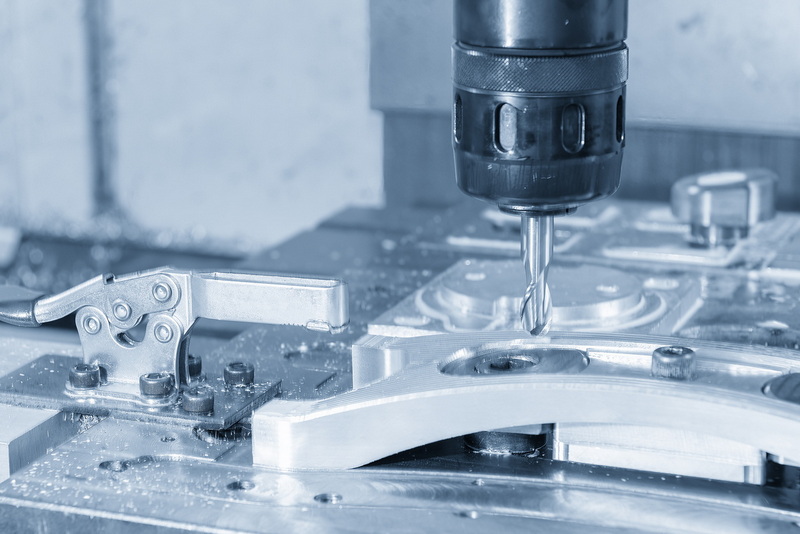
Canadian CNC milling suppliers machine a broad spectrum of materials including aluminum, alloy steels, stainless steel, titanium, brass, copper, plastics such as ABS and polycarbonate, and composite materials. Many suppliers have the capability to handle hardened metals and exotic alloys for aerospace and medical sectors.
To obtain an accurate quote, contact the supplier directly via their website, email, or phone. Provide detailed CAD files or drawings, specify the material type, part tolerances, surface finish requirements, and the desired quantity. Clear communication helps suppliers deliver competitive pricing and accurate lead times.
3-axis milling controls movements along the X, Y, and Z linear axes. It is generally used for simpler parts and flat or prismatic shapes. 5-axis milling adds two rotational axes, allowing the tool to approach the workpiece from multiple angles. This capability is essential for complex geometries like turbine blades, molds, and aerospace components.
Many Canadian CNC milling companies hold certifications such as ISO 9001, AS9100 (specific to aerospace quality standards), and ITAR compliance for defense-related work. Such certifications demonstrate adherence to strict quality, traceability, and regulatory controls needed in sensitive industries.
Yes. Leading providers in Canada offer flexible services ranging from rapid prototype machining with quick turnaround times to medium and high-volume production runs. This scalability allows customers to leverage one partner throughout a product's lifecycle.

