
Views: 222 Author: Amanda Publish Time: 2025-09-20 Origin: Site


Content Menu
● Introduction to Vacuum Casting
>> Cost Efficiency for Low Volumes
>> Ability to Reproduce Complex Geometries
● Applications of Vacuum Casting
>> Sports and Recreational Products
>> Art, Collectibles, and Scale Modeling
● Limitations of Vacuum Casting
>> Not Suitable for Mass Production
>> Dependency on Master Model Quality
● Detailed Vacuum Casting Process Explained
>> Post-Processing and Finishing
● Choosing Vacuum Casting for Your Manufacturing Needs
● Frequently Asked Questions (FAQ)
>> 1. What kinds of materials are typically used in vacuum casting?
>> 2. How many parts can be produced from one silicone mold?
>> 3. How does vacuum casting compare to injection molding?
>> 4. Can vacuum casting produce parts with complex geometries?
>> 5. Is vacuum casting suitable for large parts?
Vacuum casting is a specialized manufacturing process that enables the production of high-precision, detailed parts by casting liquid resin into silicone molds under vacuum pressure. This technique ensures the absence of air bubbles and defects, yielding parts that closely resemble injection-molded components. It has become indispensable for businesses requiring rapid prototyping, small batch productions, and OEM services, particularly for international brands, wholesalers, and manufacturers.
Offering cost efficiency, fast turnaround, and the ability to replicate complex geometries, vacuum casting is widely embraced across diverse industries such as aerospace, automotive, medical devices, consumer electronics, and more. This guide explains what vacuum casting is, how it works, its benefits, typical applications, and limitations, enabling manufacturers and product developers to make informed decisions.
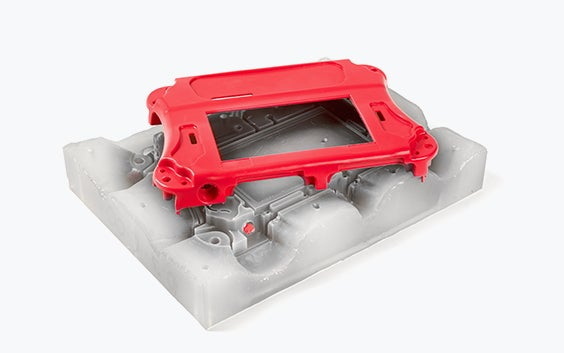
Vacuum casting is a casting method that uses vacuum suction to pour liquid polyurethane resin into a silicone mold made from a master pattern. The process removes trapped air within the resin and mold cavities, preventing bubbles and ensuring fine surface detail and dimensional accuracy in the final parts.
Unlike traditional injection molding, which uses metal molds, vacuum casting molds utilize silicone—making the process agile and economical for low volume production. Silicone molds are flexible, reusable, and capable of precisely reproducing intricate detail from the master model. These molds are typically good for 20 to 50 casts before wear affects part quality.
1. Master Pattern Creation: Using CAD designs, a master model is fabricated by CNC machining or 3D printing. This pattern acts as the reference for the silicone mold and needs to have perfect surface finish and dimensional accuracy.
2. Silicone Mold Making: The master is fixed inside a mold box and encased in liquid silicone rubber. The silicone cures for several hours at controlled temperature, then the mold is cut open to release the master pattern, leaving behind a precise negative mold cavity.
3. Casting Under Vacuum: Polyurethane resin is mixed, degassed, and poured into the silicone mold placed inside a vacuum chamber. The vacuum suction removes air bubbles, guaranteeing a flawless finish and complete mold filling.
4. Curing and Demolding: The resin cures in an oven at about 70°C. After curing, the mold is opened and the cast part is carefully removed for finishing.
5. Post-Processing: The part is trimmed to remove excess material, polished, painted, or otherwise treated to meet final specifications.
Vacuum casting eliminates air pockets that can cause defects, resulting in smooth parts with exceptional surface finishes - essential for prototypes and market samples.
Creating metal molds for injection molding is expensive and time-consuming. In contrast, silicone molds cost less and require minimal tooling, making vacuum casting ideal for parts ranging from dozens to a few hundred units.
The entire cycle from master pattern to finished part can be completed within one to two weeks, enabling rapid product iteration. Additionally, silicone molds can be quickly modified or replaced if design changes occur.
Vacuum casting supports an extensive variety of polyurethane resins with different mechanical and aesthetic properties: rigid or flexible, transparent or opaque, colorable with pigments, and even additives for particular textures or enhanced strength.
Vacuum casting delivers highly detailed components including fine ribs, threads, and undercuts that other additive or subtractive manufacturing processes may struggle to replicate precisely.
Silicone molds allow multiple cast cycles without significant degradation, supporting economical short-run production batches and repeat prototyping.
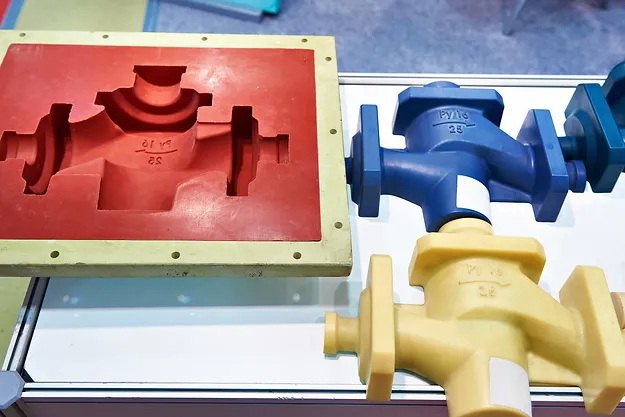
Manufacturers use vacuum casting to produce lightweight, intricate interior components, prototype housings, and functional parts for aircraft and defense equipment. Its precision and material versatility support both prototyping and limited production runs.
Vacuum casting enables fast and cost-effective production of dashboard parts, instrument panels, knobs, light housings, and trim elements. It helps speed up validation of fit, finish, and feel before moving to costly injection molding tooling.
Medical device manufacturers rely on vacuum casting for prototyping implants, diagnostic instrument casings, and ergonomic device housings. The ability to use biocompatible polyurethane resins supports functional testing and clinical trials.
For electronic assemblies, vacuum casting produces housings, faceplates, buttons, and grips, with excellent surface finishing that mimics injection molding. This is critical for showcasing near-production samples to consumers and investors.
Customized grips, protective casings, and small accessories for sporting goods benefit from vacuum casting's ability to deliver rubber-like or rigid parts in a variety of colors and textures.
The process is commonly used to replicate sculptures, figurines, and miniatures with exact detail and smooth finishes. Artists and collectors appreciate vacuum casting for reproducing limited-run collectibles without losing quality.
Silicone molds have a limited life span compared to injection molds, making vacuum casting impractical for high volume production over thousands of units.
Vacuum casting primarily works with polyurethane and similar resins, restricting its use for metal parts or parts requiring high temperature resistance that thermoplastics provide.
The size of parts is limited by the mold and vacuum chamber dimensions. Very large or complex parts may need to be segmented for vacuum casting.
Cast parts may experience slight shrinkage during curing requiring design compensation or post-processing to maintain dimensional tolerances.
Any imperfection in the master model is faithfully replicated in final castings, making master quality paramount.
The starting point is a master pattern precisely manufactured to exact specifications. It can be fabricated using 3D printing with high-resolution printers or CNC machining from aluminum or plastic blocks. The surface finish of the master has a direct impact on the final silicone mold and cast parts, demanding careful finishing and polishing.
The master is suspended in a mold box, and liquid silicone is poured in under vacuum to avoid trapping air bubbles around the master. The mold cures for 8 to 16 hours at approximately 40°C, solidifying into a flexible but tough negative cavity. Once cured, the mold is carefully cut to remove the master.
Polyurethane resin components are mixed in the correct ratios and heated to around 40°C. Pigments and additives can be added at this stage. The mixture is then degassed in a vacuum chamber for about one minute to remove dissolved gases and prevent bubble formation in parts.
The silicone mold is placed inside a vacuum chamber. The degassed resin is poured into the mold cavity. Vacuum pressure draws the resin into every part of the mold and removes any trapped air, ensuring a perfect fill.
The mold with resin is then heated in an oven (at about 70°C) for an hour to solidify the part. Once cured, the mold halves are separated, and the part is removed carefully to avoid damage.
Parts may require trimming excess flash, surface polishing, painting, or additional finishing procedures to meet appearance and functional requirements.
Vacuum casting fits perfectly for companies aiming to:
- Produce highly detailed prototypes with surface qualities close to production parts.
- Save on upfront tooling costs for short runs.
- Obtain a fast turnaround for product testing and market samples.
- Experiment with material properties matching final production standards.
- Manufacture small batches economically before investing in injection molding.
Vacuum casting is a powerful and cost-effective manufacturing method for creating high-quality prototypes and low-volume production parts. Its ability to reproduce intricate detail and smooth finishes at a fraction of the cost and time compared to traditional tooling makes it indispensable for modern product development. While it cannot replace injection molding for large-scale production, vacuum casting bridges the gap superbly between rapid prototyping and traditional manufacturing. Understanding its process, benefits, applications, and limitations empowers manufacturers and designers to leverage vacuum casting aligned with their project demands and business goals.
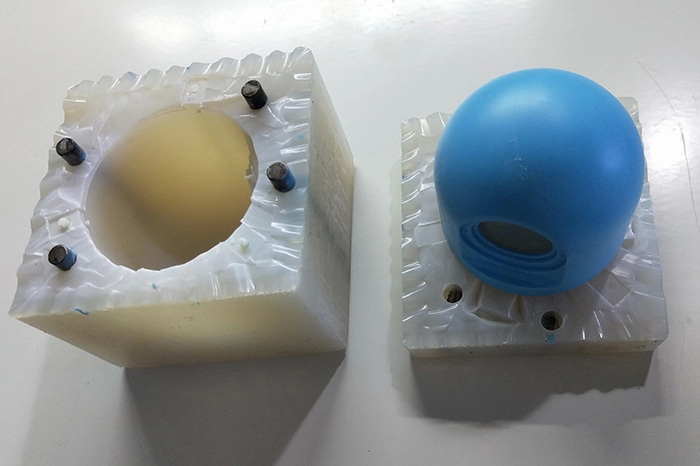
Primarily polyurethane resins with varying hardness and finishes are used. These materials can be pigmented or blended with additives for specialized mechanical or aesthetic properties.
Generally, silicone molds last for 20 to 50 casting cycles, depending on the complexity and material of the mold. The lifespan can be extended with careful handling.
Vacuum casting is more versatile for low volumes, less costly upfront, and much faster to produce. Conversely, injection molding is preferred for high volume runs with superior repeatability.
Yes, it excels at replicating fine details, undercuts, and thin walls that are difficult for other prototyping methods.
There are size limitations based on mold and chamber size, so very large parts may need different production methods or segmentation for vacuum casting.
[1](https://www.immould.com/vacuum-casting/)
[2](https://www.dekmake.com/vacuum-casting-or-urethane-casting/)
[3](https://objectify.co.in/a-comprehensive-guide-to-vacuum-casting-everything-you-need-to-know/uncategorized/)
[4](https://formlabs.com/blog/vacuum-casting-urethane-casting-polyurethane-casting/)
[5](https://leadrp.net/blog/overview-of-vacuum-casting/)
[6](https://www.rocheindustry.com/guide-to-vacuum-casting/)
[7](https://www.kemalmfg.com/complete-guide-to-vacuum-casting/)
[8](https://blog.isa.org/what-are-vacuum-casting-factories-a-comprehensive-guide-to-the-manufacturing-process)
[9](https://www.rapiddirect.com/blog/vacuum-casting-design-guide/)
[10](https://www.renishaw.com/media/pdf/en/9a351e67784c4e27992e5e3632434b1f.pdf)

