
Views: 222 Author: Amanda Publish Time: 2025-10-27 Origin: Site


Content Menu
● How CNC Milling Services Transform Sheet Metal Fabrication
● The Core Stages of CNC Milling for Sheet Metal
>> Material Selection and Machining
>> Real-Time Monitoring and Quality Control
● Common Applications of CNC Milling Services in Sheet Metal Work
● Design Rules and Best Practices in CNC Milling for Sheet Metal
● Innovations and Trends in CNC Milling Services
>> Connected Manufacturing and IoT
>> Eco-Friendly Milling Practices
● Sheet Metal CNC Milling for Prototyping and Production
● Comparing CNC Milling to Alternative Sheet Metal Processes
● How to Find a Reliable CNC Milling Service Provider
● Cost Management in CNC Milling Services
● Post-Processing and Surface Finishing in CNC Milled Sheet Metal Parts
● Ensuring Quality: Inspection and Certification
● Future Perspectives: CNC Milling and Industry 4.0
● FAQ
>> 1. What tolerances can CNC Milling Services achieve for sheet metal parts?
>> 2. What materials are compatible with CNC Milling Services?
>> 3. Can CNC milling handle both prototyping and large-scale production?
>> 4. What are common finishing options for CNC milled sheet metal parts?
>> 5. How do I choose the best CNC Milling Services provider?
In the age of high-performance manufacturing, CNC Milling Services stand at the center of innovation for sheet metal fabrication. Businesses across automotive, aerospace, electronics, and medical fields rely on CNC milling to produce components that are consistent, reliable, and tailored to exact design requirements. This guide explores the nuances of CNC milling for sheet metal—a process critical for both prototyping and precision production.
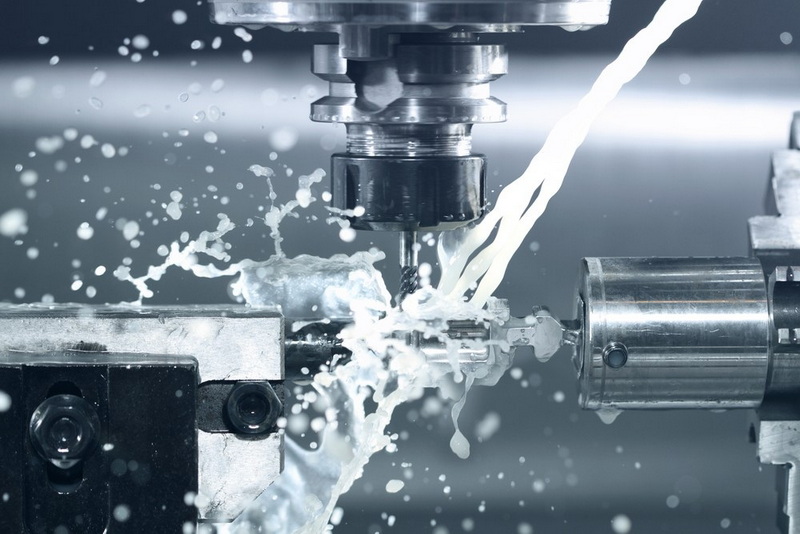
CNC milling leverages digitally programmed machines to carve, shape, and detail sheet metal accurately. Unlike manual machining, CNC milling employs computer algorithms that orchestrate spindle movement, cutting depth, and cutting speed. As a result, manufacturers achieve unparalleled repeatability and finish quality. Whether producing prototypes or end-use parts, CNC milling services offer:
- Consistent accuracy: Tight tolerances mean every part meets design specs.
- Reduced waste: Digital programming minimizes material loss and defects.
- Automated workflows: Machines run day and night with minimal supervision, boosting productivity.
- Flexibility: CNC mills can switch between materials and part designs with ease, adapting to evolving demands.
Every CNC milling project begins with a digital model, designed using CAD software. The model is translated into a series of machining instructions via CAM software, ensuring precise movement of cutting tools during production. This digital workflow minimizes human errors and streamlines setup, making complex geometries feasible.
Sheet metal comes in various grades—aluminum, stainless steel, titanium, and more. CNC milling machines are equipped with advanced spindles and tooling systems that handle these materials efficiently. Operators select the optimal cutting tools based on the workpiece's composition, size, and required features.
Modern CNC milling services implement sensors and inspection protocols to monitor progress and identify deviations instantly. This commitment to quality ensures that finished sheet metal parts adhere to customer specs, regulatory standards, and performance benchmarks. Post-machining processes such as deburring and surface finishing enhance functionality and appearance.
CNC milling is indispensable in various sectors:
- Automotive: Engine brackets, dashboard supports, gearbox casings.
- Aerospace: Instrument panels, turbine housings, complex brackets.
- Electronics: Shielding enclosures, heat sinks, mounting plates.
- Medical devices: Instrument trays, custom equipment supports, housings.
- Industrial machinery: Machine frames, robotic arms, custom fasteners.
Each application leverages the precision, reliability, and scalability of CNC milling to bring innovative designs to life.
Creating sheet metal parts with CNC milling requires careful adherence to design principles:
- Optimize wall thickness: To prevent warping and ensure machinability, maintain sufficient wall thickness, typically above 0.5 mm for most metals.
- Avoid sharp internal corners: Rounded edges improve tool life and machining speed.
- Specify tolerances wisely: Excessively tight tolerances can increase cost and lead time.
- Account for tool access: Ensure all areas of the part are reachable by cutting tools in the chosen machine setup.
- Include reliefs and cutouts: Where bolt holes or slots are needed, design these features with standard sizes for easier assembly and reduced errors.
By considering these rules, designers maximize manufacturability while minimizing production challenges and costs.
The proliferation of 4-axis and 5-axis CNC machines is transforming sheet metal fabrication. These advanced systems enable the production of multi-faceted shapes and deep cavities in a single setup, reducing process steps and improving accuracy. For industries that demand lightweight yet robust structures, multi-axis CNC milling delivers a clear advantage.
Modern CNC milling services often incorporate machine monitoring and data logging, using sensors that feed operational data to cloud-based platforms. This connectivity helps manufacturers optimize tool maintenance, anticipate equipment failures, and ensure consistent product quality across batches.
Growing environmental awareness has encouraged manufacturers to reduce waste through smart programming, high-efficiency tooling, and recycling of metal scraps. Some CNC shops deploy energy-efficient machines and green lubricants, aligning manufacturing output with sustainability goals.
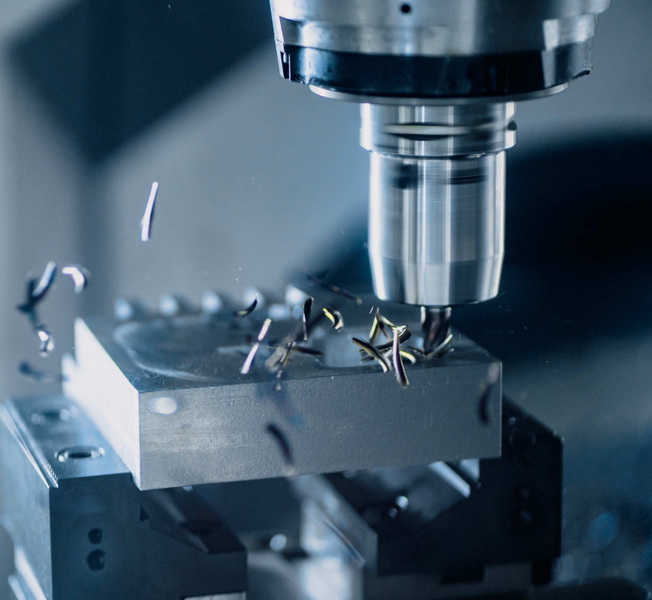
CNC milling's speed and flexibility make it ideal for developing prototypes quickly. Engineers and designers can iterate on prototype designs, evaluating form, fit, and function before scaling up to production. The prototyping phase allows stakeholders to test components in real-world scenarios, reducing the risk of costly changes later on.
When it's time for volume, CNC milling steps up with repeatable accuracy and capacity for hundreds or thousands of identical parts. Automated tool changers and fixturing systems streamline the transition from prototyping to mass production, ensuring every item is consistent and meets quality requirements.
While CNC milling delivers excellent precision, it's not the only sheet metal forming process available. Here's how it compares to common alternatives:
| Process | Precision | Production Volume | Suitable Materials | Strengths | Weaknesses |
|---|---|---|---|---|---|
| CNC Milling | High (±0.01 mm) | Prototype-Mass | Metals, plastics | Complex geometries | Cost for high volume |
| Laser Cutting | Medium (±0.1 mm) | Medium-Mass | Metals, polymers | Speed, clean edges | Limited thickness |
| Stamping | Low-Medium (±0.2 mm) | Mass | Metals | Fast, low cost | Limited detail |
| Waterjet Cutting | Medium (±0.1 mm) | Medium-Mass | Metals, stone | No heat affected zone | Lower speed |
| EDM | High (±0.01 mm) | Low-Medium | Conductive materials | Tiny features | Slow for large parts |
When choosing a partner for CNC milling sheet metal projects, consider these factors:
- Technical capabilities: Look for providers with modern equipment and skilled technicians.
- Quality control: Insist on certified processes, documented inspections, and customer reviews that prove consistent results.
- Industry experience: Select companies with a background in your sector and an understanding of relevant standards.
- Responsive support: Favor providers who communicate efficiently and adjust to changing project needs.
- Global logistics: Ensure your partner can ship to your region and handle customs if needed.
Shangchen (sc-rapidmanufacturing.com), for example, offers rapid prototyping, CNC milling, precision batch production, lathe turning, sheet metal fabrication, 3D printing, and mold making for international OEM clients—demonstrating capabilities and flexibility in global manufacturing.
Project costs depend on several factors:
- Material market prices: Metals are subject to global market fluctuations.
- Part complexity: Intricate designs require longer machining times and programming.
- Order quantity: Higher volumes can bring discounts and reduce per-unit costs.
- Finishing steps: Additional polishing, painting, or coating increases final pricing.
- Shipping logistics: International orders may involve customs duties and freight surcharges.
Working closely with your CNC service provider during the quoting phase helps clarify pricing and identify cost-saving opportunities.
After machining, sheet metal components often undergo finishing steps to improve appearance and performance:
- Deburring: Removes sharp edges and burrs for safety and functionality.
- Polishing: Enhances surface smoothness for aesthetic or technical reasons.
- Anodizing: Provides corrosion resistance and color options.
- Powder coating: Adds a durable, attractive finish ideal for outdoor or industrial use.
- Electroplating: Imbues parts with enhanced conductivity or extra protection.
These options should be matched to the application, environment, and budget for optimum results.
Quality assurance is vital to CNC milling services. Reliable providers use:
- First-article inspection: Verifying the first part off the machine before full production.
- In-process monitoring: Checking critical dimensions throughout the run.
- Final inspection: Comprehensive checks before packaging.
- International certifications: ISO 9001 and similar credentials signal a commitment to quality.
By integrating strict inspection steps, manufacturers assure accuracy and minimize defects prior to shipping.
The future of CNC milling for sheet metal is shaped by the digitization of manufacturing. With Industry 4.0, machines become smarter, interlinked, and capable of self-diagnosing maintenance needs. Predictive analytics ensure optimal tool lifespan and reduce downtime. As automation grows, CNC milling shops will handle more orders with less manual intervention, continuing the trend toward efficient, precise fabrication.
CNC Milling Services are irreplaceable in modern sheet metal manufacturing, enabling everything from fast prototypes to robust production runs for global industries. Their power lies in the promise of accuracy, flexibility, and continuous improvement through technological advancement. By following best practices, embracing innovation, and working with skilled providers, manufacturers elevate their products and compete on a global scale.
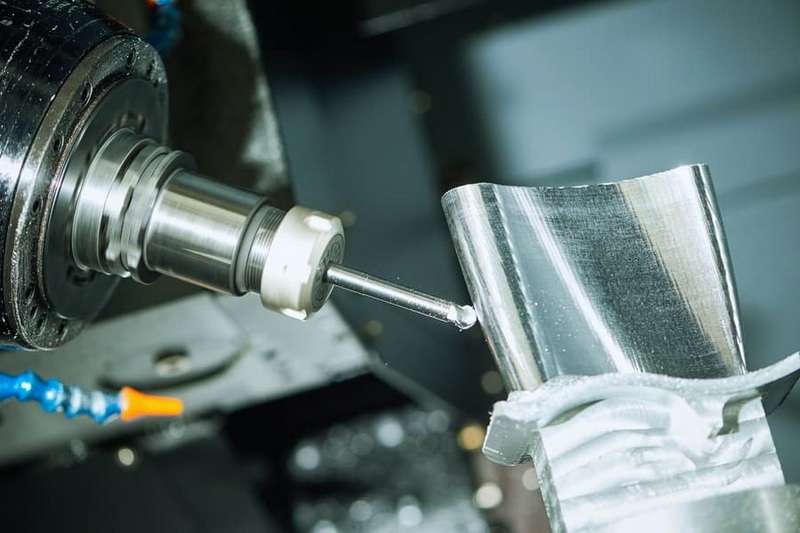
Most providers deliver tolerances between ±0.01 mm and ±0.05 mm, but this depends on materials, geometry, and machine capability.
CNC milling works well for aluminum, stainless steel, mild steel, copper, brass, titanium, and many engineering plastics, chosen based on strength, machinability, and specific application requirements.
Absolutely. With automated programming and fast setup, CNC mills switch between prototypes and mass production with ease.
Deburring, polishing, anodizing, powder coating, and electroplating are frequently requested, providing durability and aesthetic improvements.
Choose companies with modern equipment, strong quality systems, responsive support, and proven expertise in your target industry. Global logistics capability is a major advantage.

