
Views: 222 Author: Amanda Publish Time: 2025-11-01 Origin: Site


Content Menu
● 1: The Core of CNC Milling Services
● 2: An Integrated Innovation Workflow
● 3: Design Freedom Through CNC Milling
● 4: Quality, Precision, and Process Control
● 5: Material Capabilities and Applications
● 6: Real-World Impacts and Case Illustrations
● 7: Competitive Differentiation: Shangchen's OEM Capabilities
● 8: Practical Best Practices for Partners
● 9: The Future of CNC Milling in Product Development
● FAQ
>> 1. How do CNC Milling Services support rapid prototyping?
>> 2. What materials are most commonly used in CNC milling for OEM projects?
>> 3. How does Design for Manufacturing (DFM) influence CNC milling outcomes?
>> 4. What role does integration with other processes play in product development?
>> 5. What makes Shangchen a strong partner for OEM CNC milling needs?
CNC Milling Services have emerged as a fundamental enabler of modern product innovation, transforming concepts into tangible, high-precision components at speed. For foreign brands, wholesalers, and manufacturers seeking reliable OEM partnerships, a capable supplier who can integrate CNC milling with complementary fabrication processes—such as sheet metal, 3D printing, tooling, and mold production—offers a streamlined path from ideation to mass production. This article delves into how CNC Milling Services drive design freedom, shorten development cycles, and elevate product quality across prototyping, testing, and production phases. It also highlights Shangchen's end-to-end capabilities and how they align with international brands' requirements for consistency, traceability, and scalable output.
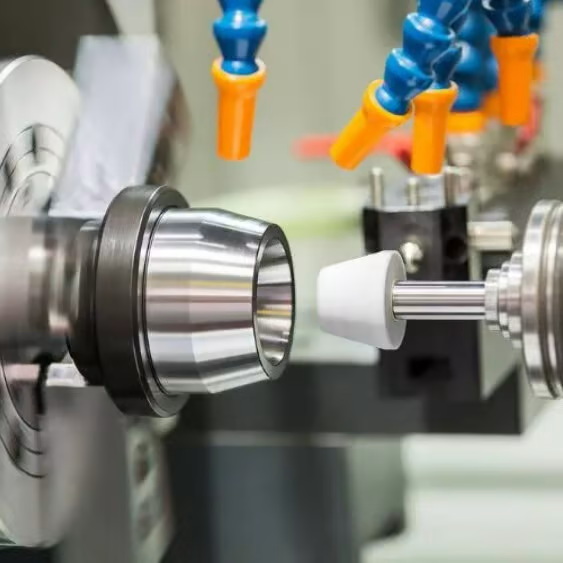
CNC milling is a subtractive process where computer-controlled cutting tools remove material from a workpiece to create precise geometries. In today's smart manufacturing environment, CNC Milling Services are deeply integrated with design-for-manufacturing (DFM) principles, digital workflow pipelines, and rigorous metrology. This integration shortens the iteration loop and ensures that concepts evolve into repeatable, producible parts with little rework. For OEM collaborations, this means a single trusted partner can shepherd a design from CAD to a validated component and onto scalable production, reducing risk and accelerating time-to-market.
Key advantages that empower development teams:
- Precision and repeatability: Tight tolerances enable interchangeability, reliable assembly, and consistent performance across units, which is essential during both prototyping and high-volume runs.
- Material versatility: A broad spectrum of metals and plastics—ranging from aluminum and stainless steel to titanium and high-performance polymers—can be machined to exact specifications for diverse applications.
- Complex geometries: Multi-axis milling unlocks intricate cavities, undercuts, and sculpted surfaces that enable advanced product aesthetics and functional interfaces.
- Speed and scalability: Short lead times for prototypes, followed by a smooth transition to pilot and mass production within the same supplier ecosystem, minimize ramp-up risk.
A well-defined workflow maximizes the contribution of CNC Milling Services at each development stage. The typical path includes concept ideation, design for manufacturability feedback, rapid prototyping, functional validation, design iteration, and production readiness. An integrated supplier that combines milling with sheet metal fabrication, additive manufacturing, tooling, and mold production enables seamless handoffs and parallel testing, reducing overall project duration.
- Concept and design brief: Engineering teams translate requirements into functional geometries, material selections, finishes, and critical tolerances, establishing the foundation for manufacturing success.
- DFM feedback: Early input on manufacturability influences wall thickness, feature sizes, radii, and fixturing strategies, preventing design choices that complicate fabrication.
- Rapid prototyping: CNC milling produces functional, testable parts directly from CAD data, enabling rapid assessment of form, fit, and function without prohibitive tooling costs.
- Functional testing and iteration: Test rigs and environmental tests generate data that guide CAD/CAM refinements and material choices, refining performance prior to tooling or full-scale production.
- Production readiness: Once designs are validated, production tooling, process parameters, fixturing, and quality plans are finalized to ensure repeatable quality in volume.
- Iterative exploration without prohibitive cost: Short run prototypes allow multiple design variants to be evaluated rapidly, accelerating the discovery of optimal configurations.
- Hybrid manufacturing potential: Milling often complements additive manufacturing for housings, inserts, and fixtures, enabling performance-tuned assemblies and lightweight yet robust components.
- Customization at scale: CNC milling supports design variations and personalization without requiring bespoke tooling for each variant, preserving efficiency in mid- to high-volume contexts.
- Surface fidelity and functional tuning: Control over surface finish, hardness, dimensional accuracy, and feature fidelity is crucial for mating parts and moving assemblies, and milling delivers consistent results in these areas.
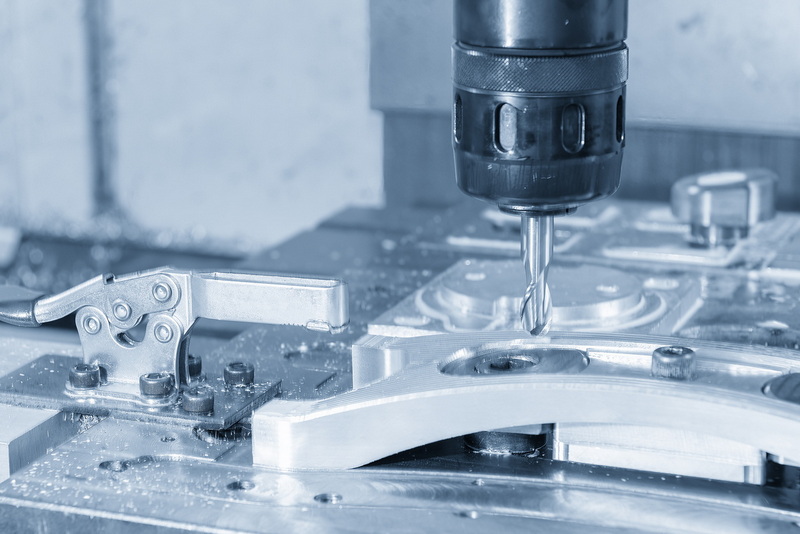
Quality assurance underpins successful CNC milling programs. Modern operations use calibrated machines, traceable metrology, and standardized work instructions to achieve consistent results across batches. Core practices include:
- Calibration and maintenance: Regular calibration, spindle checks, and axis alignment preserve accuracy and repeatability.
- In-process monitoring: Real-time monitoring of tool wear, spindle load, and cutting conditions helps maintain quality during production and flags deviations early.
- First article inspection and PPAP readiness: An initial validated part confirms process capability before high-volume production, reducing risk downstream.
- Statistical process control (SPC): Data-driven monitoring helps identify variation sources and drive continuous improvements in yield and consistency.
CNC Milling Services span a wide material palette, enabling suitability across industries:
- Metals: Aluminum alloys for light-weight structures, stainless steel for corrosion resistance, brass for wear components, and titanium for strength-to-weight efficiency.
- Plastics and composites: High-performance polymers and complex composite parts benefit from precise pocketing and controlled geometries.
- Hybrid assemblies: Milled metal components often pair with additively manufactured inserts or housings to achieve optimized performance and reduced lead times.
- Surface treatment compatibility: Post-machining finishes such as anodizing, plating, or coating can be integrated into the workflow to meet appearance and durability requirements.
- Rapid prototyping for consumer devices: A rugged, precisely milled aluminum enclosure can be iterated quickly to achieve tight tolerances and robust fit with internal components, enabling rapid design validation and a smoother transition to pilot production.
- Precision components for medical devices: High-precision features, smooth finishes, and biocompatible material options support safe, reliable integration into medical equipment and streamline regulatory submissions.
- Aerospace-grade lightweight parts: Optimized wall thickness and corrosion resistance contribute to performance targets while satisfying stringent aerospace standards.
Shangchen positions itself as a comprehensive partner for foreign brands, wholesalers, and manufacturers seeking dependable OEM services across rapid prototyping, CNC milling, sheet metal fabrication, 3D printing, tooling, and mold production. Why choose Shangchen for CNC Milling Services?
- End-to-end services: A single supplier guides projects from design feedback through prototyping and production readiness, ensuring smoother transitions and traceable workflows.
- Global supply chain readiness: Experience with international brands emphasizes quality management, regulatory compliance, and batch traceability.
- Flexible production scales: Capacity to accommodate low-volume prototyping and high-volume production with predictable lead times and cost efficiency.
- Integrated tooling and molds: In-house tooling and mold production accelerates fixtures and process development, reducing downstream delays.
- Involve engineering early: Engage milling experts in the design phase to optimize geometry, tolerances, and near-net shapes for efficient manufacturing.
- Define a clear tolerance strategy: Identify critical tolerances for mating surfaces and functional features to ensure robust assembly and performance.
- Maintain robust documentation: Version-controlled CAD files, BOMs, and process instructions support traceability and audits.
- Plan testing and validation: Build iterative testing into the development plan, including environmental and functional tests to validate designs before scaling.
Advances in software, data analytics, and automation are expanding the capabilities of CNC milling. AI-assisted optimization, predictive maintenance, and enhanced material libraries will further shorten cycles, reduce waste, and enable smarter, closed-loop manufacturing. Deeper integration with CAD/CAM ecosystems will enable more seamless transitions from concept to validated production.
CNC Milling Services stand as a pivotal engine of product innovation and development. By delivering precise, repeatable components at speed and integrating seamlessly with other fabrication disciplines, CNC milling helps international brands, wholesalers, and manufacturers move from concept to mass production with confidence. A partner that offers end-to-end capabilities—from design feedback through tooling and mold production to full-scale manufacturing—provides the stability, quality, and scalability necessary to stay competitive in a fast-moving global market.
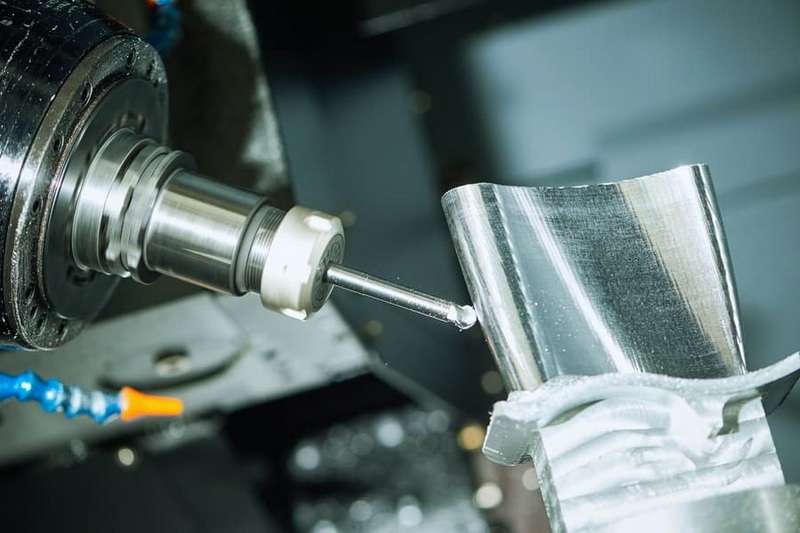
CNC Milling Services enable rapid fabrication of functional parts directly from CAD models, allowing quick testing of form, fit, and function without expensive tooling or molds, thereby accelerating feedback and decisions.
Aluminum alloys for light-weight components, stainless steel for strength and corrosion resistance, titanium for high strength-to-weight scenarios, brass for wear components, and a range of engineering plastics for housings and fixtures.
DFM guides feature sizes, wall thickness, radii, and tolerances to minimize rework, improve yields, and shorten lead times when transitioning from design to production.
Integrating CNC milling with additive manufacturing, sheet metal fabrication, and mold/tooling accelerates prototyping, enables hybrid assemblies, and streamlines the path to mass production.
Shangchen offers a one-stop capability across CNC milling, sheet metal, 3D printing, tooling, and mold production, delivering end-to-end development, consistent quality, and scalable production for international brands and manufacturers.
[1](https://richconn.com/understanding-cnc-milling/)
[2](https://jlccnc.com/blog/cnc-machining-for-rapid-prototyping-from-cad-design-to-high-precision-finished-products)
[3](https://www.rcoeng.com/cnc-milling)
[4](https://www.hxcncmachining.com/What-is-Workflow-of-Custom-CNC-Milling-Service-id46843196.html)
[5](https://www.clwmetal.com/from-design-to-product-a-comprehensive-guide-on-cnc-milling-workflow/)
[6](https://www.hlhprototypes.com/cnc-machining-services-improves-production/)
[7](https://www.pekoprecision.com/blog/prototype-cnc-machining-new-product-development/)
[8](https://www.linkedin.com/pulse/cnc-milling-service-processes-materials-opgrc)
[9](https://theprodesigngroup.com/cnc-machining-product-development/)

