
Views: 222 Author: Amanda Publish Time: 2025-09-10 Origin: Site


Content Menu
● What is Sheet Metal Fabrication?
● Key Differences Between Sheet Metal Fabrication and Metal Stamping
● In-Depth Look at Sheet Metal Fabrication Processes
>> Finishing
● In-Depth Look at Metal Stamping Processes
>> Deep Drawing
● Advantages of Metal Stamping
● Applications Across Industries
● Choosing Between Fabrication and Stamping
● FAQ
>> 1. What distinguishes sheet metal fabrication from metal stamping?
>> 2. Which process is better for prototyping?
>> 3. Can metal stamping achieve tighter tolerances compared to fabrication?
>> 4. How do production volumes influence the choice between these processes?
>> 5. What types of metals are commonly used in these processes?
Sheet Metal Fabrication and metal stamping are two cornerstone manufacturing processes that shape, cut, and form metal components, yet they serve different purposes and are suited to distinct production needs. Understanding the nuances of these methods is crucial for manufacturers, brand owners, engineers, and anyone involved in product development to select the most efficient, cost-effective, and suitable method for their projects.

Sheet metal fabrication is a comprehensive, versatile process where flat sheets of metal are cut, bent, welded, and assembled into finished parts or structures. It is widely used across industries such as automotive, aerospace, electronics, machinery, and construction. The techniques involved include laser cutting, waterjet cutting, punching, bending, welding, and assembly.
This process enables the creation of unique designs, prototypes, low to medium volume production runs, and complex assemblies. The high flexibility of sheet metal fabrication allows manufacturers to adapt quickly to design changes and produce custom parts without the high initial tooling costs associated with other methods.
Key techniques in sheet metal fabrication:
- Laser Cutting: A precise, non-contact cutting method ideal for intricate shapes.
- Bending: Controlled deformation to achieve angles and folds.
- Punching: Creating holes or cutouts by piercing the metal.
- Welding: Joining metal pieces to form assemblies.
- Assembly: Combining components using rivets, bolts, or welding.
Sheet metal fabrication is particularly well-suited for custom jobs, small batches, and applications where multiple secondary processes are needed.
Metal stamping is a specialized manufacturing method that uses dies, punches, and presses to shape metal sheets into specific parts and components. The process is designed for high-volume production, where identical parts are produced with high precision and repeatability.
Metal stamping operations include punching, blanking, embossing, bending, coining, and drawing. There are different stamping processes:
- Single-stage Stamping: Where the part is formed in one press stroke.
- Progressive Die Stamping: Where the metal strip passes through multiple stations, each performing different operations until the final shape is achieved.
Although tooling costs for metal stamping can be high due to the need for custom dies, the cost per piece decreases significantly with larger production volumes, making it ideal for mass manufacturing.
- Sheet Metal Fabrication is highly versatile, involving multiple processes such as cutting, bending, assembling, and welding to create complex designs and assemblies.
- Metal Stamping primarily focuses on shaping metal by pressing it through dies and is more limited to forming operations.
- Fabrication suits low to medium production runs, prototypes, and custom designs.
- Stamping excels in high-volume production runs due to its fast cycle times and repeatability.
- Fabrication has lower setup costs but can have a higher cost per unit due to labor and multi-step processes.
- Stamping requires a significant initial investment in die manufacturing but benefits from economies of scale.
- Stamping can achieve tighter tolerances (±0.001” to ±0.005”) and higher repeatability, producing near-identical parts with minimal variation.
- Fabrication achieves good precision (±0.005” to ±0.015”) but may require secondary machining to meet very tight tolerances due to bending springback and welding heat distortion.
- Fabrication has shorter lead times and allows for design changes during production.
- Stamping involves longer lead times for tooling but enables rapid large-scale production once set up.
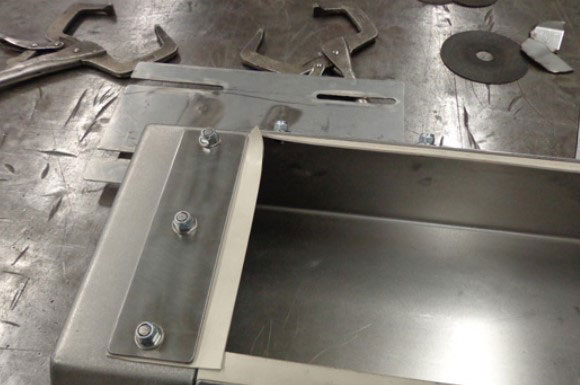
Laser cutting utilizes a highly concentrated laser beam to vaporize or melt metal along predefined paths. This method provides clean edges and can handle complex geometries across various metals, minimizing material waste.
Press brakes and other bending machines apply force to bend metal sheets at precise angles, forming brackets, enclosures, and structural parts. Springback, a natural metal tendency to retain some flexibility after bending, requires compensation in design and setup.
Punching machines use shaped punches and dies to create holes or cut out parts of the metal sheet with precision. This method is essential for creating ventilation holes, slots, and mounting points.
Welding techniques such as MIG, TIG, and spot welding join metal parts into strong assemblies. Welding introduces heat which can cause distortion, so post-weld machining or stress relief may be necessary.
Surface treatments, coatings, powder coating, anodizing, and painting enhance aesthetics and corrosion resistance.
Metal coils feed through a press with a multi-station die, progressively forming the part through sequential operations like punching, bending, and coining. This process is fast, repeatable, and ideal for mass production.
A stamping process involving stretching the metal sheet into a die to create deep, hollow shapes such as automotive panels and appliance housings.
Embossing adds raised or recessed designs, while coining presses the metal to imprint details with high precision.
- Efficiency: High-speed production rates enable thousands of parts per hour.
- Uniformity: Custom dies produce extremely consistent parts.
- Complexity: Capable of forming intricate 3D shapes impossible through simple bending.
- Cost-Effective: Low per-part cost for large volumes.
Sheet Metal Fabrication is ideal for custom enclosures for electronics, structural components for machinery, small-batch brackets, prototype parts, and assemblies requiring welding or multi-component construction.
Metal Stamping is predominantly used in automotive body parts, aerospace fasteners and panels, appliance metal shells, electronic connectors, and consumer product components with high-volume demand.
Selecting the right process depends on multiple factors: production volume, part complexity, cost constraints, required precision, and design flexibility.
- For prototypes, custom designs, and low to medium volume runs, sheet metal fabrication is generally preferred due to lower initial costs and greater design flexibility.
- For very high-volume production requiring tight tolerances and consistent repeats, metal stamping is more cost-effective despite higher upfront tooling costs.
Sheet metal fabrication and metal stamping both play essential roles in manufacturing, but their suitability depends on project requirements. Sheet metal fabrication offers flexibility, shorter lead times, and lower setup costs, making it ideal for customized and lower volume projects. Metal stamping provides high-speed, highly repeatable, and cost-efficient solutions for large-scale production with tight tolerance needs. Understanding these distinctions helps businesses optimize manufacturing processes, reduce costs, and ensure quality.
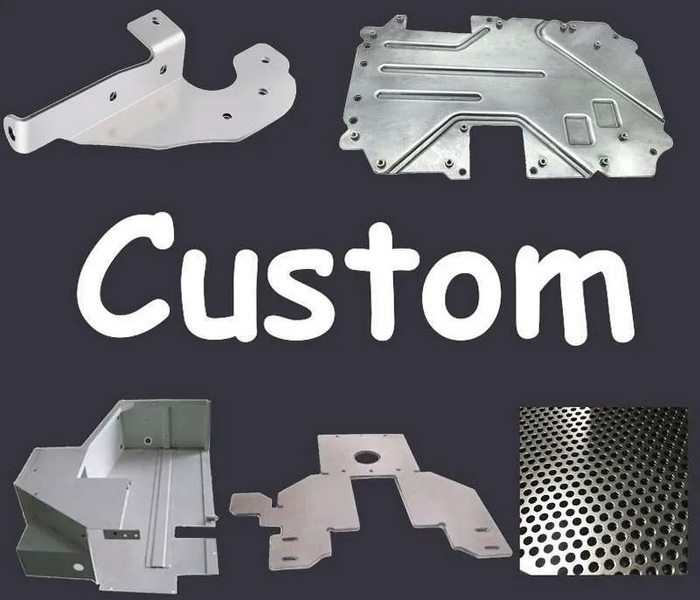
Sheet metal fabrication involves multiple processes like cutting, bending, and welding to create parts, making it suited for custom or low-volume projects. Metal stamping shapes metal sheets using dies and presses, ideal for high-volume, consistent part production.
Sheet metal fabrication is better for prototyping due to low initial tooling costs and flexibility to accommodate design changes.
Yes, metal stamping can reach tighter tolerances (±0.001” to ±0.005”) owing to precision dies and consistent pressing. Fabrication tolerances are wider and may require secondary operations.
Low to medium volumes favor sheet metal fabrication for cost-efficiency and flexibility. High volumes favor stamping for reduced per-part costs.
Both processes use metals such as stainless steel, aluminum, mild steel, brass, and copper, with material choice driven by application requirements.
[1](https://www.worthyhardware.com/news/what-is-the-difference-between-metal-stamping-and-sheet-metal-fabrication/)
[2](https://www.eigenengineering.com/sheet-metal-stamping-vs-metal-fabrication/)
[3](https://yorksheet.com/metal-stamping-vs-metal-fabrication/)
[4](https://www.esict.com/blog/sheet-metal-stamping-vs-metal-fabrication/)
[5](https://www.approvedsheetmetal.com/blog/sheet-metal-fabrication-vs-sheet-metal-stamping)
[6](https://dunkirkmetalproducts.com/metal-stamping-vs-metal-fabrication/)
[7](https://richconn.com/sheet-metal-stamping-vs-cnc-machining/)
[8](https://machitech.com/metal-stamping-vs-precision-sheet-metal-fabrication/)
[9](https://www.jtrmachine.com/metal-stamping-vs-sheet-metal-fabrication)
[10](https://blog.krytonmetals.com/metal-spinning-vs-metal-stamping)

