
Views: 222 Author: Amanda Publish Time: 2025-09-12 Origin: Site


Content Menu
● What is Sheet Metal Fabrication?
>> Main Techniques in Sheet Metal Fabrication
>> Advantages of Sheet Metal Fabrication
>> How Does Laser Cutting Work?
>> Advantages of Laser Cutting
● Sheet Metal Fabrication vs. Laser Cutting: Key Differences
● Applications of Sheet Metal Fabrication
● Applications of Laser Cutting
● Integration of Sheet Metal Fabrication and Laser Cutting
● Quality and Tolerances in Sheet Metal Fabrication and Laser Cutting
● Environmental and Economic Considerations
● How Shangchen Supports OEM Needs with Sheet Metal Fabrication and Laser Cutting
● FAQ (Frequently Asked Questions)
>> 1. What materials can be used in sheet metal fabrication?
>> 2. Is laser cutting suitable for thick metal sheets?
>> 3. How does sheet metal fabrication cost compare to laser cutting?
>> 4. Can laser cutting create holes and complex shapes?
>> 5. What industries benefit most from sheet metal fabrication?
In the modern manufacturing world, precision and efficiency are crucial, especially when working with metal. Two of the most commonly used processes in metal manufacturing are Sheet Metal Fabrication and Laser Cutting. Both techniques offer distinct advantages and cater to different needs, so understanding their differences, applications, and benefits is essential whether you're a designer, manufacturer, or business owner.
In this comprehensive article, we will explore these two processes in detail, comparing their methods, costs, capabilities, and applications. Additionally, relevant visual aids such as illustrations and videos can greatly help grasp the concepts; however, this article will focus on detailed explanations suited for technical insight. By the end, you'll have a full understanding of which technology best fits your project requirements.
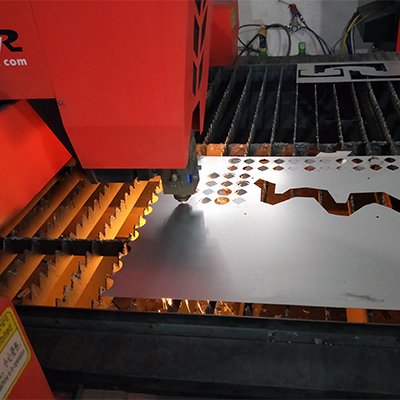
Sheet Metal Fabrication refers to the process of transforming flat sheets of metal into specific shapes and designs through various methods, including cutting, bending, punching, and assembling. This process is foundational in creating metal parts and products used in industries such as automotive, aerospace, construction, and electronics.
- Cutting: This can be performed using a variety of methods, like mechanical shears for straight cuts, laser cutting for precision, water jet cutting for heat-sensitive materials, and plasma cutting to handle thicker metals. The choice depends on the requirements of accuracy, thickness, and edge quality.
- Bending: Sheet metal pieces are bent into shape using press brakes or roll bending machines. Bending allows creation of angled parts and structural geometries, crucial for chassis, housings, and brackets.
- Punching: Punch presses force a punch through the sheet to create holes or cut out shapes. This is especially useful for repetitive holes in mass production.
- Assembling: After cutting and bending, parts are often joined through welding—like TIG or MIG welding—riveting, or fastening to complete the final product.
Sheet metal fabrication is highly versatile, enabling the production of a broad range of parts from simple panels to complex enclosures.
- Material Variety: Supports a broad range of metals including steel, stainless steel, aluminum, brass, and copper, catering to diverse needs like corrosion resistance or electrical conductivity.
- Thickness Flexibility: Can handle thin gauges (less than 1 mm) up to thick plates several millimeters thick, enabling both delicate and heavy-duty parts.
- Customization: It allows for multiple forming operations, including bending and joining, producing complex 3D shapes which laser cutting alone cannot achieve.
- Cost-Effective: For many industrial applications, sheet metal fabrication offers an affordable manufacturing solution, especially for medium to large batch runs.
- Scalability: From one-off prototypes to mass production, fabrication techniques adapt easily, providing repeatable quality.
Laser Cutting is an advanced method that uses a focused, high-powered laser beam to precisely cut through materials. It is widely used across industries due to its speed, accuracy, and ability to produce complex shapes without the need for physical tooling, making it an ideal choice for both prototyping and production.
The laser cutting machine directs a concentrated beam of coherent light onto a sheet metal surface. This high-energy light heats the metal to its melting point or vaporization temperature. Assisted by a stream of gas (oxygen, nitrogen, or air), molten material is blown away from the cut, resulting in clean edges with a narrow kerf.
Besides cutting, some laser systems offer engraving capabilities, marking metal surfaces for identification or decoration.
- High Precision: Laser beams can cut with tolerance levels as low as ±0.1 mm, enabling intricate and detailed designs that are difficult or impossible with traditional cutting tools.
- Speed: Particularly with thin materials, laser cutting is extremely fast, reducing production cycle times significantly.
- Minimal Distortion: The small heat-affected zone limits warping and maintains part integrity.
- Material Efficiency: Narrow cutting lines reduce scrap material, optimizing raw material use.
- Automation and Repeatability: Controlled by CAD/CAM software, laser cutting delivers consistent results, supporting complex patterns and nested layouts.
- Reduced Setup: Unlike mechanical tooling, laser cutting requires minimal preparation and programming can be quickly modified for design changes.

Despite their overlap, Sheet Metal Fabrication and Laser Cutting serve different roles in metalworking.
- Process Complexity: Sheet metal fabrication is multi-step, involving cutting, bending, and assembling; laser cutting focuses primarily on high-precision cutting.
- Material Thickness: Fabrication methods scale well into thicker materials; laser cutting excels in thin to medium gauge metals but can become slower or less effective with very thick materials.
- Forming Ability: Fabrication allows three-dimensional shaping through bending and welding; laser cutting works primarily on flat sheet surfaces.
- Cost Considerations: Laser cutting has higher upfront programming costs but saves on tooling; fabrication tooling may incur costs for press brakes, dies, and punches, but can be more economical at scale.
- Application Versatility: Fabrication is essential when assembling multiple parts into complex components; laser cutting is ideal for flat, intricate parts requiring fine edges.
Both technologies are often integrated into a single manufacturing workflow, choosing laser cutting for initial part outlining and fabrication techniques for shaping and assembly.
Sheet metal fabrication's adaptability is vital for a broad spectrum of industries.
- Automotive Industry: Manufacturing brackets, frame elements, heat shields, and enclosures. Precision and durability are key, and the ability to form parts with bends and welded assemblies is critical.
- Aerospace: Creating lightweight yet strong structural components and housings that meet tight tolerances.
- Electronics Enclosures: Reliable protective cases with precise cutouts for connectors and ventilation.
- HVAC Systems: Fabrication of ducts, vents, and panels using formed sheet metal.
- Industrial Equipment: Panels, guards, and mounting components custom-shaped to function efficiently.
- OEM Production: Partnering with international brands for original equipment, combining multiple fabrication methods for complex assemblies.
The ability to fabricate durable, functional parts with adapted mechanical properties makes sheet metal fabrication indispensable.
Laser cutting's precision and flexibility suit specific industrial needs:
- Rapid Prototyping: Engineers and designers rely on laser cutting to quickly produce exact parts with intricate details during product development.
- Jewelry and Art: Crafting fine, delicate designs that mechanical tools cannot achieve.
- Signage and Architectural Metalwork: Complex logos, ornamental patterns, and 3D effects.
- Medical Devices: Manufacturing surgical instruments or implant components requiring micro-precise cuts.
- Electronic Components: Producing thin, detailed metal parts for circuit boards and connectors with high repeatability.
Laser cutting streamlines production cycles, enabling manufacturers to deliver complex parts with shorter lead times compared to traditional methods.
Combining these technologies benefits industries demanding both precision and form complexity.
- Laser cutting is often used first to cut flat parts from sheet metal precisely.
- Followed by sheet metal fabrication techniques where bending, punching, and assembly complete the product.
- This synergy enables high-quality finished goods optimized for strength, size, and precision.
For example, a control panel may be laser-cut from stainless steel sheet to exact dimensions and openings, then formed and joined to create an enclosure with mounting brackets.
Both processes maintain strict quality control but differ in tolerance expectations:
- Sheet Metal Fabrication Tolerances: Typically within ±0.5 mm to ±1 mm depending on the process; bending angles and punching precision can vary slightly depending on machine calibration.
- Laser Cutting Tolerances: Tighter tolerances, often within ±0.1 mm to ±0.3 mm, making it suitable for tight-fitting parts or components requiring accurate alignment.
Understanding tolerance requirements early helps decide which process or combination to choose, influencing design and cost.
- Material Efficiency: Laser cutting reduces waste due to precision, helping manufacturers minimize cost and environmental impact. Fabrication may have slightly higher material loss during forming and punching.
- Energy Use: Laser cutting equipment typically consumes significant electricity during operation but often results in less secondary processing and fewer scrapped parts, offsetting overall consumption.
- Workforce & Skill: Sheet metal fabrication often demands experienced operators for setup and quality control. Laser cutting relies heavily on software programming and machine maintenance expertise.
- Production Speed: Laser cutting speeds decrease with thicker materials, while fabrication steps like bending and welding add time but scale better for large batches.
At Shangchen, we understand the complexities of precision manufacturing. Our integrated services encompass everything from fast prototyping to precision batch production, including:
- Sheet Metal Fabrication: Utilizing advanced mechanical cutting, CNC bending, punching, and assembly equipment to produce durable, quality parts.
- Laser Cutting: Offering high-precision, clean cutting for intricate designs on various metal types with quick turnaround.
- Value-Added Services: Welding, surface finishing, and quality inspections to meet stringent specifications.
Our factory's experience serving international brands, wholesalers, and manufacturers ensures your OEM projects benefit from competitive costs, consistent quality, and expert technical support.
Deciding between Sheet Metal Fabrication and Laser Cutting is crucial for an efficient manufacturing process. Sheet metal fabrication excels in multi-step forming and assembly, handling a wider material thickness range for functional parts. Laser cutting delivers unmatched precision on thin to medium sheets and is perfect for detailed, complex designs with fast turnaround.
By leveraging both technologies, manufacturers can optimize production quality, cost, and flexibility. Manufacturers like Shangchen, with integrated facilities and OEM expertise, provide tailored solutions that meet diverse market demands. Whether for prototyping or high-volume production, understanding these processes enables informed decisions that lead to superior product outcomes.

Sheet metal fabrication supports a wide variety of metals including steel, stainless steel, aluminum, copper, brass, and more. The choice depends on your project's requirements for strength, corrosion resistance, thermal conductivity, or aesthetics.
Laser cutting is highly effective for thin to medium thickness metals—generally up to 20 mm depending on laser power and material type. For very thick metals, plasma or water jet cutting may be more practical alternatives.
Sheet metal fabrication may have lower tooling costs for simple shapes and large batch runs that require bending and assembly. Laser cutting involves higher initial programming and machine costs but can reduce labor and material waste, especially beneficial for prototypes and complex parts.
Yes, laser cutting excels at producing intricate shapes, fine details, and precise holes with smooth edges—far superior to many conventional mechanical cutting methods.
Sheet metal fabrication plays a critical role in automotive, aerospace, electronics, HVAC, construction, and general machinery industries, delivering custom parts with complex formed geometries that meet structural and functional requirements.

