
Views: 222 Author: Amanda Publish Time: 2025-07-18 Origin: Site


Content Menu
● The Importance of Rapid Prototyping in Medical Devices
● Key Technologies in Rapid Prototyping
>> 3D Printing (Additive Manufacturing)
>> Injection Molding for Prototypes
● The Rapid Prototyping Process in Medical Device Manufacturing
>> Step 1: Concept Development
>> Step 2: Prototype Fabrication
>> Step 3: Testing and Evaluation
>> Step 5: Pre-Production and Validation
● Benefits of Rapid Prototyping for Medical Devices
>> Enhanced Design Flexibility
>> Cost Savings
>> Customization and Personalization
● Challenges and Solutions in Rapid Prototyping
>> Scalability
>> Intellectual Property Protection
>> Cost Control
● Case Studies: Rapid Prototyping Success Stories
>> Custom Surgical Instruments
>> Diagnostic Device Development
>> Minimally Invasive Surgical Tools
● FAQ
>> 1. What is the main advantage of rapid prototyping in medical device manufacturing?
>> 2. Can rapid prototyping be used for functional testing of medical devices?
>> 3. What materials are commonly used in rapid prototyping for medical devices?
>> 4. How does rapid prototyping help with regulatory compliance?
>> 5. Is rapid prototyping suitable for producing patient-specific medical devices?
The medical device industry is undergoing a profound transformation, driven by rapid technological advancements and increasing demands for innovative, safe, and effective solutions. One of the most significant catalysts of this change is rapid prototyping. This powerful process allows manufacturers to design, test, and refine medical devices with unprecedented speed and precision. By enabling quick iterations and functional testing, rapid prototyping is helping companies reduce development cycles, lower costs, and improve product quality.
In this comprehensive guide, we will explore how rapid prototyping is reshaping medical device manufacturing, its key benefits, the technologies involved, and essential considerations for companies aiming to leverage this approach for a competitive edge.

Rapid prototyping refers to a group of techniques used to quickly fabricate a scale model or a functional part using three-dimensional computer-aided design (CAD) data. Unlike traditional manufacturing methods that often require lengthy tooling and setup times, rapid prototyping enables the creation of physical prototypes in a matter of hours or days. This accelerated process allows engineers and designers to visualize, test, and improve their concepts early in the development cycle.
Key features of rapid prototyping include:
- Speed: The ability to drastically reduce the time from concept to prototype.
- Flexibility: Supports complex geometries and custom designs that might be difficult or impossible with traditional manufacturing.
- Cost-Effectiveness: Minimizes material waste and tooling costs by eliminating the need for expensive molds or dies during early development stages.
Rapid prototyping is not just about speed; it's about enabling innovation through iterative design and testing, which is especially critical in the medical device sector where precision and safety are paramount.
Medical devices must comply with stringent regulatory standards and undergo extensive testing to ensure patient safety and efficacy. Rapid prototyping plays a crucial role in this process by enabling:
- Early Design Validation: Physical prototypes allow engineers and clinicians to evaluate the form, fit, and function of devices before committing to costly tooling and production.
- Improved Communication: Tangible models facilitate better communication among stakeholders—including engineers, medical professionals, regulatory bodies, and investors—helping align expectations and identify design issues early.
- Accelerated Innovation: By shortening development cycles, rapid prototyping helps companies bring new devices to market faster, responding quickly to emerging medical needs and competitive pressures.
- Customization: The ability to create patient-specific devices tailored to individual anatomical requirements enhances treatment outcomes and patient satisfaction.
In the medical field, where device failure can have serious consequences, the ability to prototype and test designs rapidly and repeatedly is invaluable.
Several advanced technologies underpin rapid prototyping in medical device manufacturing. Each technology offers unique advantages depending on the application, materials, and required precision.
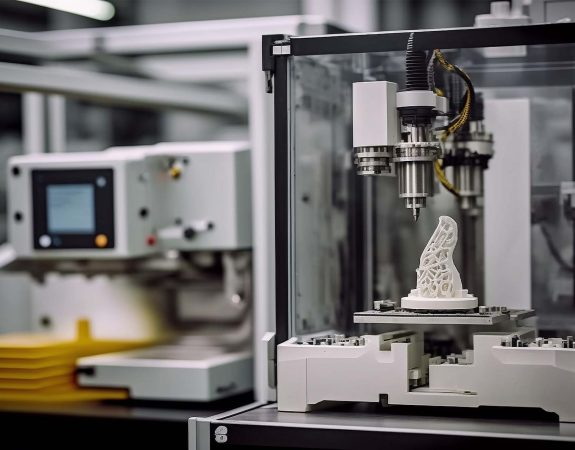
3D printing is the most popular rapid prototyping technology in medical device manufacturing due to its versatility and precision.
- Stereolithography (SLA): Uses a laser to cure liquid resin into hardened plastic, producing highly detailed and smooth prototypes ideal for visual and functional testing.
- Selective Laser Sintering (SLS): Fuses powdered materials using a laser, allowing for strong, durable parts made from plastics or metals without the need for support structures.
- Fused Deposition Modeling (FDM): Builds parts layer by layer from thermoplastic filaments, offering a cost-effective solution for quick iterations and functional prototypes.
3D printing supports complex geometries and internal structures, such as lattice frameworks and hollow channels, which are often required in medical devices.
CNC (Computer Numerical Control) machining involves precision cutting of materials from solid blocks to create complex shapes. It is particularly useful when prototypes need to be made from production-grade materials such as metals or high-performance plastics.
Advantages include:
- High dimensional accuracy and surface finish.
- Ability to work with a wide range of materials.
- Suitable for functional testing and pre-production parts.
For medical devices that require enclosures or structural components, rapid sheet metal prototyping offers fast turnaround times. Techniques such as laser cutting, bending, and stamping enable the creation of durable metal parts that mimic final production components.
Vacuum casting uses silicone molds to produce low-volume, high-quality prototypes with excellent surface finish and mechanical properties. This method is ideal for functional testing and small batch production before full-scale manufacturing.
Bridge tooling injection molding allows manufacturers to produce short runs of prototypes using molds that are less expensive and faster to produce than full production tooling. This approach helps validate designs under real-world conditions and supports regulatory submissions.

The rapid prototyping process typically follows a structured pathway to ensure efficient development and validation.
The process begins with brainstorming and sketching initial ideas based on clinical needs and product requirements. Detailed CAD models are then created to define the geometry and features of the device.
Based on the design and intended use, the appropriate rapid prototyping technology is selected. The first physical prototype is produced, allowing for tangible evaluation.
The prototype undergoes rigorous testing to assess form, fit, and function. Feedback is gathered from clinicians, engineers, and end-users to identify potential improvements.
Based on test results, the design is refined and updated prototypes are produced. This iterative cycle continues until the device meets all performance and regulatory requirements.
Once the design is finalized, prototypes may be used for regulatory submissions, clinical trials, and to validate manufacturing processes before scaling to mass production.
This iterative approach ensures that the final product is safe, effective, and manufacturable.
Rapid prototyping drastically reduces development timelines, enabling companies to respond swiftly to market demands and regulatory changes. This speed can be a decisive factor in gaining competitive advantage.
The ability to quickly test multiple design iterations encourages innovation and creativity. Complex geometries and patient-specific customizations become feasible, improving device functionality and patient outcomes.
By minimizing the need for expensive tooling and reducing material waste, rapid prototyping lowers overall development costs. Early detection of design flaws prevents costly mistakes during mass production.
Frequent testing and refinement ensure that design flaws are identified and corrected early, resulting in safer, more reliable medical devices.
Rapid prototyping enables the production of patient-specific devices such as implants and prosthetics tailored to individual anatomical needs, improving treatment efficacy and patient satisfaction.
Early prototyping helps identify potential manufacturing challenges and design weaknesses, reducing the risk of costly recalls or regulatory setbacks.
Medical devices must comply with rigorous regulatory standards. Ensuring that rapid prototyping activities align with these requirements can be challenging.
Solution: Engage regulatory experts early in the development process, maintain thorough documentation of prototyping activities, and use materials and processes that simulate production conditions.
Not all prototyping materials perfectly replicate the mechanical or biocompatible properties of final production materials.
Solution: Select prototyping methods that closely mimic production materials or use bridge tooling and low-volume production techniques to validate designs under realistic conditions.
Transitioning from prototype to mass production involves different manufacturing processes and quality controls, which can complicate scale-up.
Solution: Collaborate with manufacturing partners experienced in both prototyping and large-scale production to ensure smooth technology transfer.
Sharing prototypes with external partners or stakeholders can expose sensitive designs to risk.
Solution: Secure patents, trademarks, and non-disclosure agreements before sharing prototypes, and implement robust IP management strategies.
While rapid prototyping reduces development costs, extensive iterations can still add up.
Solution: Plan prototyping cycles carefully, focusing on critical design aspects, and leverage digital simulations to reduce unnecessary physical prototypes.
A medical device company utilized rapid prototyping to develop an innovative surgical instrument. By quickly iterating designs and testing with surgeons, they reduced development time by 40% and significantly improved usability and ergonomics.
Using rapid prototyping, a manufacturer created custom implants tailored to individual patients' anatomy. This approach resulted in better surgical fit, reduced operation times, and faster patient recovery.
A startup leveraged rapid prototyping to refine their diagnostic device, enabling rapid functional testing and design validation. This accelerated their path to securing funding and regulatory approval.
Rapid prototyping allowed a company to develop ergonomic, lightweight wearable health monitors with complex internal electronics housings, enhancing patient comfort and device reliability.
Through rapid prototyping, engineers developed and tested various designs of minimally invasive surgical tools, optimizing for precision and ease of use, which improved surgical outcomes.
Rapid prototyping has become an indispensable tool in medical device manufacturing. By enabling fast, flexible, and cost-effective development, it empowers companies to innovate, meet regulatory standards, and deliver high-quality products to market swiftly. The ability to iterate designs quickly, test functional prototypes, and customize devices to patient-specific needs is transforming how medical devices are developed and produced. As technologies continue to advance, the role of rapid prototyping will only grow, making it essential for manufacturers to embrace and master these techniques to stay competitive in the evolving healthcare landscape.
The main advantage is the ability to quickly create and test physical prototypes, allowing for faster design iterations, early detection of design flaws, and reduced time-to-market.
Yes, rapid prototyping can produce functional prototypes that closely mimic the final product, enabling thorough testing of form, fit, and function before mass production.
Common materials include various plastics such as ABS, PLA, and medical-grade resins, metals like aluminum and stainless steel, and composites, selected based on the intended application and required properties.
Rapid prototyping allows for early and frequent testing, ensuring that devices meet regulatory standards for safety and efficacy before entering full-scale production. Proper documentation during prototyping also supports regulatory submissions.
Absolutely. Rapid prototyping excels at creating customized, patient-specific devices such as implants and prosthetics, tailored to individual anatomical needs, enhancing treatment outcomes.

