
Views: 222 Author: Amanda Publish Time: 2025-07-22 Origin: Site


Content Menu
● Understanding Rapid Prototyping
● Common QA Challenges in Rapid Prototyping
>> High-Speed Production vs. Accuracy
● Quality Assurance Solutions & Best Practices
>> Implementing Advanced Inspection Techniques
>> Digital Simulation and Verification
>> Continuous Feedback and Traceability
● Case Studies: Successful QA in Rapid Prototyping
>> Automotive Component Development
>> 1. What is the most common quality issue in rapid prototyping?
>> 2. How do you ensure material properties are consistent in rapid prototyping?
>> 3. How does automation contribute to quality assurance?
>> 4. Can rapid prototyping be used for final production parts?
>> 5. What digital tools best support quality management in rapid prototyping?
Rapid prototyping has revolutionized the manufacturing landscape, enabling companies to bring innovative products to market with unprecedented speed and flexibility. This evolution is particularly notable for industries requiring fast turnaround times and frequent design iterations, such as automotive, aerospace, consumer electronics, and medical devices. However, while rapid prototyping offers immense benefits, it also presents unique quality assurance (QA) challenges. Ensuring that prototypes and parts meet stringent quality standards is crucial to maintaining product integrity, customer satisfaction, and brand reputation.
This article explores the critical quality assurance challenges faced in rapid prototyping and provides comprehensive solutions to address them, accompanied by informative explanations designed to enhance understanding.
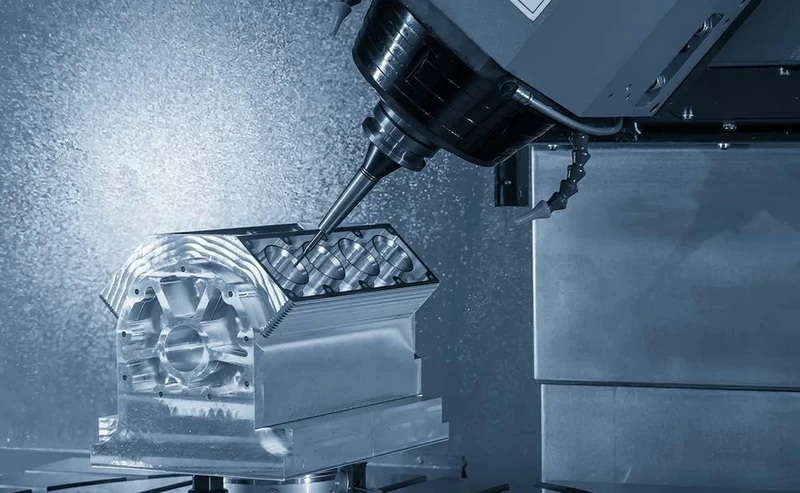
Rapid prototyping encompasses a range of technologies and approaches designed to speed up the prototype development cycle. It employs methods such as CNC machining, 3D printing (additive manufacturing), sheet metal fabrication, injection molding, and lathe turning. These processes allow businesses to quickly test designs, validate concepts, and refine products before mass production.
- 3D Printing: Enables the fast production of complex geometries with various materials, offering unparalleled design freedom and quick iteration.
- CNC Machining: Offers high precision for functional prototypes and low-volume production, suitable for parts requiring tight tolerances and durability.
- Sheet Metal Fabrication: Essential for producing enclosures, brackets, and custom structural components rapidly with excellent mechanical strength.
- Lathe Turning: Provides accurate, cylindrical parts with fast turnaround, indispensable in making shafts, bushings, and threaded components.
- Injection Molding and Tooling: Used for prototype runs in production-grade plastics or metals, offering a close representation of final mass-produced parts.
Rapid prototyping excels in reducing lead times, lowering costs of iterative design, and facilitating creative innovation. However, these varied manufacturing methods also introduce complexities in assuring quality across different parts and materials.
Despite its advantages, rapid prototyping introduces new challenges for quality assurance due to its accelerated workflow, material diversity, and demand for complex designs. Understanding these challenges helps manufacturers and brand partners better prepare mitigation strategies.
The freedom to create intricate designs often means increased risk of manufacturing errors, hidden flaws, or weak points undetectable until later stages. Highly complex structures—such as lattice geometries or thin walls—can be prone to warping, delamination, or insufficient structural integrity if design parameters are not adequately controlled.
Conversation between design and engineering teams must be continuous to balance aesthetics, functionality, and manufacturability. As design complexity increases, so does the need for detailed inspection and validation methods.
Rapid prototyping uses a broad spectrum of materials, from thermoplastics and photopolymers to metals like aluminum, titanium, and stainless steel. Each material has unique thermal behaviors, surface finish qualities, and mechanical properties. Inconsistent raw material batches or supplier variations can cause discrepancies such as:
- Shrinkage or expansion affecting dimensional accuracy
- Surface defects impacting aesthetic or functional performance
- Mechanical weaknesses leading to premature failure during testing
Close collaboration with materials suppliers and stringent incoming inspection is essential to mitigate variability.
The rapid nature of prototyping means processes are frequently tweaked to optimize speed, sometimes at the expense of repeatability and precision. Key factors affecting consistency include:
- Machine calibration drift over time
- Operator skill variability
- Environmental factors such as temperature and humidity affecting material curing or machining precision
- Variations in support structures or build orientation for additive manufacturing
Without strict process control, these factors can create dimensional inaccuracies, internal stresses, and surface roughness that compromise quality.
Balancing rapid turnaround times with high-precision requirements is one of the toughest challenges. Production pressures may tempt operators or engineers to skip thorough inspection cycles or overlook minor defects, which can escalate into significant problems in final assemblies or customer perception. Accelerated production must never sacrifice documented quality control checks.
Manufacturers should establish realistic timelines that incorporate sufficient quality checkpoints and never compromise on testing protocols.
Many rapid prototyping parts require post-processing steps such as:
- Surface finishing (sanding, polishing)
- Heat treatment (stress relieving, hardening)
- Coating or painting for environmental resistance
Each step introduces opportunities for unintended consequences like dimensional shifts, surface blemishes, or contamination. For example, aggressive finishing may thin critical features or introduce micro-cracks; improper heat treatment may cause warping or embrittlement. QA processes must include inspections both before and after post-processing.
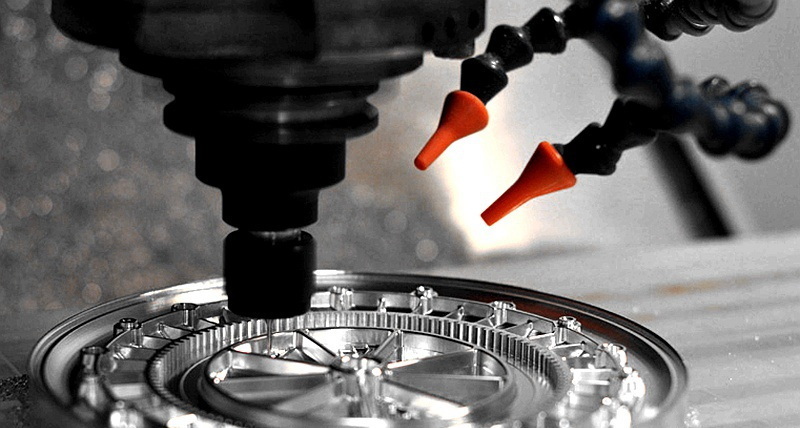
Addressing the above challenges requires a multilayered approach combining advanced technologies, robust protocols, and proactive quality culture.
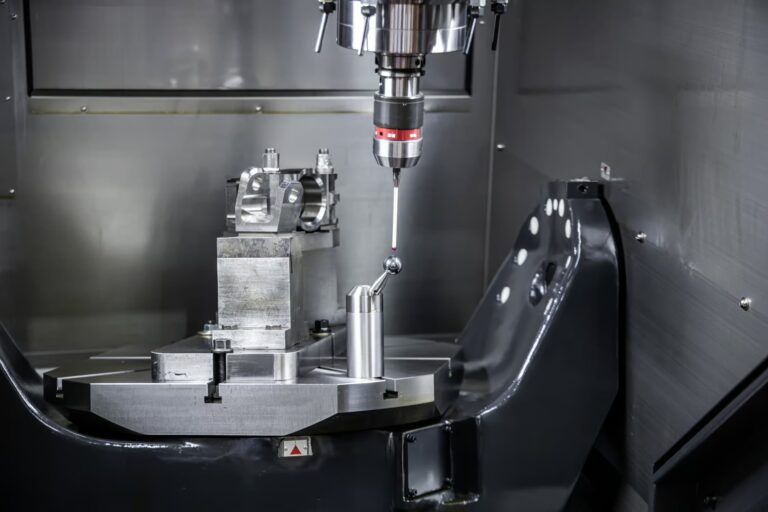
Modern non-contact 3D scanning systems enable rapid, precise measurement of complex geometries. Unlike manual calipers or gauges, these systems generate high-resolution point clouds for direct comparison with CAD models, identifying deviations down to microns. Coordinate Measuring Machines (CMM) provide complementary tactile verification for critical dimensions.
Additionally, automated visual inspection using machine learning technologies can detect surface defects such as cracks, porosity, or layer delamination in additive manufacturing. Combining these tools accelerates inspection times while improving reliability.
In-process monitoring technologies, including sensors embedded in printers or milling machines, offer real-time data on parameters such as temperature, vibration, and build quality. Early anomaly detection reduces scrap rates and rework.
Robust material qualification is fundamental to product reliability. Standard protocols include:
- Chemical composition analysis to verify alloy content or polymer additives
- Mechanical testing including tensile strength, elongation, hardness, and impact resistance
- Thermal analysis to assess behavior at operating temperatures
- Non-destructive testing (NDT) methods like ultrasound or X-ray for internal flaw detection
Testing should be performed on each new material batch and periodically audited to maintain compliance with design specifications and regulatory requirements.
Standard operating procedures (SOPs) minimize variability by defining exact machine settings, build orientations, support structures, and environmental controls for each prototyping method. Documented routines improve operator training and reduce human error.
For additive manufacturing, process parameters such as laser power, scan speed, layer thickness, and powder quality must be strictly maintained. Similarly, CNC programs require verification with test runs and tool wear monitoring.
Regular maintenance and machine recalibration schedules are essential to sustain ongoing accuracy.
Before physical prototyping, digital simulation tools allow virtual validation of designs, predicting potential fabrication issues or mechanical failures. Finite element analysis (FEA) can identify stress concentrations, deformation under load, and heat effects.
Digital twins replicate the entire manufacturing process digitally, enabling iterative adjustments to machine parameters and design optimizations without wasting material. This predictive approach drastically reduces costly trial-and-error in physical prototyping.
Successful quality assurance is not a one-time activity but a continuous improvement cycle. Key elements include:
- Barcoding or RFID tagging for every part to ensure traceability from raw material to final delivery
- Integration of cloud-based quality management systems (QMS) that collect inspection data, machine logs, and operator notes
- Regular cross-department review meetings to analyze defects and process deviations
- Implementation of corrective and preventive action programs (CAPA) to address root causes proactively
Leveraging data analytics highlights trends early, enabling preventive maintenance and process standardization.
A leading automotive OEM used CNC machining to rapidly prototype engine components, a process demanding both precision and durability. By introducing 3D optical scanning inspection after each machining cycle, the team identified minor dimensional errors before assembly. Early detection allowed timely adjustments, ensuring perfect fit and improved engine performance.
A medical startup developed surgical tools with additive manufacturing. Extensive material validation—including biocompatibility tests and tensile analyses—combined with digital simulation to assess mechanical stresses, ensured patient safety and regulatory compliance. This comprehensive QA approach accelerated time-to-market while maintaining high quality.
Rapid prototyping transforms product development by drastically reducing lead times and fostering innovation. However, its unique manufacturing dynamics introduce significant quality assurance challenges related to design complexity, material variability, process inconsistency, and post-processing.
Addressing these challenges requires a holistic QA approach incorporating advanced inspection technologies, systematic material testing, standardized processes, digital simulation, and continuous improvement frameworks. Harnessing these solutions ensures manufacturers deliver rapid prototypes that meet or exceed quality expectations, enabling smooth transitions from concept to production and reinforcing strong OEM partnerships.
By embracing quality-focused rapid prototyping strategies, businesses can confidently accelerate innovation while safeguarding product integrity and customer trust.
The most prevalent problem is dimensional inaccuracy caused by process variability such as machine calibration shifts, material shrinkage, or operator inconsistencies. This can lead to parts that do not fit or function as intended, requiring rework or redesign.
Consistency is achieved through rigorous material testing protocols, including chemical composition, mechanical properties, and physical behavior assessments for every batch. Maintaining close relationships with trusted material suppliers and performing incoming quality inspections are crucial.
Automation enhances QA by enabling fast, objective, and comprehensive inspection coverage with technologies like 3D scanning, vision systems, and AI-driven analytics. This reduces manual errors, speeds up feedback loops, and ensures consistent application of quality standards.
Yes, rapid prototyping can produce final parts if stringent QA measures are applied. Advanced materials and processes have matured enough to satisfy functional, mechanical, and regulatory requirements for a variety of end-use applications.
Digital twins, finite element analysis, cloud-based quality management platforms, and machine learning algorithms are pivotal in simulating manufacturing processes, predicting defects, managing data, and supporting continuous improvement cycles.

