
Views: 222 Author: Amanda Publish Time: 2025-11-09 Origin: Site


Content Menu
● Understanding Turning Lathe Fundamentals
>> Manual Turning Lathe: Craftsmanship and Flexibility
>> Automatic (CNC) Turning Lathe: Precision and Scalability
● Manual Turning Lathe — Strengths, Limits, and Best Use Cases
>> Strengths of Manual Turning Lathe
>> Limitations of Manual Turning Lathe
>> Best Use Cases for Manual Turning Lathe
● Automatic Turning Lathe (CNC) — Strengths, Limits, and Best Use Cases
>> Strengths of Automatic Turning Lathe
>> Limitations of Automatic Turning Lathe
>> Best Use Cases for Automatic Turning Lathe
● Cost of Ownership, Quality, and Throughput Comparison
● OEM Partnerships and Why Turnkey OEMs Benefit
>> Key Benefits of Partnering with Shangchen
● Practical Decision Guide — How to Choose
● Production Workflow Considerations
● Case Studies or Example Scenarios
>> Case Study 1: Small Batch Prototyping
>> Case Study 2: High-Volume Production
● FAQ
>> 1. What are the main differences between manual turning lathe and CNC turning lathe?
>> 2. When is a manual turning lathe more cost-effective than CNC?
>> 3. How does CAD/CAM programming impact CNC turning efficiency?
>> 4. What factors influence lead times for turning lathe parts in a turnkey OEM project?
>> 5. How can an OEM partner help optimize a product for manufacturability during the design phase?
In the world of precision manufacturing, the choice between a manual turning lathe and an automatic (CNC) turning lathe is a critical decision that shapes the efficiency, quality, and scalability of production. For international brands, wholesalers, and manufacturers, understanding the strengths and limitations of each type of turning lathe is essential for optimizing costs, lead times, and product quality. Shangchen (sc-rapidmanufacturing.com) specializes in rapid prototyping, CNC machining, sheet metal fabrication, 3D printing, and mold production, offering comprehensive OEM services tailored to the needs of overseas clients. This article explores the key differences between manual and automatic turning lathes, their ideal applications, and how partnering with a turnkey OEM like Shangchen can streamline your manufacturing journey.

A turning lathe is a machine tool that rotates a workpiece on its axis to perform various operations such as cutting, sanding, knurling, drilling, or deformation. The turning process is fundamental in manufacturing cylindrical parts, shafts, and components with rotational symmetry. The turning lathe is the backbone of many workshops, from small job shops to large-scale production facilities.
A turning lathe consists of a bed, headstock, tailstock, carriage, and tool post. The workpiece is clamped in the chuck or between centers, and as it rotates, a cutting tool is fed into it to remove material and shape the part. The turning lathe can be operated manually, where the machinist controls the feed and speed, or automatically, using computer numerical control (CNC) to program and execute precise movements.
Manual turning lathes are operated by skilled machinists who control the feed, speed, and tool positioning by hand. This approach offers unparalleled flexibility for prototyping, custom work, and small-batch production. Manual turning lathes are ideal for parts that require frequent adjustments, unique finishes, or bespoke geometries. The machinist's expertise directly influences the quality and precision of the finished product.
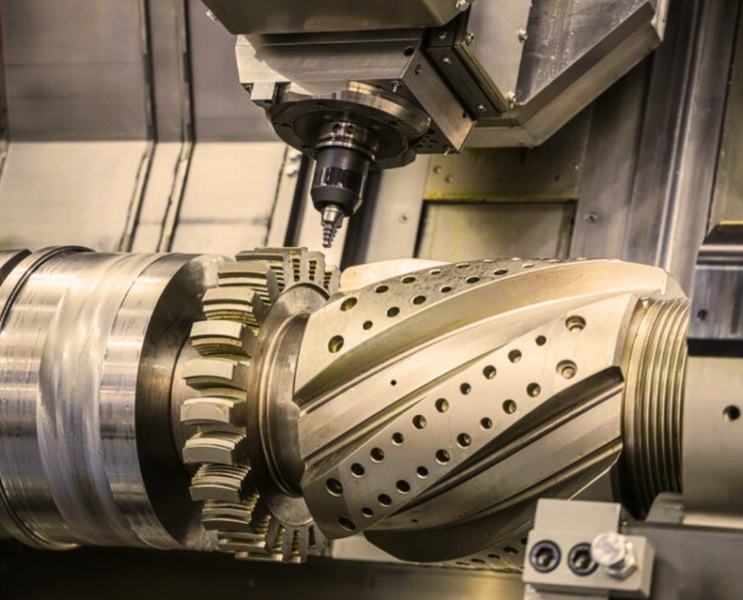
Automatic turning lathes, commonly known as CNC lathes, use computer programs to control the machining process. These machines excel in high-volume production, complex geometries, and tight tolerances. CNC turning lathes can run unattended for extended periods, ensuring consistent quality and reducing labor costs. They are equipped with advanced features such as live tooling, multi-axis capabilities, and integrated inspection systems.
- Flexibility: Manual turning lathes allow for immediate adjustments and real-time feedback, making them ideal for prototyping and custom work.
- Low Initial Investment: The cost of a manual turning lathe is generally lower than that of a CNC lathe, making it accessible for small workshops and startups.
- Skill Development: Operating a manual turning lathe helps develop craftsmanship and machining intuition, which is valuable for training and skill-building.
- Operator Dependency: The quality and consistency of parts are highly dependent on the machinist's skill and experience.
- Scalability: Manual turning lathes are less suited for high-volume production due to longer cycle times and higher labor costs.
- Complexity: Parts with complex geometries or tight tolerances may be challenging to produce consistently on a manual turning lathe.
- Prototyping: Manual turning lathes are perfect for creating one-off or small-batch prototypes where rapid turnaround is crucial.
- Custom Work: Parts requiring unique finishes, frequent design changes, or bespoke features benefit from the flexibility of manual turning.
- Training: Manual turning lathes are excellent for training machinists and developing machining skills.
- High Repeatability: CNC turning lathes deliver consistent quality and tight tolerances, essential for mass production.
- Scalability: These machines can handle medium to high-volume production runs with minimal labor input.
- Complex Geometries: CNC lathes can produce parts with intricate features, such as threads, grooves, and contours, with high precision.
- Automation: CNC turning lathes can run unattended, reducing labor costs and increasing throughput.
- Higher Initial Investment: The cost of a CNC turning lathe is significantly higher than that of a manual lathe.
- Programming Lead Times: Setting up and programming a CNC lathe requires time and expertise, which can impact lead times for small batches.
- Maintenance: CNC lathes require regular maintenance and skilled technicians to keep them running smoothly.
- Mass Production: CNC turning lathes are ideal for producing large quantities of identical parts with consistent quality.
- Complex Parts: Parts with complex geometries, tight tolerances, or integrated features benefit from the precision and automation of CNC lathes.
- Lights-Out Manufacturing: CNC lathes can operate overnight or over weekends, maximizing productivity and reducing downtime.
- Manual Turning Lathe: Lower upfront cost but higher ongoing labor expenses due to operator dependency.
- Automatic Turning Lathe: Higher initial investment but lower per-unit labor cost after setup, making it cost-effective for high-volume production.
- Manual Turning Lathe: Quality is highly dependent on the machinist's skill, with potential variability in small batches.
- Automatic Turning Lathe: CNC lathes offer high repeatability and traceability, ensuring consistent quality across large production runs.
- Manual Turning Lathe: Suitable for small batches and prototypes, with limited scalability for high-volume production.
- Automatic Turning Lathe: Excels in repeatable high-volume runs, with the ability to scale production as demand increases.
Shangchen (sc-rapidmanufacturing.com) provides a comprehensive suite of manufacturing services, including rapid prototyping, CNC machining, sheet metal fabrication, 3D printing, and mold production. As a turnkey OEM partner, Shangchen offers end-to-end solutions for international brands, wholesalers, and manufacturers. Our expertise in CNC lathe turning and precision manufacturing ensures that your parts are produced to the highest standards of quality and consistency.
- Rapid Prototyping: Quick-turn prototyping services to accelerate product development and reduce time-to-market.
- Scalable Manufacturing: Flexible production capabilities to support pilot runs and mass production.
- Integrated Supply Chain: Streamlined logistics and supply chain management for seamless production and delivery.
- Quality Control: Rigorous quality control processes to ensure every part meets your specifications.
- Customization: Private label and customization options to meet your unique branding and product requirements.
- Part Geometry Complexity: Simple parts with basic features may be suitable for manual turning, while complex geometries require CNC turning.
- Production Volume: Small batches and prototypes are best handled by manual turning, while high-volume production benefits from CNC turning.
- Lead-Time Targets: Manual turning offers faster setup for small runs, while CNC turning provides consistent throughput for large runs.
- Budget Constraints: Manual turning has lower upfront costs, while CNC turning offers lower per-unit costs for high-volume production.
- Automation Needs: CNC turning is ideal for automated, lights-out manufacturing, while manual turning requires skilled operators.
- Part Complexity: Score 1–5 based on the number of features and tolerances.
- Production Volume: Score 1–5 based on the number of units required.
- Lead-Time: Score 1–5 based on urgency and turnaround requirements.
- Budget: Score 1–5 based on available capital and cost constraints.
- Automation: Score 1–5 based on the need for unattended operation.
- Manual Turning Lathe: Design handoff, setup, manual operation, inspection, and final assembly.
- Automatic Turning Lathe: Design handoff, programming, setup, automated operation, inspection, and final assembly.
- Inline Gauging: Use of gauges and measurement tools during the machining process to ensure accuracy.
- CMM Checks: Coordinate measuring machine (CMM) checks for final part validation.
- Final Part Validation: Comprehensive inspection to verify that all specifications are met.
A European brand needed a small batch of custom shafts for a new product launch. Shangchen used manual turning lathes to produce the prototypes quickly, allowing the brand to test and refine the design before moving to mass production.
An American wholesaler required a large quantity of precision pins for a consumer electronics product. Shangchen employed CNC turning lathes to produce the pins with consistent quality and tight tolerances, ensuring a smooth supply chain and timely delivery.
Choosing between a manual turning lathe and an automatic (CNC) turning lathe depends on your specific production needs, part complexity, volume requirements, and budget constraints. Manual turning lathes offer flexibility and craftsmanship for small batches and prototypes, while automatic turning lathes deliver precision, scalability, and consistency for high-volume production. Shangchen (sc-rapidmanufacturing.com) provides comprehensive OEM services, including rapid prototyping, CNC machining, sheet metal fabrication, 3D printing, and mold production, to support your manufacturing journey from concept to completion.
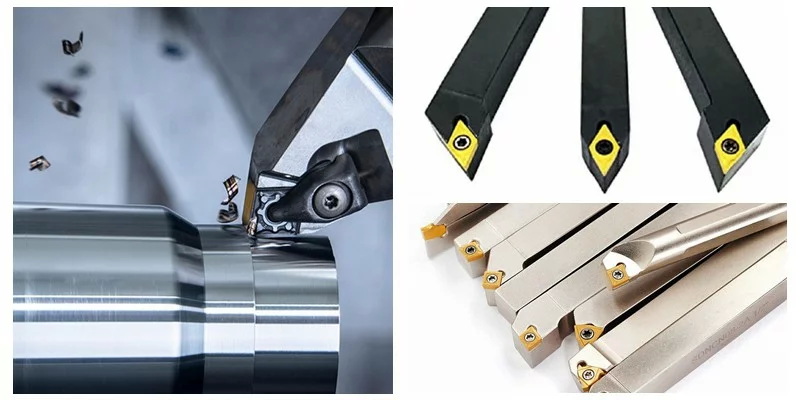
Manual turning lathes are operated by skilled machinists and offer flexibility for custom work and small batches, while CNC turning lathes use computer programs to control the machining process, providing high repeatability and scalability for mass production.
A manual turning lathe is more cost-effective for small batches, prototypes, and custom work where the upfront investment is lower and the production volume is limited.
CAD/CAM programming allows for precise control of the machining process, reducing setup times and ensuring consistent quality. It enables the production of complex geometries and tight tolerances with minimal manual intervention.
Lead times are influenced by part complexity, production volume, available skilled labor, programming and setup times, and the efficiency of the supply chain and logistics.
An OEM partner can provide design-for-manufacturability (DFM) feedback, material selection advice, and process optimization to ensure that your product is easy to manufacture, cost-effective, and meets your quality requirements.
[1](https://openoregon.pressbooks.pub/manufacturingprocesses45/chapter/chapter-unit-1-the-engine-lathe/)
[2](https://www.woodworkersuk.co.uk/books/lathe-design-construction-and-operation-with-practical-examples-of-the-lathe-work-o-e-perrigo-1919.pdf)
[3](https://cncwmt.com/qa/how-a-cnc-lathe-works/)
[4](https://www.market-prospects.com/articles/what-is-the-lathe-manufacturing-process)
[5](https://www.fictiv.com/articles/introduction-to-cnc-turning)
[6](https://trytaiga.com/en/blog/vertical-lathe-machinig/)
[7](https://dk.dmgmori.com/news-and-media/blog-and-stories/blog/blg2507-cnc-lathe-setup)
[8](https://www.acmebestcorp.com/guide-to-cnc-turning-process-types-and-advantages)
[9](http://www.diva-portal.org/smash/get/diva2:930493/FULLTEXT01.pdf)

