
Views: 222 Author: Amanda Publish Time: 2025-12-16 Origin: Site


Content Menu
● What Is Rapid Prototyping in Manufacturing?
● Sequential Model: Linear but Structured
● Iterative and Parallel Models: The Natural Home of Rapid Prototyping
● How Rapid Prototyping Interacts with Sequential Stages
● Rapid Prototyping Methods Along the Development Path
● Shangchen's Role in Rapid Prototyping for OEM Projects
● Is Rapid Prototyping Itself Sequential?
● Benefits of Combining Sequential Planning with Iterative Rapid Prototyping
● Typical Rapid Prototyping Workflow with a Factory Like Shangchen
● Rapid Prototyping for Design Validation and User Experience
● Rapid Prototyping and Risk Control
● Rapid Prototyping Across Physical and Digital Products
● Choosing the Right Rapid Prototyping Partner
● Why Rapid Prototyping Is Not Just a Cost, but an Investment
● Does Rapid Prototyping Belong to a Sequential Model?
● FAQ
>> Q1. Is rapid prototyping mainly sequential or iterative?
>> Q2. How does rapid prototyping fit into a traditional product development process?
>> Q3. Can rapid prototyping be used with both physical and digital products?
>> Q4. What advantages does a full-service factory like Shangchen bring to rapid prototyping projects?
>> Q5. How does rapid prototyping help reduce the overall project cost?
Rapid prototyping has transformed modern product development, but many people still wonder whether it belongs to a strictly sequential model or to a more flexible iterative process. For OEM brands, wholesalers, and manufacturers working with Chinese factories, understanding this relationship is crucial for planning development timelines and budgets.
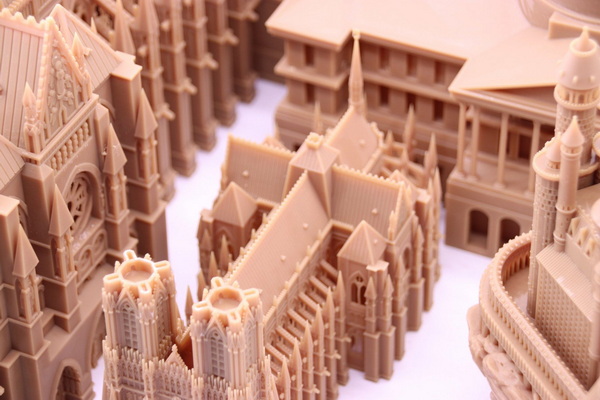
In reality, rapid prototyping does not purely refer to a sequential model; instead, it usually operates in iterative and even parallel cycles embedded inside a broader, high-level sequence of stages. This hybrid nature is what makes rapid prototyping so powerful for accelerating innovation while controlling risk.
Rapid prototyping is a set of techniques that quickly convert digital design data into physical or virtual prototypes so that teams can test ideas, verify functions, and evaluate manufacturability before committing to full-scale production. It is widely used in industries such as automotive, consumer electronics, medical devices, industrial equipment, and packaging.
In manufacturing, rapid prototyping often relies on technologies such as CNC machining, turning, sheet metal fabrication, 3D printing, vacuum casting, and soft tooling to produce prototype parts in a short time. This allows engineers and designers to touch and test real components that represent the final product more accurately than digital simulations alone.
The sequential model, sometimes called the “waterfall” style in development, assumes that each phase follows in a linear order with limited backtracking. Typical steps include requirements, design, prototyping, testing, and production. Each stage must be largely completed before moving on to the next.
This model offers clarity and predictability because decision points and deliverables are clearly defined at each stage. However, it can be slower and less flexible when market conditions or user requirements change rapidly. For complex hardware products with strict compliance or certification needs, a sequential framework is still common at the project level, even if rapid prototyping is used inside each stage.
Iterative models focus on repetition: design, build, test, learn, and improve. Each cycle produces a prototype that incorporates feedback and reduces uncertainty. Parallel models go one step further by running multiple prototypes or design options at the same time, then comparing results to choose the best direction.
Rapid prototyping fits naturally into iterative and parallel models because it is designed to support fast learning. When prototypes can be created in days instead of weeks, teams are free to explore more alternatives and collect more feedback. This is especially effective for consumer-facing products where aesthetics, ergonomics, and usability are critical.
Although rapid prototyping itself is iterative, most organizations still structure their overall development efforts into sequential stages such as concept, feasibility, engineering validation, design validation, and production validation. In each of these stages, rapid prototyping plays a different role, and several loops of iteration can occur.
For example, during the concept stage, rapid prototyping may create simple visual and ergonomic models to evaluate sizing, shape, and basic assembly. In later engineering stages, functional prototypes are built in real or near-real materials to verify strength, tolerances, and performance. Finally, during pre-production, rapid prototyping supports pilot runs and trial tooling to confirm that the product is ready for mass manufacturing.
Different rapid prototyping technologies are better suited to different stages:
- Early-stage concept models often use 3D printing because of its flexibility and low setup cost.
- Mechanical verification prototypes may rely on CNC machining and sheet metal fabrication to match final materials and tolerances.
- Appearance models might combine CNC machining, polishing, painting, and surface finishing to replicate the final look and feel.
- Bridge or pilot production can use soft tooling, low-volume molds, and quick-turn machining to test production processes before investing in hard tools.
By choosing the right rapid prototyping method at each stage, companies can maintain a balance between speed, cost, and realism.
Shangchen (sc-rapidmanufacturing.com) is a China-based factory specializing in rapid prototyping, CNC machining services, precision batch production, lathe turning, sheet metal manufacturing, 3D printing services, and mold production for OEM clients from overseas markets. This combination of capabilities allows Shangchen to support a full range of rapid prototyping needs, from early design experiments to low-volume production.
Overseas brands, wholesalers, and manufacturers can send their 3D models and technical drawings to Shangchen and receive rapid prototyping parts in metals and plastics with tight tolerances. The same engineering team can then transition successful prototypes into small batches, soft tooling, and finally hard tooling for mass production, preserving design intent and quality at every step.
From a narrow perspective, rapid prototyping can be arranged sequentially: prototype 1, test, then prototype 2, test, and so on. In some projects, this is indeed how it operates, especially when each prototype must be carefully evaluated before commissioning the next version.
However, from a broader and more practical perspective, rapid prototyping is rarely purely sequential. Teams often build multiple design variations in parallel, conduct user tests in different regions, and feed all insights back into the design team at once. This creates a web of iterative and parallel cycles within an overall sequential project structure. As a result, rapid prototyping is better described as an iterative technique that supports both sequential and parallel development strategies.
When companies combine sequential planning at the macro level with rapid prototyping at the micro level, they gain several advantages:
- Clear project milestones while still allowing flexibility within each stage
- Faster learning from real prototypes, leading to fewer surprises late in the project
- Better alignment between design, engineering, purchasing, and manufacturing teams
- More informed decisions about tooling investments and final specifications
This hybrid approach allows global OEMs to keep their project schedules predictable while still taking advantage of rapid prototyping's ability to expose issues early.
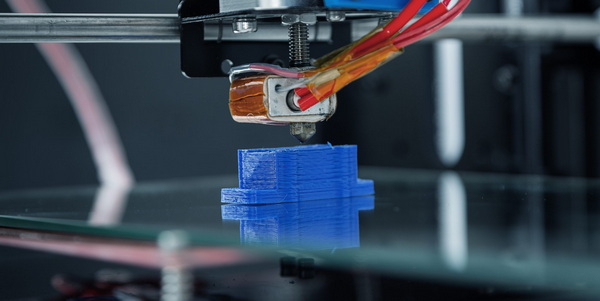
A standard OEM project might follow a path like this:
1. Concept sharing and design review
The customer sends initial 3D models, 2D drawings, and requirement documents. Shangchen's engineering team reviews the data and suggests design-for-manufacturing improvements.
2. First rapid prototyping round
Using 3D printing or simple CNC machining, Shangchen produces initial prototypes to check dimensions, assembly, and basic functions. These parts are shipped to the customer for evaluation.
3. Second rapid prototyping round
After feedback, revised designs are machined from final materials or close equivalents. Surface finishes, tolerances, and functional features are refined. These prototypes are used for more serious mechanical testing and user evaluation.
4. Pre-production rapid prototyping
Once the design is nearly frozen, Shangchen may create prototype molds, jigs, fixtures, and sheet metal parts to simulate mass production conditions. Small batches are produced to test assembly, packaging, and logistics.
5. Transition to batch production
When all rapid prototyping results are satisfactory, the project moves into precision batch production and tooling optimization. Because the same factory handled rapid prototyping and early batches, ramp-up is smoother and quality is easier to control.
Rapid prototyping is not only about technical performance; it is also crucial for design validation and user experience. For products that users touch, wear, hold, or operate frequently, designers must see how people react in real life.
Rapid prototyping allows designers to test multiple shapes, button layouts, screen sizes, grip angles, and color schemes quickly. They can run user tests to see which design feels more intuitive, looks more attractive on shelves, or produces fewer errors in operation. This user-centered approach is almost impossible with a rigid sequential model that allows only one or two prototypes before committing to mass production.
Every new product faces technical, commercial, and operational risks. Rapid prototyping reduces these risks by providing real, testable artifacts at each stage:
- Technical risk: Will the product meet performance, reliability, and safety targets?
- Market risk: Will customers actually like and buy the product?
- Manufacturing risk: Can the design be produced at the required cost, quality, and speed?
Through rapid prototyping, companies test each of these aspects early. If something fails, it is much cheaper to adjust designs while still at the prototype level than to modify expensive moulds or rework large batches of finished goods.
Rapid prototyping is widely recognized in physical manufacturing, but its principles also apply to software and digital interfaces. In software, teams use clickable mockups, wireframes, and near-real interactive prototypes to test flows and features before full implementation.
When hardware and software are combined in the same product, such as smart devices or industrial IoT equipment, rapid prototyping becomes a bridge between the physical and digital worlds. Hardware prototypes from factories like Shangchen can be combined with software prototypes to simulate real usage, gather data, and optimize both sides together.
For overseas brands and wholesalers, choosing a rapid prototyping partner is strategic. The ideal partner should:
- Offer a wide range of processes: CNC machining, turning, sheet metal, 3D printing, and mold making
- Understand OEM requirements, including confidentiality, quality standards, and export logistics
- Provide technical support for design optimization and material selection
- Scale from one-off prototypes to small series and then to mass production
Shangchen's integrated capability profile matches these needs, which helps customers reduce coordination costs and keep knowledge inside a single, trusted supplier relationship.
Some teams worry that rapid prototyping adds cost to development. In practice, it is an investment that usually pays back several times over. By discovering design and manufacturability issues early, companies avoid scrapping expensive tools, reworking large volumes of parts, or releasing flawed products that damage their brand.
Rapid prototyping also shortens time-to-market by reducing uncertainty and speeding up decision-making. When stakeholders can see and test real prototypes, they can approve or reject ideas faster, which is especially important in competitive global markets.
From a high-level project perspective, many companies still use a sequential set of stages for planning, reporting, and management. Rapid prototyping operates inside and across these stages as a flexible, iterative tool. It supports both sequential transitions between major milestones and fast loops of design–prototype–test in between.
Therefore, rapid prototyping does not strictly refer to a sequential model; it is better described as an iterative and sometimes parallel process that can be organized within a sequential framework as needed. For global OEMs working with factories like Shangchen, the most effective approach is to combine the discipline of sequential planning with the agility of rapid prototyping.
Rapid prototyping is a core strategy for modern product development, but it should not be misinterpreted as belonging only to a rigid sequential model. Instead, rapid prototyping thrives in iterative and parallel cycles that are embedded within a broader sequence of concept, validation, and industrialization stages. By leveraging rapid prototyping in this way, overseas brands and OEMs can accelerate innovation, reduce risk, and improve product quality before investing heavily in mass production.
For companies that work with a full-service partner such as Shangchen (sc-rapidmanufacturing.com), rapid prototyping becomes a bridge between digital design and reliable manufacturing. With integrated CNC machining, turning, sheet metal, 3D printing, and mold production, Shangchen helps clients transform ideas into validated prototypes and then into stable series production with fewer delays and surprises.
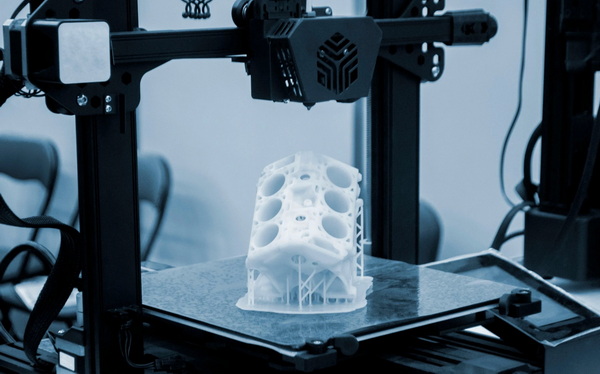
Rapid prototyping is mainly iterative because its core value comes from repeating cycles of designing, building, testing, and improving. While these cycles can be arranged sequentially in a project plan, in practice teams often run several iterations and even parallel variations to compare options and gather rich feedback.
In a traditional process, rapid prototyping fits inside stages such as concept, feasibility, engineering validation, and pre-production. Each stage may use different types of rapid prototyping—concept models, functional prototypes, and pilot runs—to answer specific questions and help decision-makers move confidently to the next step.
Yes, rapid prototyping applies to both physical and digital products. In physical manufacturing, prototypes are made from metals and plastics by CNC machining, sheet metal, 3D printing, and molds. In digital or hybrid products, interactive mockups and software prototypes combine with physical prototypes to test the complete user experience.
A full-service factory like Shangchen offers multiple processes under one roof, so customers can move from simple prototypes to functional parts and then to small batch production without changing suppliers. This integrated approach shortens lead times, improves quality consistency, and protects design confidentiality across the entire rapid prototyping and production chain.
Rapid prototyping reduces project cost by detecting design errors, manufacturing challenges, and user experience problems before large investments are made in tooling and mass production. Fixing issues at the prototype stage is much cheaper than reworking molds, scrapping finished goods, or recalling products, so the upfront cost of rapid prototyping usually leads to significant savings later.

