
Views: 222 Author: Amanda Publish Time: 2026-01-10 Origin: Site


Content Menu
● Understanding Rapid Prototyping in Engineering
● How Rapid Prototyping Fits Into the Engineering Workflow
● Key Rapid Prototyping Technologies
>> CNC Machining and Turning in Rapid Prototyping
>> Sheet Metal Fabrication for Rapid Prototyping
>> 3D Printing and Additive Manufacturing in Rapid Prototyping
>> Rapid Tooling and Low-Volume Molding
● Engineering Benefits of Rapid Prototyping
>> Enhancing Design Quality and Reliability
>> Reducing Development Risk and Cost
● Rapid Prototyping for OEM and International Customers
>> One-Stop Rapid Prototyping and Production
>> From Rapid Prototyping to Precision Batch Manufacturing
● Rapid Prototyping and Cross-Functional Collaboration
>> Bringing Design, Engineering, and Manufacturing Together
>> Involving Customers and End Users
● Digital Foundations of Rapid Prototyping
>> CAD, CAE, and Data Management
>> Online Engineering Services and Automation
● Why Rapid Prototyping Is Clearly Engineering
● FAQ About Rapid Prototyping in Engineering
>> 1. Is Rapid Prototyping only suitable for early concept design?
>> 2. How does Rapid Prototyping support design for manufacturability (DFM)?
>> 3. Can Rapid Prototyping help with regulatory and certification testing?
>> 4. What should engineers consider when choosing a Rapid Prototyping process?
>> 5. How does Rapid Prototyping benefit international OEM collaboration?
Rapid Prototyping is unquestionably a core activity within modern engineering because it applies scientific principles, structured methods, and industrial technologies to transform digital concepts into physical, testable parts at high speed. It connects design, analysis, and manufacturing into an integrated workflow that drives better, safer, and more competitive products to market in less time.
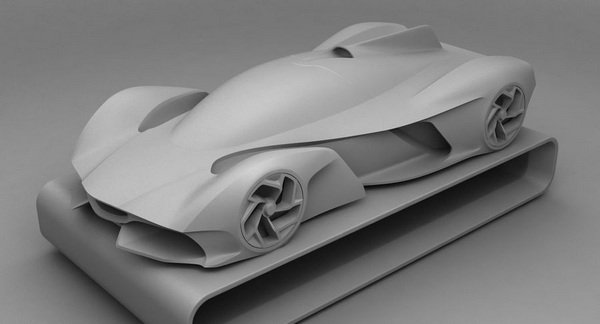
Rapid Prototyping is a group of techniques used to quickly fabricate a physical model of a part or assembly directly from three-dimensional CAD data, usually using technologies such as 3D printing, CNC machining, and sheet metal processing. These prototypes are created not just for appearance, but for engineering validation, functional testing, and manufacturability assessment throughout the product development cycle.[1][2][3][4]
Within an engineering context, Rapid Prototyping supports iterative cycles in which each design version is built, tested, reviewed, and refined in days or weeks, rather than months. This agile loop allows teams to explore many design alternatives, reduce uncertainty, and refine details before committing to mass production and long-term tooling investments.[5][6][7][8]
In a modern project, Rapid Prototyping is embedded from early concept development all the way to pre-production and pilot runs. Engineers start by creating CAD models, running basic simulations if needed, then producing prototypes that can be physically inspected, assembled, and tested under realistic conditions.[2][4][8][1]
The knowledge gained from each Rapid Prototyping cycle feeds directly back into design changes, tolerance adjustments, material selection, and process planning for production. This makes Rapid Prototyping a strategic engineering tool, not just a quick way to visualize shapes.[3][9]
CNC machining and CNC turning are central Rapid Prototyping techniques because they allow engineers to produce parts in fully dense metals and engineering plastics with production-level tolerances. This is crucial when prototypes must behave very similarly to final parts in terms of strength, durability, and assembly fit.[8][10][11]
With CNC-based Rapid Prototyping, complex components can be milled or turned in small batches, enabling verification of:
- Dimensional accuracy and tolerance stack-up.
- Mating surfaces, threads, fits, and assembly behavior.
- Surface finish and post-processing requirements.
Because the same basic technology is often used later in low-volume and even mass production, CNC Rapid Prototyping establishes a realistic baseline for performance and manufacturability.[10][11]
Rapid Prototyping of sheet metal parts uses processes like laser cutting, punching, bending, and welding to deliver robust enclosures, brackets, frames, and panels in very short lead times. Engineers use these prototypes to verify stiffness, mounting configurations, cooling airflow, access for assembly, and other practical details.[9][11][8][10]
Because sheet metal Rapid Prototyping can support both custom one-off pieces and small pilot batches, OEM customers gain the flexibility to:
- Adjust flange dimensions and hole locations.
- Optimize structural reinforcements and mounting points.
- Validate the interaction between electronics, mechanics, and housing.
This makes sheet metal Rapid Prototyping a powerful bridge between initial industrial design and full production of metal housings and mechanical structures.[11][8]
3D printing is often the fastest and most flexible Rapid Prototyping tool, enabling the creation of complex geometries that would be difficult or impossible with conventional methods. Engineers can quickly generate concept models, ergonomic samples, functional prototypes, and even low-volume end-use parts using plastic, resin, or metal processes.[6][12][1][5]
Additive Rapid Prototyping provides unique advantages:
- Ability to create internal channels, lattice structures, and organic shapes.
- Minimal tooling, allowing rapid design changes without added setup cost.
- Cost-effective production of multiple design variants for side-by-side testing.
When integrated into engineering, these capabilities support advanced lightweight structures, thermal management solutions, and custom components tailored to specific OEM requirements.[4][6]
Rapid Prototyping also extends to quick-turn tooling solutions for injection molding and casting, enabling parts in production-like materials before full tooling investment. Soft molds, simplified steel tools, or even printed tools can be used to create small batches of plastic parts for functional testing, regulatory certification, or early market trials.[13][8][9][11]
This form of Rapid Prototyping gives engineers and OEM customers the ability to:
- Confirm mechanical properties, chemical resistance, and long-term behavior.
- Validate assembly with other components made through different processes.
- Gather feedback from early users or key customers using near-final parts.
By closing the gap between prototype and mass production, rapid tooling supports smoother product launches and fewer surprises at scale.[8][13]
Rapid Prototyping compresses the entire development timeline, allowing teams to move from idea to working prototype in days or weeks rather than months. Multiple design concepts can be produced and tested in parallel, enabling faster decision-making on which direction to pursue.[7][2][6][8]
For businesses that compete in fast-moving markets, this speed translates into:
- Earlier product launches and quicker response to customer needs.
- More time available for refinement without delaying release dates.
- Greater ability to seize new opportunities or adapt to technology shifts.
By making iteration quick and affordable, Rapid Prototyping turns time pressure into a manageable engineering challenge instead of a barrier.[6][9]
A key reason Rapid Prototyping is engineering is its direct impact on product quality and reliability. Through repeated cycles of prototyping and testing, engineers can systematically identify design weaknesses and correct them while changes are still inexpensive.[4][7][9]
This leads to:
- Better ergonomics, usability, and user experience based on real testing.
- Stronger, safer structures validated under realistic or accelerated loads.
- Reduced risk of field failures and warranty issues after launch.
In effect, Rapid Prototyping serves as an early quality filter that prevents many costly errors from ever reaching production.[9][6]
Although each iteration has a cost, Rapid Prototyping lowers total project risk by detecting issues before costly tooling, complex assembly lines, or large raw material orders are committed. Avoiding late-stage changes and production disruptions usually saves far more money than the cost of extra prototypes.[7][4][6][9]
For OEMs and brand owners, this means:
- More predictable budgets and schedules.
- Fewer redesign cycles after validation testing or certification.
- Less scrap, rework, and downtime in early production.
By combining Rapid Prototyping with careful engineering review, companies can be more confident that the chosen design will perform as planned in real-world applications.[13][8]
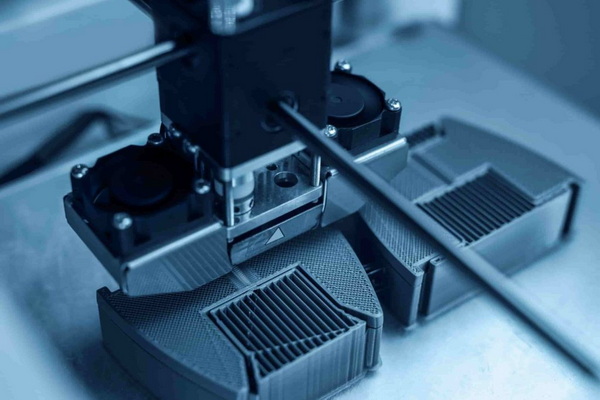
Many modern manufacturing partners now offer integrated services that combine Rapid Prototyping with CNC machining, turning, sheet metal fabrication, 3D printing, rapid tooling, and batch production in a single workflow. This approach is particularly valuable for overseas OEM customers, wholesalers, and manufacturers who need a reliable, technically capable partner for custom parts.[10][11][13]
A one-stop Rapid Prototyping and production provider can:
- Support the entire lifecycle from early concept samples to steady mass production.
- Coordinate process selection, cost optimization, and quality control across technologies.
- Maintain consistent engineering communication and documentation for every revision.
By centralizing these capabilities, such factories make it easier for foreign brands to manage complex projects and maintain high standards across multiple product lines.[11][13]
In OEM projects, Rapid Prototyping is only the first phase of a broader engineering relationship that eventually includes low-volume runs, pilot production, and full-scale manufacturing. Once a prototype has been validated, the same technical team can refine process parameters, adjust fixture designs, and develop inspection routines to support stable batch production.[8][11][13]
This continuity offers clear benefits:
- Faster industrialization because knowledge from Rapid Prototyping is reused.
- Fewer misunderstandings between designers and manufacturers.
- Easier traceability of design history and process changes over time.
For international OEM partners, a factory that combines Rapid Prototyping with precision production becomes a long-term engineering ally rather than just a part supplier.[11][13]
Rapid Prototyping naturally encourages closer collaboration among industrial designers, mechanical engineers, manufacturing engineers, and quality specialists. Because they all review and handle the same physical prototypes, issues are identified sooner and resolved more efficiently.[14][3][6][8]
Typical collaboration around Rapid Prototyping includes:
- Designers evaluating appearance, branding, and human interaction.
- Mechanical engineers checking strength, clearances, and mechanisms.
- Manufacturing experts assessing feasibility, cost, and process robustness.
This cross-functional dialogue ensures that decisions are technically sound, cost-conscious, and aligned with user expectations.[6][9]
By delivering realistic prototypes early in the project, Rapid Prototyping allows key customers, distributors, and end users to test form, fit, and function well before final release. Their feedback can then be translated into clear engineering changes while design flexibility remains high.[3][14][7][6]
Early engagement powered by Rapid Prototyping helps to:
- Confirm that product features truly solve user problems.
- Fine-tune ergonomics, interfaces, and usage scenarios.
- Reduce the risk of launching products that miss market needs.
In this way, Rapid Prototyping supports user-centered engineering instead of relying on assumptions or late-stage corrections.[9][6]
Rapid Prototyping depends heavily on accurate CAD models and, in many cases, engineering simulation (CAE) to predict behavior before physical testing. Engineers design 3D models, evaluate stresses, flows, or dynamics, then export manufacturing-ready geometry directly to CNC, 3D printing, or sheet metal systems.[1][2][4][8]
This digital foundation brings several advantages:
- Clear control of revisions and configuration across multiple iterations.
- Faster transition from virtual design to physical Rapid Prototyping.
- Easier integration of design changes based on prototype test results.
Solid data management ensures that every Rapid Prototyping cycle is linked to specific CAD versions, avoiding confusion and errors as the product evolves.[2][13]
Many Rapid Prototyping providers now offer online platforms that automatically analyze CAD files, provide instant quotes, and highlight potential manufacturability issues. This automation saves time for engineers and purchasing teams, especially in international projects where communication and time zones can be challenging.[10][13][8]
These digital services support engineering decision-making by:
- Offering quick comparisons between materials, processes, and lead times.
- Providing early feedback on thin walls, undercuts, or difficult features.
- Reducing administrative work so teams can focus on technical improvement.
As digital tools continue to improve, Rapid Prototyping will become even more tightly integrated into global engineering workflows.[13][8]
Rapid Prototyping is engineering because it uses disciplined methods, quantitative evaluation, and industrial technologies to transform ideas into validated solutions. It does far more than produce demonstration models; it drives the technical decisions that determine whether a product will be safe, manufacturable, reliable, and competitive.[2][4][8][9]
By deeply integrating Rapid Prototyping with CNC machining, CNC turning, sheet metal fabrication, 3D printing, and rapid tooling, engineering teams and OEM partners can compress development cycles, reduce risk, and launch products with greater confidence. In today's manufacturing landscape, Rapid Prototyping is not optional—it is one of the most powerful engineering tools available for turning innovative concepts into successful real-world products.[7][6][11][13]
Rapid Prototyping has evolved from a niche technique into a central engineering discipline that underpins modern product development. By leveraging fast processes such as 3D printing, CNC machining, CNC turning, sheet metal fabrication, and rapid tooling, engineers and OEM partners can explore more ideas, test more thoroughly, and make better-informed decisions before committing to large-scale production.[1][2][6][11]
This integration of Rapid Prototyping with digital design, simulation, and precision manufacturing improves product quality, enhances reliability, and reduces development risk and cost. For international OEM brands, wholesalers, and manufacturers working with advanced factories, Rapid Prototyping is the bridge that connects visionary concepts to robust, repeatable, and market-ready products.[4][9][11][13]
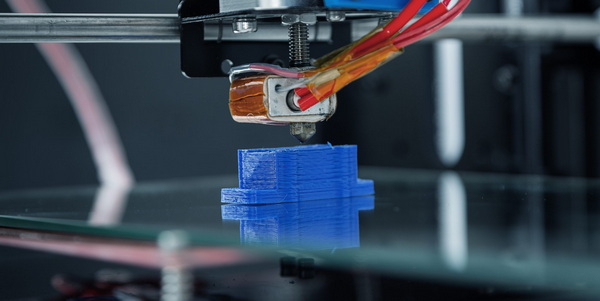
No. Rapid Prototyping is useful from early concept design through detailed engineering and even into pre-production stages. In later phases, it helps validate tolerances, materials, assembly, and performance before finalizing tooling and process settings.[3][6][8][9]
Rapid Prototyping generates physical parts that manufacturing engineers can review to identify features that are difficult, expensive, or unstable to produce. Feedback from these prototypes leads to design modifications that simplify processes, reduce cost, and improve consistency in mass production.[8][9][11][13]
Yes. By using production-like materials and representative geometries, Rapid Prototyping can produce parts for preliminary regulatory tests and internal qualification. This early testing highlights potential issues before final certification runs, reducing the risk of costly delays.[4][6][9][8]
Engineers should consider material requirements, functional needs, dimensional accuracy, surface finish, and budget when selecting a Rapid Prototyping process. They also need to think about how closely the prototype must match final production conditions to provide meaningful test results.[2][10][13][8]
Rapid Prototyping allows international OEM partners to review physical samples quickly, refine specifications, and align expectations with their manufacturing factory before mass production. Shorter feedback loops, clearer communication, and shared understanding of physical prototypes lead to smoother, more reliable long-term cooperation.[10][11][13]
[1](https://en.wikipedia.org/wiki/Rapid_prototyping)
[2](https://www.autodesk.com/solutions/rapid-prototyping)
[3](https://www.productplan.com/glossary/rapid-prototyping/)
[4](https://www.propelsoftware.com/glossary/rapid-prototyping)
[5](https://formlabs.com/blog/ultimate-guide-to-rapid-prototyping/)
[6](https://www.stratasys.com/en/resources/blog/key-advantages-of-rapid-prototyping/)
[7](https://parts-badger.com/top-7-benefits-of-rapid-prototyping/)
[8](https://www.fictiv.com/articles/rapid-prototyping-guide)
[9](https://www.monarch-innovation.com/rapid-prototyping-in-product-development)
[10](https://www.xometry.com/rapid-prototyping-service/)
[11](https://www.rapid-protos.com/services/)
[12](https://www.pcbway.com/rapid-prototyping/3d-printing/)
[13](https://www.protolabs.com)
[14](https://www.geeksforgeeks.org/software-engineering/what-is-rapid-prototyping/)

