
Views: 222 Author: Amanda Publish Time: 2026-01-10 Origin: Site


Content Menu
● What Rapid Prototyping Means Today
● Is It a Real Engineering Role?
● Core Responsibilities of a Rapid Prototyping Engineer
● How Rapid Prototyping Connects Design and Manufacturing
● Key Technologies in Rapid Prototyping
>> 3D Printing in Rapid Prototyping
>> CNC Machining for Rapid Prototyping
>> Sheet Metal and Rapid Molding
● Rapid Prototyping Across the Product Lifecycle
● Why OEMs and Global Brands Rely on Rapid Prototyping
● The Role of OEM‑Focused Rapid Prototyping Factories
● Engineering Skills That Make Rapid Prototyping Effective
● How Rapid Prototyping Reduces Risk and Cost
● Career Growth and Future Trends in Rapid Prototyping
● FAQ About Rapid Prototyping Engineering
>> 1. What does a Rapid Prototyping Engineer actually do?
>> 2. What skills are required for Rapid Prototyping roles?
>> 3. How is Rapid Prototyping different from traditional prototyping?
>> 4. Which industries hire Rapid Prototyping Engineers?
>> 5. Is Rapid Prototyping a good long‑term career path?
Rapid Prototyping is absolutely a real engineering role that combines design, manufacturing, and problem‑solving to turn ideas into testable parts at high speed. It has become a core function in modern product development, not just a “nice‑to‑have” side task.
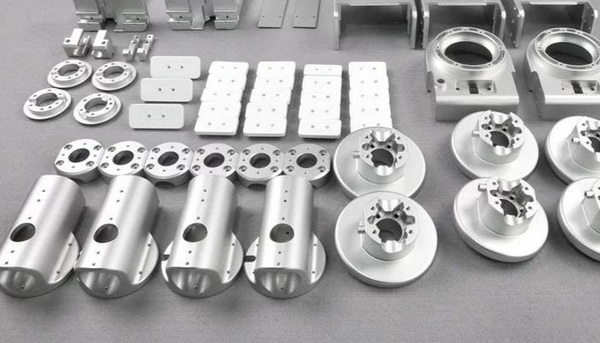
Rapid Prototyping is the engineering practice of quickly turning digital product concepts into physical prototypes using technologies like 3D printing, CNC machining, sheet metal fabrication, and rapid molding. Instead of waiting weeks or months for traditional tooling, Rapid Prototyping compresses that cycle into days so teams can test, iterate, and improve designs with minimal delay.
In many OEM and manufacturing organizations, Rapid Prototyping is now a defined job title such as “Rapid Prototyping Engineer” or “Rapid Prototyping Specialist,” with dedicated responsibilities and performance metrics. These roles sit at the intersection of product design, R&D, manufacturing engineering, and sometimes even marketing or industrial design.
Yes, Rapid Prototyping is recognized as a formal engineering role across industries such as consumer electronics, automotive, aerospace, medical devices, and industrial equipment. Job descriptions for Rapid Prototyping Engineers typically require an engineering degree or equivalent technical background, CAD proficiency, and hands‑on experience with multiple rapid manufacturing processes.
These engineers are expected to select suitable materials, processes, and tolerances; run tests; document results; and collaborate with design and production teams to improve final products. That combination of analytical design skills and practical manufacturing knowledge makes Rapid Prototyping an engineering role, not just a technician or “lab helper” position.
A Rapid Prototyping Engineer's work usually spans the full prototype life cycle from CAD to functional testing. Typical responsibilities include:
- Interpreting product requirements and converting them into 3D CAD models ready for manufacturing.
- Choosing the most appropriate Rapid Prototyping process (3D printing, CNC machining, CNC turning, sheet metal, or rapid injection molding) based on cost, speed, and performance.
- Preparing and optimizing CAD files for each process, including wall thickness, draft angles, tolerances, and support strategies.
- Managing prototype builds, including machine setup, parameter selection, scheduling, and quality checks.
- Testing prototypes for fit, form, and function, then feeding structured feedback to design engineers and project managers.
- Collaborating with suppliers, OEM partners, and in‑house manufacturing teams to transition from Rapid Prototyping to low‑volume or mass production.
In many companies, Rapid Prototyping Engineers also maintain equipment, standardize workflows, and develop internal guidelines for selecting processes and materials. They increasingly participate in early design reviews so that manufacturability problems are prevented rather than corrected later.
Rapid Prototyping acts as a bridge between design teams and production lines. Early in development, designers need physical parts to validate ergonomics, assembly, and aesthetics, while manufacturing teams need to understand whether a concept can be produced reliably and repeatedly.
By using Rapid Prototyping, engineers can:
- Validate form and fit using 3D printed or CNC‑machined parts before committing to expensive tooling.
- Simulate production materials using rapid CNC machining, sheet metal prototyping, or quick‑turn molding so that mechanical performance is realistic.
- Explore multiple design variants in parallel, reducing design risk and uncovering manufacturability issues earlier.
This role also helps OEM customers and brand owners visualize concepts and align cross‑functional teams faster, which is crucial for competitive product launches. Rapid Prototyping outcomes often guide decisions about which concepts move forward, which are revised, and which are dropped.
3D printing is often the first choice in Rapid Prototyping because it enables fast, low‑cost parts with complex geometries and minimal setup. Common processes include SLS, MJF, SLA, and FDM, each with different strengths in surface finish, detail resolution, and mechanical properties.
SLA, for example, produces highly detailed and smooth prototypes ideal for visual models and clear parts, while SLS and MJF are used for more functional, mechanically loaded components. FDM offers cost‑effective, larger prototypes in engineering‑grade thermoplastics, making it valuable for early functional trials and assembly checks.
In an OEM‑oriented Rapid Prototyping factory, 3D printing often serves as the first iteration tool to validate concepts before moving to CNC machining, sheet metal, or molding. This staged approach enables a balance between speed and realism: quick plastic models first, then more robust prototypes in production‑like materials.
CNC machining is a critical Rapid Prototyping method when parts must be evaluated in their final metal or plastic production materials. Engineers use CNC milling and CNC turning to generate tight‑tolerance prototypes that behave almost identically to final production components.
Although CNC machining requires more setup and programming compared with 3D printing, it provides superior dimensional accuracy and surface quality for many applications. This makes it ideal for precision housings, fixtures, mechanical linkages, and test rigs that must withstand real‑world loads and environments.
CNC machining in Rapid Prototyping is also important for validating manufacturability. When a part is successfully machined in a rapid setting, the engineering team gains confidence that large‑scale CNC or tooling‑based production will be feasible with minimal design changes.
For rotational components such as shafts, bushings, rings, and cylindrical housings, CNC turning is a core Rapid Prototyping process. CNC lathes can quickly produce accurate round parts in metals and plastics, allowing engineers to test fit with bearings, seals, and mating components.
Rapid Prototyping using CNC turning is especially useful in automotive and industrial machinery projects where concentricity, run‑out, and precise diameters are critical. In a rapid environment, turning specialists work closely with design engineers to tweak geometries, corner radii, and tolerances until the part performs correctly in assemblies.
Sheet metal Rapid Prototyping is widely used for brackets, enclosures, chassis, and structural frames that will ultimately be made from metal. With modern laser cutting, bending, and forming equipment, sheet metal prototypes can be produced in days, allowing for multiple design iterations before committing to production tooling.
Rapid injection molding and modular tooling systems give OEMs access to near‑production parts at lower upfront tool costs and shorter lead times. This “bridge” Rapid Prototyping stage is crucial when teams need hundreds or thousands of parts for extended testing while high‑cavitation production molds are still under construction.
As Rapid Prototyping capabilities mature, factories that support both sheet metal and rapid mold making can deliver complete assemblies: metal frames, plastic covers, and internal mounting features all produced with short‑run methods. This integrated approach makes the Rapid Prototyping role even more central to project success.
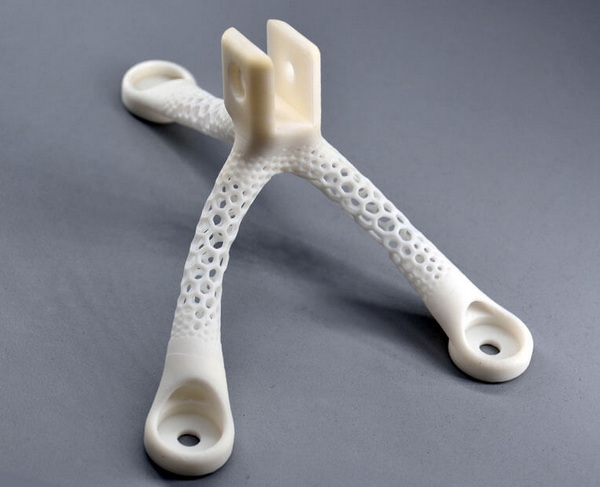
Rapid Prototyping is not limited to early “concept” phases; it now appears at multiple points in the product lifecycle. Teams use Rapid Prototyping to:
- Build early concept models for internal alignment and stakeholder presentations.
- Produce ergonomic samples for user testing in marketing and human‑factors studies.
- Manufacture functional engineering prototypes for mechanical, electrical, and environmental testing.
- Support design verification and validation with near‑production prototypes in realistic materials.
- Create pilot‑run components and fixtures to prepare production lines and assembly operations.
Because Rapid Prototyping touches so many stages, engineers involved in this work often become key advisors on design decisions, risk assessments, and launch timing. Their feedback on process constraints, material behavior, and assembly performance directly influences the final product architecture.
OEMs, brand owners, and international wholesalers use Rapid Prototyping services to reduce time‑to‑market and development cost while controlling technical risk. Working with specialized Rapid Prototyping factories that offer CNC machining, CNC turning, sheet metal fabrication, 3D printing, and mold making allows them to consolidate suppliers and simplify project management.
These Rapid Prototyping partners can produce everything from one‑off experimental parts to low‑volume batches that support pilot runs, user testing, and initial marketing. Because this work requires interpreting engineering drawings, holding tight tolerances, and meeting OEM material standards, it clearly belongs in the engineering domain.
For overseas OEM customers, Rapid Prototyping factories in manufacturing hubs can provide not only engineering support but also logistics advantages. Parts can move directly from Rapid Prototyping into small‑batch production in the same facility, avoiding delays or quality risk caused by switching suppliers mid‑project.
OEM‑focused Rapid Prototyping factories integrate multiple processes under one roof: 3D printing, CNC machining, CNC turning, sheet metal, and mold making. This multi‑process capability allows Rapid Prototyping engineers to select the ideal route for each part without being limited by a single technology.
An OEM customer might start with plastic Rapid Prototyping via 3D printing to check appearance, move to CNC machining in aluminum for functional testing, then proceed to rapid injection molding for small‑batch validation. The factory's engineering team guides each step, ensuring dimensions, materials, and finishes remain consistent with eventual mass production.
Such factories typically organize teams around dedicated project engineers who own the entire Rapid Prototyping flow for each customer. These engineers coordinate DFM (Design for Manufacturing) feedback, process selection, cost estimation, schedule planning, and quality documentation, turning Rapid Prototyping into a complete engineering service rather than a basic part‑making task.
To perform at a high level, Rapid Prototyping engineers cultivate a wide range of technical and soft skills:
- Strong 3D CAD modeling capabilities for parametric modeling and quick iteration.
- Understanding of mechanical principles such as stiffness, strength, tolerances, and thermal effects.
- Knowledge of rapid manufacturing processes, including design limits for 3D printing, CNC machining, turning, sheet metal, and molding.
- Ability to select suitable materials and surface treatments for both prototypes and production‑like samples.
- Competence in measurement and inspection methods, from calipers and gauges to CMM and optical systems.
- Communication skills for working with designers, suppliers, and non‑technical stakeholders.
Because Rapid Prototyping is inherently iterative, engineers in this area must be comfortable with change. They often revise designs daily, respond to feedback from testing teams, and adjust manufacturing plans in real time based on what prototypes reveal.
A major reason Rapid Prototyping has become a recognized engineering role is its impact on risk reduction and cost control. When prototypes are produced late or infrequently, design flaws may only appear after production tools are built, making changes expensive and time‑consuming.
Rapid Prototyping dramatically changes this pattern by enabling:
- Early detection of design issues such as interference, misalignment, or assembly difficulty.
- Real‑world testing of mechanical performance, heat dissipation, sealing, and durability before committing to tooling.
- Data‑driven optimizations of wall thickness, ribbing, fillets, and tolerances that improve both performance and manufacturability.
In many organizations, Rapid Prototyping engineers present test data and lessons learned to design and production teams, influencing material choices, structural concepts, and even product architecture. The small cost of multiple Rapid Prototyping cycles is offset by massive savings during the tooling and mass‑production stages.
The demand for Rapid Prototyping Engineers continues to grow as businesses adopt digital manufacturing and seek faster innovation cycles. Many organizations now treat Rapid Prototyping as a strategic capability, investing in dedicated labs, hybrid workshops, and in‑house or outsourced engineering teams.
Engineers in this field often progress into roles such as product development engineer, manufacturing engineer, R&D engineer, or technical project manager, depending on their interests. The combination of hands‑on process knowledge and big‑picture design understanding makes Rapid Prototyping experience highly valuable in modern engineering careers.
Future trends suggest that Rapid Prototyping will become even more integrated with simulation, automation, and smart factories. Cloud‑based CAD, AI‑assisted design, and automated quoting and scheduling systems are already shortening the time between idea and physical part. In this context, Rapid Prototyping engineers will not only run machines but also manage data, workflows, and digital twins of products and processes.
Rapid Prototyping is not only a real engineering role; it has become a central element of modern product development and manufacturing strategies. By combining CAD skills, process knowledge, and practical testing, Rapid Prototyping Engineers reduce risk, accelerate innovation, and create a tangible link between design studios and production floors.
As global OEMs, brand owners, and manufacturers push for shorter lead times and more frequent product updates, the importance of Rapid Prototyping and the engineers behind it will continue to increase. For anyone with an interest in hands‑on engineering, digital manufacturing, and real‑world problem‑solving, Rapid Prototyping offers a dynamic, impactful, and long‑term career path.
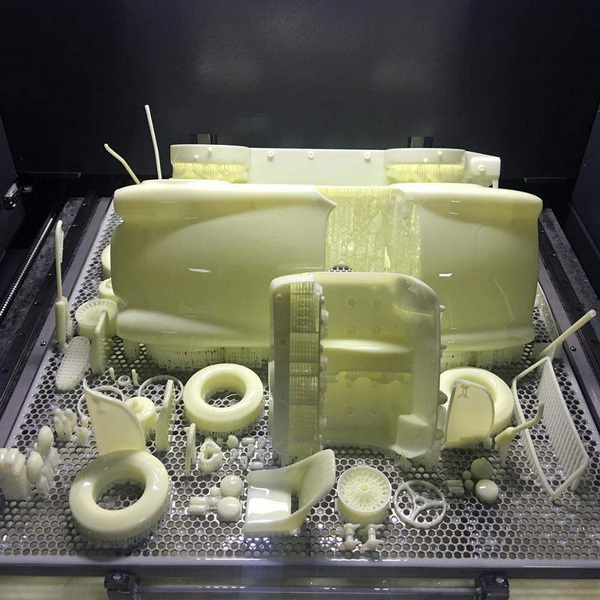
A Rapid Prototyping Engineer designs, fabricates, and tests prototypes using tools like 3D printers, CNC machines, CNC turning centers, sheet metal equipment, and rapid molding systems. The goal is to quickly create functional parts so that design teams can validate performance, assembly, and user experience before full‑scale production.
Key skills include proficiency in 3D CAD, understanding of mechanical design, and hands‑on experience with Rapid Prototyping processes such as 3D printing, CNC machining, CNC turning, and sheet metal fabrication. Problem‑solving, communication with design and manufacturing teams, and the ability to interpret and optimize technical drawings are also essential.
Rapid Prototyping uses digital workflows and flexible manufacturing technologies to create parts much faster and often at lower cost than traditional tooling‑based approaches. Instead of building dedicated molds or fixtures first, engineers work directly from CAD data to produce prototypes in days, enabling multiple design iterations before committing to expensive tools.
Industries such as automotive, aerospace, consumer electronics, medical devices, industrial machinery, and specialized OEM manufacturing frequently employ Rapid Prototyping engineers. Many OEMs and specialized manufacturing partners maintain in‑house Rapid Prototyping teams or collaborate closely with external rapid manufacturing factories to support global product lines.
Yes, Rapid Prototyping is a strong long‑term path because companies increasingly rely on fast iteration and digital manufacturing to stay competitive. Experience in Rapid Prototyping can lead to roles in product development, R&D, manufacturing engineering, operations, and technical management, and it builds a versatile foundation in both design and production.

