


Content Menu
● Core CNC Machining Processes
>> CNC Milling
>> CNC Turning (Lathe Machining)
● Is CNC Machining Really Hard?
● The Learning Curve of CNC Machining
>> For Operators and Machinists
>> For Engineers and Designers
● How CNC Machining Works Step by Step
● Skills That Make CNC Machining Easier
>> Material and Tooling Knowledge
● Modern Technologies That Reduce Difficulty
● CNC Machining vs. 3D Printing: Which Is Harder?
● Why Outsourcing CNC Machining Simplifies Everything
● How Shangchen Uses CNC Machining in Integrated Manufacturing
● Reducing CNC Machining Cost Without Sacrificing Quality
● When CNC Machining Is the Best Choice
● Working With a CNC Machining Factory: What Information You Need
● FAQ
>> 1. Is CNC machining suitable for both prototypes and mass production?
>> 2. What types of tolerances can CNC machining achieve?
>> 3. How do I know if my design is suitable for CNC machining?
>> 4. Can CNC machining handle complex 3D shapes?
>> 5. Why should overseas OEM brands choose a Chinese CNC machining partner?
CNC machining is often seen as intimidating, but in reality, it is a structured, logical manufacturing process that becomes manageable once the fundamentals are understood. For many engineers, product designers, and brand owners, the real challenge is not operating the machines personally, but choosing the right CNC machining partner and understanding how the process impacts quality, cost, and lead time.
For OEM brands, wholesalers, and manufacturers working with a professional factory like Shangchen (sc-rapidmanufacturing.com), CNC machining becomes far less “hard” because experienced engineers, advanced machines, and proven workflows handle the complexity behind the scenes.
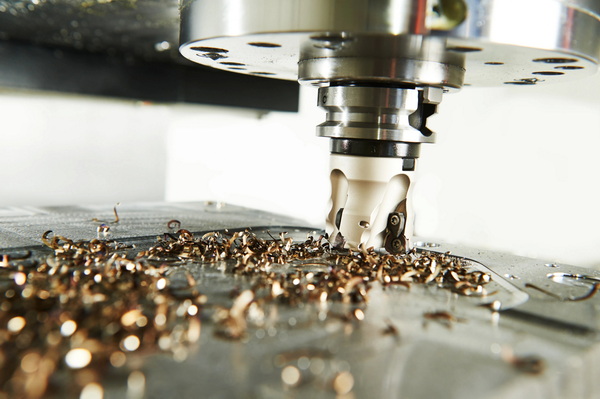
CNC machining (Computer Numerical Control machining) is a subtractive manufacturing process in which cutting tools controlled by a computer remove material from a solid block (or billet) to produce a finished part. The machine follows a programmed toolpath, allowing precise control over dimensions, shapes, and surface finishes.
In typical CNC machining projects, the workpiece can be metal, plastic, or composite, and it is fixed to a machine bed or chuck while rotating tools cut, drill, or mill material away according to numerical instructions.
CNC milling uses a rotating cutting tool and a stationary (or partially moving) workpiece to create complex 2D and 3D shapes. The machine moves in multiple axes (commonly three, plus possible additional rotational axes), enabling pockets, slots, contours, and detailed surface features.
CNC milling is widely used for housings, brackets, fixtures, precision plates, and high-detail prototypes that require tight tolerances and good surface finish.
CNC turning involves a rotating workpiece and a stationary or moving cutting tool that removes material from the outer diameter (or sometimes internal diameter) of the part. This method is ideal for cylindrical components such as shafts, bushings, sleeves, and threaded parts.
Lathe-based CNC machining excels at producing round parts with high concentricity and consistent diameters across small or large batches.
Beyond basic 3-axis machining, 4-axis and 5-axis CNC machining introduce additional rotational axes that allow the tool and workpiece to tilt or rotate. This significantly reduces setups and enables the production of very complex geometries.
Multi-axis CNC machining is especially attractive for aerospace, medical, and high-performance industrial components where organic shapes, undercuts, and compound angles are common.
From a technical perspective, CNC machining can be demanding because it sits at the intersection of mechanical engineering, materials science, and digital programming. Newcomers must understand how machine tools, cutting conditions, and software interact to produce a stable, accurate process.
However, for businesses that outsource to a qualified CNC machining factory, the difficulty mainly lies in communicating requirements clearly: material, tolerances, surface finish, quantity, and delivery time. The right partner converts these requirements into a robust machining solution.
For someone learning to operate CNC machines, these areas form the main learning curve:
- Understanding machine components and basic maintenance.
- Reading engineering drawings and tolerances.
- Setting up tools, fixtures, and work offsets.
- Adjusting feeds, speeds, and coolant to prevent tool breakage or poor finishes.
With professional training and practice, basic operation can be learned in months, while advanced multi-axis machining and optimization often take years of experience.
Engineers and product designers face a different challenge: designing parts that are manufacturable with CNC machining. They must understand:
- Minimum wall thicknesses and feature sizes that can be machined reliably.
- Preferred radii, chamfers, and hole sizes that reduce tool stress.
- How to balance geometric complexity with cost and lead time.
Good Design for Manufacturability (DFM) practices help reduce machining difficulty while preserving function and aesthetics.
A typical CNC machining workflow includes:
1. Designing the part
- A 3D CAD model is created with all critical dimensions and tolerances.
- Material, surface finish, and special requirements are defined.
2. Programming with CAM software
- CAM software converts the 3D model into toolpaths and generates G-code.
- Cutting tools, spindle speeds, and feed rates are selected based on material and geometry.
3. Machine setup
- The machinist mounts the workpiece using appropriate fixturing or vices.
- Tools are installed, lengths and diameters are measured, and coordinate systems are set.
4. Machining the part
- The CNC machine executes the program, removing material in roughing and finishing passes.
- The operator monitors for vibration, tool wear, chip evacuation, and temperature.
5. Inspection and post-processing
- The finished part is measured with calipers, micrometers, CMMs, or gauges.
- Deburring, surface treatments, or coating may follow as required.
Several core skills significantly reduce the perceived difficulty of CNC machining:
- Strong understanding of geometry and spatial visualization for interpreting 3D models.
- Familiarity with G-code and CAM systems to adjust toolpaths quickly.
- Knowledge of machine capabilities (travel limits, spindle power, tooling options).
With these capabilities, machinists and engineers can diagnose problems faster and refine processes effectively.
CNC machining is heavily influenced by the behavior of materials and cutting tools:
- Harder materials (like stainless steel or titanium) need lower speeds but higher rigidity and robust tooling.
- Softer metals (like aluminum) allow higher cutting speeds but produce long chips that must be evacuated properly.
- Engineering plastics require special attention to heat buildup and deformation.
Choosing the correct tool geometry, coating, and cutting parameters is crucial to prevent chatter, tool breakage, and dimensional inaccuracies.
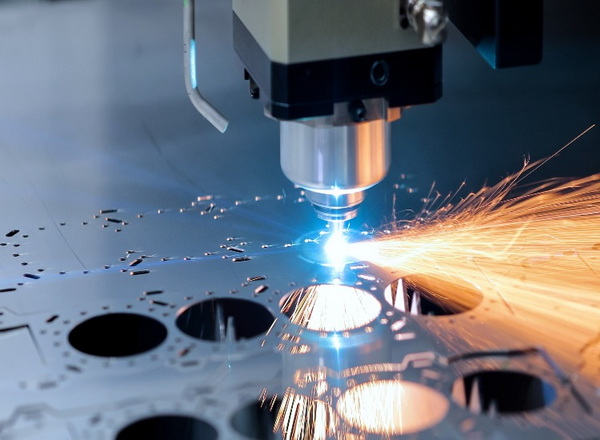
CNC machining is far less “hard” today than it was decades ago, thanks to digital tools and smarter equipment:
- Intuitive CNC controls with graphical interfaces reduce the reliance on raw G-code editing.
- CAM automation suggests toolpaths and machining strategies optimized for different materials and geometries.
- Simulation and verification allow virtual test runs, detecting collisions, gouging, or over-travel before physical cutting.
- Probing systems inside the machine automatically detect work offsets and measure parts during or after machining.
These technologies help ensure that the CNC machining process is more predictable, faster to set up, and easier to train new staff on.
Both CNC machining and 3D printing are powerful manufacturing technologies, but they behave very differently:
- CNC machining removes material; 3D printing adds material layer by layer.
- CNC machining often achieves better tolerances, surface finishes, and material properties for structural parts.
- 3D printing excels at complex internal geometries, one-off prototypes, and lightweight structures.
From a process-control perspective, CNC machining involves more variables—tool selection, coolant, rigidity, workholding—making it more complex to optimize. However, once a stable CNC machining process is established, it remains highly repeatable and scalable, especially for batch production.
CNC machining is central to many industries due to its combination of precision and flexibility:
- Aerospace – turbine components, brackets, housings, structural parts.
- Automotive – engine parts, transmission housings, custom aftermarket components.
- Medical – surgical tools, implants, orthopedic fixtures.
- Electronics – device enclosures, heat sinks, connector housings.
- Industrial equipment – gears, shafts, jigs, fixtures, and high-strength machine parts.
Factories that combine CNC machining with sheet metal fabrication, rapid prototyping, 3D printing, and mold production can support customers from early development through full-scale production.
From the perspective of a foreign brand owner or manufacturer, CNC machining becomes much easier when handled by a specialized factory. Instead of hiring in-house machinists, buying machines, and learning complex workflows, businesses can:
- Share CAD files, specifications, and quantities with a CNC machining supplier.
- Review DFM feedback to adjust designs for cost-effective machining.
- Rely on the supplier's process engineers to design fixtures, choose CNC machines, and define cutting parameters.
A professional partner like Shangchen manages everything from rapid prototypes to precision batch production, delivering ready-to-use parts that meet international standards and OEM requirements.
Shangchen is not only a CNC machining provider but also a comprehensive manufacturing partner offering:
- Rapid prototyping with CNC machining and 3D printing for fast design validation.
- CNC milling and turning for high-precision metal and plastic components.
- Sheet metal fabrication for enclosures, brackets, and frames.
- Mold manufacturing for injection molding and die-casting projects.
By integrating CNC machining into this broader ecosystem, Shangchen helps overseas clients move smoothly from idea to mass production without changing suppliers at each phase.
CNC machining does not have to be expensive if parts are designed and sourced intelligently. Some practical strategies include:
- Simplifying geometries where possible to reduce tool changes and setups.
- Using standard hole sizes, radii, and thread specifications that match common tool dimensions.
- Grouping similar parts or features to reduce machine setup time across batches.
- Selecting materials that balance performance with machinability, such as using well-known aluminum grades for prototypes.
An experienced CNC machining factory can suggest cost-saving modifications while preserving critical features, tolerances, and strength.
Although other processes exist (casting, stamping, 3D printing, molding), CNC machining is often the best choice when:
- You need tight tolerances and consistent dimensions.
- Production quantities are small to medium, or you require iterative design changes.
- Material properties (strength, temperature resistance, chemical resistance) are critical.
- Surface quality and mechanical performance are more important than simply achieving a complex shape.
CNC machining also serves as an excellent bridge between early prototypes and later volume production using molds or other specialized tooling.
To make CNC machining projects smoother and less “hard” for both client and supplier, it helps to provide:
- 3D CAD files (STEP, IGES, etc.) and 2D drawings with tolerances.
- Material specifications, including alternatives if flexibility is possible.
- Surface finish requirements (e.g., anodizing, powder coating, polishing).
- Expected quantities, batch sizes, and delivery timelines.
- Any special requirements such as inspection reports, certificates, or functional testing.
This information enables accurate quotations, realistic lead times, and a CNC machining process optimized for both performance and cost.
CNC machining may appear hard because it involves advanced machines, complex programming, and detailed knowledge of materials and tooling. In practice, its difficulty is significantly reduced by modern CAM software, intelligent controls, and the expertise of experienced machinists and process engineers.
For designers, brand owners, and manufacturers, the key is not to master every technical detail of CNC machining personally, but to understand what the process can do and how to communicate requirements effectively. By collaborating with a professional partner like Shangchen, CNC machining becomes a powerful, reliable, and accessible tool for rapid prototyping, precision parts, and scalable OEM production.

Yes. CNC machining is highly suitable for prototypes because it does not require expensive molds and can quickly produce accurate functional parts. For mass production, well-optimized CNC machining processes and fixtures provide consistent quality and repeatability across large batches.
CNC machining can reach very tight tolerances, often in the range of a few hundredths of a millimeter when required and when the design, material, and setup allow. Actual achievable tolerances depend on the machine, tooling, workholding, and part geometry, so it is important to specify which features are critical.
A design is suitable for CNC machining if its features can be reached by cutting tools and its dimensions fit within the working envelope of standard machines. If you are unsure, sending CAD files to a CNC machining factory for DFM review is the best way to confirm machinability and receive improvement suggestions.
Yes. With modern multi-axis CNC machining, very complex 3D surfaces, contours, and organic shapes can be produced with high precision. The main considerations are tool access, machine capability, and whether the chosen material can be machined efficiently to those shapes.
A Chinese CNC machining partner often offers a strong combination of competitive pricing, advanced equipment, and experienced engineering support. For overseas OEM brands, this means access to high-quality parts, flexible production capacity, and integrated services such as rapid prototyping, batch manufacturing, and mold production through a single source.
[1](https://gab.wallawalla.edu/~ralph.stirling/classes/engr480/examples/nvx/NVX/Helpful%20Docs/CNC_Machining_The_Complete_Engineering_Guide.pdf)
[2](https://www.fictiv.com/articles/the-ultimate-guide-to-cnc-machining)
[3](https://jlccnc.com/help/article/CNC-Machining-Design-Guideline)
[4](https://academy.titansofcnc.com/files/Fundamentals_of_CNC_Machining.pdf)
[5](https://www.cnccookbook.com/what-is-cnc-machining-and-cnc-machines/)
[6](https://www.xometry.com/resources/machining/parts-of-a-cnc-machine/)
[7](https://geomiq.com/cnc-machining-guide/)
[8](https://sybridge.com/ultimate-cnc-machining-guide/)
[9](https://www.cadrex.com/cnc-machining-starter-guide)

