
Views: 222 Author: Amanda Publish Time: 2026-01-10 Origin: Site


Content Menu
● Understanding Rapid Prototyping
● What Is Additive Manufacturing?
● Rapid Prototyping vs Additive Manufacturing
● Core Goals of Rapid Prototyping
● Key Rapid Prototyping Technologies
● Additive Manufacturing for Concept Rapid Prototyping
● Functional Rapid Prototyping and Engineering Validation
● Bridging Rapid Prototyping to Short-Run Production
● Benefits of Additive Manufacturing in Rapid Prototyping
● Where CNC Machining Leads Rapid Prototyping
● Sheet Metal and Rapid Prototyping for Structural Parts
● Rapid Prototyping with Molding and Tooling
● Digital Workflow and Data in Rapid Prototyping
● Rapid Prototyping for OEMs, Brands, and Wholesalers
● How Rapid Prototyping Reduces Overall Risk
● The Future of Rapid Prototyping and Additive Manufacturing
● FAQs About Additive Manufacturing and Rapid Prototyping
>> 1. Is additive manufacturing just another name for Rapid Prototyping?
>> 2. Why is additive manufacturing so popular for Rapid Prototyping?
>> 3. When should Rapid Prototyping use CNC instead of additive manufacturing?
>> 4. Can Rapid Prototyping support low-volume or bridge production?
>> 5. How does Rapid Prototyping reduce development time and cost?
Additive manufacturing is one of the most important technologies used for Rapid Prototyping, but Rapid Prototyping is a broader approach that also includes CNC machining, sheet metal fabrication, molding, and other methods. In practice, many engineers use additive manufacturing and Rapid Prototyping together to shorten development cycles, validate designs, and bridge the gap to mass production.[1][2]
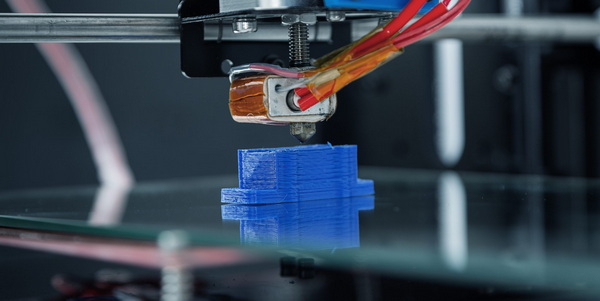
Rapid Prototyping is a group of techniques used to quickly fabricate a scale model or functional part from 3D CAD data so designers can test form, fit, and function before committing to full-scale production. Construction of the prototype in Rapid Prototyping is usually done using 3D printing technologies, but other flexible digital processes such as CNC machining and sheet metal fabrication are also common.[3][1]
- Rapid Prototyping focuses on speed, iteration, and learning, allowing teams to explore multiple design directions without heavy upfront tooling investment.[4]
- The Rapid Prototyping process typically moves from CAD modeling and simulation to fast physical builds that allow engineers to evaluate ergonomics, performance, and manufacturability in parallel.[3]
Additive manufacturing builds parts layer by layer, directly from digital models, using processes often known as 3D printing. Unlike subtractive machining, which removes material from a solid block, additive manufacturing deposits or cures material only where needed, enabling far more geometric freedom and reducing waste.[5][6]
- Common additive technologies used in Rapid Prototyping include SLA, FDM, SLS, and metal 3D printing, each suited to different materials, resolutions, and mechanical properties.[7]
- Because additive manufacturing does not require dedicated molds or dies, engineers can modify CAD files and generate updated Rapid Prototyping builds with minimal delay between iterations.[2]
Rapid Prototyping and additive manufacturing are closely related, but they are not the same concept. Rapid Prototyping refers to the strategy and workflow of quickly producing prototypes, while additive manufacturing is one of the technologies used to implement that strategy.[8][5]
- In practical terms, Rapid Prototyping is the application—fast, iterative prototype creation—and additive manufacturing is a key process that serves this application alongside CNC machining, sheet metal, and molding.[5]
- Many organizations use additive manufacturing primarily for Rapid Prototyping, but the same equipment can also produce jigs, fixtures, tooling inserts, and even end-use parts once designs are validated.[7]
The main goal of Rapid Prototyping is to accelerate learning about the product while minimizing risk, cost, and time. By combining Rapid Prototyping with digital workflows, teams move from concept to validated design in fewer iterations, with each iteration delivering more insight than a purely virtual simulation.[1][4]
- Rapid Prototyping enables early detection of design flaws, assembly issues, and usability problems that would otherwise appear much later, when changes are far more expensive.[1]
- Because Rapid Prototyping allows many small experiments instead of a few large bets, companies can de-risk innovation and still move quickly toward manufacturing readiness.[4]
Modern Rapid Prototyping relies on a toolbox of digital manufacturing methods, rather than a single technology. Selecting the right method for each prototype depends on geometry, material requirements, surface finish, accuracy, and the kind of test that the prototype must withstand.[9][10]
- Additive manufacturing-based Rapid Prototyping is ideal for complex shapes, internal channels, and lightweight structures that would be hard or impossible to machine conventionally.[6]
- CNC machining and turning are widely used in Rapid Prototyping when parts must be made directly from production metals or engineering plastics with tight tolerances and high-quality surfaces.[9]
In the earliest stages of development, teams often use additive manufacturing for concept-level Rapid Prototyping. At this point, speed and design freedom matter more than final mechanical properties or perfect tolerances, making additive methods highly attractive.[11][2]
- Designers can quickly output multiple size variants, shape options, or ergonomic studies using additive Rapid Prototyping and compare them in design reviews or stakeholder meetings.[2]
- Early Rapid Prototyping models help teams communicate ideas across engineering, marketing, industrial design, and management, aligning everyone around a tangible concept instead of abstract renderings.[7]
Once a concept is promising, Rapid Prototyping shifts toward functional testing and engineering validation. In this phase, parts often need to withstand loads, temperature, or environmental conditions similar to real use, so the Rapid Prototyping process may combine additive manufacturing with CNC machining or other processes.[9][1]
- Engineering-focused Rapid Prototyping often uses strong 3D printing materials or even metal additive manufacturing for brackets, housings, and structural components that must be tested under realistic forces.[6]
- To validate interfaces and tolerances, teams may produce mating parts via CNC-based Rapid Prototyping in production-grade materials, then assemble them with additive-manufactured components for complete system testing.[9]
Another crucial role of Rapid Prototyping is to bridge the gap between prototype and mass production. Rather than jumping directly from a small number of additive prototypes to expensive hard tooling, companies often run short batches using Rapid Prototyping methods that closely resemble final manufacturing.[10][12]
- Rapid injection molding and rapid tooling allow small series of molded components, giving early insight into how parts behave when produced using near-final materials and processes.[10]
- Sheet metal Rapid Prototyping can create enclosures, brackets, and structural frames that mirror production parts, enabling full assembly tests and pilot runs before scaling up.[9]
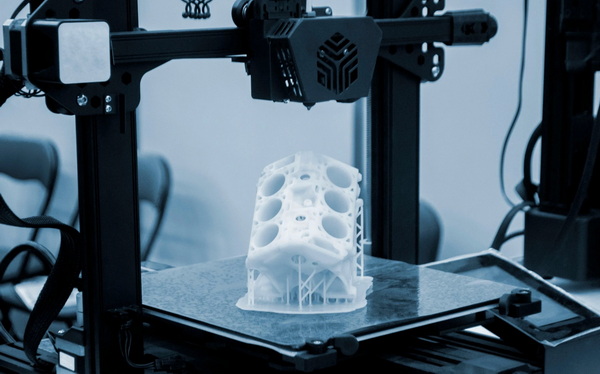
Additive manufacturing has become synonymous with Rapid Prototyping because it concentrates so many advantages in a single technology. In particular, its speed, flexibility, and low setup cost make it an ideal foundation for iterative Rapid Prototyping strategies.[8][11]
- Additive Rapid Prototyping enables overnight iteration, with each new design version requiring only digital changes and minimal operator intervention, dramatically accelerating feedback cycles.[2]
- Because additive manufacturing uses only the material required for each part, it improves material utilization compared with many traditional processes, which supports more sustainable Rapid Prototyping workflows.[6]
Despite the impact of additive manufacturing, CNC machining remains essential for many Rapid Prototyping scenarios. Whenever dimensional accuracy, surface quality, or specific materials are critical, CNC-based Rapid Prototyping can outperform additive solutions.[6][9]
- High-precision components for aerospace, automotive, and industrial equipment often rely on CNC Rapid Prototyping so engineers can tune tolerances and finishes to match real production behavior.[6]
- For certain shapes and volumes, CNC machining can deliver Rapid Prototyping parts faster and more economically than additive manufacturing, especially when multiple identical parts are needed for testing.[13]
Sheet metal fabrication is another pillar of Rapid Prototyping, especially for mechanical structures and enclosures. It offers speed, robustness, and material options that complement both additive and CNC methods in a complete Rapid Prototyping strategy.[10][9]
- Laser cutting, bending, and welding support Rapid Prototyping of brackets, control panels, chassis, and protective housings across industries such as automotive, robotics, and industrial controls.[10]
- Combining sheet metal Rapid Prototyping with additive components allows hybrid assemblies, where structural frames are fabricated from metal while complex interfaces or mounts are produced with 3D printing.[9]
Rapid injection molding and rapid tooling extend Rapid Prototyping into the realm of realistic plastic parts and pilot production. These methods use temporary or soft tooling to produce parts quickly, at a fraction of the cost and lead time of conventional hard tools.[10][9]
- Rapid tooling allows engineers to test gate locations, shrinkage, warpage, and assembly behavior using materials and process parameters similar to full-scale production.[10]
- For many consumer products and industrial housings, a combination of additive Rapid Prototyping for early iterations and rapid molding for final validation offers a fast, low-risk development pathway.[9]
The power of Rapid Prototyping is amplified by fully digital workflows that connect CAD, simulation, manufacturing, and quality feedback. A seamless data flow reduces translation errors, shortens lead times, and makes it easy to run multiple Rapid Prototyping iterations in parallel.[4][7]
- Cloud-based collaboration tools and digital manufacturing platforms allow engineers to request quotes, choose processes, and track Rapid Prototyping orders online, improving transparency and responsiveness.[9]
- As data from each Rapid Prototyping iteration is captured and analyzed, teams can build design rules, material databases, and best practices that improve future projects across the entire product portfolio.[4]
For OEMs, brand owners, wholesalers, and production partners, Rapid Prototyping is a strategic asset rather than just a technical option. It allows organizations to validate new product lines, tailor designs to market feedback, and coordinate with global manufacturing partners more efficiently.[12][9]
- Rapid Prototyping supports custom variants, region-specific features, and quick design updates that help brands stay competitive in fast-moving markets.[9]
- By working with manufacturing partners that can deliver additive manufacturing, CNC machining, sheet metal, and molding under one Rapid Prototyping workflow, companies reduce coordination overhead and accelerate commercialization.[12]
One of the most powerful aspects of Rapid Prototyping is risk reduction at every level of the product lifecycle. Each physical iteration provides concrete evidence about performance, manufacturability, and user experience that cannot be fully captured in simulations alone.[1][4]
- Rapid Prototyping helps detect issues such as interference, misalignment, unexpected vibration, or difficult assembly steps that might otherwise appear only during expensive late-stage testing or ramp-up.[1]
- By uncovering these problems early—and resolving them with updated Rapid Prototyping builds—companies avoid costly rework in tooling, production equipment, and market-facing collateral.[4]
Future developments will further connect additive manufacturing with Rapid Prototyping and production. Increased automation, better process monitoring, and more robust materials will enable additive methods to serve not only prototype needs but also more end-use applications.[8][7]
- As hybrid machines combining additive and subtractive capabilities mature, Rapid Prototyping will increasingly involve single systems that can print, machine, and finish parts in one continuous workflow.[6]
- Coupled with generative design and topology optimization, additive-driven Rapid Prototyping will allow engineers to explore design spaces that were impractical with traditional methods, unlocking lighter, stronger, and more efficient products.[8]
Additive manufacturing is a central enabler of modern Rapid Prototyping, but Rapid Prototyping itself is a broader, process-neutral methodology that combines 3D printing, CNC machining, sheet metal fabrication, rapid molding, and tooling. The most successful teams treat Rapid Prototyping as a strategic capability, using additive manufacturing for fast concept and functional iterations, then complementing it with precision machining and production-like processes to de-risk the transition to mass manufacturing. By integrating these technologies under a unified Rapid Prototyping workflow, companies shorten development cycles, reduce cost and risk, and deliver higher-quality products to market faster than ever before.[5][2][9]
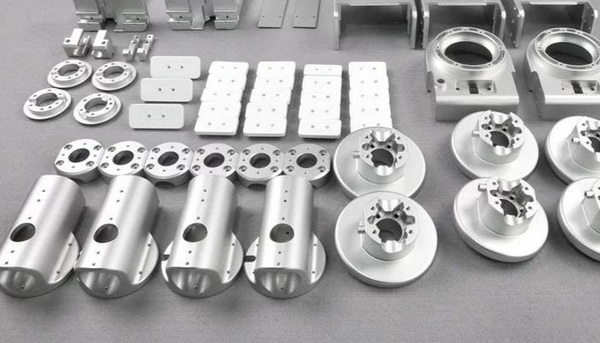
No, additive manufacturing is a manufacturing process, while Rapid Prototyping is the overall practice of quickly producing prototypes using multiple technologies. Additive manufacturing is widely used within Rapid Prototyping, but it sits alongside CNC machining, sheet metal, and molding in a complete Rapid Prototyping toolbox.[5][8]
Additive manufacturing is popular in Rapid Prototyping because it eliminates hard tooling, reduces setup time, and allows almost instant changes from one design iteration to the next. This makes it ideal for early-stage concept validation and for exploring complex geometries without being limited by traditional manufacturing constraints.[11][2]
Rapid Prototyping should use CNC machining or turning when parts require tight tolerances, high surface quality, or specific metals and engineering plastics that are difficult to print. For prototypes that must behave almost identically to production components, CNC-based Rapid Prototyping can provide more representative results than standard 3D printing.[6][9]
Yes, Rapid Prototyping is frequently used for low-volume and bridge production through CNC machining, sheet metal fabrication, rapid injection molding, and sometimes direct additive manufacturing of end-use parts. These small batches help validate manufacturing assumptions and market response before large investments in full-scale tooling and automation.[12][10]
Rapid Prototyping reduces development time and cost by enabling frequent, low-risk iterations that catch design and manufacturing problems early. By combining additive manufacturing with CNC, sheet metal, and molding, companies can move from idea to verified design in fewer cycles, with less rework and lower tooling investment.[1][4]
[1](https://www.twi-global.com/technical-knowledge/faqs/faq-manufacturing-what-is-rapid-prototyping)
[2](https://www.makerverse.com/resources/insights-and-trends/the-guide-to-rapid-prototyping-with-additive-manufacturing/)
[3](https://en.wikipedia.org/wiki/Rapid_prototyping)
[4](https://www.autodesk.com/solutions/rapid-prototyping)
[5](https://www.tth.com/blog/what-is-the-difference-between-3d-printing-additive-manufacturing-and-rapid-prototyping)
[6](https://watry.com/cnc-machining-vs-additive-manufacturing/)
[7](https://www.propelsoftware.com/glossary/rapid-prototyping)
[8](https://wohlersassociates.com/terminology-and-definitions/what-is-rapid-prototyping/)
[9](https://www.norck.com/collections/rapid-prototyping)
[10](https://uptivemfg.com/solutions/rapid-prototyping/)
[11](https://nstxl.org/using-additive-manufacturing-for-rapid-prototyping/)
[12](https://www.xometry.com/rapid-prototyping-service/)
[13](https://www.premiumparts.com/blog/cnc-machining-vs-am-choose-the-right-prototype-method)

