
Views: 222 Author: Amanda Publish Time: 2026-01-10 Origin: Site


Content Menu
● Is 3D Printing the Same as Rapid Prototyping?
● How 3D Printing Enables Rapid Prototyping
● Benefits of 3D Printing for Rapid Prototyping
● Rapid Prototyping vs Traditional Prototyping
● 3D Printing vs CNC in Rapid Prototyping
● Types of 3D Printing Used in Rapid Prototyping
● Applications of Rapid Prototyping With 3D Printing
● Where Rapid Prototyping Fits in Product Development
● The Role of a Full-Service Factory in Rapid Prototyping
● Best Practices for Using 3D Printing in Rapid Prototyping
● Limitations of 3D Printing in Rapid Prototyping
● How Rapid Prototyping Supports OEM and Global Brands
● FAQ About 3D Printing and Rapid Prototyping
>> 1. Is 3D printing always the best Rapid Prototyping method?
>> 2. How fast can Rapid Prototyping deliver parts with 3D printing?
>> 3. What materials are commonly used in Rapid Prototyping with 3D printing?
>> 4. Can Rapid Prototyping with 3D printing produce functional parts?
>> 5. How does Rapid Prototyping reduce project risk for OEMs and brands?
Yes, 3D printing is widely regarded as one of the core technologies used for Rapid Prototyping because it can convert CAD data into physical parts quickly and cost‑effectively. Rapid Prototyping itself is a broader product development strategy that also includes processes such as CNC machining, sheet metal fabrication, and mold-based sample runs.
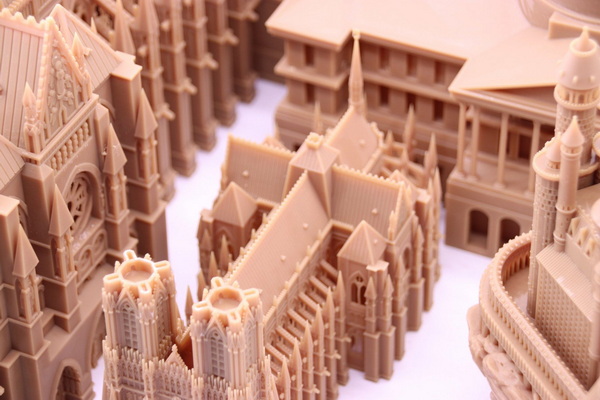
Rapid Prototyping is a group of modern manufacturing techniques used to quickly fabricate a physical model of a part or assembly directly from 3D CAD data. It emphasizes fast iteration and short feedback loops so that engineers and designers can refine concepts before committing to mass production.
- In Rapid Prototyping, models are typically produced in days rather than the weeks or months associated with traditional tooling-based prototyping.
- The goal of Rapid Prototyping is not only to create a prototype but also to support continuous improvement through multiple design cycles.
Rapid Prototyping supports various fidelity levels, from simple proof-of-concept shapes to highly functional models that closely mimic final production parts. It enables validation of form, fit, function, ergonomics, and manufacturability at different stages of product development.
3D printing and Rapid Prototyping are closely connected but not identical. 3D printing refers specifically to additive manufacturing technologies that build parts layer by layer from digital files, while Rapid Prototyping is a methodology that may use several manufacturing processes.
- Many definitions of Rapid Prototyping mention that prototype parts are “usually” made by 3D printing, which shows how central additive manufacturing has become to this workflow.
- However, when a prototype requires tight tolerances, specific metals, or production-grade surfaces, other processes such as CNC machining, sheet metal fabrication, or injection molding may be integrated into the Rapid Prototyping strategy.
In practice, teams often treat 3D printing as the default Rapid Prototyping tool for early design stages, and then shift to additional technologies as they approach pre‑production. This layered approach preserves the flexibility of Rapid Prototyping while improving realism and performance as the design stabilizes.
3D printing enables Rapid Prototyping by converting CAD designs directly into parts without dedicated tooling, molds, or complex fixtures. This digital-to-physical pipeline shortens lead time dramatically and lowers the barrier to frequent design changes.
- Designers can upload a new iteration, adjust wall thickness or internal structures, and generate a revised part in a single build cycle.
- Because the process is additive, there is no need to program toolpaths, prepare stock material, or design custom fixtures before manufacturing can begin.
These characteristics make 3D printing particularly powerful for early-stage Rapid Prototyping, where geometry is still fluid and multiple concepts must be tested. Projects that once required rigid, linear stages can now evolve in parallel, with several prototypes being evaluated simultaneously for ergonomics, visual appeal, and basic functionality.
3D printing amplifies the core advantages of Rapid Prototyping by unlocking speed, flexibility, and design freedom. When applied strategically, it can transform the economics and timing of new product launches.
- Rapid iteration: Teams can print, test, and revise multiple variants within a single week, dramatically increasing the number of validated ideas.
- Cost efficiency: Because no hard tooling is required, changes do not trigger expensive mold modifications or new fixtures, keeping early-stage costs low.
- Complex geometries: Organic shapes, lattice structures, lightweight frameworks, and internal channels are easy to implement, which supports performance-driven Rapid Prototyping.
- Customization and personalization: Designs can be tailored to specific users, markets, or test cases without modifying hardware setups or tooling.
- Reduced time-to-market: Faster design loops mean potential issues are identified sooner, enabling earlier market entry with more refined products.
By combining these benefits, 3D printing helps Rapid Prototyping deliver more insight per iteration, improving decision quality at each gate in the development process. This is especially valuable for overseas brands and OEM customers that need to de-risk complex global launches.
Traditional prototyping methods often rely on manual machining, soft tooling, or even early production tooling, which makes every design change slow and expensive. Rapid Prototyping, by contrast, uses digital workflows and flexible manufacturing to encourage frequent iteration.
- In traditional workflows, building a single prototype might require weeks of tool design, machining, and setup, discouraging multiple design experiments.
- Rapid Prototyping decouples prototype creation from full-scale tooling, allowing teams to test many configurations before committing to a definitive production design.
The mindset shift is as important as the technology. Instead of assuming that the first physical model must be close to final, Rapid Prototyping assumes that prototypes exist to be challenged, modified, and sometimes discarded. This philosophy supports more creative exploration and better long‑term product performance.
3D printing and CNC machining are complementary tools inside a robust Rapid Prototyping strategy. Understanding their strengths helps teams select the right process for each development stage.
- 3D printing is ideal when design flexibility, internal features, or fast turnarounds are crucial and surface finish or tolerances can be refined later.
- CNC machining is better when prototypes must closely match final production properties, especially for metal parts, tight tolerances, and demanding mechanical loads.
Because both technologies are driven from the same CAD data, it is straightforward to move from 3D‑printed Rapid Prototyping to CNC machining once the geometry stabilizes. Early plastic or resin prints might validate ergonomics and assembly, while later CNC prototypes validate real-world durability and thermal behavior.
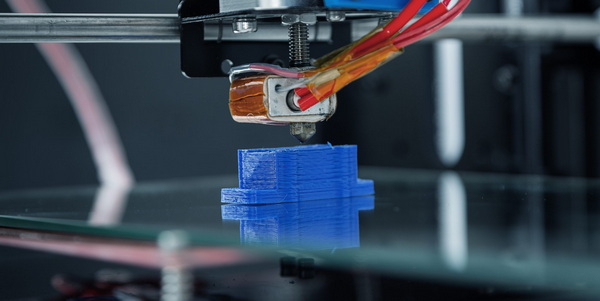
Different 3D printing technologies serve different Rapid Prototyping needs, from visual models to functional engineering parts. Choosing the right process ensures accurate insight from each iteration.
- Fused filament fabrication (FFF/FDM): Commonly used for quick, affordable Rapid Prototyping in engineering plastics, suitable for form and fit tests.
- Stereolithography (SLA): Produces high-resolution surfaces and fine details, ideal for visual models, complex shapes, and small components.
- Selective laser sintering (SLS): Uses powdered materials, often nylon, to create strong functional parts with good mechanical properties and no support structures.
- Metal additive processes: Such as selective laser melting, used when Rapid Prototyping must replicate the performance of metal production parts.
By combining these options, a manufacturing partner can tailor Rapid Prototyping routes to each stage of a project, switching technologies as requirements evolve. This flexibility helps keep both cost and performance aligned with project goals.
Rapid Prototyping with 3D printing appears in almost every manufacturing-driven industry, because the same underlying need exists: de-risk design decisions before large capital investments.
- Automotive: Designers prototype dashboards, brackets, airflow components, and interior trims to validate human factors and vehicle integration.
- Medical and healthcare: Engineers create anatomical models, prosthetic concepts, and device enclosures to evaluate performance and comfort for end users.
- Aerospace: Lightweight structural elements and airflow test components leverage complex internal geometries for optimal strength-to-weight ratios.
- Consumer electronics: Enclosures, bezels, and wearable shells undergo multiple Rapid Prototyping rounds to refine ergonomics and style.
- Robotics and automation: Gears, housings, and sensor mounts are iterated quickly to optimize space usage and ease of assembly.
In each case, Rapid Prototyping with 3D printing compresses design cycles, supports more robust testing, and increases the likelihood of a successful first production run.
Rapid Prototyping is not a single event; it is a continuous thread that runs through the entire product development lifecycle. 3D printing and other digital manufacturing tools are engaged at multiple milestones.
- Concept stage: Simple Rapid Prototyping models validate overall size, ergonomics, and visual identity before detailed engineering.
- Design validation: More refined Rapid Prototyping parts test functions such as snap fits, hinge movements, thermal behavior, and assembly sequences.
- Pre‑production: High-fidelity Rapid Prototyping samples and pilot batches mirror the final production workflow to fine-tune processes and supply chain parameters.
The ability to iterate across these stages using the same base CAD data keeps the design coherent. Each Rapid Prototyping cycle adds knowledge, reduces uncertainty, and pushes the project closer to a robust, manufacturable solution.
A full-service manufacturing factory that integrates Rapid Prototyping with downstream production capabilities offers major advantages for overseas brands and OEM customers. With 3D printing, CNC machining, sheet metal fabrication, lathe turning, and mold making under one roof, projects move more smoothly from initial concept to large-scale production.
- Early-stage Rapid Prototyping can occur rapidly using 3D printing while engineers simultaneously evaluate manufacturability for CNC or molding.
- Once the design stabilizes, the same factory can produce tooling, run small pre‑production batches, and ramp up to mass production with consistent quality.
This continuity reduces communication gaps, avoids handoff delays between separate suppliers, and keeps all project data within a single controlled environment. It also allows manufacturers to offer flexible OEM services: from Rapid Prototyping to precision batch manufacturing and long-term production, tailored to each customer's volume and timing needs.
To extract the full value of 3D printing in Rapid Prototyping, teams should adopt a few practical best practices throughout the design and development process.
- Design for additive manufacturing: Adjust wall thickness, support strategies, and orientation to optimize strength, print time, and surface quality.
- Plan iteration cycles: Instead of one large design leap, schedule multiple Rapid Prototyping sprints with specific validation goals for each batch.
- Combine materials: Use different materials for different prototypes to separate aesthetic, ergonomic, and mechanical testing into focused experiments.
- Integrate measurement and feedback: After each Rapid Prototyping round, capture dimensional data, test results, and user feedback systematically to guide the next cycle.
By treating Rapid Prototyping as a structured, data-driven process, companies can avoid “random” iterations and instead move through a deliberate sequence of informed design decisions. This approach is especially important when coordinating international projects with tight launch schedules.
Although 3D printing is central to many Rapid Prototyping strategies, it is not a perfect solution for every situation. Understanding its limitations helps teams decide when to integrate other processes.
- Material constraints: Not all production materials are available for additive manufacturing, and printed properties may differ from injected or machined materials.
- Surface finish and tolerance: Many 3D printing methods require secondary finishing or machining to reach production-level surfaces and tight tolerances.
- Build volume and throughput: Very large parts or high quantities may be better suited to CNC machining, stamping, or molding once the design stabilizes.
Recognizing these limitations does not diminish the value of Rapid Prototyping with 3D printing; instead, it clarifies where complementary processes such as CNC machining, sheet metal work, and mold-based samples should join the workflow.
For international OEMs, brand owners, and wholesalers, Rapid Prototyping with 3D printing and CNC machining is not only a technical advantage but also a strategic tool. It helps coordinate complex global projects, align teams across regions, and reduce the risk of late-stage surprises.
- Design teams can share CAD data and prototype feedback across borders, using Rapid Prototyping to maintain alignment between headquarters and manufacturing sites.
- Small batches of prototypes and pre‑production samples can be delivered quickly to different markets for localized user testing and regulatory evaluation.
By working with a manufacturing partner experienced in Rapid Prototyping, companies can shorten lead times, improve communication, and bring robust products to market more confidently, even when development and production are separated by thousands of kilometers.
3D printing is a central pillar of modern Rapid Prototyping, delivering fast, flexible, and cost‑effective prototypes directly from digital designs. At the same time, Rapid Prototyping is larger than any single technology and often combines additive manufacturing with CNC machining, sheet metal fabrication, and mold-based sampling to cover every stage from early concept to pre‑production. When product teams and OEM customers treat Rapid Prototyping as a strategic, iterative process—and work with manufacturing partners that offer both 3D printing and traditional processes—they can reduce risk, compress development schedules, and launch better products into global markets.
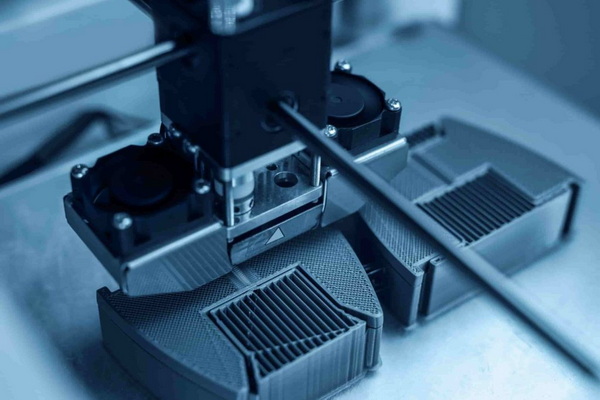
3D printing is often the best Rapid Prototyping choice when speed, complex geometry, and low quantity are the main priorities. For early concept validation, it usually offers the fastest and most economical route from CAD model to physical part. However, when a prototype must mirror final production behavior very closely—especially for high-precision metal parts—CNC machining, casting, or other processes may be more appropriate. Many teams blend 3D printing and CNC machining inside the same Rapid Prototyping plan to capture the advantages of both.
Turnaround time depends on part size, complexity, and finishing requirements, but Rapid Prototyping with 3D printing can often deliver functional parts within a few days of finalizing the CAD design. Simple components may be produced in a single day, while more complex sets that require support removal, surface finishing, and assembly naturally take longer. Compared with tooling-based methods, this still represents a substantial time saving, enabling more design cycles before deadlines.
Rapid Prototyping with 3D printing uses a range of materials, including standard and engineering plastics, photopolymer resins, and, in some processes, metal powders. For concept models, economical plastics are often sufficient to evaluate shape and ergonomics. For functional prototypes, stronger engineering polymers or nylon powders offer better mechanical performance. Metal additive materials are usually reserved for advanced Rapid Prototyping phases where parts must behave very close to final production metal components.
Yes, many Rapid Prototyping parts made by 3D printing are functional enough for assembly tests, limited performance testing, and even short-term use in real environments. Functional prototypes might include working hinges, snap fits, or load‑bearing brackets designed to withstand realistic conditions. Nonetheless, when absolute performance, long-term durability, or strict certification is required, teams often complement 3D‑printed Rapid Prototyping parts with CNC‑machined or molded pieces to fully simulate production-grade behavior.
Rapid Prototyping reduces project risk by exposing design issues early in the development cycle, when changes are relatively inexpensive and easy to implement. Instead of discovering fit or performance problems after production tooling is complete, teams can identify and correct them during multiple prototype rounds. For global OEMs and brands, this means fewer last-minute engineering changes, fewer delays caused by tooling rework, and more predictable launch schedules. Rapid Prototyping also improves communication, because stakeholders across different locations can evaluate the same physical prototypes and align on decisions.

