
Views: 222 Author: Amanda Publish Time: 2025-10-05 Origin: Site


Content Menu
● Key Differences Between Injection Molding and 3D Printing
● When to Choose Injection Molding for Prototyping
● When to Choose 3D Printing for Prototyping
● Design Considerations for Prototyping
● Cost and Time Considerations
● Quality and Material Performance
● Hybrid Approaches in Prototyping
● FAQ
>> 1. What is the main advantage of Injection Molding over 3D Printing for prototyping?
>> 2. Can 3D Printing completely replace Injection Molding?
>> 3. How long does Injection Molded prototyping typically take compared to 3D Printing?
>> 4. Are Injection Molded parts stronger than 3D Printed parts?
>> 5. What design limitations does Injection Molding have compared to 3D Printing?
Prototyping is an essential step in product development, enabling designers and manufacturers to test, refine, and validate their concepts before committing to large-scale production. Two of the most prominent manufacturing processes for prototyping today are Injection Molding and 3D Printing. Each technology offers unique strengths and limitations, and selecting the most suitable one requires a clear understanding of their characteristics, costs, timelines, and design considerations. This article provides an exhaustive comparison of Injection Molding and 3D Printing for prototyping purposes, guiding when to use each method to achieve the best results.

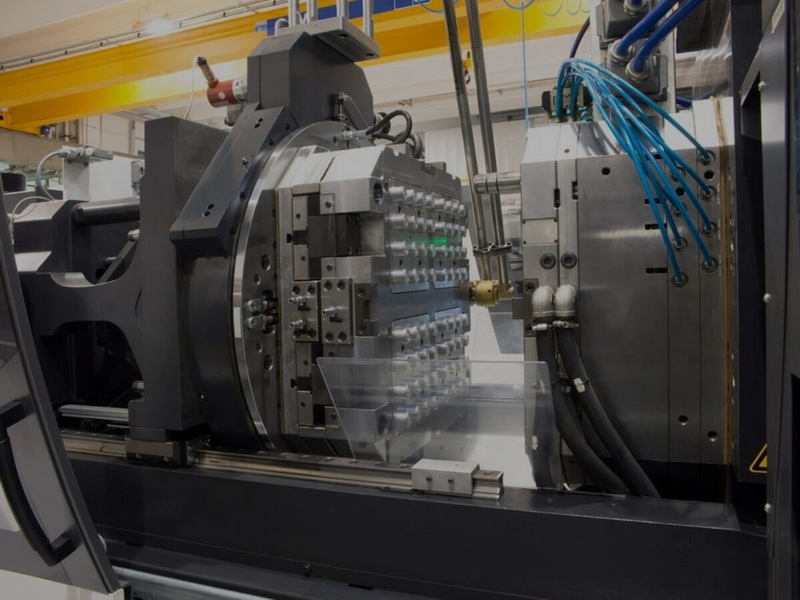
Injection Molding is a manufacturing process used to produce plastic parts by injecting molten material into a custom-built mold. The molten plastic fills the mold cavity, cools, solidifies, and is then ejected as a finished part. This long-established method is highly efficient for producing large volumes of consistent, high-quality parts.
The advantages of Injection Molding include:
- High repeatability and uniformity across parts.
- Excellent surface finishes without excessive post-processing.
- Broad material options, including durable thermoplastics suited for functional prototypes.
- Low per-part cost at high volumes.
However, Injection Molding demands significant upfront investment and time for mold design and fabrication, which may take weeks to complete. Therefore, it is economically viable when producing thousands of parts or when the prototype design is nearly finalized and unlikely to change. The process produces strong, highly accurate parts ideal for testing the form, fit, and function closely resembling final production items.
3D Printing, known as additive manufacturing, creates parts by depositing material layer by layer directly from a CAD design. Unlike Injection Molding, it does not require tooling or molds, enabling rapid production of complex and customized parts with minimal setup time.
3D Printing offers the following benefits:
- Fast turnaround times for prototypes, often within days.
- Capability to manufacture intricate designs, internal channels, and unique geometries easily.
- Cost-effective small batch or one-off parts with no mold investment.
- Flexibility for rapid design changes and iterations during early development stages.
Though 3D printed parts can be created quickly, they typically show visible layer lines and may have lower mechanical strength than Injection Molded parts. Surface finish and material properties vary with printing technology but generally require additional finishing steps for cosmetic or high-performance applications. 3D Printing is thus the preferred method for quick prototyping, design exploration, and small production runs.
| Aspect | Injection Molding | 3D Printing |
| Production Volume | Most cost-effective for 1,000+ units | Best suited for low to medium volume (1–1,000) |
| Lead Time | Mold design and fabrication require weeks | Rapid prototyping possible within days |
| Initial Cost | High setup costs due to mold tooling | Minimal setup costs, no tooling needed |
| Unit Cost | Low per part at scale | Higher per unit cost for larger runs |
| Part Strength | Superior mechanical properties and durability | Generally less strong, depends on method |
| Design Flexibility | Limited by mold design (draft angles, no undercuts) | Unlimited complex geometries and internal structures |
| Surface Finish | Smooth, production-quality finishes | Layered surface; may need post-processing |
The economic, temporal, and design trade-offs between these processes determine the ideal prototyping method depending on the project's requirements.
Injection Molding is typically the most appropriate choice in cases where:
- High Volume Production is Required: The upfront mold costs are justified when amortized over thousands or millions of parts.
- Functional and Durable Prototypes Are Needed: The prototypes must endure real-world mechanical stresses and accurately represent final production materials.
- Consistent Quality and Tight Tolerances Are Essential: Applications demanding fine dimensional precision and excellent surface finishes.
- Wide Material Selection Matters: Injection Molding offers thermoplastics and engineering-grade materials to mimic production parts exactly.
- Design Has Stabilized: The prototype design is firm and unlikely to change significantly, reducing expensive mold iterations.
Although the initial cost and lead time for mold fabrication are high, Injection Molding becomes very economical and efficient for large runs and later-stage prototyping. The resulting parts are highly suitable for final testing phases, bridge tooling, or small-scale production before mass manufacturing.
3D Printing is ideal for prototyping when:
- Rapid Design Iterations Are Necessary: Quick and frequent changes to the prototype are required, minimizing downtime between design cycles.
- Complex or Customized Geometries Are Needed: Internal cavities, fine details, and intricate shapes that are difficult or impossible with molds.
- Low Volume or One-Off Prototypes Are Desired: Short runs or unique parts where mold costs would be prohibitive.
- Speed and Flexibility Matter Most: Early-stage prototypes, concept models, or personalized products that benefit from minimal setup.
- Budget Constraints Limit Upfront Costs: No need for expensive tooling means less initial investment for prototype validation.
By enabling quick validation and refinement, 3D Printing accelerates product development and is particularly valuable for early design phases and bespoke manufacturing.
To facilitate mold release and minimize tooling complexity, Injection Molded parts require design features such as draft angles on vertical walls, uniform wall thickness, rounded corners, and the avoidance of undercuts unless special tooling is added. Sharp angles and delicate features increase mold wear and cost. Designers must balance aesthetics and function while respecting moldability constraints.
3D Printing removes most manufacturability limitations, allowing complex, multi-material, and hollow structures. However, some processes require support structures during printing, and surface roughness may be inherent. Mechanical properties depend on print orientation, material, and layer bonding. Designers should account for these factors to optimize performance. Post-processing such as sanding, polishing, or painting may be needed for cosmetic purposes.
Injection Molding has high upfront expenses related to mold design and fabrication, usually spanning several weeks. However, once molds are ready, cycle times are rapid and per-part costs decrease significantly with volume. This makes Injection Molding cost-effective for large quantities but less suitable for quick, low-volume prototyping.
Conversely, 3D Printing involves minimal setup costs without molds and can produce parts within days, irrespective of quantity. However, build times per part are slower, and per-unit costs remain relatively higher. For very low volumes or urgent prototypes, 3D Printing offers clear cost and time advantages, but total costs escalate as volume increases.
Injection Molded parts typically exhibit better strength, chemical resistance, and surface finish, imitating final production-quality standards. In contrast, 3D Printed parts vary widely depending on the process and material, often lacking the uniformity and structural integrity of molded parts but excelling in customization and complexity.
An increasingly common strategy is to combine both technologies to leverage their strengths. Initial prototypes can be rapidly produced through 3D Printing to test concepts and make changes quickly. Once the design stabilizes, Injection Molding can produce functional and production-ready parts for thorough testing and end-use applications. This hybrid approach balances speed, cost, and quality effectively.
Injection Molding and 3D Printing each have distinct roles across the prototyping lifecycle. Injection Molding excels in producing durable, high-precision parts at scale and is ideal when volume and material performance demands justify mold investments. 3D Printing offers unmatched design freedom, fast iterations, and flexibility for low volumes or complex parts.
The best choice depends on production volume, project timeline, design complexity, customization needs, and budgetary constraints. Understanding the advantages and limitations of each process empowers informed decisions that accelerate product development and enhance prototype effectiveness.

The primary advantage of Injection Molding is its ability to produce high-quality, durable parts at a low per-unit cost when manufacturing large volumes, along with superior surface finishes and consistent dimensional accuracy.[1][4]
No. 3D Printing excels at rapid, custom, low-volume prototypes but cannot match Injection Molding's cost efficiency, production speed, and material performance for mass production.[5][10]
Injection Molded prototypes often require weeks due to mold design and fabrication lead times, whereas 3D printed parts can be delivered in days, enabling faster development cycles.[4][1]
Typically, yes. Injection Molded parts benefit from stronger, more uniform material properties and better durability compared to most 3D printed equivalents.[10]
Injection Molding requires draft angles, uniform wall thickness, and avoids undercuts to facilitate mold release, while 3D Printing supports complex geometries, internal channels, and intricate details without such restrictions.[4][5]
[1](https://jlc3dp.com/blog/injection-molding-vs-3d-printing)
[2](https://ultimaker.com/learn/3d-printing-vs-injection-molding-is-additive-manufacturing-better/)
[3](https://www.aaamould.com/news/which-is-better-for-prototyping-injection-molding-or-3d-printing.html)
[4](https://www.rapiddirect.com/blog/3d-printing-vs-injection-molding-a-quick-comparison/)
[5](https://xometry.pro/en/articles/injection-molding-3d-printing/)
[6](https://formlabs.com/blog/race-to-1000-parts-3d-printing-injection-molding/)
[7](https://www.protolabs.com/en-gb/resources/blog/how-to-select-the-best-manufacturing-process-for-your-part/)
[8](https://www.protolis.com/resources/engineering-insights/injection-molding-vs-3d-printing-which-is-better-for-prototyping-and-end-use-parts/)
[9](https://www.kaysun.com/blog/plastic-injection-molding-vs-3d-printing)
[10](https://www.fictiv.com/articles/3d-printing-vs-injection-molding)

