
Views: 222 Author: Amanda Publish Time: 2025-10-09 Origin: Site


Content Menu
● The Fundamentals of Injection Molding
● Material Compatibility and Selection
● Uniform Wall Thickness and Core Geometry
● Strategic Use of Ribs and Fillets for Strength
● Optimal Gate and Runner Configuration
● Effective Cooling Channel Design
● Mitigating Shrinkage and Warpage
● Mold Material and Durability
● Design for Manufacturability (DFM) in Injection Molding
● Surface Finish and Texturing Considerations
● Frequently Asked Questions (FAQ)
>> 1. How does wall thickness influence injection molded part quality?
>> 2. Why are ribs important, and how should they be designed?
>> 3. What benefits do conformal cooling channels provide?
>> 4. How can gate design reduce waste in injection molding?
>> 5. What mold materials are optimal for long-lasting, high-quality molds?
Injection molding is a cornerstone process for manufacturing high-quality plastic parts, prized for its efficiency, precision, and ability to create complex geometries in large volumes. However, achieving strong, durable parts while minimizing material waste requires careful attention to design principles and mold construction. This article distills expert injection molding design tips aimed at optimizing part strength and reducing production scrap, valuable knowledge for OEMs, brand owners, and manufacturers engaged in plastic molding projects.

Injection molding consists of injecting molten plastic into a mold cavity where it cools and solidifies into the desired shape. Its advantages include fast cycle times, repeatability, and excellent surface finish with tight dimensional control. Poorly designed parts or molds, however, can lead to issues like warping, sink marks, excessive material usage, and frequent defects, thus increasing waste and costs. Applying sound design principles improves:
- Material efficiency by avoiding overuse or excess scrap
- Mechanical strength and structural integrity of parts
- Production consistency and repeatability
- Mold durability and maintenance intervals
A well-planned design accommodates material behavior and molding process limits while optimizing for manufacturability, cost, and environmental impact.
Choosing the right plastic materials and mold components upfront lays the foundation for success. Different plastics exhibit distinct melting points, flow characteristics, and shrinkage rates, influencing mold design.
- Select mold steels that tolerate high pressures and temperatures without wear, especially for engineering plastics like PEEK or polycarbonate.
- Match mold surface texture to material to improve flow and minimize sticking.
- Design gating and runners based on material viscosity and thermal properties to balance fill times and packing pressure, reducing defects.
Compatibility ensures smooth flow without degradation, uniform cooling, and easier ejection, foundational for minimizing waste and ensuring part strength.
Wall thickness plays a pivotal role in part quality and manufacturability.
- Maintain consistent wall thickness wherever possible, ideally ensuring no section is less than 40% to 60% of adjacent thicknesses.
- Avoid sudden changes in thickness; use fillets and chamfers to transition between areas smoothly.
- Reduce overall mass by coring out thick sections rather than making solid bulky features, which helps control shrinkage and warpage while preserving function.
Uniform walls promote even cooling and reduce stress concentrations, preventing common defects such as sink marks and warping, which degrade mechanical performance and increase scrap.
Ribs and fillets enhance strength without excessive material.
- Design ribs thinner than adjacent walls (approximately 40%-60% thickness) to prevent sink marks.
- Position ribs considering material flow direction to support uniform filling.
- Use fillets at rib bases and corners to reduce stress concentration and improve flow, avoiding sharp edges which create weak points.
Ribs reinforce mechanical performance efficiently, contributing to weight reduction and consistent aesthetics.
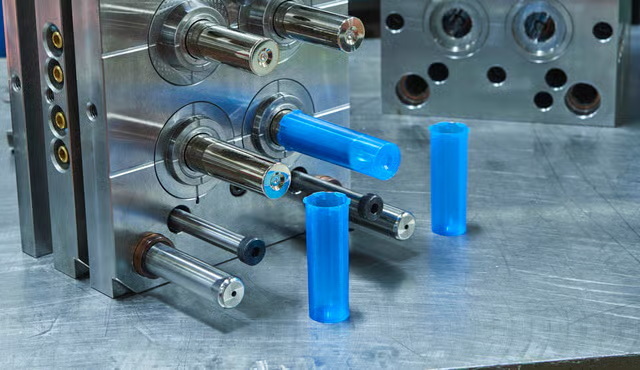
Gate and runner design directly impacts material usage, cycle time, and part quality.
- Locate gates to minimize visible marks, avoid stress areas and ensure balanced flow.
- Tailor gate size and shape to material and part complexity, controlling injection speed and pressure.
- Utilize hot runner systems in high-volume production to eliminate runner waste and enhance cycle times.
Balanced gating ensures complete fills and reduces scrap caused by short shots or excessive flash.
Temperature control throughout molding drastically affects quality and efficiency.
- Employ conformal cooling channels that contour closely to part shapes for uniform heat removal.
- Prevent uneven cooling that causes warpage or residual stresses by optimizing channel placement and flow.
- Faster, even cooling shortens cycle times and improves dimensional accuracy, directly reducing waste and energy consumption.
Advanced cooling designs also reduce tool wear and maintenance frequency, improving production sustainability.
Shrinkage and warpage threaten dimensional accuracy and structural integrity.
- Use draft angles (1° to 2°) on vertical faces to ease ejection and reduce deformation stresses.
- Incorporate ribs and gussets to stiffen areas prone to bending.
- Analyze and design for expected shrinkage based on resin properties, modifying mold dimensions accordingly.
Addressing these concerns in early design phases ensures robust parts without costly rejects or rework.
Mold longevity reduces costs and environmental impact.
- Choose hardened steel molds with protective coatings to resist wear, corrosion, and high pressures.
- Regular maintenance and proper surface finishing uphold mold performance and part consistency.
- Invest in mold quality early to avoid premature tool failure, minimizing production interruptions.
Durable molds support high-volume, waste-reduced production runs delivering consistent quality.
Design for Manufacturability (DFM) principles integrate material properties, process capabilities, and cost considerations into the early design phase.
- Manufacturability analysis evaluates wall thickness, draft angles, undercuts, and mold complexity.
- Simplify part geometry to eliminate non-essential features, combining multiple components where possible to reduce assembly steps.
- Early design iterations anticipate potential issues and optimize injection speed, temperature, and pressure profiles.
DFM reduces redesign cycles, scrap rates, and production delays, enabling faster time-to-market and higher overall product quality.
The surface finish impacts aesthetics and functionality.
- Choose finishes from gloss to matte, considering application and user interaction.
- Use texturing to improve grip, hide defects, or enhance durability.
- Methods include sandblasting, laser engraving, or chemical etching enabled by mold design and machine capabilities.
Proper finish selection complements structural design, enhancing product appeal without compromising strength or manufacturability.
Injection molding design excellence requires harmonizing multiple factors to minimize waste and maximize strength. Emphasizing consistent wall thickness, compatible materials, structural ribs, optimal gating, and advanced cooling leads to stronger, cost-effective, and environmentally responsible production. Mold durability and design for manufacturability further enhance efficiencies and quality. Applying these guidelines equips manufacturers with comprehensive strategies to produce high-performance plastic parts efficiently, reducing raw material consumption, scraps, and production costs, fostering sustainability in OEM supply chains.
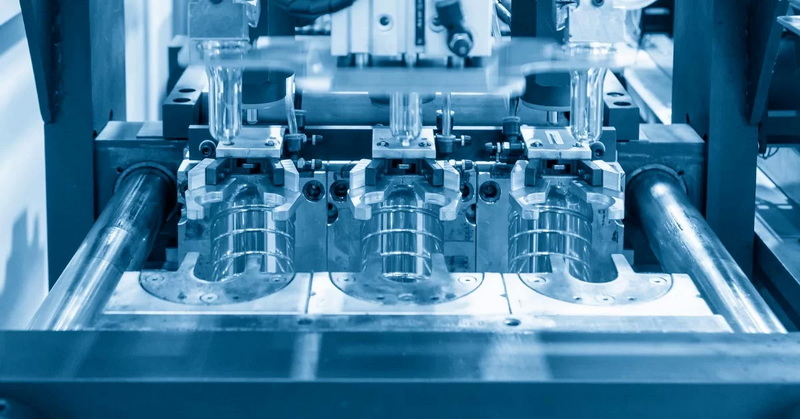
Consistent wall thickness prevents sink marks, warping, and uneven cooling. Walls should remain within 40%-60% thickness of adjacent sections to maintain strength and reduce defects.
Ribs strengthen parts without adding bulk. They should be thinner than walls (about 40%-60%) and placed to follow material flow. Fillets at rib bases reduce stress concentrations.
Conformal cooling channels closely follow mold contours, providing uniform temperature control that shortens cycle times, reduces warpage, and cuts energy costs.
Optimizing gate size, type, and location ensures balanced filling, minimizing short shots and leftover runner scrap. Hot runner systems further reduce runner waste in large volumes.
Hardened steel molds with specialized coatings resist wear and corrosion, especially for high-performance plastics, extending mold life and maintaining consistent part quality.
[1](https://www.crescentind.com/blog/how-to-ensure-high-quality-injection-molding-6-best-practices)
[2](https://www.protolabs.com/resources/guides-and-trend-reports/designing-for-moldability-fundamental-elements/)
[3](https://www.goldengatemolders.com/post/injection-molding-101-a-comprehensive-guide-for-newcomers)
[4](https://jiga.io/injection-molding/design-for-injection-molding-guide/)
[5](https://www.hubs.com/guides/injection-molding/)
[6](https://xometry.pro/wp-content/uploads/2025/03/EN-eBook_-Injection-Molding-Design-Guide.pdf)
[7](https://www.fictiv.com/wp-content/uploads/2021/07/IM-Design-Guide-ebook.pdf)
[8](https://geomiq.com/injection-moulding-design-guide/)
[9](https://www.reddit.com/r/IndustrialDesign/comments/1j53dh2/recommendations_for_a_guidetutorial_to_design_for/)

