
Views: 222 Author: Amanda Publish Time: 2025-09-05 Origin: Site


Content Menu
● Introduction to CNC Lathe Turning Automation
● How Automation Enhances CNC Lathe Turning
● Key Benefits of CNC Lathe Turning Automation
>> Enhanced Production Efficiency
>> Exceptional Precision and Consistency
>> Improved Safety and Ergonomics
>> Flexibility and Scalability
● Advanced Technologies Driving CNC Lathe Turning Automation
>> Integration of Artificial Intelligence (AI) and Machine Learning
>> Collaborative Robots (Cobots)
>> Internet of Things (IoT) Connectivity
● Real-World Examples of CNC Lathe Turning Automation
● Important Considerations When Implementing Automation
● Frequently Asked Questions (FAQs)
>> 1. What is CNC Lathe Turning automation?
>> 2. How does automation improve CNC lathe turning efficiency?
>> 3. Can existing CNC lathes be automated?
>> 4. What types of parts are suitable for CNC lathe turning automation?
>> 5. What safety advantages does CNC lathe turning automation offer?
In the fast-evolving world of manufacturing, CNC lathe turning Automation has become a pivotal technology that transforms production capabilities. It integrates computer numerical control (CNC) systems with lathe turning operations to automate the machining of rotational parts with high precision and efficiency. This automation is revolutionizing the way manufacturers approach production, reducing manual labor, increasing output, and improving product quality. For factories like Shangchen offering fast prototyping, CNC machining, and precision batch production, integrating CNC lathe turning automation is crucial for scaling up operations to meet global OEM demands.

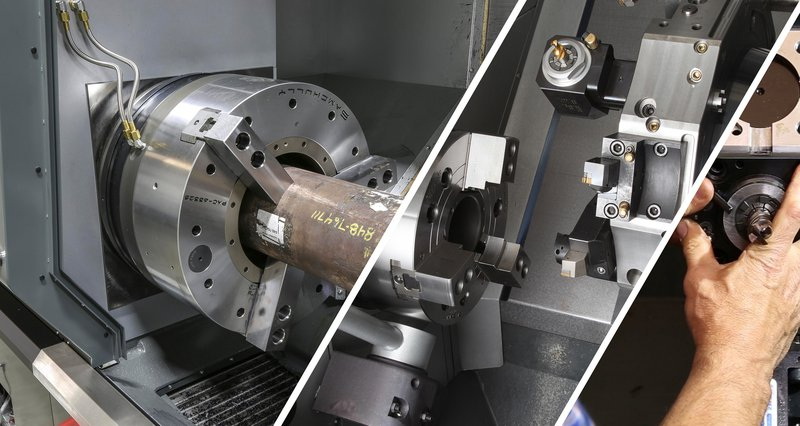
CNC Lathe Turning is a machining process where a workpiece is rotated around a spindle while a cutting tool shapes it to the desired specifications. The "CNC" aspect refers to the use of computer programming to precisely control the lathe's movements, speeds, and tooling, enabling complex geometries to be machined accurately with minimal human intervention. This process is widely used for cylindrical parts such as shafts, sleeves, and rods across industries including automotive, aerospace, medical, and electronics.
Automation of CNC lathe turning involves the integration of robotic systems, programmable logic controllers (PLCs), automatic loaders/unloaders, and advanced software to enable continuous, unmanned operation. Robotic arms can automatically load raw materials and unload finished parts with high precision and speed, minimizing downtime between cycles. This seamless coordination between CNC machines and automation systems increases production efficiency dramatically.
Several types of automation solutions are utilized in CNC lathe turning, including:
- Robot Loaders: Robotic arms integrated with CNC lathes to automatically handle loading and unloading operations. These can be equipped with double or multiple claws to manage multiple workpieces at once, improving throughput.
- Gantry Loaders: Overhead gantry systems designed for efficient part handling and transfer between machining stations, perfect for large-scale batch production.
- Palletizing Systems: Automated systems that position workpieces in trays or pallets, reducing the need for manual handling and ensuring consistent workpiece flow.
This automation not only speeds up the process but also reduces labor costs, material waste, and error rates by eliminating human-related inconsistencies.
Automated CNC lathe systems run with minimal manual intervention, allowing factories to operate lathes continuously without frequent stops or shift changes. This leads to increased machine utilization and higher parts output in less time. The repetitive nature of lathe turning operations is especially well-suited for automation, where robots can perform consistent tasks without fatigue or error.
The integration of robotic loaders with CNC systems ensures consistent loading positions and machining conditions. This stability translates to micrometer-level precision and repeatability across large production runs. Such precision is critical in industries like aerospace and medical devices, where tolerances are extremely tight and consistency is paramount.
Automation reduces the need for operators to manually load heavy or dangerous components, minimizing workplace injuries and fatigue. Automated systems handle the transportation of raw materials and finished parts, enabling operators to focus on supervision and quality control rather than physically demanding tasks. This redesign of the workflow enhances worker safety and job satisfaction.
Precise programming and stable automated handling mean cutting errors and scrap rates are significantly lowered, saving raw material costs and reducing environmental impact. CNC lathe turning automation can incorporate real-time feedback and adaptive controls to adjust cutting parameters on the fly, further optimizing material usage.
Automated CNC lathe turning setups can be customized and scaled according to production needs. Robotic systems can be reprogrammed for different parts or connected to multiple CNC machines simultaneously, adapting to changing market demands quickly. This flexibility is ideal for factories catering to OEMs with diverse product portfolios requiring quick changeovers.

Emerging AI technologies are being integrated into CNC lathe systems, enabling real-time monitoring, predictive maintenance, and process optimization. AI can analyze vast data generated during machining to identify patterns that signal tool wear, possible defects, or machine anomalies, prompting corrective actions before downtime occurs. This smart automation boosts uptime and product quality.
Collaborative robots designed to work alongside human operators are becoming part of CNC lathe turning automation. These cobots handle repetitive loading tasks while humans perform inspections and complex machining setups. The synergy between human skills and robotic precision enhances productivity without fully replacing the workforce.
IoT-enabled CNC lathes communicate with connected systems for remote monitoring, control, and analytics. Production managers gain real-time insights into machine status, cycle counts, and performance metrics from any location, facilitating proactive decision-making. This connectivity also supports integration with enterprise resource planning (ERP) systems for streamlined production planning.
A notable case is the implementation of a double spindle, double turret CNC lathe operated by a six-axis industrial robot loader. This configuration allows the robot's dual claws to simultaneously handle two workpieces on two lathes, effectively doubling output without increasing manual labor. The robot communicates via PLC signals to synchronize loading/unloading with machining operations, resulting in higher production rates and machine efficiency.
Another example is the use of gantry loaders combined with bar feeders and work stockers for shaft machining. This system coordinates the supply and removal of parts effortlessly, allowing CNC lathes to run unattended for extended periods, which is especially ideal for batch or mass production environments.
Furthermore, some factories integrate automated CNC lathe turning cells with part measurement systems, where finished components are automatically inspected for quality without operator involvement. Such closed-loop systems enable immediate feedback and adjustments, maintaining the highest standards in production.
- Machine Compatibility: Ensure current CNC lathes support integration with robotic systems and PLCs. Some older machines may require retrofit kits or controller upgrades.
- Robot Specification: Choose robot arms with adequate load capacity, reach, and claw types for your parts. Precision robotic arms with multiple degrees of freedom enable versatility in handling various geometries.
- Software Synchronization: Use intelligent control software that seamlessly integrates CNC and robotic movements. This software should allow for easy programming, simulation, and troubleshooting.
- Safety Measures: Implement safety guards, light curtains, and emergency stop mechanisms alongside automated workflows to protect operators and equipment.
- Training and Support: Provide operator training on automated systems and maintain technical support for troubleshooting. Skilled staff ensure smooth operation and quick resolution of issues.
- Cost-Benefit Analysis: While automation involves upfront investment, evaluate long-term savings in labor, materials, and production throughput to justify implementation.
The incorporation of CNC Lathe Turning Automation is a transformative step for manufacturers seeking to boost production efficiency, product quality, and workplace safety. By automating loading, unloading, and machining operations with robotic systems and integrated control software, production lines become faster, more precise, and cost-effective. Factories like Shangchen, offering comprehensive manufacturing services, can significantly elevate their OEM capabilities and market competitiveness by adopting these advanced automation technologies. As automation technologies continue to advance, integrating AI, IoT, and collaborative robots will further redefine the capabilities of CNC lathe turning, ensuring manufacturers stay at the forefront of industrial innovation.
CNC Lathe Turning automation refers to the use of robotic arms, automatic loaders, and integrated control systems to automate the loading, machining, and unloading processes of lathe machines, enabling continuous unattended production.
Automation reduces machine idle time by rapidly and precisely handling parts, minimizes operator involvement, and ensures consistent machining conditions, leading to higher throughput and quicker cycle times.
Yes, many existing CNC lathes can be retrofitted with robotic loaders, PLC systems, and automation software to enable automated operations without replacing the entire machine.
Cylindrical or rotational parts like shafts, sleeves, medical implants, automotive components, and electronic housings are ideally suited for CNC lathe turning automation.
Automation minimizes manual interaction with moving machine parts, reduces operator fatigue and injury risk, and improves workplace ergonomics by performing hazardous loading/unloading tasks robotically.
[1](https://www.cngongtie.com/how-to-automate-cnc-lathe-with-robot-loader/)
[2](https://panotecmetalworking.com/en/advantages-of-cnc-turning-the-art-of-precision-in-the-field-of-turning/)
[3](https://www.cmz.com/en/automation-lathe-cnc/)
[4](https://www.youtube.com/watch?v=cJYRuzNlloY)
[5](https://cellro.com/en/knowledgebase/what-you-need-to-keep-in-mind-when-automating-a-lathe/)
[6](https://radmot.com/blog/cnc-turning)
[7](https://www.haltercncautomation.com/automation-of-lathes)
[8](https://www.youtube.com/watch?v=AwZPyzGEGG4)
[9](https://www.modular-automation.de/en/industries/cnc-automation/automation-of-cnc-lathes)
[10](https://www.rapiddirect.com/blog/what-is-cnc-turning/)
[11](https://standardbots.com/blog/automate-cnc-machine-guide)
[12](https://www.youtube.com/watch?v=C4bRr6FzhxA)
[13](https://www.mazak.com/jp-en/products/automation-turning/)
[14](https://staubinc.com/news/a-guide-to-cnc-lathe-machining-processes-applications-benefits/)
[15](https://www.dmgmori.co.jp/sp/automation/en/3type/)
[16](https://www.youtube.com/watch?v=Bl4H0swXzUY)
[17](https://www.fanucamerica.com/solutions/applications/cnc-turning)
[18](https://www.acemicromatic.net/role-of-cnc-turning-machine-automation/)
[19](https://www.3ds.com/make/guide/videos/video-cnc-machining-turning)
[20](https://blog.robotiq.com/15-types-of-cnc-machines-and-how-to-automate-them)

