
Views: 222 Author: Amanda Publish Time: 2025-10-18 Origin: Site


Content Menu
● What is Vacuum Mold Casting?
● What is Silicone Mold Casting?
● Key Differences between Vacuum Mold Casting and Silicone Mold Casting
>> Air Bubble Control and Surface Quality
>> Suitability for Complex Geometries
>> Production Volume and Mold Longevity
● Advantages of Vacuum Mold Casting for Precision Parts
● Advantages of Silicone Mold Casting for Precision Parts
● Limitations of Both Techniques
● Applications Best Suited for Vacuum Mold Casting
● Applications Best Suited for Silicone Mold Casting
● Frequently Asked Questions (FAQ)
>> 1. What types of materials are typically used in vacuum mold casting?
>> 2. How long does a silicone mold last in vacuum mold casting?
>> 3. Can vacuum mold casting produce very large parts?
>> 4. What makes vacuum mold casting more expensive than standard silicone mold casting?
>> 5. Is post-processing required after vacuum mold casting?
When producing precision parts, selecting the right manufacturing process is crucial to ensure quality, cost efficiency, and fast turnaround. Among the popular methods are Vacuum Mold Casting and Silicone Mold Casting—both relying on silicone molds but differing in how the casting material is handled. This article explores these two processes comprehensively, focusing on their differences, benefits, limitations, and suitability for precision parts manufacturing.
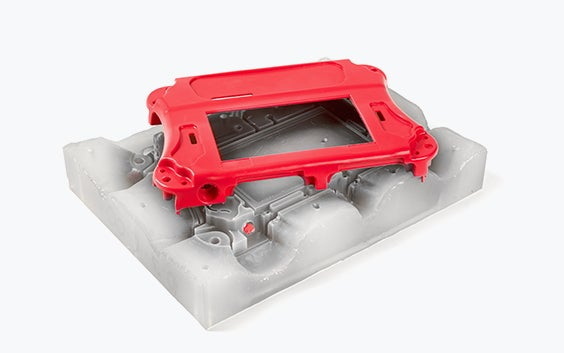
Vacuum mold casting is a specialized casting technique where liquid resin, typically polyurethane, is poured into silicone molds inside a vacuum chamber. The vacuum removes air bubbles that can cause surface defects or structural flaws, leading to parts with superior surface finish and dimensional accuracy. The process involves several steps:
- Master Pattern Creation: Starting with a digitally designed 3D model, a master pattern is made using CNC machining or 3D printing as a prototype for the silicone mold.
- Silicone Mold Fabrication: Liquid silicone rubber is cast around the master pattern and cured to produce flexible molds.
- Casting Under Vacuum: The liquid resin is introduced into the mold placed inside a vacuum chamber, drawing the resin into every cavity and minimizing trapped air.
- Curing and Demolding: After resin cures, the flexible mold is opened, and the precision part is removed.
Vacuum casting is widely used in prototyping, functional testing, and low-to-medium volume production (usually up to 30 parts per mold) of complex and detailed components.
Silicone mold casting refers broadly to the use of silicone molds to replicate parts. The molds are flexible and capable of capturing fine details, making silicone a favored material for producing small batches of parts. However, silicone mold casting without vacuum assistance involves pouring resin or other casting materials at atmospheric pressure, which may trap air bubbles leading to minor defects.
Silicone molds in traditional casting are often used for prototyping, artistic sculptures, small batch manufacturing, and applications where ease and speed of mold creation are important.
The defining difference is that vacuum mold casting uses a vacuum chamber to eliminate air bubbles during resin filling. This results in:
- Improved surface finish, with nearly bubble-free parts.
- Reduced defects like voids and pinholes.
Traditional silicone mold casting does not employ vacuum and thus may have bubble inclusion risks, requiring more post-processing to achieve smooth surfaces.
Vacuum casting excels with complex designs, including intricate details and sharp undercuts, due to the vacuum pulling resin into all mold sections evenly. Silicone mold casting may struggle with filling tight or hollow sections thoroughly without assistance.
Both processes use silicone molds with a relatively short lifespan, typically supporting 20–30 casting cycles before significant wear affects part quality. Thus, both are ideal for low to medium volume production. Vacuum casting, however, tends to be selected for projects where the part quality and surface finish are more critical even for limited runs.
Silicone molds are less expensive and faster to produce than metal molds used in methods like injection molding, making both casting types cost-effective for small batches.
- Vacuum casting requires a vacuum chamber and more controlled processing, which can slightly increase cycle times and initial setup complexity.
- Silicone mold casting is simpler and faster per part but may result in additional finishing costs if surface defects occur.
Vacuum mold casting primarily utilizes polyurethane resins mimicking many final plastic properties. Silicone mold casting can accommodate other materials, but both don't compare with the range of thermoplastics available in injection molding.
1. Superior Detail and Precision
Vacuum casting delivers high fidelity replication of the master pattern, essential for aerospace, medical, and electronics parts needing tight tolerances.
2. Excellent Surface Finish
The vacuum process eliminates trapped air, reducing imperfections and minimizing post-cure sanding or polishing requirements.
3. Ability to Handle Complex Features
Undercuts, thin walls, and intricate textures are more effectively formed under vacuum conditions.
4. Reduced Waste
Vacuum casting generates minimal material waste, making it an eco-friendlier option during prototype and small-batch production.

1. Cost-Effectiveness for Quick Prototyping
This process is easier to set up and doesn't require specialized vacuum equipment, lowering initial costs and speeding mold production.
2. Material Flexibility
Silicone mold casting can work with different resins outside typical vacuum casting materials, helpful for artistic or specialized applications.
3. Simple Process and Equipment
Ideal for exploratory design phases where speed and convenience outweigh ultimate surface finish or complexity.
- Mold Wear: Silicone molds wear out quickly compared to metal molds, limiting production runs.
- Material Strength: Parts often have lower mechanical strength than those made by injection molding.
- Limited Volume Capacity: Not suited for mass manufacturing.
- Vacuum Casting Specific: Requires investment in vacuum chambers and controlled processing.
- Silicone Mold Casting Specific: Higher risk of surface defects from air bubbles and may require more finishing.
- Functional prototypes needing high fidelity and strength simulation.
- Small batch production of aerospace, medical, or consumer electronics components.
- Parts requiring smooth finishes and complex geometries.
- Scenarios where quick mold turnaround is critical and costs must be contained.
- Artistic objects and sculptures.
- Basic prototypes to verify form and fit.
- Very low volume batches where surface finish perfection is less critical.
- Projects without access to vacuum casting equipment.
Vacuum mold casting significantly enhances traditional silicone mold casting by introducing a vacuum environment that removes air bubbles and ensures superior surface quality and dimensional accuracy. This method is ideal for precision parts with complex geometries and smooth finishes, particularly in prototype and low-to-medium volume production where metal molds are cost-prohibitive. Conversely, silicone mold casting remains a valuable technique for simpler, low-cost prototyping where speed and flexibility are prioritized over surface perfection.
Manufacturers targeting precision part production should consider vacuum mold casting when surface finish, detail, and material performance are paramount, while silicone mold casting suits applications needing quick iteration and low setup costs.
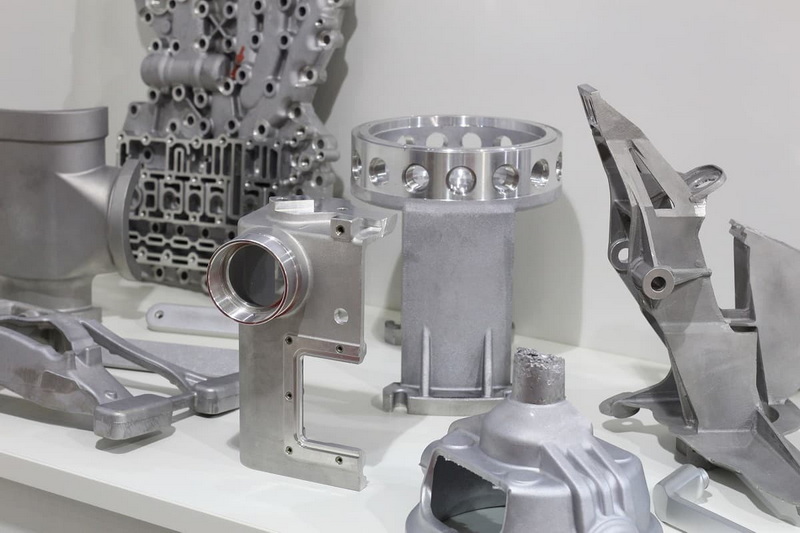
Vacuum mold casting mainly uses polyurethane resins, which can be formulated to mimic various mechanical properties such as rigidity, flexibility, and surface texture. Some specialty resins cater to specific needs, but thermoplastics common in injection molding are not suitable for vacuum casting.
Silicone molds generally support between 20 to 30 casting cycles before degradation impacts part quality, necessitating the production of new molds. Proper care and storage can extend mold life slightly.
While vacuum mold casting can handle reasonably sized parts, its effectiveness decreases as part size grows because silicone molds are flexible and can deform under gravity. For very large parts, other methods such as injection or compression molding are preferred.
The requirement for a vacuum chamber and controlled process parameters adds equipment and operational costs, along with longer cycle times per part to ensure proper degassing and curing.
typically, vacuum mold cast parts require minimal post-processing due to superior surface finish, though depending on application, some sanding, trimming, or painting may be necessary.
[1](https://www.sc-rapidmanufacturing.com/vacuum-casting-vs-silicone-molding-what-s-the-difference.html)
[2](https://onlinelibrary.wiley.com/doi/full/10.1002/appl.202100012)
[3](https://xometry.pro/en-eu/articles/vacuum-casting-overview/)
[4](https://leadrp.net/blog/overview-of-vacuum-casting/)
[5](https://www.3erp.com/blog/vacuum-casting-vs-injection-molding/)
[6](https://quickparts.com/gb/vacuum-casting-or-injection-moulding/)
[7](https://formlabs.com/blog/vacuum-casting-urethane-casting-polyurethane-casting/)
[8](https://jlc3dp.com/blog/examining-and-differentiating-vacuum-casting-3d-printing-and-injection-moulding)
[9](https://prototyperlab.com/vacuum-casting-vs-injection-molding-vs-silicone-molding/)

