
Views: 222 Author: Amanda Publish Time: 2025-10-22 Origin: Site


Content Menu
● Understanding Vacuum Mold Casting
● Advantages of Vacuum Mold Casting in Aerospace and Defense
>> Cost Efficiency in Small Volume Production
>> Superior Precision and Complex Geometries
>> High-Quality Surface Finishes
>> Rapid Prototyping and Design Iterations
>> Reliability and Consistent Quality
● Vacuum Mold Casting Process in Detail
● Applications in Aerospace and Defense
>> Structural and Functional Components
>> Custom Seals and Flexible Components
● Comparing Vacuum Mold Casting with Other Technologies
● Further Innovations and Future Trends
● FAQ
>> 1. What materials are used in vacuum mold casting for aerospace parts?
>> 2. How does vacuum mold casting improve aerospace part quality?
>> 3. What is the typical production volume suitable for vacuum mold casting?
>> 4. Can vacuum mold casting produce complex aerospace components with undercuts?
>> 5. How does vacuum mold casting compare to injection molding and 3D printing?
Vacuum mold casting is a transformative manufacturing process that provides significant advantages for aerospace and defense industries. Through the use of vacuum technology during the casting or molding process, Vacuum Mold Casting ensures the production of highly precise, defect-free, and complex parts. This process is instrumental for producing prototypes, small production runs, and highly detailed components with exceptional surface finishes and mechanical properties, meeting the stringent demands of these critical sectors.
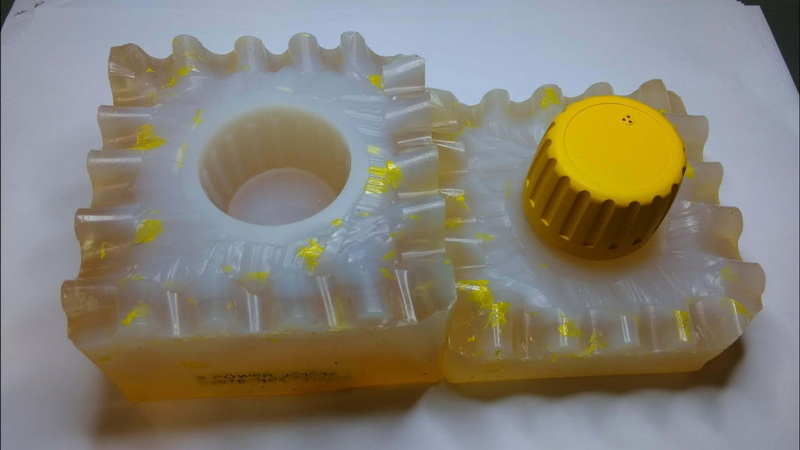
Vacuum mold casting, also called vacuum casting or urethane casting when using plastics, is a process of injecting liquid resin or plastic into a silicone mold inside a vacuum chamber. The vacuum removes entrapped gases and air bubbles, ensuring the mold cavity is completely filled, minimizing defects such as porosity or voids, and enhancing the final part's durability and surface quality.
The process starts with creating a master pattern—often via 3D printing or CNC machining—which is used to make a flexible silicone mold. Liquid resin is then mixed and poured under vacuum conditions, allowing it to flow into every mold detail without turbulence or trapped air. After curing, the cast parts have physical and aesthetic properties closely resembling injection-molded components but with shorter lead times and lower tooling costs.
For aerospace and defense manufacturers, producing low to medium volume parts with high accuracy can be cost-prohibitive using traditional injection molding due to the expense of steel tooling. Vacuum mold casting uses silicone molds that are more affordable and can be produced quickly, reducing overall costs for limited runs or prototypes. This economic benefit allows companies to experiment with design iterations or produce complex components without investing heavily in tooling.
Aerospace and defense parts often demand intricate designs with tight tolerances. Vacuum mold casting excels at duplicating these complex geometries, including thin walls, sharp edges, and undercuts that are challenging for other manufacturing methods. This precision allows for the production of functional parts that meet rigorous performance standards, critical for safety and reliability in aerospace crafts and defense systems.
The vacuum environment significantly improves the surface finish of cast parts by preventing bubbles and porosity. This results in cosmetically superior parts with smooth textures, reducing the need for extensive post-processing or finishing. The availability of different resin types—including transparent, colored, and flexible materials—further enhances the ability to match final production materials in appearance and function.
Vacuum mold casting supports a wide variety of materials, from rigid and high-strength polyurethanes to flexible and pigmentable resins. This versatility enables aerospace and defense manufacturers to replicate the mechanical and thermal characteristics of the intended final materials, facilitating functional testing and validation before committing to mass production.
Because vacuum mold casting relies on silicone molds created from master patterns rather than expensive metal tooling, it offers rapid turnaround times. This speed allows engineers to prototype and test multiple design versions rapidly—an essential feature in aerospace and defense, where innovation and precision are paramount. It significantly shortens development cycles and reduces time-to-market.
Consistency in part quality is crucial for aerospace and defense components, which must adhere to strict safety and performance regulations. Vacuum mold casting delivers reliable, repeatable parts that are structurally sound, minimizing defects such as air entrapment, uneven curing, or warping. Its controlled environment ensures parts maintain integrity even under extreme conditions.
1. Master Pattern Development: A detailed CAD design is converted into a physical master model using 3D printing or CNC machining that replicates the desired airframe or defense component.
2. Silicone Mold Fabrication: The master pattern is encased in liquid silicone rubber, which cures to form a flexible mold capturing all intricate features.
3. Resin Preparation: Two-part polyurethane or other resins are mixed and degassed under vacuum to remove air bubbles prior to casting.
4. Casting in Vacuum Chamber: The silicone mold is placed in a vacuum chamber where resin is poured or injected. The vacuum environment helps resin fill every detail of the mold by evacuating trapped air.
5. Curing and Demolding: The part cures inside the mold, after which it is carefully removed, trimmed, and inspected for defects to ensure it meets aerospace or defense standards.
6. Post-Processing: Optional finishing steps include sanding, painting, or coating to further enhance the part's mechanical or aesthetic attributes.
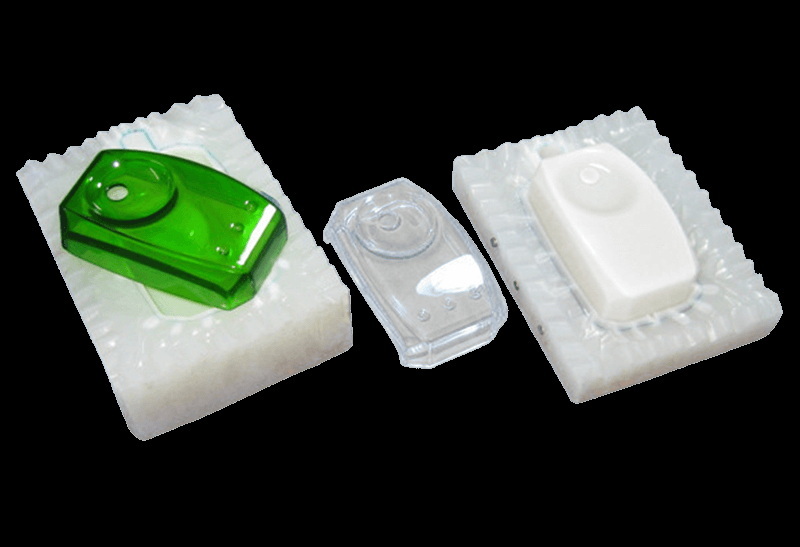
Vacuum mold casting is commonly used for producing lightweight structural parts, housings, covers, and brackets used in aerospace vehicles and defense equipment. These components require precise manufacturing to maintain strength while minimizing weight, a critical factor in aerospace design.
The process is invaluable in creating functional prototypes for aerodynamic testing, fit checks, and system integration. It allows aerospace engineers to validate designs and materials before large investment in traditional manufacturing methods.
Durable parts for weapons systems, naval hardware, and communication devices benefit from vacuum mold casting's ability to produce components that withstand extreme operational environments while maintaining dimensional stability.
Vacuum casting allows production of flexible parts like custom seals, gaskets, and handles using specialized resins, critical for defense systems' robustness and reliability.
Compared to injection molding, vacuum mold casting requires lower upfront costs and offers faster initial part production for small runs, though it is less economical for high-volume manufacturing. Versus 3D printing, vacuum casting provides superior surface finish and material properties closer to final production plastics. CNC machining produces strong and precise parts but is generally slower and more expensive for complex geometries and small quantities.
Vacuum mold casting continues to evolve with advances in resin materials, mold-making technologies, and automation. Innovations include multi-material overmolding under vacuum to create parts with varied texture and functionality, use of UL-certified and medical-grade materials for critical aerospace components, and integration with digital manufacturing workflows for improved quality control.
Vacuum mold casting is a highly beneficial manufacturing process for aerospace and defense industries, offering a unique combination of cost-efficiency, precision, material versatility, and rapid prototyping capabilities. It enables the production of complex, high-quality parts that meet the sector's rigorous standards, supporting innovation and reducing development timeframes. This process stands out as a flexible solution for low-volume production runs and functional prototyping, perfectly tailored for critical aerospace and defense applications.
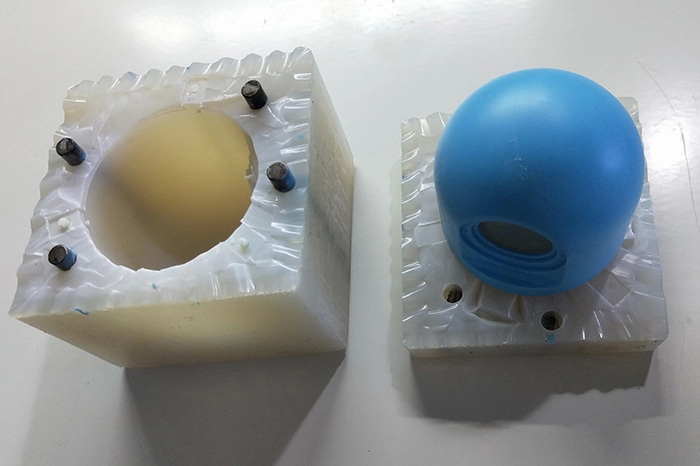
Materials range from rigid and flexible polyurethane resins to transparent and pigmented variants that simulate final production plastics with similar physical and chemical properties.
The vacuum removes air bubbles and gases that cause porosity, ensuring denser, more durable parts with superior surface finishes and dimensional accuracy.
Ideal for small to medium batch runs, typically between 5 to 100 parts, making it perfect for prototypes, pre-production models, and low-volume functional parts.
Yes, it is adept at replicating intricate details including undercuts and thin walls, though mold design must consider demolding feasibility for complex shapes.
Vacuum mold casting offers lower tooling costs and quicker turnaround for low volumes than injection molding, with better surface finish and material properties than most 3D printing technologies.
[1](https://www.totalmateria.com/zh/articles/vacuum-casting-1/)
[2](https://www.metaltek.com/blog/what-is-vacuum-investment-casting/)
[3](https://www.3ds.com/make/guide/process/vacuum-molding)
[4](https://arti90.com/vacuum-casting/)
[5](https://uk.arrk.com/low-volume-production/polyurethane-vacuum-casting/)
[6](https://ame-3d.co.uk/news/a-complete-guide-to-vacuum-casting-polyurethane-casting)
[7](https://www.indo-mim.com/vacuum-investment-casting-equiax/)
[8](https://www.makerverse.com/resources/casting/vacuum-casting-everything-you-need-to-know/)
[9](https://frigate.ai/capabilities/casting-services/vacuum-casting-services/)
[10](https://www.xmake.com/different-types-of-casting-process/)

