
Views: 222 Author: Amanda Publish Time: 2025-11-13 Origin: Site


Content Menu
● The Evolution of Turning Lathe Technology
● Key Components and Functions of a Turning Lathe
● Batch Production Workflow with Turning Lathes
>> Preparation
>> Programming
>> Completion
● Precision and Consistency in Batch Production
>> The Imperative of Product Consistency
>> Factors Influencing Consistency
● Advanced Turning Lathe Operations That Drive Repeatable Quality
>> External and Internal Features
● Materials and Applications in Turning Lathe Batch Production
>> Industry-Specific Solutions
● Best Practices for Optimal Batch Production
>> Design for Manufacturability
● Automation, Robotics, and Smart Manufacturing
● Sustainability and Efficiency
● Future Developments in Turning Lathe Technology
● FAQ
>> 1. How does a turning lathe improve batch product consistency?
>> 2. Can turning lathes handle complex designs?
>> 3. What materials can be processed on turning lathes?
>> 4. How do manufacturers maintain quality during long batch runs?
>> 5. What innovations are shaping the future of turning lathe batch production?
In the age of global manufacturing, product consistency is not just a competitive advantage—it is an absolute necessity for OEM suppliers and contract manufacturers striving for excellence. Turning lathes, the backbone of batch production in industries such as automotive, aerospace, electronics, and medical devices, ensure every component adheres closely to design specifications. By combining precision engineering, CNC automation, and meticulous quality control, modern factories like Shangchen deliver repeatable high-quality results across thousands—or even millions—of parts in each batch.[3][11][12]
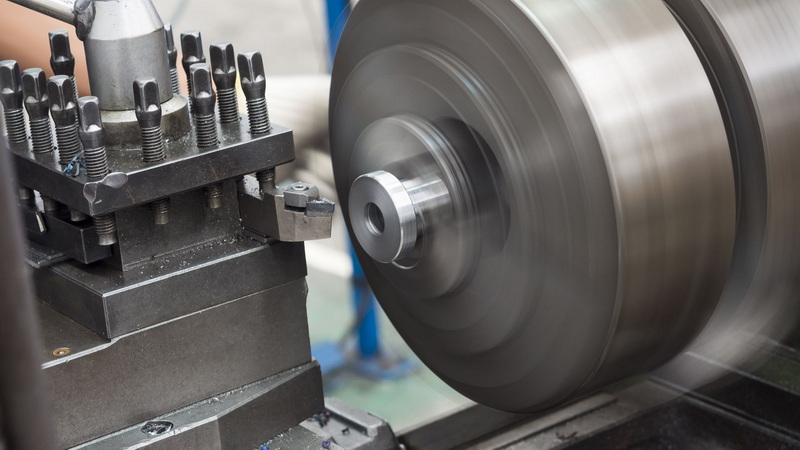
Turning lathes have a storied history, evolving from simple manually operated devices to sophisticated computer-controlled systems. Traditional lathes required a skilled operator's constant attention to tool placement, spindle speed, and feed rate, often resulting in variable outcomes. Modern advancements—especially the rise of CNC (Computer Numerical Control) turning lathes—have virtually eliminated inconsistencies in the batch production process by automating every step.[5][13]
Significant technological leaps, including multi-axis turrets, live tooling, smart sensors, and robotic integration, have amplified efficiency and reduced downtime. These innovations allow manufacturers to execute complex operations such as contour turning, threaded section fabrication, and multi-profile part machining in a single setup.[6][14]
- Bed: Provides structural stability and alignment for all moving parts.[4]
- Headstock and Spindle: Drives workpiece rotation at controlled speeds.
- Chuck and Collet: Securely grip raw material for concentric rotation.
- Carriage System: Enables precise positioning of cutting tools along the workpiece.
- Tool Post: Holds and adjusts the single-point or multi-point cutting tools.
- Coolant System: Reduces heat and friction, prolonging tool life and maintaining part integrity.[4]
- Automated Feed Mechanisms: Achieve optimal surface finishes and dimensional accuracy by regulating cutting speeds and depths.
Raw stock materials, typically bar-shaped metals or plastics, are loaded manually or by robotic automation into the chuck. Proper clamping is crucial for safety and geometric accuracy throughout the process.[4]
CNC-controlled lathes are programmed with exact specifications for spindle speed, tool paths, feed rates, depth of cut, and finishing instructions. This removes variability and maintains high repeatability in mass production.[13][5]
During turning, the lathe rotates the workpiece while a fixed cutting tool shapes its external or internal features. Various operations are performed, including:
- Turning: Reduces diameter, shapes cylinders.
- Facing: Creates perfectly flat surfaces on the ends.
- Threading: Cuts precise screw threads internally or externally.
- Taper Turning: Forms angled transitions or conical features.
- Boring and Drilling: Enlarges holes for integrated component interfaces.
- Knurling: Creates surface textures for grip or aesthetics.[2][15]
Each finished part is either inspected manually or automatically using high-precision measurement instruments. Advanced systems can perform real-time checks during machining, adjusting parameters to counteract tool wear and material inconsistencies.[16][4]
Finished components are removed from the lathe and readied for secondary operations or shipment. With high-volume automated lathes, the cycle repeats continuously, often running unattended for extended periods.
Consistent parts guarantee reliability, customer satisfaction, and regulatory compliance. Industries demanding strict tolerance—such as medical devices or aerospace—leverage the reliability of CNC turning lathes to produce thousands of identical components without deviation.[12][17][16]
- Machine Calibration: Regular calibration ensures accuracy over consecutive runs.
- Tool Wear Monitoring: Smart sensors detect wear and trigger tool replacement, stopping inconsistencies before they occur.
- Process Programming: CNC logic eliminates human error, maintaining process continuity across shifts or days.[14][13][4]
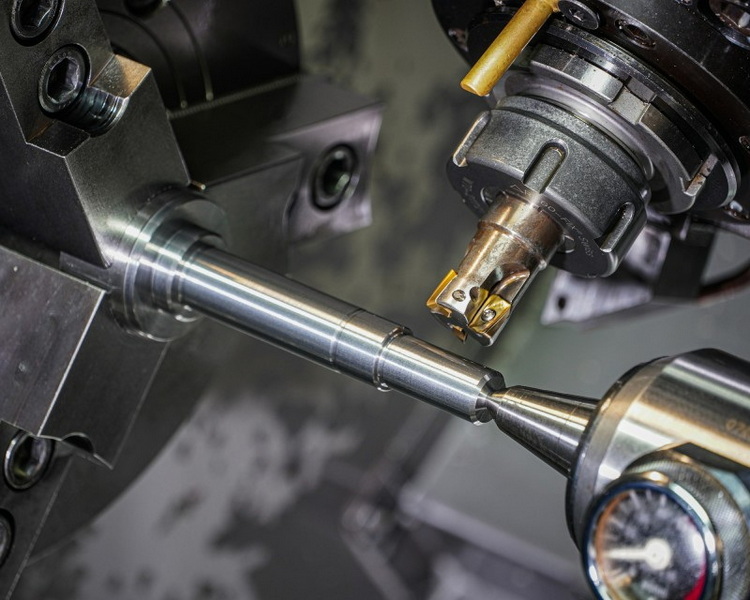
Modern turning lathes excel at fabricating both external diameters (OD) and internal diameters (ID). Sophisticated tools handle intricate features—tapers, grooves, contours, threads, and slots—optimizing both simplicity and complexity in design.
Multi-axis lathes can cut non-cylindrical profiles, such as camshafts, turbine parts, and orthopedic implants, all to minute tolerances. This ability broadens the scope of products attainable in batch manufacturing.[2][6]
On-board measurement systems, including laser and touch probe technology, perform dimensional checks and transmit corrections to the CNC controller for adaptive process changes. This real-time feedback is pivotal for keeping each produced part within specification.
Turning lathes accommodate a variety of metals (steel, aluminum, brass, titanium, copper), plastics, ceramics, and composite materials. Selection depends on both the part's intended function and batch production requirements.[3][5]
- Automotive: Producing shafts, bushings, connectors, piston rods.
- Medical: Surgical screws, implantable devices, diagnostic components.
- Aerospace: Fasteners, turbines, landing gear components.
- Electronics: Housings, contacts, switch bodies, connectors.
- Consumer Hardware: Custom tool handles, precision knobs, furniture components.
- Standardize material sizes and tolerance bands to maximize process speed.
- Minimize secondary operations by integrating complex features during turning.
- Use draft angles and fillets for improved surface finish and dimensional control.[8]
- Choose appropriate speeds and feeds for each material to prevent burnishing or excessive wear.[6]
- Regularly maintain machine calibration, coolant systems, and tool holders.[4]
- Implement automated loading and unloading for high-volume, unattended batch runs.
Robotic arms and automated feeders seamlessly load workpieces, reducing manual labor and maximizing throughput. Unattended operation becomes feasible, with CNC systems orchestrating the entire process.[18][19]
Sensors monitor vibration, temperature, and tool wear, sending data to industrial IoT platforms for predictive maintenance and process correction. This results in higher uptime and further reduces quality variation across batches.
Efficient tool paths, minimal waste strategies, and smart coolant management contribute to eco-friendly manufacturing. Modern lathes are designed for energy efficiency, often integrating regenerative drive motors and variable speed options.
By machining only essential material from each blank and recycling chips, turning lathes support environmentally responsible production practices.
- Multi-tasking Machines: Combining turning, milling, and drilling.
- AI-driven Process Controls: Real-time adjustment based on part variation and environmental factors.
- Digital Twins: Virtual process models predicting outcomes and optimizing new batch production cycles.
The turning lathe is not merely a fixture on the modern factory floor—it is the foundation of product consistency in global batch manufacturing. Equipped with advanced automation, smart control systems, and robust quality assurance, CNC turning lathes empower manufacturers to produce identical components at scale, meet stringent customer demands, and drive innovation in every sector. Whether for automotive, aerospace, electronics, or medical applications, the advantages of turning lathes are clear: precision, repeatability, flexibility, and cost-effectiveness for every batch run.

A turning lathe, especially when equipped with CNC control, automates the machining process, eliminates operator errors, and enables precise, repeatable operations, ensuring every part matches intended specifications.[5][13]
Yes, advanced multi-axis CNC turning lathes can machine intricate shapes, threads, contours, and other features with high accuracy, supporting even the most demanding part geometries in mass production.[2][6]
Turning lathes can process a variety of metals, including steel, aluminum, brass, titanium, as well as plastics, composites, and ceramics, depending on the application requirements.[3][5]
Manufacturers employ regular calibration, integrate automated in-process inspection, use smart sensors for tool wear management, and rely on adaptive CNC programs to continuously monitor and adjust machining conditions.
New developments include multi-tasking machinery, AI-powered process control, real-time digital twins, and increased IIoT data integration to optimize efficiency and predict manufacturing outcomes.
[1](https://openoregon.pressbooks.pub/manufacturingprocesses45/chapter/unit-4-turning/)
[2](https://turntechprecision.com/clueless-machinist/2020/8/25/10-machining-operations-performed-on-a-lathe)
[3](https://www.xavier-parts.com/turning-parts-manufacturing-guide/)
[4](https://cncwmt.com/qa/how-does-a-lathe-work/)
[5](https://www.xometry.com/resources/machining/what-is-turning-in-machining/)
[6](https://www.youtube.com/watch?v=8EsAxOnzEms)
[7](https://www.cncmasters.com/what-is-cnc-turning-guide/)
[8](https://www.makerverse.com/resources/cnc-machining-guides/best-practices-designing-for-cnc-turning/)
[9](https://www.creatingway.com/guide-to-cnc-lathe-machining-process/)
[10](https://www.bayareacncmachinery.com/blog/21376-lathe-mc-a-comprehensive-guide-to-understanding-and-using-a-lathe-machine)
[11](https://www.sc-rapidmanufacturing.com/how-cnc-lathe-turning-improves-product-quality-and-consistency.html)
[12](https://www.alco.com/blog/the-advantages-of-cnc-turned-parts-in-precision-manufacturing/)
[13](https://www.lsrpf.com/en/blog/cnc-turning-definition-process-advantagesapplications-tips-ls-manufacturing)
[14](https://www.wevolver.com/article/what-is-cnc-turning)
[15](https://tirapid.com/turning-operations/)
[16](https://cncwmt.com/qa/exploring-cnc-turning-accuracy-standards-influencing-factors-and-industry-applications/)
[17](https://www.fanuc.eu/eu-en/case-studies/cnc-lathe-builder-takes-control-production-fanuc)
[18](https://zenoot.com/articles/case-study-lathe-tending-system-modified-to-extend-unattended-production/)
[19](https://cellro.com/en/knowledgebase/what-you-need-to-keep-in-mind-when-automating-a-lathe/)

