
Views: 222 Author: Amanda Publish Time: 2025-11-22 Origin: Site


Content Menu
● Why Rapid Prototyping Matters for Manufacturers
● How ChatGPT Supports Rapid Prototyping
● Stage 1: Idea Generation and Concept Exploration
● Stage 2: From Concept to Design Requirements
● Stage 3: Selecting Rapid Prototyping Processes
● Stage 4: Material Selection for Rapid Prototyping
● Stage 5: Preparing Data and Files for Manufacturing
● Stage 6: Building and Refining Prototypes
● Stage 7: Post-Processing and Finishing
● Stage 8: Documentation, Reports, and Client Communication
● Advanced Uses: Integrating ChatGPT into Digital Workflows
● Limitations and Risk Management
● Working with Shangchen for AI-Enhanced Rapid Prototyping
● FAQ
>> 1. How exactly does ChatGPT help in Rapid Prototyping?
>> 2. Can ChatGPT choose the best Rapid Prototyping process for my part?
>> 3. Is Rapid Prototyping only for plastic parts?
>> 4. How many iterations are typical in a Rapid Prototyping project?
>> 5. Can small companies benefit from ChatGPT and Rapid Prototyping?
In modern manufacturing, Rapid Prototyping has transformed how new products move from concept to market-ready solutions. It shortens development cycles, reduces costs, and allows engineers and designers to validate ideas quickly before committing to expensive tooling or large-scale production. For international OEM and ODM projects, this speed and flexibility are especially valuable.
ChatGPT adds another powerful layer to this transformation. By combining Rapid Prototyping technologies with AI-driven text generation, teams can streamline ideation, documentation, communication, and decision-making. For a manufacturing partner like Shangchen (sc-rapidmanufacturing.com), which offers CNC machining, 3D printing, sheet metal fabrication, and molding, ChatGPT can significantly enhance every stage of the Rapid Prototyping workflow.
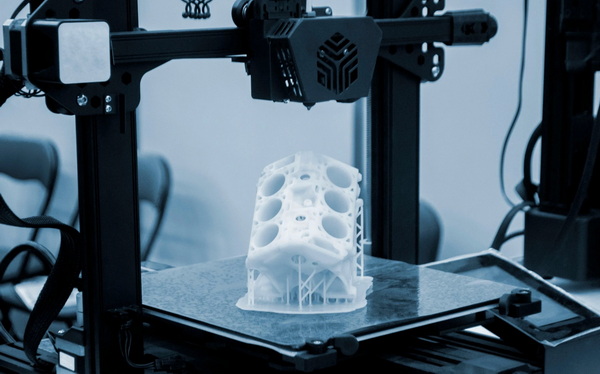
Rapid Prototyping is a group of techniques used to quickly create a physical part or assembly from three-dimensional CAD data. It relies on advanced manufacturing processes such as CNC machining, 3D printing, and rapid tooling to produce prototypes in hours or days instead of weeks.[4][6]
Typical steps in a Rapid Prototyping process include design creation in CAD, data preparation (often generating STL files), machine setup, prototype building, and post-processing for surface quality or functional performance. These steps allow engineers to test form, fit, and function before moving into full production.[3][6]
Rapid Prototyping supports faster innovation and more reliable decision-making across industries such as automotive, aerospace, medical devices, and consumer electronics. It enables multiple design iterations without lengthy delays, which is critical for products with complex geometries or demanding performance requirements.[7][4]
For OEM customers working with partners like Shangchen, Rapid Prototyping delivers several advantages:
- Quicker validation of new product designs without committing to final tooling.
- Ability to explore different materials and manufacturing methods before mass production.
- Better communication between designers, engineers, and production teams through tangible prototypes.
ChatGPT optimizes the information and communication side of Rapid Prototyping. It does not replace machines or engineers, but it reduces friction in planning, documentation, and cross-team collaboration. When used thoughtfully, it becomes a virtual assistant that lives inside the product development cycle.
Key ways ChatGPT adds value to Rapid Prototyping include:
- Turning rough sketches or bullet points into clear design briefs.
- Explaining manufacturing constraints and trade-offs in simple language.
- Drafting standard operating procedures and process documentation.
- Helping compare Rapid Prototyping processes and materials in structured formats.
At the earliest stage, a team often starts with a rough vision of a product. ChatGPT can rapidly expand this into multiple concept directions that support Rapid Prototyping. By specifying target users, functions, and manufacturing constraints, designers can get structured suggestions aligned with real-world production.
For example, a prompt might describe a handheld device that must be CNC machined from aluminum and overmolded with silicone, and ChatGPT can outline several form factors, ergonomic features, and surface finishing ideas. This helps teams rapidly explore the design space before committing to detailed CAD.
ChatGPT also supports creative tasks like naming product lines, generating marketing angles for future launches, and brainstorming modular variants that can be prototyped using the same base components.
Once a concept is chosen, Rapid Prototyping requires clear design requirements. These include dimensions, tolerances, target materials, and functional performance criteria. Industry guidance emphasizes that the quality of the initial CAD design and specifications strongly influences the success of Rapid Prototyping.[8][3]
ChatGPT can help structure these requirements into organized documents, such as:
- Functional requirement lists for each subsystem.
- Tolerance targets that match CNC machining or 3D printing capabilities.
- Checklists for features that need special attention in Rapid Prototyping, such as thin walls or fine details.
This structured output makes it easier for CAD engineers to translate requirements into three-dimensional models that are ready for machining or printing.
Different Rapid Prototyping processes offer unique strengths. Additive manufacturing builds parts layer by layer, using methods like FDM, SLA, or SLS, and supports complex geometries and internal channels. Subtractive methods such as CNC machining remove material from a solid block and can achieve tight tolerances and excellent surface finishes.[5][3][7]
ChatGPT can act as a decision-support tool by:
- Summarizing when to choose 3D printing versus CNC machining based on part complexity, tolerance needs, and production volume.[6][7]
- Explaining when to use rapid injection molding or other formative processes to test near-production plastics.[7]
- Highlighting how Rapid Prototyping can bridge the gap between early concepts and low-volume production.
By combining this guidance with the practical experience of a factory like Shangchen, teams can quickly converge on the most suitable Rapid Prototyping route.
Selecting the right material is essential to ensure that a prototype behaves similarly to the final product during testing. Experts recommend evaluating mechanical properties, environmental conditions, regulatory constraints, process compatibility, and post-processing options when choosing materials.[8][7]
ChatGPT can assist by:
- Creating side-by-side comparisons of materials for Rapid Prototyping, such as ABS vs. PC vs. nylon for plastic parts or aluminum vs. stainless steel for metal parts.[6][7]
- Explaining how material choice impacts 3D printing methods like FDM, SLA, or SLS, as well as CNC machining complexity.[5][7]
- Generating material requirement checklists for engineers and purchasing teams to review together.
This helps ensure that Rapid Prototyping reflects realistic performance conditions, not just cosmetic appearance.
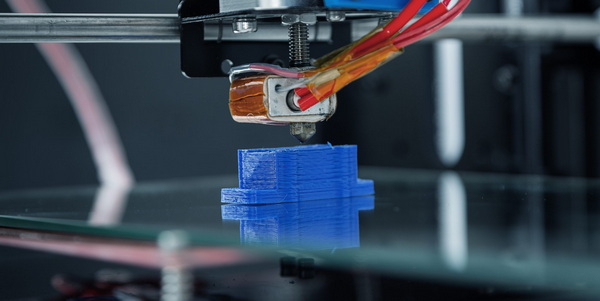
Once CAD models are ready, they must be prepared for specific Rapid Prototyping processes. Typical steps include generating STL files for additive manufacturing, setting up CAM programs for CNC machining, and checking models for errors such as non-manifold geometry or missing fillets.[3][6][8]
ChatGPT supports this stage by:
- Drafting step-by-step guidelines for preparing files for different Rapid Prototyping machines.
- Creating internal checklists for design for manufacturability, such as minimum wall thickness, hole diameters, and allowable overhangs in 3D printing.[5][7]
- Helping to standardize naming conventions, revision control, and file documentation for multi-iteration Rapid Prototyping projects.
By formalizing these practices in clear language, teams improve consistency and reduce errors when handing off designs to production.
In a typical Rapid Prototyping cycle, parts are built, inspected, tested, and then refined based on performance and feedback. Many guides describe this as an iterative loop of prototyping, testing, and refining. Additive and subtractive methods may be combined, with early versions printed and later versions machined to verify final tolerances.[9][7]
ChatGPT enhances this iteration by:
- Summarizing test results into concise reports that highlight key issues, such as fit problems, deformation, or assembly challenges.
- Proposing design adjustments to address specific issues while respecting manufacturing constraints, based on information given by engineers.
- Helping create clear communications for customers, explaining what changed from one Rapid Prototyping iteration to the next and why.
As a result, decision-makers can quickly judge whether a design is ready for bridge production or still requires further Rapid Prototyping cycles.
Post-processing is often necessary to achieve the required surface finish, dimensional accuracy, or mechanical performance for prototypes. Common tasks include sanding, painting, machining critical surfaces, or heat treatment.[3][6]
ChatGPT can help by:
- Drafting standard instructions for deburring, polishing, coating, or assembling Rapid Prototyping parts.
- Outlining quality checkpoints to ensure that post-processed prototypes align with design specifications and customer expectations.
- Creating internal work instructions that link post-processing steps to specific Rapid Prototyping methods, such as SLA or CNC machining.[7][5]
This documentation helps manufacturing teams maintain repeatable, high-quality results across multiple prototype builds.
A major benefit of using ChatGPT in Rapid Prototyping is the ability to automate and improve documentation. Reports, presentations, and client updates can consume many hours when written manually, especially for international projects.
ChatGPT can efficiently:
- Produce structured progress reports with sections for goals, methods, Rapid Prototyping iteration history, test results, and next steps.
- Draft technical summaries that explain complex manufacturing details in language accessible to non-engineering stakeholders.
- Prepare multilingual communication drafts that help OEM clients understand prototype status, changes, and upcoming milestones.
For a factory like Shangchen that serves overseas brands and wholesalers, this smooth communication is critical for building trust and long-term cooperation.
As manufacturing becomes more digital, Rapid Prototyping workflows are increasingly integrated with CAD, PLM, simulation, and MES systems. Some guides describe how CAD-linked workflows can connect prototypes with version control and quality data to accelerate decisions across distributed teams.[7]
ChatGPT can be integrated into these environments by:
- Supporting engineers in writing design change justifications and DFMEA text related to Rapid Prototyping iterations.[7]
- Helping to annotate CAD snapshots with explanations and notes for global collaboration.
- Assisting in creating training content for new staff about Rapid Prototyping processes, materials, and best practices.
By embedding AI-generated content into existing digital ecosystems, companies can scale knowledge sharing without overloading experienced engineers.
Despite its advantages, ChatGPT has limitations. It does not run simulations, generate CAD geometry, or directly operate manufacturing equipment. Physical validation through actual Rapid Prototyping, testing, and inspection remains essential.[6][3]
To manage risk when using ChatGPT in technical work:
- Treat AI outputs as drafts that must be reviewed by qualified engineers.
- Avoid sharing sensitive CAD files or proprietary data in non-secure environments.
- Ensure designs comply with industry regulations and safety standards before entering full production.
When combined with a disciplined engineering process and an experienced Rapid Prototyping partner, these precautions allow companies to benefit from AI while maintaining quality and safety.
For global OEM and ODM customers, partnering with a factory that understands both Rapid Prototyping and AI-assisted workflows is a major advantage. Shangchen offers CNC machining, turning, sheet metal fabrication, 3D printing, and molding services suitable for both prototypes and precision small-batch production.
By using ChatGPT to draft design briefs, material comparisons, and iteration reports, customers can communicate requirements clearly and efficiently. Shangchen's engineering team can then translate these requirements into actionable production plans, selecting the right Rapid Prototyping process and optimizing for cost, speed, and quality.
This collaboration model combines the speed of AI-supported planning with the accuracy and reliability of real-world manufacturing capability.
Rapid Prototyping has become a core strategy for accelerating product development, enabling companies to test designs, validate performance, and refine products before committing to mass production. Modern processes such as additive manufacturing, CNC machining, and rapid tooling make it possible to produce high-quality prototypes in a fraction of the time traditional methods require.[4][7]
ChatGPT enhances this ecosystem by improving how information flows through each stage, from early idea generation and design specification to process selection, documentation, and cross-border communication. When used alongside experienced partners like Shangchen, ChatGPT helps ensure that every Rapid Prototyping iteration brings products closer to market readiness with less friction and fewer delays. This combination of AI and advanced manufacturing positions companies to innovate faster and compete more effectively in global markets.
ChatGPT helps by turning unstructured ideas into clear design briefs, summarizing technical information about processes and materials, and drafting documentation that supports each Rapid Prototyping iteration. It reduces the time engineers spend on routine writing tasks so they can focus on design and verification.
ChatGPT cannot directly analyze CAD geometry, but it can explain general guidelines for selecting between additive manufacturing, CNC machining, and rapid molding based on information you provide about complexity, tolerance requirements, and target quantities. Final process selection should always involve a manufacturing engineer.
No. Rapid Prototyping includes processes for plastics, metals, and even composite materials. Additive methods can handle polymers and some metals, while CNC machining and sheet metal fabrication provide Rapid Prototyping options for aluminum, steel, and other alloys.
The number of iterations depends on design complexity, regulatory requirements, and customer expectations. Many projects go through multiple cycles of Rapid Prototyping, testing, and refinement before parts are stable enough for bridge production or final tooling.
Yes. Small companies often gain the most because Rapid Prototyping eliminates large upfront tooling costs, and ChatGPT reduces the need for a large documentation team. This combination allows startups and small manufacturers to bring high-quality products to market with limited resources.
[1](https://www.stratasys.com/en/resources/blog/guide-to-rapid-prototyping/)
[2](https://www.protolabs.com/resources/guides-and-trend-reports/rapid-prototyping-processes/)
[3](https://www.techniwaterjet.com/what-is-rapid-prototyping-process-stages-types-and-tools/)
[4](https://formlabs.com/blog/ultimate-guide-to-rapid-prototyping/)
[5](https://www.shapr3d.com/content-library/rapid-prototyping-evolves-into-multiple-processes)
[6](https://rmcplastics.com/prototype-manufacturing-guide-to-rapid-prototyping/)
[7](https://wefab.ai/blog/rapid-prototyping-explained-a-guide-to-the-processes-that-accelerate-product-development/)
[8](https://leadrp.net/blog/a-basic-guide-to-rapid-prototyping-process/)
[9](https://www.geeksforgeeks.org/software-engineering/what-is-rapid-prototyping/)

