
Views: 222 Author: Amanda Publish Time: 2025-12-16 Origin: Site


Content Menu
● What Is AI-Driven Rapid Prototyping?
● Why Use AI for Rapid Prototyping?
● Where AI Fits in the Rapid Prototyping Workflow
● Shangchen: AI-Ready Rapid Prototyping Partner
● Step 1: Use AI for Ideation and Concept Development
● Step 2: AI-Assisted CAD and Geometry Creation
● Step 3: AI for Design-for-Manufacturing (DFM) in Rapid Prototyping
● Step 4: AI-Enabled Quoting and Process Selection
● Step 5: AI in CNC, 3D Printing, and Sheet Metal Rapid Prototyping
● Step 6: AI for Quality Inspection and Measurement
● Step 7: AI-Driven Iteration and Analytics
● AI Tools for Digital UX and UI Rapid Prototyping
● Combining Digital and Physical Rapid Prototyping with AI
● How Overseas OEMs Can Use AI with Shangchen
● Practical Tips to Implement AI in Rapid Prototyping
● Common Use Cases of AI in Rapid Prototyping
● Challenges and Limitations of AI for Rapid Prototyping
● Future Trends: AI and Rapid Prototyping
● How Shangchen Can Support Your AI-Enhanced Rapid Prototyping
● FAQ
>> 1. What is AI in rapid prototyping?
>> 2. How does AI reduce rapid prototyping costs?
>> 3. Which AI tools are useful for rapid prototyping?
>> 4. Can small companies use AI for rapid prototyping?
>> 5. How do I start integrating AI into my rapid prototyping process?
AI-driven rapid prototyping uses machine learning and intelligent algorithms to automate or optimize design, manufacturability analysis, quoting, scheduling, and quality control in the prototyping cycle. Instead of relying only on manual CAD work and trial‑and‑error, teams use AI to generate design options, simulate performance, and identify production risks before any material is cut or printed. This makes rapid prototyping more systematic and scalable across product lines.
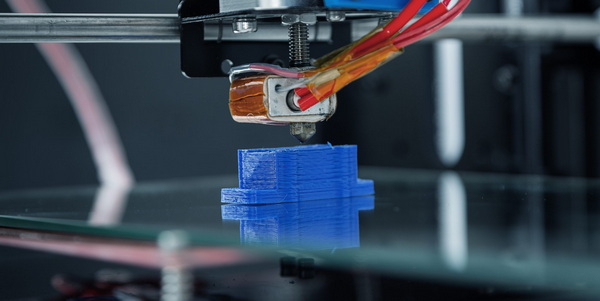
Using AI in rapid prototyping shortens development time by automating repetitive tasks such as geometry checks, parameter exploration, and basic CAD operations. It also reduces cost and rework by flagging manufacturability issues, predicting failures, and improving first‑time‑right builds. For OEM buyers, AI-enabled rapid prototyping provides clearer data for decision‑making on design changes, material choices, and process routes.
- Faster design exploration with AI-generated concepts and variants.
- More reliable manufacturability feedback and cost estimates.
- Better quality through AI-assisted inspection and predictive analytics.
In a typical rapid prototyping workflow, AI now supports idea generation, CAD modeling, simulation, design-for-manufacturing (DFM), process selection, pricing, scheduling, and inspection. In practice, that means AI tools help at every stage, from the first sketches to CNC machining, 3D printing, sheet metal fabrication, and mold design with partners like Shangchen. This end‑to‑end integration ensures that prototypes stay aligned with realistic production constraints.
Shangchen (sc-rapidmanufacturing.com) focuses on rapid prototyping, CNC machining, precision batch production, lathe turning, sheet metal fabrication, 3D printing, and mold production for global brands, wholesalers, and manufacturers. These capabilities are ideal foundations for AI-enhanced rapid prototyping workflows, from early concept models to small-batch production. By integrating AI with rapid prototyping services, Shangchen helps customers compress development cycles while maintaining stable quality.
AI assistants and specialized ideation tools can generate product ideas, feature lists, and rough visual layouts based on text prompts, market inputs, and competitor analysis. This makes early rapid prototyping more efficient because teams can explore many concepts before committing engineering time and budget. When combined with market research data, AI can also highlight which concepts offer the strongest commercial potential.
Modern CAD systems increasingly embed AI features that propose dimensions, suggest parametric relationships, and automate repetitive modeling steps. Generative design algorithms can automatically produce multiple geometry options that meet strength, weight, and material constraints, which is ideal for rapid prototyping of lightweight structures, brackets, and housings. Engineers can then filter these AI-generated options according to aesthetics, assembly, and cost.
AI-powered DFM tools analyze CAD files for thin walls, undercuts, impossible radii, and other features that are hard to machine, print, or mold. For rapid prototyping, this means fewer failed CNC or 3D printing builds, lower scrap, and faster iteration with suppliers such as Shangchen. The DFM feedback also guides engineers toward geometries that are easier to scale from one-off prototypes into mass production.
In some custom manufacturing platforms, AI engines now read CAD files, identify features, compare against historical jobs, and automatically suggest pricing and lead times for multiple processes. This helps engineering and purchasing teams quickly compare CNC machining, 3D printing, sheet metal fabrication, and molding as rapid prototyping options. Over time, this data forms a knowledge base that improves process selection and budgeting strategies.
During CNC machining, AI can assist with toolpath optimization, feed‑rate control, and predictive maintenance to keep machines running and reduce downtime. In 3D printing and sheet metal rapid prototyping, AI models can predict warpage, support structures, and spring‑back effects, improving dimensional accuracy on the first run. This leads to more consistent results across batches and better correlation between digital models and physical prototypes.
Vision systems powered by AI now inspect surfaces, dimensions, and assemblies in real time and detect small defects that humans might miss. For rapid prototyping projects, this ensures prototypes closely match CAD intent and provides data to refine designs before mass production. Combining AI inspection reports with CAD revision history creates a closed loop for continuous improvement.
AI analytics tools aggregate measurement data, field feedback, and test results to identify trends across multiple rapid prototyping cycles. By linking prototype performance back to material choices and process parameters, AI recommends design changes and process adjustments for the next iteration. This “learn from every prototype” approach turns rapid prototyping into a strategic learning system instead of isolated experiments.
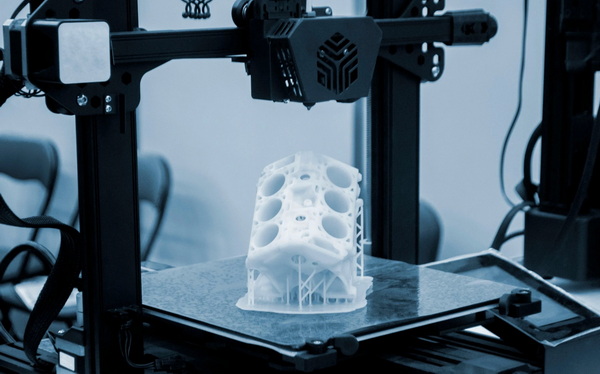
Product teams working on digital interfaces can use AI tools to generate wireframes, user flows, and interactive prototypes from simple prompts. These tools accelerate rapid prototyping of user interfaces before hardware or enclosure prototypes are made. When UX and UI are tested early, the requirements for physical controls, displays, and housings become much clearer for mechanical rapid prototyping.
When digital UX prototypes are validated using AI-driven tools, the same specifications can be fed into physical rapid prototyping for enclosures, brackets, and system components. A manufacturer like Shangchen can then turn these AI-refined specifications into CNC‑machined, 3D‑printed, or sheet‑metal prototypes with less ambiguity and fewer design loops. This synchronizes software and hardware development, reducing integration risk later in the project.
Overseas OEM buyers can first use AI to generate and refine CAD models, then send production-ready files and clear requirement documents to Shangchen for rapid prototyping. By combining AI-based DFM checks with Shangchen's engineering review, teams can select the best process—CNC machining, rapid 3D printing, sheet metal, or molding—for each prototype. As prototypes are tested, feedback can be fed back into AI tools to guide the next design iteration.
To introduce AI into rapid prototyping, start with low-risk pilot projects and extend usage as your team gains confidence. Focus on high‑value applications—such as automated DFM, quoting, or design exploration—where rapid prototyping speed or cost is a clear bottleneck. Clear KPIs, such as reduced lead time or fewer design loops, help you evaluate whether each AI tool truly improves your rapid prototyping workflow.
- Standardize CAD formats and naming conventions to feed AI tools clean data.
- Capture all prototype test results so AI models can learn from each rapid prototyping cycle.
- Work closely with a manufacturing partner like Shangchen to align design, process, and inspection data.
AI is especially valuable in rapid prototyping of lightweight mechanical parts, customized fixtures, medical device housings, and consumer product enclosures. It helps reduce time-to-market by compressing quoting, DFM evaluation, and supplier matching into minutes instead of days or weeks. In complex assemblies, AI can also simulate tolerance stack‑ups and assembly risks before any physical prototypes are ordered.
Despite its advantages, AI in rapid prototyping requires quality data, clear objectives, and human oversight to avoid unrealistic designs or misinterpreted recommendations. There are also integration challenges when connecting AI tools with existing CAD, PLM, and factory systems, especially in multi‑supplier projects. Companies must invest in training and governance so that rapid prototyping teams understand both the power and the limits of AI suggestions.
Emerging trends include AI co‑pilot systems embedded directly in CAD and CAM tools, closed-loop workflows from quoting to inspection, and supply chains that dynamically reroute rapid prototyping work based on cost and lead time. As these tools mature, rapid prototyping will more closely resemble software development, with fast, continuous iteration cycles. For OEM buyers, this means the ability to test more concepts in parallel and adapt quickly to market feedback.
Shangchen can receive AI-optimized designs, provide engineering feedback, and execute rapid prototyping across CNC machining, 3D printing, sheet metal, and mold making. This combination allows overseas brands and manufacturers to use AI for design intelligence while relying on Shangchen for high-quality physical prototypes and scalable production. By building long‑term cooperation, customers can establish stable rapid prototyping pipelines that grow with their product portfolio.
AI is reshaping rapid prototyping by accelerating design, automating manufacturability checks, improving quoting, and enhancing quality control from the first concept to the final prototype. When these AI capabilities are paired with an experienced OEM partner like Shangchen (sc-rapidmanufacturing.com), rapid prototyping becomes faster, more reliable, and better aligned with full-scale manufacturing. For overseas brands, wholesalers, and manufacturers, this combination of AI and rapid prototyping is a strategic advantage in highly competitive markets.

AI in rapid prototyping refers to using intelligent algorithms to assist with design generation, simulation, manufacturability checks, process selection, and quality inspection during the prototype phase. It helps teams test more ideas and produce better prototypes in less time.
AI reduces rapid prototyping costs by catching manufacturability issues early, optimizing material usage, and minimizing failed builds or rework. Automated quoting and smarter process selection also help buyers choose the most cost‑effective methods and suppliers for each prototype.
Useful AI tools for rapid prototyping include generative design systems in CAD software, DFM analyzers, AI quoting engines, and visual inspection platforms. For digital products, AI UX and UI tools support fast interface prototyping that connects smoothly with physical rapid prototyping.
Yes, small companies can access many cloud-based AI tools for design, analytics, and UX prototyping without large upfront investment. By working with an external manufacturing partner such as Shangchen, smaller teams can combine AI-driven design with professional rapid prototyping and production.
Start by choosing one high-impact area—such as DFM checks, quoting, or UX prototyping—and pilot an AI tool there. Then standardize data, collect feedback from engineering and manufacturing partners, and expand AI usage as you see measurable improvements in speed, quality, and cost.

