
Views: 222 Author: Amanda Publish Time: 2025-11-07 Origin: Site


Content Menu
● The Foundation of Moulding Production
>> Key Benefits of Moulding Production
● Integrated Workflow: From Design to Mass Manufacture
>> Starting with Rapid Prototyping and CNC Machining
>> The Moulding Production Cycle Unpacked
>> Advancing Through 3D Printing and Sheet Metal Fabrication
● Advanced Strategies for Scaling with Moulding Production
>> Designing for Manufacturability
>> Modular and Flexible Tooling
>> Optimized Equipment and Technology
>> Strategic Supply Chain Management
● Overcoming Challenges in Moulding Production
>> Managing Complexity and Tolerances
>> Quality Assurance and Continuous Improvement
>>> Equipment and Process Optimization
>>> Data Analytics and Continuous Review
● Achieving Sustainable and Profitable Growth
>> Inventory and Resource Management
>> Strategic Partnerships and Customer Focus
● The Impact of Reliable Moulding Production on Brand Growth
● FAQ
>> 1. What are the main stages of moulding production?
>> 2. How can the cycle time be optimized in moulding production?
>> 3. What are key material considerations in moulding production?
>> 4. What role does modular tooling play in scaling production?
>> 5. How can consistent quality be assured in mass production?
Scaling your enterprise with moulding production is essential in today's fast-paced, innovation-driven global marketplace. For brand owners, OEMs, and wholesalers, reliable moulding production can seamlessly bridge the gap between prototyping and high-volume manufacturing, offering robust, scalable, and consistent delivery. This comprehensive guide explores proven strategies, the latest technical advancements, and managerial approaches for leveraging moulding production to unlock market growth and operational excellence.
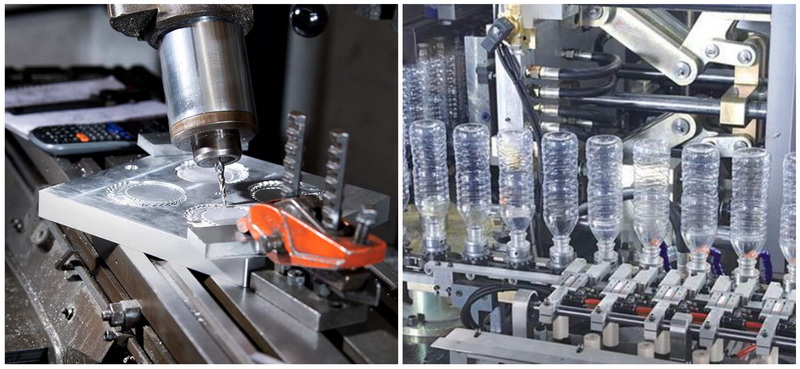
Moulding production is the backbone of efficient, scalable manufacturing. It transforms meticulous designs into repeatable, high-precision parts using robust cycles—clamping, injection, cooling, and ejection—all geared for rapid and reliable output. When paired with fast prototyping, CNC machining, and 3D printing, it promises both design agility and manufacturing stability.[10][11][12][13]
- Scalable Volume: Seamlessly move from small batch orders to mass production with consistent results.[8]
- Material Choices: Match product requirements with engineering plastics and metals for optimal durability, flexibility, or clarity.[14]
- Repeatable Precision: Each cycle delivers parts to exacting tolerances, enabling low-defect OEM supply.[15][14]
- Reduced Costs at Scale: As outputs increase, per-unit cost decreases—ideal for international clients needing value and predictability.[8]
Product development begins at the design table but quickly advances with rapid prototyping and CNC machining, ensuring concepts are physically tested and refined before the moulding production phase.[11][10]
- Prototyping accelerates feedback for design tweaks.
- CNC machining provides precision that helps perfect manufacturability.
- Material simulation during prototyping can predict real-world product performance.
Each stage of the moulding cycle is critical for ensuring part quality and production speed. Modern factories optimize these to balance cost, output, and quality.[13][16]
1. Clamping: Securing the mould.
2. Injection: High-pressure insertion of molten material.
3. Cooling: Precision temperature control ensures structural integrity.
4. Ejection: Accurate, non-damaging removal supports high throughput.
Adding versatility to the production flow, 3D printing and sheet metal fabrication can supplement traditional moulding by enabling low-volume runs, complex geometries, or unique functional prototypes. These integrated services ensure comprehensive rapid manufacturing and tailored solutions for international markets.
Early-stage Design for Manufacturability (DFM) minimizes cost and error during full-scale operations. Aligning the design with moulding production constraints—such as wall uniformity and draft angles—preempts costly retooling and supports quicker ramp-ups.[6]
Modular tooling expedites transitions between product lines or part revisions. Upfront investment pays off when demand shifts or incremental improvements are required, empowering OEM clients to stay nimble without incurring excessive costs.[6]
- Automation and Robotics: Enhance productivity and precision, reduce waste, and facilitate 24/7 operations.
- Data-driven Monitoring: Real-time control of all variables—temperature, pressure, and cycle time—means higher reliability and faster response to deviations.[7][17]
- Preventive Maintenance: Scheduled upkeep reduces unscheduled downtime and maintains peak equipment efficiency.
Building a flexible supply chain forms the backbone of scalable moulding production. Diversify supplier pools, secure multiple material sources, and adopt just-in-time systems to mitigate disruption risks and enhance flexibility.[6]
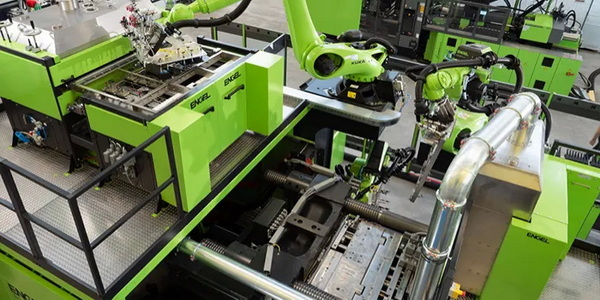
Choosing the right material is foundational for quality and scalability. Sophisticated projects evaluate:
- Performance properties: Impact resistance, temperature tolerance, transparency.
- Regulatory compliance: Materials must meet international health and safety norms for export.[14]
- Sustainability: Eco-conscious manufacturers gain a competitive edge and may reduce fees through recycling and waste minimization.[1]
Skilled engineering teams utilize advanced simulation and mould flow analysis to solve warping, sink marks, and incomplete fills—delivering high-quality components even with complex geometries.[18][19][13]
- Inspection systems using coordinate measuring machines (CMM), vision systems, and statistical process control ensure every batch meets OEM standards.
- Ongoing employee training, process reviews, and external audits promote a culture of relentless improvement, reducing scrap rates and off-spec production.[1]
Strategic enhancements in equipment and workflows can significantly shorten the cycle time—the interval between two successive parts—without sacrificing quality.[7]
- Fine-tuned parameters (e.g., injection speed, pressure, and temperature).
- Innovative mould designs for better material flow and efficient cooling.[7]
- Advanced cooling technologies like conformal cooling improve thermal efficiency.
Regularly analyzing production data uncovers inefficiencies and supports ongoing refinements. Machine learning and predictive analytics are increasingly vital for forecasting trends and preemptively removing bottlenecks.[7]
Implementing lean principles increases profitability. Eliminating bottlenecks, unnecessary handling, and delays ensures optimal utilization of manpower, materials, and equipment.[1]
Adopt real-time inventory tracking and just-in-time (JIT) systems to minimize carrying costs and prevent material shortages or overstock, directly impacting profitability and flexibility.[1]
A trained and empowered workforce is integral to efficient moulding production. Regular upskilling ensures teams stay ahead of technological shifts, contributing ideas to further refine quality and process.[1]
Collaboration with stakeholders—from material suppliers to end clients—increases efficiency, enhances innovation, and ensures both the factory and customer stay ahead of market demands. Emphasizing transparent communication builds trust and facilitates long-term growth.[5][1]
Successful businesses recognize moulding production not as an isolated service but as a growth catalyst. With efficient scaling, businesses gain:
- Quicker response to market opportunities
- Faster launch of new products
- Greater flexibility to fulfill fluctuating order volumes
- Assurance of international quality and compliance
Sophisticated OEM clients can focus on innovation, marketing, and expansion, secure in the knowledge that their manufacturing backbone is robust and scalable.
Reliable moulding production services empower organizations to scale efficiently, compete globally, and deliver consistent, high-quality products. By leveraging advanced manufacturing technologies, robust process strategies, and experienced partners, both established brands and ambitious startups can translate ideas into mass-produced success. The continual refinement of processes, workforce training, and data-driven management ensure ongoing improvement, cost containment, and readiness for new market challenges. Choose scalable moulding production to anchor your expansion and achieve sustainable business growth.
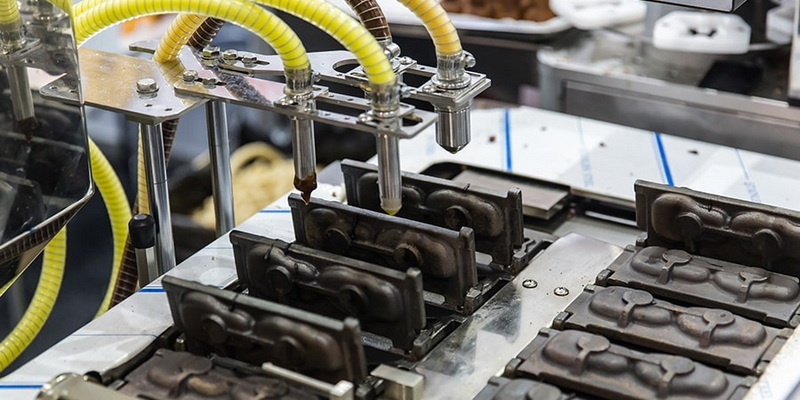
Moulding production consists of clamping, injection, cooling, and ejection. Each ensures stable, high-quality part production, essential for scaling up in manufacturing environments.[19][13]
Cycle time can be reduced through advanced machine settings, innovative cooling strategies, real-time data analytics, and regular equipment maintenance to eliminate bottlenecks and maximize efficiency.[17][20][7]
Selections are guided by mechanical strength, heat resistance, regulatory compliance, and sustainability requirements. Proper choices affect product lifespan, export eligibility, and market acceptance.[18][14]
Modular tooling allows for adaptable configurations, supporting rapid design and production shifts, reducing costs and lead times as portfolios or order volumes change.[6]
Continuous process monitoring, quality audits, ISO-compliant systems, skilled staff, and up-to-date equipment together create the reliability that OEM clients demand for global export and brand integrity.[21][17]
[1](https://rjginc.com/maximizing-profitability-six-effective-strategies-to-grow-your-injection-molding-business/)
[2](https://advantechplastics.com/blog/challenges-and-solutions-to-scaling-plastic-injection-molding-production-at-a-life-sciences-company/)
[3](https://www.medical.saint-gobain.com/resources/blog/5-phase-approach-scaling-silicone-injection-molding-process)
[4](https://www.youtube.com/watch?v=tUDvQupklBg)
[5](https://www.linkedin.com/posts/western-industries-plastic-products-llc_blowmolding-manufacturing-blowmolding-activity-7209307545411227648--Lom)
[6](https://www.cambridgenetwork.co.uk/news/mastering-mass-manufacturing-startups-guide-scaling-successfully)
[7](https://www.phas.io/post/injection-molding-cycle-planning)
[8](https://beaverstateplastics.com/top-4-advantages-of-scalable-plastic-injection-molding/)
[9](https://e-bi.com/why-injection-molding-is-key-for-scalable-robotics-production/)
[10](https://nabell.com/blog/why-cnc-rapid-prototyping-matters-in-industrial-applications/)
[11](https://www.ltc-proto.com/blog/5-reasons-to-use-cnc-machining-for-rapid-prototyping/)
[12](https://www.fictiv.com/articles/injection-molding-manufacturing-process)
[13](https://boyanmfg.com/injection-molding-process-steps/)
[14](https://formlabs.com/blog/guide-to-manufacturing-processes-for-plastics/)
[15](https://advancedplastiform.com/injection-molding/frequently-asked-questions/)
[16](https://www.polyplastics.com/global/s/support/PrototypeEvaluation/TheOutlineofInjectionMolding?language=en_US)
[17](https://www.monitor-box.com/injection-molding-cycle-time/)
[18](https://www.smtllcgroup.com/master-injection-molding-challenges/)
[19](https://www.youtube.com/watch?v=RMjtmsr3CqA)
[20](https://www.youtube.com/watch?v=FCyMVqR2hO4)
[21](https://www.retlawindustries.com/PlasticInjectionMolding)

