
Views: 222 Author: Amanda Publish Time: 2025-11-05 Origin: Site


Content Menu
● Understanding Moulding Production Processes
>> Core Processes in Moulding Production
● Design Strategies for Cost Reduction
>> Eliminate Unnecessary Features
>> Minimize or Eliminate Undercuts
>> Optimize Wall Thickness and Drafts
>> Strategic Material Selection
● Process Optimization and Automation
>> Fine-Tuning Process Parameters
● Quality Control Without Added Cost
>> Invest in Workforce Training
>> Statistical Process Control
● Technology Upgrades and Advanced Methods
>> Inline Compounding and Vented Extrusion
● Real-World Examples in Cost-Effective Moulding Production
● Environmental and Long-Term Savings
● Practical Action Steps for Manufacturers
● Summary
● FAQs
>> 1. How does modular tooling help control costs?
>> 2. What design changes yield the biggest savings in moulding production?
>> 3. What's the role of material selection in cost reduction?
>> 4. Why are automation and process monitoring essential for cost savings?
>> 5. Can sustainability efforts actually reduce moulding production costs?
Reducing costs in moulding production, while upholding high-quality standards, is at the heart of sustainable manufacturing for global OEMs, wholesalers, and brands. From design to manufacturing and post-processing, every stage of moulding production offers options to optimize efficiency, enhance quality, and deliver savings. The following guide offers a comprehensive approach—of value to manufacturers in plastics, metals, and composite fabrication—spanning initial design to finished product evaluation.
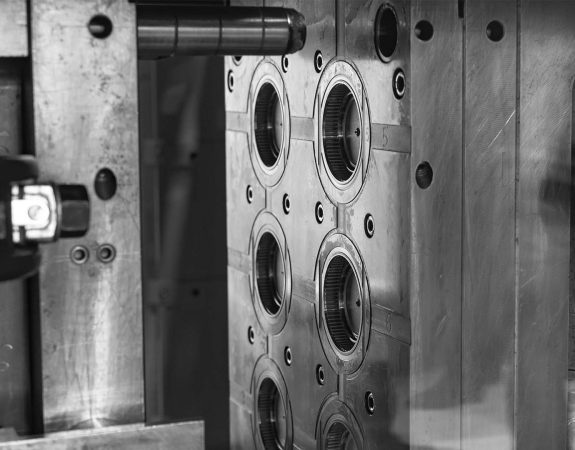
Moulding production describes a series of manufacturing technologies designed to create precise, repeatable components, typically in high volume. These processes—including injection moulding, CNC machining, rapid prototyping, and additive manufacturing—share a commitment to accuracy, process control, and material efficiency.[10][11]
- Injection Moulding: Heating a plastic or rubber, injecting it into a precision-engineered cavity, and ejecting the finished part after cooling.
- Urethane Casting: Using silicone tools for small batches with high surface quality.
- CNC Machining: Subtractive manufacturing for tight-tolerance metal/plastic parts.
- Sheet Metal Fabrication: Bending, cutting, and assembling metal sheets.
- 3D Printing: Layer-by-layer additive manufacturing for prototypes and low-volume runs.
- Die Casting & Extrusion: Metal and plastic shaping for mass or continuous production.[12]
Each method serves specific product requirements, but the shared focus is repeatable quality at competitive cost.
Every additional contour, engraving, or complex geometry increases the cost of both tooling and production. Designers should prioritize essential features: utility, fit, function, and minimal branding, for efficient, cost-effective moulding production.[1][2][6]
Undercuts prevent a part from being directly ejected from a mould, requiring side actions or more complex tooling. These features add expense, slow down cycling, and increase maintenance needs. By reducing or redesigning undercuts, manufacturers see measurable tooling and per-part cost savings.[2][6][1]
Uniform, moderate wall thicknesses enable faster, more even cooling and lower waste, while preventing warping or sink marks. Draft angles—tapers from vertical wall sections—make part ejection easier, extending tool life and reducing reject rates.[3][6][13]
Opt for core cavity approaches for box-shaped or deep components. This strategy enables simpler tool fabrication, easier resin flow, and less expensive manufacturing compared with cutting deep, narrow cavities.[6][2]
Solid, unnecessarily bulky sections can be replaced by structured ribs or gussets, reducing material use, cycle time, and shipping cost, but supporting mechanical performance. Simple, streamlined part geometry supports efficient, quality-oriented production.[5][6]
Material choice is one of the most direct cost levers in moulding production. Engineers should carefully analyze required performance characteristics—strength, heat resistance, chemical exposure—and select the lowest-cost material fulfilling these needs. In many cases, commodity polymers or standard alloys are adequate and far more affordable than specialized grades.[13][1][3]
Utilize design-for-manufacturability (DFM) analysis to minimize part volume, employ runner or gating systems that recycle scrap where possible, and opt for multi-use regrind strategies without compromising requirements.[6]
Modular tooling systems use a standardized base with replaceable inserts for different product types, allowing for rapid changeover and lower upfront investment, especially for short runs or prototyping. Family moulds consolidate multiple unique parts into one tool, promoting parallel production and distributing tooling costs across products.[5]
For high-volume production, multi-cavity moulds are indispensable. By producing several parts per shot, cycle times and unit cost are slashed compared to single-cavity configurations. The higher initial capital is quickly recovered through long-term savings.[3][5]
Quick-change systems accelerate maintenance, setup, and die swap, reducing machine downtime—critical for contract manufacturers and dynamic production schedules.
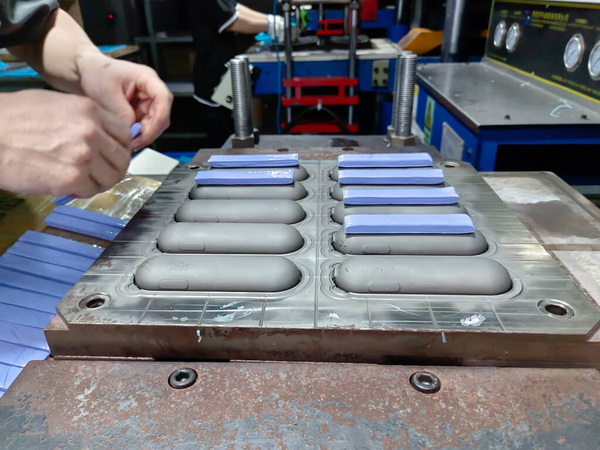
Process optimization involves adjusting temperature, pressure, cooling time, and speed for each resin and part geometry. Experimenting with these parameters, with the aid of scientific moulding and sensor feedback, ensures defects are minimized and every cycle yields optimal results.[14][3]
Automated part handling, tool changes, and quality checks boost yields and free up skilled labour for value-added tasks. Automation increases consistency, reduces errors, and shortens total production time—significantly lowering costs over a project's lifespan.[15][14]
Modern all-electric injection machines and energy-saving ancillaries substantially reduce energy consumption and heat loss. Energy monitoring and preventive maintenance programs lower utilities costs and extend equipment life while upholding process reliability.[16][3]
Routine equipment checks, preventive replacements, and calibration ensure moulding production lines remain efficient with less unplanned downtime. These measures prevent defective output—saving both scrap and customer goodwill.[17][15]
Operators trained in troubleshooting, DFM, and proactive quality assurance catch issues before they escalate, reducing rework and warranty claims.[15][17]
Real-time process monitoring (SPC) helps identify drift or anomalies as they occur, allowing for instant corrections and maintaining quality at minimal extra expense.
Technologies such as in-mold assembly, insert moulding, and in-mold labeling can integrate multiple processes, directly reducing labor time and post-mould operations in moulding production.[3]
Integrating material compounding and the extrusion process within the same cycle better utilizes materials and reduces secondary processing steps, yielding savings on both material cost and energy.[3]
Blending CNC machining, additive manufacturing, and traditional moulding enables rapid prototyping, shortens design cycles, and supports flexible, efficient production—particularly for custom or complex projects.[18]
Leading manufacturers have successfully:
- Eliminated excess features: Reducing unnecessary surface finishes, logos, or branded engravings, saving up to 15% in tooling and cycle time.[1][2]
- Opted for family and modular tooling: Achieving higher throughput, especially across product lines with related components, spreading cost investment for significant long-term savings.[5]
- Optimized for material and wall thickness: Shifting from specialty polymers to suitable commodity-grade resins, and trimming wall thickness, improving both throughput and raw material expenditure.
- Integrated automated inspection: Reducing the total number of manual quality checks and human error while maintaining regulatory compliance.
Cutting costs should never result in environmental shortcuts. By utilizing recyclable materials, lowering waste via optimized gating and part fills, and investing in efficient technology, moulding production can align with increasingly stringent sustainability standards, opening further markets and future-proofing operations. This adds reputational and regulatory value well beyond immediate financial returns.[16]
1. Review designs with DFM experts to pare unnecessary features.
2. Work with suppliers to identify new, cost-competitive resins or metals with similar or better performance.
3. Invest in modular or multi-cavity tooling where long-run or high-mix production is planned.
4. Implement a robust quality management program—including preventive maintenance, real-time monitoring, and in-depth operator training.
5. Automate repetitive processes to free skilled labour for value-added tasks and increase throughput.
6. Benchmark energy usage; consider technology upgrade cycles for machines that offer better precision and efficiency.
Manufacturers that systematically integrate design efficiency, sharp material selection, advanced tooling, and state-of-the-art automation continually outperform competitors. Cost savings in moulding production need not come at the expense of product quality. In fact, the best strategies do both—helping to deliver consistent, reliable parts to customers while strengthening business margins and market competitiveness. By following these proven methods, companies can thrive even amid rising global cost pressures.
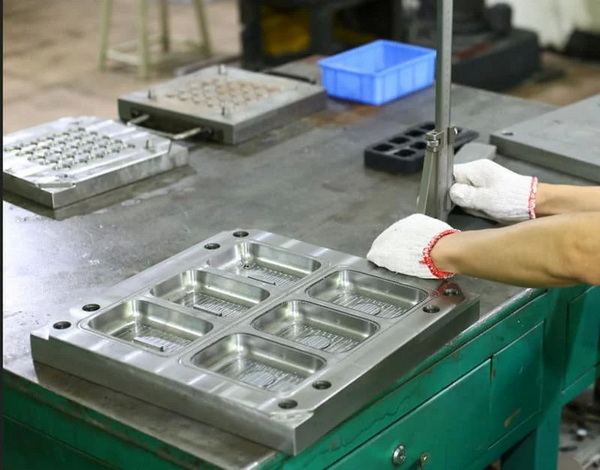
Modular tooling allows different product inserts to be swapped into a standard mould base, lowering upfront tooling costs for new items and shortening setup times for frequent design changes. This greatly enhances flexibility and investment effectiveness, especially for low to mid-volume production.[5]
Removing unnecessary undercuts and intricate details, relaxing cosmetic standards where possible, and simplifying product geometries deliver substantial savings in tooling and cycle time, while also improving yields.[2][1][6]
Selecting adequate but lower-cost materials tailored to the application's environmental and mechanical needs keeps direct costs low, enhances manufacturability, and can increase production speed through faster curing, cooling, or ejection.[13][1][3]
Automation reduces manual labor requirements, prevents human errors, and boosts cycle throughput. Continuous process monitoring ensures immediate detection and correction of issues, saving both material and time.[14][15]
Yes—reducing waste, recycling materials, using efficient machines, and optimizing for energy can all lower operating expenses in direct and indirect ways, while also supporting customer and regulatory demands for green manufacturing.[16]
[1](https://www.protolabs.com/en-gb/resources/design-tips/9-tips-to-reduce-injection-moulding-costs/)
[2](https://advancedplastiform.com/reduce-the-costs-of-injection-molding/)
[3](https://www.makerverse.com/resources/injection-molding/6-ideas-to-reduce-your-injection-molding-costs/)
[4](https://www.fictiv.com/articles/tips-to-reduce-injection-molding-costs)
[5](https://www.stelray.com/blog/6-cost-effective-strategies-for-injection-molded-part-design)
[6](https://revpart.com/8-ways-lower-injection-molding-costs/)
[7](https://elsmar.com/elsmarqualityforum/threads/cost-savings-ideas-plastics-injection-molding-automotive-supplier.16638/)
[8](https://www.aprios.com/insights/choosing-the-best-injection-molding-tooling-for-cost-and-performance)
[9](https://www.reddit.com/r/AskEngineers/comments/3h3hbq/what_would_be_the_most_cost_effective_method_to/)
[10](https://www.protolabs.com/resources/guides-and-trend-reports/designing-for-moldability-fundamental-elements/)
[11](https://formlabs.com/blog/guide-to-manufacturing-processes-for-plastics/)
[12](https://xometry.pro/en/articles/infographic-formative-manufacturing-technologies/)
[13](https://www.rpworld.com/en/resources/blog/6-ways-to-reduce-costs-for-injection-molding-parts.html)
[14](https://rjginc.com/how-to-lower-plastic-injection-molding-costs/)
[15](https://www.frog3d.com/cnc-machining-quality-control/)
[16](https://4spepublications.onlinelibrary.wiley.com/doi/10.1002/pen.26256)
[17](https://www.bakerindustriesinc.com/blog/best-practices-for-quality-control-in-cnc-machining/)
[18](https://www.stratasys.com/en/resources/videos/reduce-injection-molding-cost-and-lead-time-with-polyjet-3d-printing/)

