
Views: 222 Author: Amanda Publish Time: 2025-12-03 Origin: Site


Content Menu
● CNC Machining for Global OEM Brands
● CNC Machining Career Path: Where to Begin
● Core Knowledge Needed for CNC Machining
● Practical Roadmap to a CNC Machining Career
● How Shangchen Supports Engineers and Product Teams
● Common CNC Machining Materials and Their Uses
● Industries That Rely on CNC Machining
● Design for CNC Machining: Practical Guidelines
● CNC Machining and Other Manufacturing Processes
● Cost Factors in CNC Machining
● Quality Control in CNC Machining
● How to Get Started with Shangchen
● FAQs
>> 1. What skills are required to start in CNC Machining?
>> 2. Do I need formal education to work in CNC Machining?
>> 3. How can an overseas brand start using CNC Machining in China?
>> 4. Is CNC Machining only for metal parts?
>> 5. How do I choose the right CNC Machining supplier?
Getting into CNC Machining can mean building a long-term technical career or transforming how your company develops and manufactures products with a reliable OEM partner. For overseas brands, wholesalers, and manufacturers, working directly with a professional factory such as Shangchen (sc-rapidmanufacturing.com) in China is one of the fastest ways to unlock the full potential of CNC Machining for rapid prototyping and precision production.[10][11][12][13]
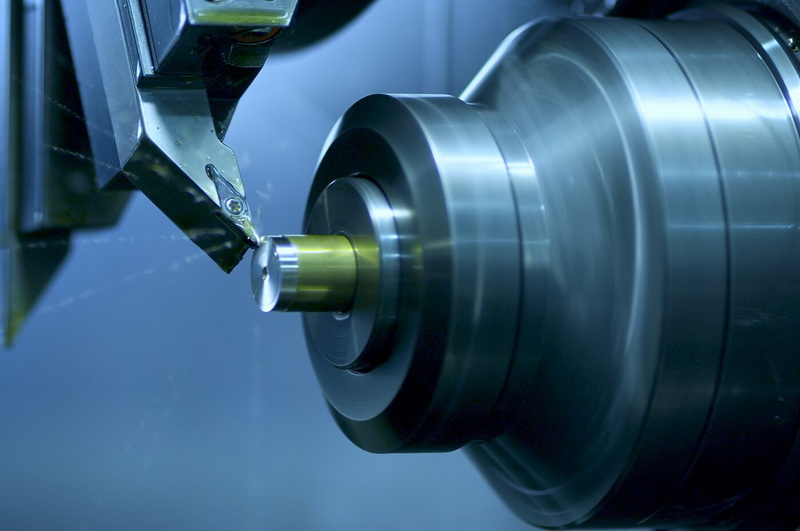
Shangchen (sc-rapidmanufacturing.com) is a China-based factory focused on rapid prototyping, CNC Machining, CNC turning, precision batch manufacturing, sheet metal fabrication, 3D printing, vacuum casting, injection molding, and mold production for global OEM customers. By combining multi‑axis machining centers, experienced engineers, and a strict quality-management system, Shangchen helps brands reduce development risk and bring CNC Machining parts to market faster.[12][13]
The company serves foreign brands across automotive, aerospace, robotics, medical, industrial equipment, consumer electronics, and new energy sectors, offering high-precision CNC Machining in metals and engineering plastics. Shangchen's ability to integrate CNC Machining with sheet metal, 3D printing, and molding also means you can manage prototypes, bridge production, and mass production under one roof.[1][13][12]
CNC Machining (Computer Numerical Control Machining) is a subtractive manufacturing process where computer-controlled tools remove material from a solid block to create a finished part. Programming instructions derived from CAD/CAM software guide the cutting tools along precise paths, allowing CNC Machining centers to achieve complex geometries and tight tolerances repeatedly.[14][15][16]
Common CNC Machining equipment includes vertical and horizontal mills, turning centers, Swiss-type lathes, and 5‑axis machining centers that process multiple faces in a single setup. Because CNC Machining can work with aluminum, stainless steel, carbon steel, titanium, brass, copper, and a wide range of plastics, it is widely used in both prototyping and production for high-value parts.[4][13][15][14]
For overseas OEM brands, “getting into” CNC Machining usually means building a dependable partnership rather than investing heavily in your own shop. Equipment, CAM software, tooling, metrology, and skilled staff represent a major capital commitment, so many companies outsource CNC Machining to specialized Chinese factories.[2][17][18][19]
Shangchen supports this model by:[13][12]
- Providing CNC Machining quotations based on 3D files and drawings, with manufacturability and cost feedback
- Offering material and process suggestions to match performance, regulatory, and cost targets
- Producing prototypes and low-volume CNC Machining batches for testing and market validation
- Scaling to stable, repeatable CNC Machining production or transferring designs to molding when volumes increase
This approach lets OEM brands focus on design, marketing, and distribution while leveraging a mature CNC Machining ecosystem in China.[18][19]
If your goal is to become a CNC machinist, you need a mix of theoretical knowledge and real workshop experience. CNC Machining roles involve interpreting drawings, setting up machines, selecting tools, programming or editing G‑code, and monitoring quality and safety throughout the machining process.[11][20][10]
Typical first steps include:[20][10]
- Completing high school or equivalent with strong math and basic physics
- Enrolling in vocational or technical programs focusing on CNC Machining, machining technology, and CAD/CAM
- Starting as an operator or trainee to gain hands-on CNC Machining experience and understand shop workflows
- Pursuing certifications and advanced training to move into programming, process engineering, or supervisory positions
CNC Machining careers can evolve into roles such as CNC programmer, manufacturing engineer, shop supervisor, or production manager as your experience grows.[16][11]
Anyone entering CNC Machining—whether in a factory role or as an OEM decision‑maker—benefits from mastering some core topics. These fundamentals make communication with suppliers smoother and help you make more realistic design and production decisions around CNC Machining.[15][10][13][16]
Important knowledge areas include:[14][15]
- G‑code and M‑code basics and how CNC Machining centers interpret toolpaths
- Coordinate systems, offsets, workholding strategies, and tool length compensation
- Feed, speed, depth of cut, and how they influence tool life, accuracy, and surface finish in CNC Machining
- Tolerancing, geometric dimensioning and tolerancing (GD&T), and surface roughness specifications
Even if you outsource all CNC Machining, understanding these concepts helps you design parts that machine efficiently and specify the right requirements for your suppliers.[19][13]
A structured roadmap makes entering CNC Machining clearer and more manageable. While details differ by region, most paths include formal or informal training and a period of supervised practice in production shops.[10][11][16][20]
A typical roadmap for CNC Machining looks like this:
1. Build a STEM foundation through math, physics, and basic engineering concepts.[20][10]
2. Attend a technical college or training center offering CNC Machining and machining technology courses.[16][10]
3. Secure an entry-level operator role to learn machine setup, part inspection, and basic troubleshooting.[21][11]
4. Learn CAD/CAM software to design toolpaths and understand the digital side of CNC Machining.[16][20]
5. Pursue advanced topics such as multi‑axis CNC Machining, automation, and process optimization to open senior technical roles.[22][16]
Along the way, documenting your CNC Machining projects and achievements in a portfolio helps show employers your capabilities.[11][20]
For designers and engineers, collaborating closely with Shangchen gives you practical feedback on how your ideas interact with real CNC Machining constraints. Instead of guessing, you can refine models based on manufacturability analysis, prototype results, and cost comparisons across different CNC Machining strategies.[12][13][19]
Typical cooperation steps for a CNC Machining project include:[13][12]
- Sharing 3D models and 2D drawings with initial tolerance and finish requirements
- Receiving recommendations about materials, tolerances, and geometric changes to suit CNC Machining
- Approving quotations and lead times for prototypes or short runs
- Reviewing sample parts, test results, and inspection reports
- Finalizing production parameters and scaling up CNC Machining quantities or transitioning parts to other processes as needed
This iterative collaboration helps you reach a balance between performance, manufacturability, and cost in your CNC Machining projects.[18][13]
One of the strengths of CNC Machining is the wide range of compatible materials. Selecting the right material is crucial for mechanical performance, weight, corrosion resistance, and cost in both prototypes and production CNC Machining parts.[1][15][14]
Common materials used in CNC Machining include:[4][15]
- Aluminum alloys (such as 6061, 7075) for lightweight, high-strength parts in automotive, aerospace, and electronics
- Stainless steels for corrosion-resistant components in medical devices, food processing, and chemical equipment
- Carbon steels and tool steels when high strength or wear resistance is needed in gears, fixtures, and machinery
- Copper alloys and brass for electrical, thermal, and decorative components
- Engineering plastics like ABS, POM, PC, nylon, and PEEK for lightweight, electrically insulating, or chemically resistant CNC Machining parts
Shangchen works with many of these materials, allowing OEM customers to compare several options within the same project using CNC Machining prototypes and short runs.[1][13]
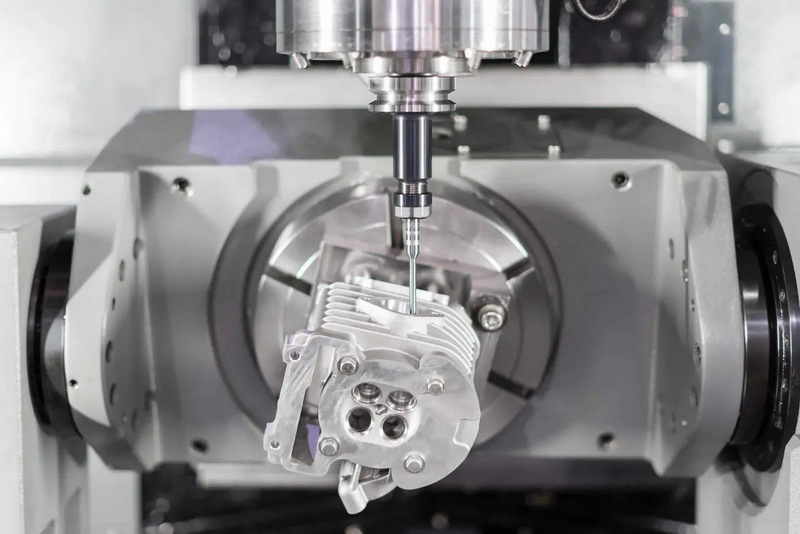
CNC Machining has become a core manufacturing method in numerous industries thanks to its precision, repeatability, and versatility. Understanding where CNC Machining is used helps you evaluate its relevance to your own products.[5][2][4][1]
Key sectors using CNC Machining include:
- Automotive: Components such as engine blocks, cylinder heads, brackets, housings, and interior structure parts are produced with CNC Machining for reliability and repeatability.[2][1]
- Aerospace: Structural parts, engine components, and critical fittings often require tight-tolerance CNC Machining in aluminum, titanium, and high-temperature alloys.[7][5]
- Medical and healthcare: Surgical instruments, implants, prosthetics, and device housings rely on precise CNC Machining and biocompatible materials.[5][1]
- Electronics and semiconductors: Enclosures, heat sinks, connectors, fixtures, and precision tooling are made with high-precision CNC Machining.[4][1]
- Energy and agriculture: Turbine components, solar panel frames, valve bodies, and agricultural machinery parts often depend on CNC Machining for durability and dimensional accuracy.[1][4]
Shangchen serves many of these sectors, which gives their engineering team practical insight into how different industries apply CNC Machining.[12][13]
Design-for-manufacturing (DFM) is essential to get the most out of CNC Machining. By adapting designs to the realities of tooling, workholding, and machine kinematics, you can reduce lead time, avoid costly rework, and improve performance.[23][15][19][13]
Useful design guidelines for CNC Machining include:[15][13]
- Avoid excessively thin walls and deep, narrow pockets that are difficult to machine and may cause chatter or distortion
- Use internal radii that match or slightly exceed standard cutter diameters to allow smooth tool motion
- Apply tighter tolerances only where they are functionally necessary; over-specifying tolerances increases CNC Machining time and inspection effort
- Consider how parts will be fixtured on CNC Machining centers and add features that simplify clamping when possible
- Plan secondary operations such as tapping, reaming, or surface finishing in tandem with CNC Machining strategy
Shangchen's engineers often review drawings and suggest adjustments that preserve function while making CNC Machining more robust and economical.[13][12]
CNC Machining rarely stands alone; it interacts with other technologies throughout the product life cycle. Understanding when to choose CNC Machining and when to switch to processes such as injection molding or sheet metal can save both cost and time.[6][19][23][18]
Common relationships include:[19][1]
- CNC Machining before injection molding: Prototype and validate parts with CNC Machining before investing in molds, then use CNC Machining to manufacture mold components.
- CNC Machining plus 3D printing: Use additive manufacturing for fast design iterations and complex internal features, and CNC Machining for tight tolerances or critical interfaces.
- CNC Machining plus sheet metal fabrication: Combine folded enclosures with CNC Machining inserts or mounting features for high-precision assemblies.
Because Shangchen provides all of these processes in one facility, customers can shift smoothly between CNC Machining and other methods without changing suppliers.[12][13]
Understanding what drives the cost of CNC Machining helps you optimize designs and sourcing decisions. Cost is not only about material price; it also reflects setup time, cycle time, tooling, inspection, and finishing.[6][15][19][13]
Key cost drivers in CNC Machining include:[15][4]
- Part geometry: Deep pockets, thin walls, tight radii, and complex multi‑axis features increase machining time
- Tolerances and surface finish: Stricter requirements often need slower machining, special tools, or additional finishing operations
- Material choice: Harder or exotic materials extend cycle times and tool wear in CNC Machining
- Order volume: Low volumes may have higher per-part costs due to setup, while larger CNC Machining batches spread fixed costs over more pieces
Discussing these factors early with Shangchen allows you to balance performance needs with realistic CNC Machining budgets.[13][12]
Quality control is central to successful CNC Machining, especially for safety‑critical and precision components. Proper measurement and inspection ensure that the parts produced by CNC Machining meet drawing requirements and industry standards.[7][5][15][1]
Modern CNC Machining quality practices often include:[5][15]
- Use of calipers, micrometers, height gauges, and coordinate measuring machines (CMMs)
- First-article inspection reports to validate CNC Machining processes before full production
- Statistical process control (SPC) to monitor trends and keep machining processes stable
- Material certifications and traceability, especially for aerospace, medical, and automotive applications
Shangchen's combination of CNC Machining capability and inspection equipment gives overseas customers confidence that parts will meet specification consistently.[12][13]
Starting a CNC Machining project with Shangchen is straightforward and scalable. Whether you are developing a single prototype or launching a family of OEM products, the same structured process applies.[18][19][13][12]
A typical four-step engagement looks like:[13][12]
1. Send RFQ: Provide CAD files, drawings, quantities, target lead times, and any special CNC Machining or material requirements.
2. Receive DFM and quotation: Shangchen reviews CNC Machining feasibility, suggests optimizations, and presents pricing and delivery.
3. Prototype and validate: Test CNC Machining samples for fit, function, and performance and refine requirements if needed.
4. Scale and stabilize: Move to higher volumes, introduce new variants, or integrate CNC Machining with other processes such as sheet metal and molding.
This approach enables a smooth entry into CNC Machining and allows you to grow your product line without rebuilding your supply chain.[18][13]
Getting into CNC Machining is a strategic decision, whether you are an individual building a technical career or an OEM brand seeking competitive manufacturing advantages. By understanding CNC Machining fundamentals, design principles, cost drivers, and quality practices, you can make informed decisions that support long-term growth.[17][10][14][15]
For international brands, Shangchen (sc-rapidmanufacturing.com) offers a mature, integrated platform for CNC Machining, turning, sheet metal, 3D printing, and mold making that supports everything from early prototypes to batch and mass production. Combining your product vision with a knowledgeable CNC Machining partner lets you bring high-quality parts to market faster and more confidently in an increasingly demanding global landscape.[19][12][13]
To begin working in CNC Machining, you need strong basic math, mechanical reasoning, and the ability to read technical drawings and follow detailed instructions. Good communication, attention to detail, and a respect for safety are also critical because CNC Machining involves rotating tools, sharp edges, and precise setups.[10][11][20][16]
Formal education is not always mandatory, but completing vocational or technical courses in CNC Machining and machining technology makes it much easier to enter and advance in the field. Many employers prefer candidates who have hands-on training with CNC Machining equipment and a basic understanding of CAD/CAM before joining the shop floor.[11][20][10][16]
Overseas brands usually start by sending 3D models, drawings, and quality requirements to a trusted Chinese factory such as Shangchen (sc-rapidmanufacturing.com) for evaluation and quotation. After reviewing DFM feedback and approving samples produced by CNC Machining, they move into batch production and gradually expand the relationship to additional projects.[17][12][13]
CNC Machining is widely used for metals but is also very common for engineering plastics and composites. Using plastics in CNC Machining is particularly helpful for functional prototypes or low-volume production when you need properties similar to injection-molded parts without investing in tooling.[23][15][19][1]
When choosing a CNC Machining supplier, look at technical capabilities, equipment range, quality certifications, communication, industry experience, and the ability to scale from prototypes to production. Partners such as Shangchen that offer CNC Machining alongside sheet metal, 3D printing, and molding provide extra flexibility because they can support your product through multiple stages of its life cycle.[2][17][12][13]
[1](https://www.3erp.com/blog/cnc-machining-applications-and-uses/)
[2](https://durexinc.com/top-industries-using-cnc-machining/)
[3](https://www.reddit.com/r/MechanicalEngineering/comments/1953x9j/which_industrys_uses_cnc_milling_the_most_for/)
[4](https://qviro.com/blog/what-industries-use-cnc-machines/)
[5](https://www.americanbusinessmag.com/applications-that-benefit-from-cnc-machining/)
[6](https://www.shopsabre.com/5-applications-of-cnc-machines/)
[7](https://karkhana.io/cnc-and-its-applications/)
[8](https://www.makerverse.com/resources/insights-and-trends/how-cnc-machining-is-used-across-industries/)
[9](https://xmake.com/cnc-machining-in-the-automotive-industry-11-techniques-and-its-applications/)
[10](https://astforgetech.com/what-is-a-cnc-machinist-and-how-to-become-one-full-guide/)
[11](https://www.4cornerresources.com/career-guides/cnc-machinist/)
[12](https://www.sc-rapidmanufacturing.com)
[13](https://www.sc-rapidmanufacturing.com/cnc-machining.html)
[14](https://www.rapidmfgco.com/services/cnc-machining)
[15](https://cncrapid.com/cnc-machining-services)
[16](https://www.datron.com/resources/blog/how-to-become-a-cnc-machinist/)
[17](https://www.hollyplasticparts.com/china-cnc-machining-service-companies/)
[18](https://firstmold.com/insights/rapid-prototyping-companies-in-china/)
[19](https://www.china2west.com/rapid-prototyping-services-china/)
[20](https://www.indeed.com/career-advice/finding-a-job/how-to-become-a-cnc-machinist)
[21](https://www.reddit.com/r/CNC/comments/14qj1ru/i_want_to_get_into_cnc_whats_the_best_way_i_have/)
[22](https://www.rapidmfgco.com/our-services)
[23](https://www.pcbway.com/rapid-prototyping/)

