
Views: 222 Author: Amanda Publish Time: 2025-12-10 Origin: Site


Content Menu
● Why CNC Machining Time Matters
● Key Components of CNC Machining Time
● Basic Formula for CNC Machining Time
● Understanding Speeds, Feeds, and Cutting Length
● Calculating Feed Rate for CNC Machining
● Estimating Total Length of Cut
● Cycle Time Estimation for CNC Milling
● Cycle Time Estimation for CNC Turning
● Cycle Time Estimation for CNC Drilling and Tapping
● Non‑Cutting Time in CNC Machining
● Step‑by‑Step Workflow to Estimate CNC Machining Time
● Example: Simple CNC Milling Time Estimation
● Example: CNC Turning Time Estimation
● Using CAM Systems to Estimate CNC Machining Time
● Advanced Methods: AI and Predictive Models
● Practical Factors Affecting CNC Machining Time
● Batch Size and Average CNC Machining Time per Part
● How Shangchen Helps OEM Clients with Time Estimation
● Tips to Reduce CNC Machining Time
● Common Mistakes in CNC Machining Time Estimation
● Best Practices for OEM RFQs Involving CNC Machining
● FAQs
>> 1. What is the basic formula for CNC machining time?
>> 2. How do speeds and feeds affect CNC machining time?
>> 3. How accurate are CAM software cycle‑time estimates?
>> 4. Why is setup time important for small CNC machining batches?
>> 5. Can advanced models improve CNC machining time estimation?
Estimating CNC machining time accurately is essential for competitive quoting, realistic delivery dates, and profitable production planning for CNC Machining projects. A clear, repeatable method helps both OEM buyers and CNC machining suppliers like Shangchen (sc-rapidmanufacturing.com) align on cost, timing, and capacity.[1][2]
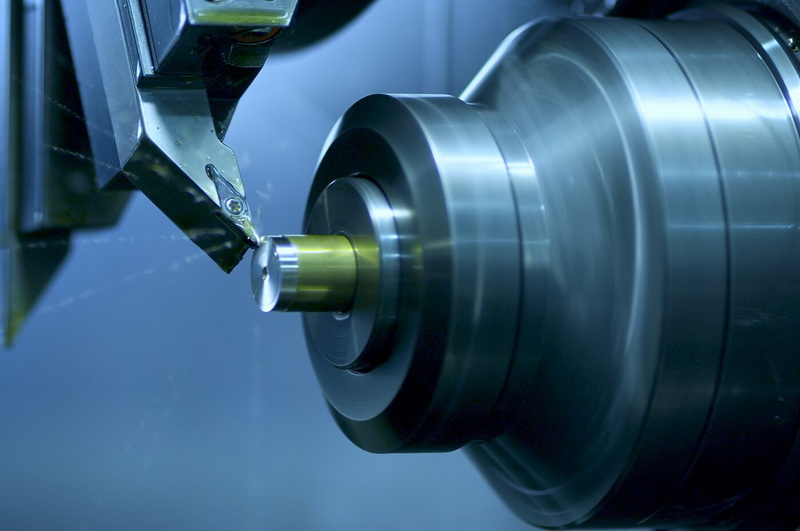
Accurate CNC machining time estimation drives pricing, machine utilization, and delivery reliability in any CNC machining workshop. Underestimating time erodes profit, while overestimating time makes your CNC machining RFQ less competitive in global markets.[2][3]
CNC machining time is also the foundation for capacity planning, shift allocation, and investment decisions in new machines or automation. When time is well understood, CNC machining suppliers can promise shorter lead times and still protect margins.[1][2]
CNC machining time is not only the cutting time; it also includes setup, tool changes, program loading, inspections, and material handling. For OEM CNC machining projects, time must be evaluated per operation and per batch to reflect real shop-floor conditions.[4][1]
The main components usually include:
- Setup time: fixturing, workpiece alignment, zero setting, and program loading.[4]
- Cutting time: actual material removal during CNC machining feeds and speeds.[1]
- Non‑cutting time: rapid positioning, spindle acceleration, tool changes, and part handling.[4]
- Inspection and adjustment time: in‑process checks and fine‑tuning of CNC machining parameters.[2]
At the most fundamental level, machining time can be expressed as total motion length divided by motion rate, plus non‑cutting activities. A common simplified formula for CNC machining is:[3]
MachiningTime(minutes)=TotalLengthofCut/FeedRate+SetupTime+ToolChangeTime+ProgramTime
For real CNC machining projects, this base formula is adapted separately for milling, turning, and drilling operations, then summed to get total cycle time per part. This structure keeps the CNC machining time estimation transparent for both engineers and purchasing teams.[5][2]
Feed rate determines how fast the cutting edge advances through the material and is usually given in mm/min or inches per minute. Cutting speed is linked to spindle speed and tool diameter, and standard machining formulas convert surface speed recommendations into RPM for CNC machining.[6][7][8]
Total cutting length depends on part geometry, step‑over, depth of cut, and number of passes in the CNC machining toolpath. For complex 3D profiles, CAM software is often used to calculate total path length; for simpler shapes, it can be estimated from dimensions and pass count.[9][1]
In CNC milling, feed rate is often calculated from spindle speed, chip load, and number of teeth on the cutter.[10][1]
FeedRate=RPM×FeedperTooth×NumberofTeeth
In CNC turning, feed is typically specified per revolution, so feed rate in mm/min or inches per minute is derived from RPM and feed per revolution. Understanding these relationships helps engineers tune CNC machining parameters to hit a target cycle time without sacrificing stability.[7][11][12]
Total length of cut is the sum of all cutting passes, including approach and over‑travel distances on each path. In CNC machining, roughing, semi‑finishing, and finishing passes all contribute, and each may use different feeds and depths of cut.[10][1]
For basic pockets, slots, and profiles, engineers can approximate cutting length by multiplying the linear distance by the number of passes and including any lead‑in or lead‑out moves. For complex CNC machining jobs with 3D surfacing or multi‑axis motion, CAM reports provide a more accurate length estimate.[9][1]
For milling operations, cycle time is often approximated as length of cut divided by feed rate times number of passes.[2][1]
CycleTime=(LengthofCut/FeedRate)×NumberofPasses
When performing 2.5D or 3D CNC machining, roughing strategies, step‑over, and step‑down strongly affect total length of cut and therefore total time. High‑efficiency milling strategies with constant tool engagement can reduce CNC machining time significantly while maintaining tool life.[7][10][1]
For CNC turning, cycle time is based on diameter, cutting speed, feed per revolution, and the axial distance to be turned. The generic form still uses cutting length divided by feed rate, but cutting length must consider all passes and any facing or grooving moves.[11][5]
Operations such as rough turning, finish turning, facing, grooving, and threading each have distinct feeds and speeds. Accurate CNC machining time estimation in turning requires calculating time for each operation and including rapid traverses and tool‑indexing time.[5][11]
In CNC drilling, time per hole can be estimated by dividing hole depth by feed per revolution and adjusting for spindle speed. Total drilling time equals time per hole multiplied by the number of holes, plus any rapid positioning, dwell, and peck cycles required in the CNC machining process.[1][2]
For tapping, the feed is directly linked to the pitch and spindle speed, so time is largely determined by depth and RPM. Pecking, chip evacuation, and reversing motions all add extra seconds that should be included in CNC machining time calculations.[2][1]
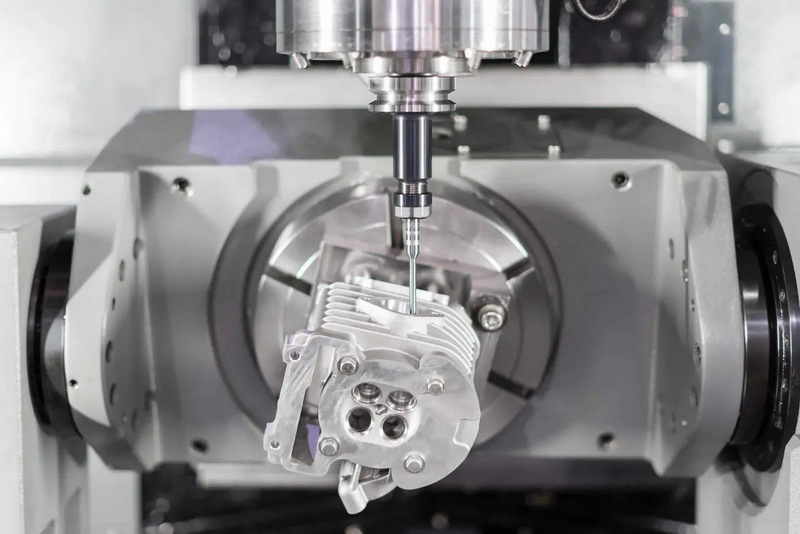
Non‑cutting time covers spindle acceleration, rapid moves, tool changes, part loading, and in‑process inspection. On short CNC machining jobs or prototype runs, setup and tool change time can dominate total time and must be allocated per part based on batch size.[4]
Rapid travel speed, tool changer design, and operator efficiency all influence non‑cutting time. Shops that standardize workholding and minimize manual interventions can significantly reduce overall CNC machining time even when cutting parameters stay the same.[1][4]
A practical workflow for estimating CNC machining time starts with understanding the part, then moves to speeds, feeds, and path length.[3]
Typical steps include:
- Analyze part features and CNC machining operations needed (milling, turning, drilling, tapping).[2]
- Select cutting tools, materials, and recommended cutting data for each operation.[6][7]
- Calculate spindle speed and feed rate for each tool using standard machining formulas or cutting‑data tables.[8][6]
- Determine total cutting length and number of passes for each feature.[1]
- Compute cutting time for each operation and sum the results.[2][1]
- Add setup, tool change, handling, and inspection time to obtain the full CNC machining time per part and per batch.[4]
This workflow gives OEM buyers and CNC machining suppliers a common language for discussing lead times and process improvements.[2]
Consider a simple rectangular pocket milling operation where total cut length and feed rate are known from CAM or hand calculations. Dividing total length by feed rate gives the pure cutting time, which is then adjusted by additional minutes for part clamping, datum setting, and tool changes to estimate realistic CNC machining time.[1][2]
Engineers can perform sensitivity checks by slightly increasing feed or optimizing toolpaths and then observing how much CNC machining time is reduced without violating tool or machine limits. This quantitative approach helps justify tooling upgrades or programming efforts in terms of saved minutes per part.[7][10][2]
For a turning job, the axial length to be turned is combined with feed per revolution and spindle speed to calculate time. When multiple roughing and finishing passes are needed, the time is computed for each pass and summed to obtain total CNC machining time for that surface.[11][5]
Facing, grooving, boring, and threading add extra segments to the CNC machining time equation, each with its own cutting data. Including rapid moves to and from each feature, as well as turret indexing time, gives a more realistic cycle‑time figure for CNC machining quotations.[5][11]
Modern CAM software can simulate toolpaths and output estimated cycle times based on programmed speeds, feeds, and machine settings. These CNC machining time estimates are often close, but must still be corrected for real‑world factors like machine acceleration limits, tool wear, and operator habits.[13][9]
CAM‑generated CNC machining time reports are especially useful when comparing alternative strategies such as conventional roughing versus high‑efficiency milling or different fixturing concepts. By combining CAM data with shop feedback, companies refine their CNC machining time database and improve future quotes.[1][2]
Research has introduced machine‑learning and hybrid kinematic/AI models to improve CNC machining time prediction accuracy. Such models can use NC code, machine feedback, and historical data to predict processing time with error rates significantly lower than basic empirical estimates.[14][15][13]
These predictive systems can be integrated into MES or ERP tools to provide dynamic CNC machining time estimates as programs and schedules change. For high‑volume or complex CNC machining environments, this leads to better load balancing, shorter lead times, and more reliable delivery performance.[15][13]
Real CNC machining time is influenced by material hardness, tool wear, coolant conditions, and machine rigidity. Conservative feeds for difficult materials or long‑reach tools will increase time, while optimized toolpaths and adaptive strategies can reduce CNC machining cycle times considerably.[10][2][1]
Tool selection and coating, chip evacuation, and thermal stability of the CNC machining setup also impact achievable feeds and speeds. Shops that regularly review cutting data and monitor tool life gain more predictable CNC machining times and fewer unexpected stoppages.[7][2]
Setup time is usually fixed per batch and must be amortized across the quantity of parts to get a per‑part CNC machining time. For large runs, the influence of setup is small, but for prototypes or very short batches it can be the dominant factor in cost per piece.[4][2]
For OEM customers, sharing realistic forecast volumes helps CNC machining suppliers select the best process route and setup strategy. In many cases, a slightly longer pure cutting time may be acceptable if it allows a much shorter setup and overall CNC machining time per part at the required batch size.[4][2]
Shangchen (sc-rapidmanufacturing.com) combines CNC machining, rapid prototyping, turning, sheet metal, 3D printing, and mold making to support overseas brands and manufacturers from concept to mass production. For each RFQ, Shangchen's engineering team evaluates CNC machining time, material, and process flow to provide accurate quotations and predictable lead times for OEM customers.
Because Shangchen runs both prototype CNC machining and precision batch production under one roof, the team can recommend the most economical route based on quantity and tolerance requirements. This helps overseas OEM clients balance cost, quality, and CNC machining delivery time throughout the product life cycle.
Reducing CNC machining time without sacrificing quality usually comes from better tooling, optimized toolpaths, and stable process parameters. Standardizing setups, using multi‑function tools, and improving fixturing can shorten non‑cutting time and make CNC machining more competitive for OEM buyers.[10][2][4][1]
Other effective strategies include consolidating operations on multi‑axis machines, using automatic probing for faster setup, and implementing tool presetting outside the machine. Together, these measures can reduce overall CNC machining time per part while improving consistency and throughput.[2][1]
Frequent mistakes include ignoring non‑cutting time, using overly optimistic feeds, and neglecting tool‑change delays. Another pitfall is copying CNC machining data from one material or machine to another without adjustment, which leads to inaccurate cycle‑time predictions and unstable processes.[3][6][4][2]
Underestimating inspection and rework time is also common, especially for tight‑tolerance CNC machining jobs in aerospace or medical sectors. Systematically capturing actual times and comparing them to estimated values is the best way to continuously improve CNC machining time accuracy.[3][2]
When OEM buyers request CNC machining quotes, sharing complete drawings, tolerances, materials, and quantities enables more accurate time estimation. Indicating special requirements such as surface finish, hardness, or geometric dimensioning makes it easier for CNC machining suppliers to plan cycles correctly.[2]
Working with experienced suppliers like Shangchen allows buyers to receive realistic, data‑based CNC machining lead times that align with project schedules and budgets. Clear communication about priorities—cost, speed, or flexibility—helps the CNC machining partner choose the most suitable route and time assumptions.[2]
Estimating CNC machining time starts with a straightforward relationship between cutting length and feed rate but becomes truly reliable only when speeds, feeds, non‑cutting activities, and batch size are all considered. By combining sound machining formulas, CAM simulation, and practical shop experience, CNC machining suppliers such as Shangchen (sc-rapidmanufacturing.com) can give OEM customers accurate pricing and delivery commitments while continually optimizing cycle times for global competitiveness.[3][1][2]
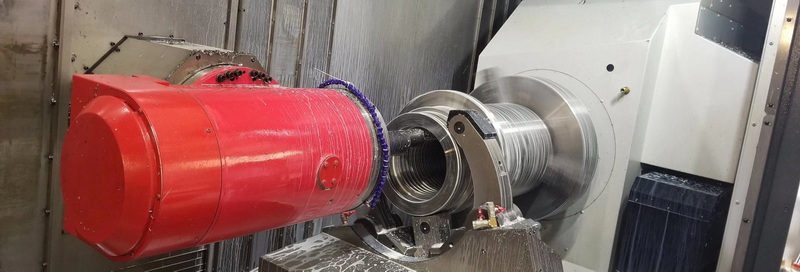
The basic formula expresses machining time as cutting length divided by feed rate, with setup and tool‑change time added on top. In practice, this is applied separately to each CNC machining operation and then summed for the total cycle time per part.[3][1][2]
Higher feed rates and cutting speeds generally reduce CNC machining time but can increase tool wear or affect surface finish if pushed too far. The goal is to choose speeds and feeds that keep the CNC machining process stable while reaching an economical cycle time.[6][7][2]
CAM software can provide reasonable CNC machining time estimates based on toolpaths, speeds, and feeds, but often assumes ideal machine dynamics. Real machines have acceleration limits, tool‑change delays, and operator‑dependent factors, so estimates should be validated and fine‑tuned with shop‑floor data.[13][9]
Setup time is largely fixed and can be significant when only a few CNC machining parts are produced. For prototypes or small runs, setup minutes per job can dominate the per‑part time and must be included in cost calculations.[4][2]
Yes, advanced approaches using AI, neural networks, or hybrid kinematic models can predict CNC machining times more accurately than simple formulas. These models learn from NC code and machine feedback, reducing estimation error and supporting better planning for complex CNC machining jobs.[14][15][13]
[1](https://www.3erp.com/blog/cnc-machining-lead-times/)
[2](https://www.americanmicroinc.com/resources/cnc-machining-cycle-time-calculation/)
[3](https://www.cncci.com/post/calculating-machining-time-for-any-machining-operation)
[4](https://web.mit.edu/2.810/www/files/readings/Polgar_TimeEstimation.pdf)
[5](https://www.smartlathe.com/blogs-1/calculation-of-machining-time-for-facing-parting-off-and-deep-grooving-on-a-cnc-lathe)
[6](https://www.kennametal.com/us/en/resources/engineering-calculators/miscellaneous/speed-and-feed.html)
[7](https://www.harveyperformance.com/in-the-loupe/speeds-and-feeds-101/)
[8](https://gcodetutor.com/cnc-macro-programming/calculating-spindle-speeds.html)
[9](https://www.practicalmachinist.com/forum/threads/machining-time.228729/)
[10](https://www.dapra.com/resources/milling-formulas)
[11](https://www.mmc-carbide.com/us/technical_information/formula/tec_turning_formula)
[12](https://www.sumitool.com/en/downloads/app/calc_turning.html)
[13](https://www.sciencedirect.com/science/article/pii/S2212827124012447)
[14](http://www.ijsimm.com/Full_Papers/Fulltext2016/text15-4_663-675.pdf)
[15](https://ieeexplore.ieee.org/document/10640055/)

