
Views: 222 Author: Amanda Publish Time: 2025-10-05 Origin: Site


Content Menu
● Understanding Injection Molding and Its Quality Challenges
● Design and Material Review: Foundation for Quality
● Mold Fabrication and Pre-Production Checks
● In-Process Quality Control: Maintaining Consistency
● Common Injection Molding Defects and Controls
● Final Inspection and Packaging
● Integration of Technology for Enhanced Quality Control
● Lean Manufacturing and Waste Reduction
● Frequently Asked Questions (FAQ)
>> 1. What key factors influence injection molding quality control?
>> 2. How does Statistical Process Control (SPC) enhance quality assurance?
>> 3. What common defects occur in injection molded parts and how are they prevented?
>> 4. Why is mold inspection crucial before production?
>> 5. How do modern technologies improve injection molding quality control?
Injection molding is a vital manufacturing process widely used to produce high-precision plastic components at scale. Ensuring quality control in injection molding production is essential for delivering defect-free parts that meet design specifications, functionality requirements, and customer expectations. Quality control not only improves product reliability but also reduces waste and production costs, enhancing overall efficiency. This comprehensive guide details effective strategies and best practices for quality control throughout every stage of the injection molding production process, emphasizing how manufacturers can maintain consistent product excellence with the aid of modern technology and systematic procedures.
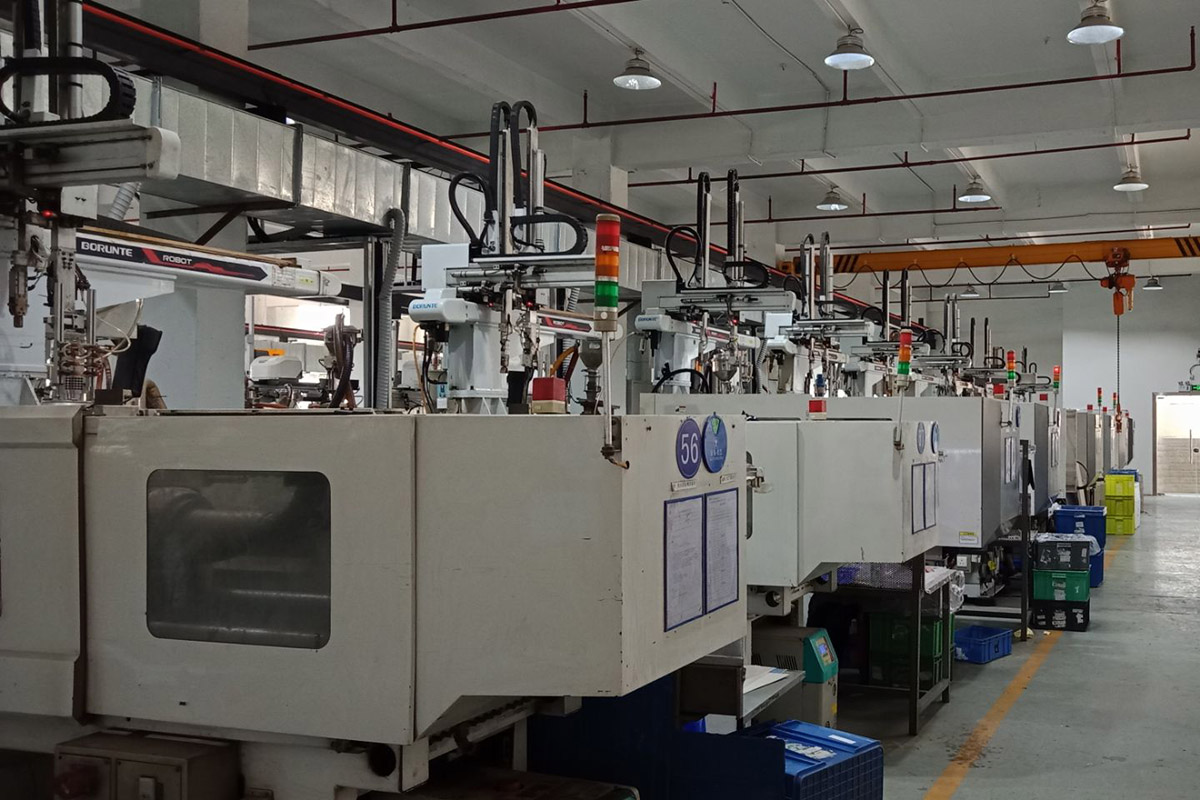
Injection molding involves injecting molten plastic into a precisely engineered mold cavity, where it cools and solidifies into the desired shape. Despite its efficiency and repeatability, the process is sensitive to various factors such as material properties, mold design, machine settings, and environmental conditions. Minor deviations can result in defects such as warping, short shots, flash, bubbles, weld lines, sink marks, and discoloration.
Quality control in injection molding is a systematic set of procedures designed to monitor, evaluate, and control all parameters influencing product quality, ensuring that each part complies with stringent specifications and industry standards. The goal is to identify and correct defects early, maintain production consistency, and deliver high-quality products that fulfill customer requirements.
Successful quality control begins far before production with thorough design analysis and careful material selection.
- Design for Manufacturability: The product design must accommodate injection molding best practices, including uniform wall thickness, properly angled draft slopes, and appropriate ribbing to avoid warping and sink marks. Well-optimized CAD models consider thermal shrinkage and flow behavior.
- Material Validation: Selecting the right plastic resin and additives based on mechanical, thermal, and chemical requirements is critical. Materials should be sourced from certified suppliers and tested for moisture content, contamination, melt flow index, and consistency.
- Simulation and Prototyping: Dynamic mold flow simulations guide design adjustments to optimize fill patterns, pressure distribution, and cooling channels. Rapid prototyping technologies such as 3D printing allow early physical validation before mold production.
Investing efforts at this stage minimizes costly trial and error during production and forms the baseline for subsequent quality control.
The mold quality is the cornerstone of producing consistent, accurate parts.
- Precision Mold Manufacturing: Molds are fabricated from durable aluminum or hardened steel alloys with highly precise machining processes to achieve tight dimensional tolerances and surface finishes. Critical areas include gates, runners, cooling channels, and ejection systems.
- Surface Treatment: Mold cavity surfaces are polished or textured to control the finished part's surface aesthetics and ease of part ejection.
- Pre-Production Inspection: Prior to starting mass production, molds undergo rigorous inspection to verify dimensional accuracy, alignment of parts, effective venting, and functionality of moving components (e.g., sliders and ejectors).
- Trial Runs and First Article Inspection (FAI): Initial injection runs produce sample parts which are thoroughly inspected visually and dimensionally to detect early defects such as short shots, flash, or weld lines. Adjustments to mold or process parameters are made accordingly.
Ensuring mold readiness avoids costly defects and downtime during mass production while guaranteeing compliance with design specifications.
Continuous monitoring during production is essential for controlling product quality and catching issues in real-time.
- Machine Calibration and Stability: Injection molding machines must be precisely calibrated for temperature zones, injection speed, pressure, and cooling cycle times. Machine drift is continuously monitored and corrected to prevent quality deviations.
- Raw Material Inspection: Incoming plastic pellets are checked for moisture, contamination, and batch consistency. Automated feeders and dryers maintain stable material flow and condition.
- Statistical Process Control (SPC): Critical parameters are tracked through SPC charts to detect trends, outliers, or shifts early in the process. This enables timely adjustments before defects occur.
- Real-Time Quality Inspection: Visual inspections by trained operators combined with automated optical inspection systems ensure defects like surface blemishes, color inconsistencies, or dimensional errors are quickly identified.
- Sample Testing: Periodic sampling of parts undergoes mechanical and functional testing such as tensile strength, impact resistance, and dimensional verification to ensure product meets performance standards.
Systematic in-process control delivers consistent output quality, reduces material scrap, and minimizes rework.

Understanding typical defects that can arise during injection molding enables targeted quality control measures to prevent or mitigate these issues:
| Defect | Cause | Control Measures |
| Short Shot | Incomplete cavity filling due to low injection pressure | Optimize injection speed/pressure; improve gate design |
| Warping | Uneven cooling or material shrinkage | Ensure uniform wall thickness; optimize cooling channels |
| Flash | Excess pressure or mold misalignment | Precise mold assembly; pressure adjustment |
| Weld Lines | Multiple molten fronts failing to fuse properly | Redesign gates; adjust injection temperature |
| Sink Marks | Thick sections cooling unevenly | Design for uniform thickness; controlled cooling |
| Bubbles | Entrapped gas or moisture in material | Proper venting; material drying |
| Discoloration | Incorrect pigment or temperature settings | Use approved materials; consistent temperature control |
| Burning | Residual trapped gas or overheating | Adjust temperature and injection speed |
| Surface Scratches | Plastic rubbing against mold during ejection | Fine-tune ejection system; surface treatments |
A proactive approach utilizing data analysis, operator training, and optimized process parameters drastically reduces defect rates.
The last stage of quality control serves as a gatekeeper to ensure that only fully compliant parts reach customers.
- Detailed Visual and Dimensional Inspection: Trained inspectors verify each part for cosmetic defects, proper dimensions, and functional fit. Precise measurement tools like micrometers, calipers, and coordinate measuring machines (CMM) are used.
- Functional Testing: Critical parts are subjected to performance testing simulating real-world conditions such as load, stress, and wear resistance.
- Documentation and Traceability: Inspection results, deviations, and corrective actions are meticulously recorded. This traceability supports continuous improvement and audits.
- Protective Packaging: Finished parts are packaged to protect them from contamination, moisture, or mechanical damage during transit. Environmentally friendly packaging solutions are preferred to minimize ecological impact.
Final inspection safeguards product integrity and brand reputation by preventing defective parts from customer delivery.
Modern injection molding facilities benefit significantly from technological advancements that automate and optimize quality control processes:
- Automation and Robotics: Automated inspection stations and robotic handling systems increase inspection speed and reduce human error.
- Optical 3D Scanning: High-precision non-contact measurement systems map dimensions and surface features quickly and accurately.
- Data Analytics and IoT: Real-time data from sensors embedded in machines allow continuous process monitoring, enabling predictive maintenance and early fault detection.
- Artificial Intelligence: AI algorithms analyze production trends to predict and prevent defects, adjusting parameters automatically to maintain optimal quality.
- Scientific Molding: A data-driven approach that systematically tests and sets exact parameters for melt temperature, injection speed, and pressure, ensuring repeatability and minimizing variability.
By adopting these technologies, manufacturers achieve higher throughput, lower scrap rates, and better part consistency.
Quality control in injection molding also aligns with sustainability through waste reduction strategies:
- Material Optimization: Precise control reduces excess material usage and scrap.
- Recycling Programs: Implementing recycling for rejected parts and sprues conserves resources.
- Energy Efficiency: Using energy-efficient machines decreases environmental footprint and lowers operating costs.
- Continuous Improvement: Identifying waste sources through audits enables targeted process improvements.
These measures reduce costs while promoting environmental responsibility, enhancing the factory's operational excellence.
Quality control in injection molding production is a complex but essential endeavor that spans from initial design and material selection through mold fabrication, in-process monitoring, and final inspection. Employing rigorous quality assurance practices and embracing advanced technologies like statistical process control, automation, and AI ensures consistent production of defect-free parts. Manufacturers who prioritize quality control reduce waste, improve customer satisfaction, and maintain competitiveness in the dynamic global market. A systematic, proactive approach to quality transforms injection molding from a routine process into a precision-driven manufacturing art.

Material properties, mold design, machine settings, and environmental conditions all critically impact quality control. Effective management of these factors is vital for defect-free parts.
SPC monitors production parameters in real time, identifying variations early to allow prompt corrections, thereby reducing defects and improving consistency.
Common defects include short shots, warping, flash, bubbles, and sink marks. Preventing these involves optimized mold design, precise machine calibration, proper material handling, and controlled cooling.
Mold inspection verifies that molds meet exact specifications and functional readiness, preventing costly part defects and production downtime.
Technologies like automation, 3D scanning, data analytics, and AI enable more accurate, consistent inspection and process control, reducing human error and increasing production efficiency.
[1](https://www.plasticmoulds.net/4-stages-of-quality-control-in-plastic-injection-molding.html)
[2](https://www.goldengatemolders.com/post/injection-molding-101-a-comprehensive-guide-for-newcomers)
[3](https://rjginc.com/how-to-implement-effective-injection-molding-quality-control-measures/)
[4](https://jiga.io/injection-molding/injection-mold-tooling-comprehensive-guide/)
[5](https://www.protolabs.com/resources/guides-and-trend-reports/designing-for-moldability-fundamental-elements/)
[6](https://geomiq.com/injection-moulding-guide/)
[7](http://www.dainsta.com/quality-control-injection-molding/)
[8](https://nibmehub.com/opac-service/pdf/read/Total%20Quality%20Process%20Control%20for%20Injection%20Molding.pdf)
[9](https://www.ksplastic.com/blog/comprehensive-guide-to-plastic-injection-molding/)

