
Views: 222 Author: Amanda Publish Time: 2025-07-15 Origin: Site


Content Menu
>> Key Benefits
● Types of Rapid Prototyping Services
● Factors to Consider When Choosing a Rapid Prototyping Service
>> 5. Cost
● Step-by-Step Guide to Selecting a Rapid Prototyping Partner
>> Step 1: Define Your Objectives
>> Step 2: Research Potential Providers
>> Step 3: Evaluate Technical Expertise
>> Step 4: Request Samples and Case Studies
>> Step 5: Compare Quotes and Lead Times
>> Step 6: Communicate Expectations Clearly
>> Step 7: Start with a Trial Project
● Additional Considerations for International Clients
● How Advanced Technologies Enhance Rapid Prototyping
● Sustainability in Rapid Prototyping
● FAQ
>> 1. What is the difference between rapid prototyping and traditional prototyping?
>> 2. How do I choose the right material for my prototype?
>> 3. Can rapid prototyping be used for functional testing?
>> 4. What is the typical lead time for a rapid prototype?
>> 5. Is rapid prototyping cost-effective for small batch production?
In today's fast-paced manufacturing landscape, Rapid Prototyping has become an essential process for product development, innovation, and market competitiveness. Whether you are a brand owner, wholesaler, or manufacturer, selecting the right rapid prototyping service can significantly impact your product's quality, lead time, and overall success. This comprehensive guide will walk you through everything you need to know about choosing the best rapid prototyping solution for your needs, from understanding the basics to evaluating service providers and making informed decisions.

Rapid Prototyping refers to a group of techniques used to quickly fabricate a scale model or part using three-dimensional computer-aided design (CAD) data. This process enables businesses to transform ideas into tangible products with speed and precision, facilitating design validation, functional testing, and market feedback before full-scale production.
- Speed: Drastically reduces product development cycles.
- Cost Efficiency: Minimizes material waste and tooling costs.
- Design Flexibility: Allows for quick iterations and design changes.
- Risk Reduction: Identifies design flaws early, saving time and resources.
CNC (Computer Numerical Control) machining is a subtractive manufacturing process where material is removed from a solid block using precision tools. It is ideal for creating high-accuracy prototypes from metals and plastics. CNC machining offers excellent surface finish and tight tolerances, making it suitable for functional parts that require strength and durability. It is especially effective for prototypes that need to be tested under real-world conditions or serve as master models for mold making.
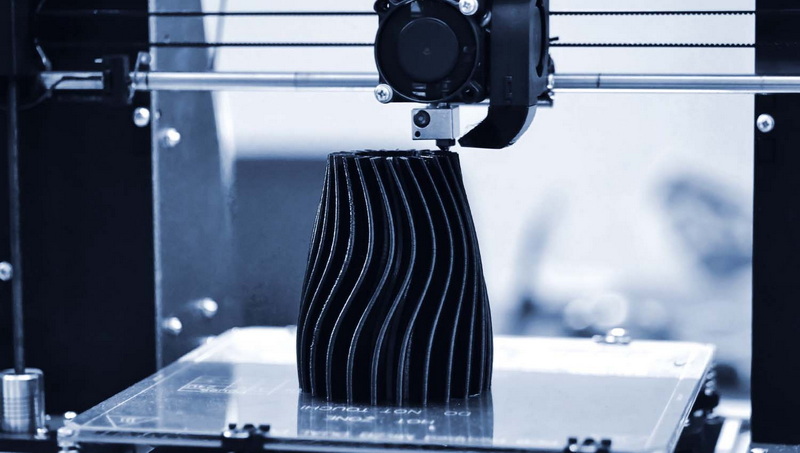
3D printing, or additive manufacturing, builds parts layer by layer from digital models. Common methods include FDM (Fused Deposition Modeling), SLA (Stereolithography), SLS (Selective Laser Sintering), and DMLS (Direct Metal Laser Sintering), each suitable for different materials and applications. 3D printing allows for rapid iteration and can produce complex geometries that are difficult or impossible to achieve with traditional methods. It is widely used for concept models, visual prototypes, and some functional parts depending on the material.
This process involves cutting, bending, and assembling metal sheets to create functional prototypes, enclosures, and structural components. Sheet metal fabrication is commonly used in industries such as electronics, automotive, and aerospace where metal housings and brackets are required. This method provides prototypes that closely resemble final products in both appearance and function.
While primarily used for mass production, rapid injection molding can produce prototype parts from production-grade materials, enabling real-world testing. Rapid injection molding uses soft tooling or aluminum molds that can be manufactured quickly and at a lower cost than traditional steel molds. This service is ideal for prototypes that require the same material properties and surface finish as the final product.
Vacuum casting uses silicone molds to create small batches of prototypes from polyurethane resins, simulating the properties of final production parts. This method is cost-effective and suitable for producing multiple copies of a prototype with consistent quality. Vacuum casting is often chosen when a prototype needs to mimic the color, texture, and mechanical properties of injection-molded parts.
Understanding your project needs is the first critical step. This includes:
- Material Selection: Different prototyping methods support different materials. Choose a service that can provide materials that closely match your final product's requirements, whether that's plastic, metal, or composite.
- Part Complexity: Highly intricate designs may require additive manufacturing, while simpler, high-precision parts might be better suited for CNC machining.
- Quantity: Are you looking for a one-off prototype or a small batch? Some services specialize in single prototypes, while others excel at low-volume production.
Evaluate the technical capabilities of the service provider:
- Technology Portfolio: A provider offering multiple rapid prototyping technologies can recommend the best solution tailored to your project.
- Precision and Tolerances: Check if the provider can meet your dimensional accuracy requirements.
- Post-Processing Options: Finishing processes such as painting, plating, polishing, or assembly can be crucial for prototype usability and presentation.
Speed is often the key advantage of rapid prototyping, but not all providers deliver on time:
- Standard Lead Times: Understand the typical turnaround for your type of prototype.
- Rush Services: Some providers offer expedited services for urgent projects.
- Capacity and Scalability: Confirm that the provider can handle your project volume and deadlines reliably.
Quality control ensures your prototype meets specifications:
- Inspection Methods: Ask about dimensional inspection, material testing, and certification processes.
- Experience: Providers with a history of working with international clients or specific industries may have higher quality standards.
- Communication: Transparent reporting and responsiveness are critical to ensuring quality.
Budget considerations are important but should be balanced with quality and service:
- Detailed Quotes: Request itemized pricing that includes materials, labor, finishing, and shipping.
- Value Over Price: The cheapest option may lead to rework or delays; consider the total cost of ownership.
- Long-Term Partnerships: Working with a reliable provider can reduce costs over multiple projects.
Begin by clearly defining what you want to achieve with your prototype. Are you testing form, fit, or function? Do you need a prototype for marketing purposes or for engineering validation? Establish your budget, timeline, and material preferences upfront.
Look for rapid prototyping companies that specialize in your industry or product type. Explore their websites, review portfolios, and check customer testimonials. Consider providers who offer a comprehensive range of services, including design assistance and post-processing.
Assess the provider's technical knowledge and experience. Can they advise on design for manufacturability? Do they understand the nuances of your materials? A knowledgeable partner can help optimize your design for cost and performance.
Ask for physical samples or case studies similar to your project. This helps you evaluate craftsmanship, surface finish, and dimensional accuracy. Seeing real examples builds confidence in the provider's capabilities.
Gather detailed quotes from multiple providers. Compare not only the price but also lead times, quality assurances, and customer support. Look for transparency and flexibility in their proposals.
Provide detailed CAD files, specifications, and any special instructions. Open communication helps avoid misunderstandings and ensures the prototype meets your expectations.
If possible, begin with a small pilot order. This allows you to evaluate the provider's performance without committing to large volumes. Use this opportunity to test communication, quality, and delivery.
For overseas brands, wholesalers, and manufacturers seeking rapid prototyping services in China, certain factors become even more critical:
- Language and Communication: Choose a provider with fluent English-speaking staff and clear communication channels.
- Shipping and Logistics: Confirm the provider's ability to handle international shipping efficiently and cost-effectively.
- Intellectual Property Protection: Ensure the provider has strict confidentiality agreements and security measures.
- Time Zone Differences: Plan for time differences and establish regular update schedules.
Modern rapid prototyping services increasingly integrate cutting-edge technologies to improve speed, accuracy, and functionality:
- AI and Machine Learning: Used to optimize design and manufacturing parameters.
- Multi-Material 3D Printing: Enables prototypes with varying material properties in a single build.
- High-Precision CNC Machines: Achieve micron-level tolerances for demanding applications.
- Digital Twins: Virtual models that simulate prototype performance before physical production.
Sustainability is becoming a priority in manufacturing, including prototyping:
- Material Recycling: Some providers use recycled or biodegradable materials.
- Energy Efficiency: Advanced machines reduce energy consumption.
- Waste Reduction: Additive manufacturing minimizes scrap compared to subtractive methods.
- Eco-Friendly Finishes: Use of water-based paints and coatings.
Choosing the right Rapid Prototyping service is a critical decision that can influence your product's success. By understanding your project requirements, evaluating providers' capabilities, and maintaining clear communication, you can ensure a smooth prototyping process and achieve high-quality results. Whether you need a single prototype or a batch of precision parts, investing time in selecting the right partner will pay dividends in speed, quality, and market competitiveness. With the right service provider, your product ideas can move swiftly from concept to reality, enabling you to innovate confidently and stay ahead in a competitive marketplace.
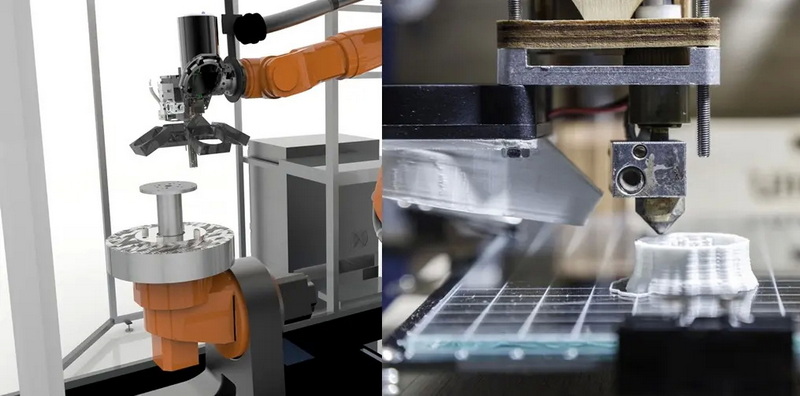
Rapid prototyping uses advanced technologies like CNC machining and 3D printing to quickly produce prototypes from digital designs, while traditional prototyping often relies on manual fabrication and takes longer to complete.
Consider the intended use of your prototype, required mechanical properties, and final production materials. Consult with your service provider for expert recommendations.
Yes, many rapid prototyping techniques produce parts suitable for functional and fit testing, allowing you to validate your design before mass production.
Lead times vary depending on complexity and technology, but most rapid prototyping services can deliver parts within a few days to two weeks.
Absolutely. Rapid prototyping is ideal for low-volume production, bridge manufacturing, and market testing, offering cost savings over traditional tooling.

