
Views: 222 Author: Amanda Publish Time: 2025-09-27 Origin: Site


Content Menu
● Understanding 3D Printing and Its Industrial Applications
● Key Factors to Consider When Choosing a 3D Printing Service
>> Material Range and Compatibility
>> Technology and Equipment Capabilities
>> Production Volume and Scalability
>> Quality Control and Certifications
● Advantages of Using a Professional 3D Printing Service
● How Our Factory Meets Diverse Industry Needs
● Design Optimization for 3D Printing
● Sustainability and Environmental Impact
● The Role of Post-Processing in 3D Printing
● Common Challenges in 3D Printing and How to Overcome Them
● Integrating 3D Printing with Other Manufacturing Methods
● FAQ
>> 1. What industries benefit most from 3D printing services?
>> 2. How does 3D printing compare to traditional manufacturing?
>> 3. What materials are commonly used in 3D printing?
>> 4. Can 3D printing produce parts strong enough for functional use?
>> 5. What quality standards should I expect from a 3D printing service?
In today's rapidly evolving manufacturing landscape, 3D printing has become an essential technology across various industries, from automotive and aerospace to healthcare and consumer goods. Whether you are a brand owner, wholesaler, or manufacturer looking to incorporate innovative manufacturing solutions, selecting the right 3D printing service provider is crucial to meet your specific industry needs. This comprehensive guide is designed to help you make an informed decision when choosing a 3D printing service.
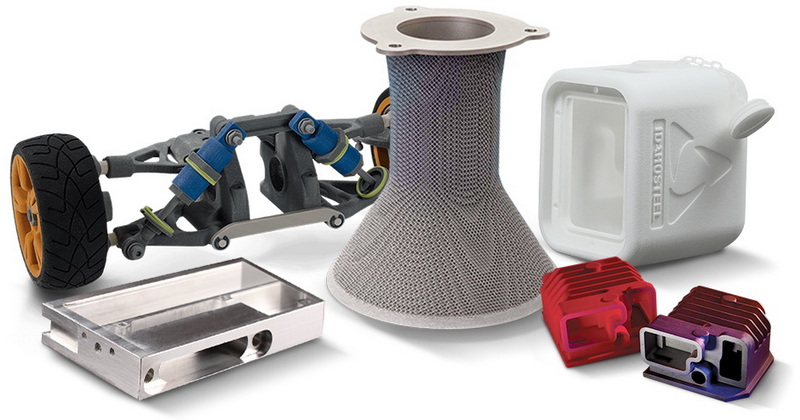
3D printing, also known as additive manufacturing, creates physical objects from digital models by layering materials precisely. This technology enables rapid prototyping, small-batch production, and complex designs that traditional manufacturing struggles to achieve economically.
Industries such as automotive use 3D printing for prototype parts, tooling, and even end-use components. Aerospace relies on it for lightweight, strong parts that meet stringent safety standards. Healthcare harnesses 3D printing for custom implants and devices, while consumer goods manufacturers benefit from flexible customization and fast turnaround.
Selecting the best 3D printing service requires a multi-faceted approach to ensure quality, cost efficiency, and meeting timeline expectations. Here are essential factors to evaluate:
Different 3D printing technologies support various materials such as plastics (ABS, PLA, Nylon), metals (stainless steel, titanium, aluminum), and composites. Ensure the service provider has expertise and equipment to work with materials relevant to your industry and product specifications. Some industries demand specialized materials, like biocompatible polymers for medical devices or aerospace-grade alloys for aviation parts.
Common 3D printing technologies include FDM (Fused Deposition Modeling), SLA (Stereolithography), SLS (Selective Laser Sintering), and DMLS (Direct Metal Laser Sintering). Each is suited to specific applications depending on detail, strength, and surface finish requirements. For example, SLA offers high-resolution parts ideal for visual models and intricate designs, whereas DMLS and SLS produce durable functional parts used in mechanical assemblies.
Assess whether the provider can handle your required production scale—be it rapid prototyping or precision batch production. Some services specialize in low-volume runs, such as prototyping or custom parts, while others are equipped to scale up to medium or even high-volume manufacturing. Understanding your current and future needs helps determine if a provider can grow with your business.
Industry compliance and quality standards are critical. Verify if the 3D printing service conducts thorough quality checks, dimensional inspections, and adheres to certifications like ISO 9001 or aerospace/medical regulatory standards. Consistent quality is essential, especially if parts are intended for safety-critical applications or consumer products requiring regulatory approvals.
Timely delivery can be a competitive advantage. Evaluate the provider's production turnaround times, shipping capabilities, and responsiveness to order modifications. Some companies offer express services for urgent projects, while others may have longer lead times due to workload or post-processing steps.
Factor in material costs, labor, post-processing, and shipping when comparing service pricing. It's important to avoid lowest-cost options that might compromise quality or result in costly redesigns. A good 3D printing service will balance price and quality while offering transparent pricing that fits your budget.
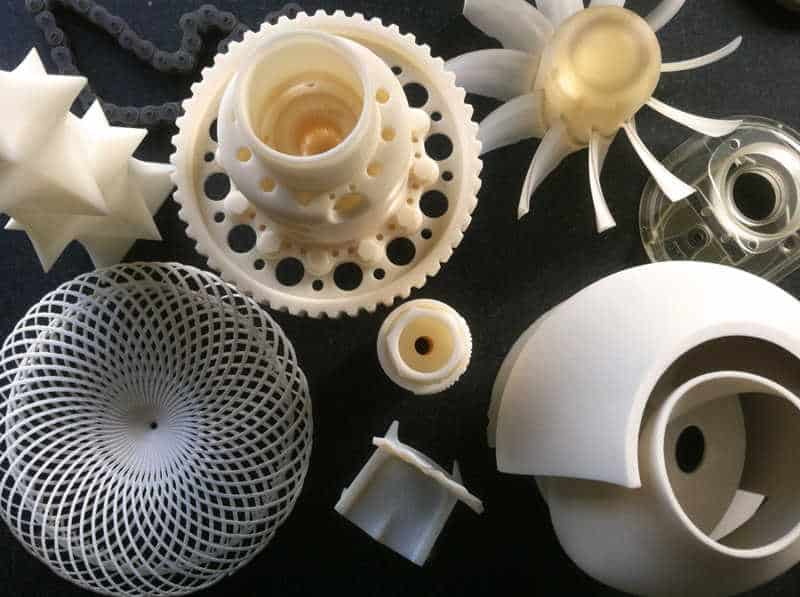
Professional 3D printing services bring several business advantages:
- Access to advanced machines without hefty investments
- Expertise in design optimization for additive manufacturing
- Ability to produce strong, lightweight, complex components quickly
- Reduced time-to-market through rapid prototyping and iteration
- Enhanced customization options for end-users
Leveraging a professional service allows companies to concentrate on product innovation and market strategy while relying on manufacturing expertise to deliver precise, high-quality parts.
As a leading factory specializing in rapid prototyping, CNC machining, precision batch production, lathe turning, sheet metal fabrication, 3D printing services, and mold manufacturing, we serve international brand owners, wholesalers, and manufacturers with reliable OEM services.
Our 3D printing capabilities include:
- Multiple advanced printing technologies tailored per project, ensuring that whether your parts require intricate detail or functional strength, we can deliver.
- Wide material compatibility, including engineering-grade polymers and metals that meet rigorous industry standards.
- Strict quality management systems ensuring product consistency, supported by dimensional verification and functional testing processes.
- Flexible production capacity from prototypes to medium volume batches, enabling projects to scale smoothly from concept to production.
- Comprehensive post-processing options like polishing, painting, and surface treatments to meet aesthetic and functional requirements.
Partnering with a skilled 3D printing service not only means access to machines but also invaluable design advice. Additive manufacturing allows for shapes and internal structures impossible in traditional manufacturing; however, to fully exploit these benefits, parts must be optimized for printability.
This might involve redesigning components for support structure minimization, maximizing strength via lattice structures, or adjusting wall thickness and tolerances to suit specific printing technologies. Our engineering team collaborates closely with customers to refine CAD models, improving material efficiency and minimizing post-processing.
3D printing also offers environmental benefits important to many industries. Compared to subtractive manufacturing, additive processes generate significantly less waste material, and many printers use recyclable or biodegradable materials. The ability to produce parts onsite or near market reduces shipping emissions and inventory waste.
When choosing a 3D printing service, consider providers committed to sustainable practices. Our factory integrates eco-friendly materials and efficient energy use to support clients' green manufacturing goals without sacrificing quality.
Post-processing is an often underestimated but crucial stage in 3D printing. Depending on the technology used, parts may require support removal, sanding, heat treatment, infiltration, or coating to achieve desired strength, finish, or color.
A reliable 3D printing service offers a variety of post-processing techniques to meet different industry demands:
- Polishing and smoothing for cosmetic parts used in consumer products or medical devices.
- Heat treatments that enhance mechanical properties, especially for metal parts in aerospace or automotive.
- Painting or plating to meet aesthetic or functional surface requirements.
Discuss your post-processing needs upfront to ensure your finished parts meet expectations.
While 3D printing offers many benefits, it also comes with challenges:
- Material Limitations: Not all materials are suitable for every application. Selecting a provider with a broad material portfolio minimizes compromises.
- Surface Finish: Some 3D printing methods leave rough textures that require finishing to meet aesthetic or mechanical standards.
- Dimensional Accuracy: Maintaining tight tolerances can be difficult but is critical for parts that must fit precisely with other components.
- Cost for Large Volumes: Additive manufacturing may be less cost-effective than traditional injection molding or stamping when dealing with very high volumes.
Engaging a professional 3D printing service partner helps identify these challenges early and leverages their expertise to mitigate them.
3D printing does not have to replace traditional manufacturing but complements it effectively. Many companies blend 3D printing for prototyping with CNC machining or injection molding for mass production. This hybrid approach accelerates development and reduces risk, providing design flexibility while retaining cost advantages for volume orders.
Our factory offers a complete portfolio—from rapid prototyping and 3D printing to precision machining and sheet metal fabrication—enabling seamless transitions throughout the product lifecycle.
Choosing the best 3D printing service for your industry requires balancing technical capabilities, quality assurance, cost, and service reliability. By understanding your unique project demands and thoroughly vetting potential providers, you can leverage 3D printing to innovate, reduce time-to-market, and enhance product customization. Our factory combines cutting-edge 3D printing technologies with manufacturing excellence to serve a wide range of industries with OEM solutions that deliver both precision and scalability.
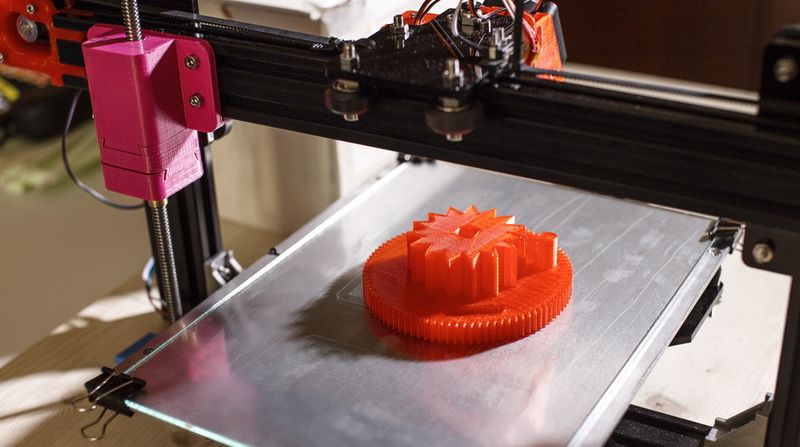
3D printing is valuable in automotive, aerospace, healthcare, consumer products, and electronics industries, mainly for rapid prototyping and customized part production.
3D printing allows for faster prototyping, complex geometries, and customization, but traditional manufacturing may be more cost-effective for large volume production.
Common materials include thermoplastics like ABS and PLA, engineering plastics, metals including stainless steel and aluminum, and composites depending on technology.
Yes, many 3D printing technologies produce parts with mechanical properties suitable for functional and end-use applications, especially metal 3D printing and advanced polymers.
Look for providers certified to ISO 9001 and industry-specific standards, who perform thorough quality control, dimensional inspections, and deliver consistent product quality.

