
Views: 222 Author: Amanda Publish Time: 2025-08-18 Origin: Site


Content Menu
● Key Advantages of CNC Machining
● Alternative Manufacturing Methods
>> Additive Manufacturing (3D Printing)
● In-depth Comparison of CNC Machining and Alternative Methods
>> Production Volume and Cost Efficiency
>> Surface Finish and Post-Processing
>> Lead Times
● Industry Applications and Use Cases
● Combining Technologies for Optimal Results
● FAQs
>> 1. What materials can CNC machining work with?
>> 2. How does CNC machining compare to 3D printing in terms of cost?
>> 3. Which manufacturing method produces better surface finishes?
>> 4. Can CNC machining produce complex geometries?
>> 5. Is it possible to combine CNC machining and additive manufacturing?
Choosing the right manufacturing method is a critical decision for businesses seeking to optimize production efficiency, reduce costs, ensure quality, and accelerate time-to-market. Among the many options available, CNC machining stands out as a dominant technology used worldwide for producing highly precise and complex parts. However, alternative manufacturing methods such as conventional machining, additive manufacturing (3D printing), and other fabrication techniques often present viable options depending on specific project needs. Understanding the distinctions, strengths, and limitations of CNC machining compared to these alternatives can empower manufacturers and brand owners to select the best approach for their product requirements and production scale.
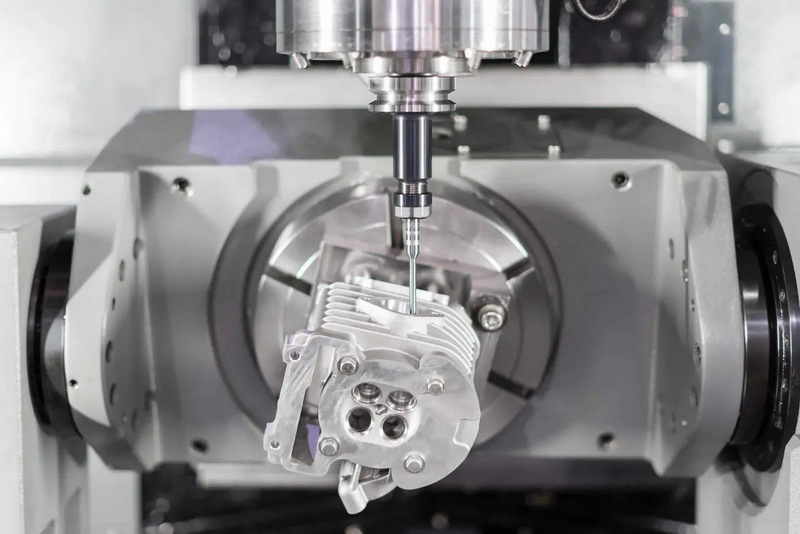
CNC (Computer Numerical Control) machining is a sophisticated subtractive manufacturing process that removes material from a solid workpiece using computer-controlled cutting tools. The entire machining operation follows precisely programmed instructions, leading to the creation of parts with exceptional accuracy and repeatability. CNC machines are capable of working with a diverse array of materials, including metals, plastics, and composites, which makes them invaluable across industries from aerospace to medical devices.
- High Precision and Accuracy: CNC machining delivers tight tolerances, sometimes as fine as ±0.005 mm, essential for components with stringent dimensional requirements.
- Material Versatility: The process supports a broad spectrum of materials, from aluminum and stainless steel to advanced plastics and exotic alloys.
- Automation and Repeatability: Once programmed, CNC machines consistently produce identical parts without variation or human fatigue.
- Excellent Surface Finish: CNC machining often results in superior surface finishes, reducing the need for additional polishing or post-processing.
- Production Scalability: CNC machining is suitable for prototyping, small batch runs, and high-volume manufacturing, providing flexibility for different production needs.
Conventional machining refers to traditional manual machining processes, such as turning, milling, drilling, and grinding, predominantly operated by skilled machinists. This method has been the backbone of manufacturing for decades and still plays a vital role today. However, compared to CNC machining, conventional machining is less efficient for high-volume production runs and generally offers lower precision and repeatability. It is often selected for simpler geometries or when dealing with softer materials where automation is unnecessary.
Additive manufacturing builds components by adding material layer by layer, in contrast to the subtractive approach of CNC machining. This technique allows for unprecedented design freedom, enabling the production of intricate internal structures, complex geometries, and lightweight lattice parts that are difficult or impossible to achieve otherwise. Although historically additive manufacturing struggled to match CNC machining in precision and surface finish quality, recent technological advances have significantly narrowed this gap. It is particularly cost-effective for rapid prototyping, custom parts, and low-volume production runs.
CNC machining is a subtractive process where material is carved out from a solid block, whereas additive manufacturing creates parts by layering material precisely where needed. Conventional machining is similarly subtractive but relies heavily on manual control.
CNC machining provides significantly higher precision and tighter tolerances, suitable for critical applications where exact dimensions matter. Conventional machining offers moderate precision but cannot compete with CNC in complex tasks. Additive manufacturing's layer-by-layer approach commonly results in looser tolerances; however, recent developments allow for improvements, especially in metal 3D printing.
CNC machining supports a wide variety of materials including metals (carbon steel, stainless steel, titanium), plastics (ABS, polycarbonate), and composites. Conventional machining is somewhat limited to materials that are easier to cut manually. Additive manufacturing can now process plastics, metals, ceramics, and composites, though the range of materials and their mechanical properties can sometimes be restricted compared to CNC machining.
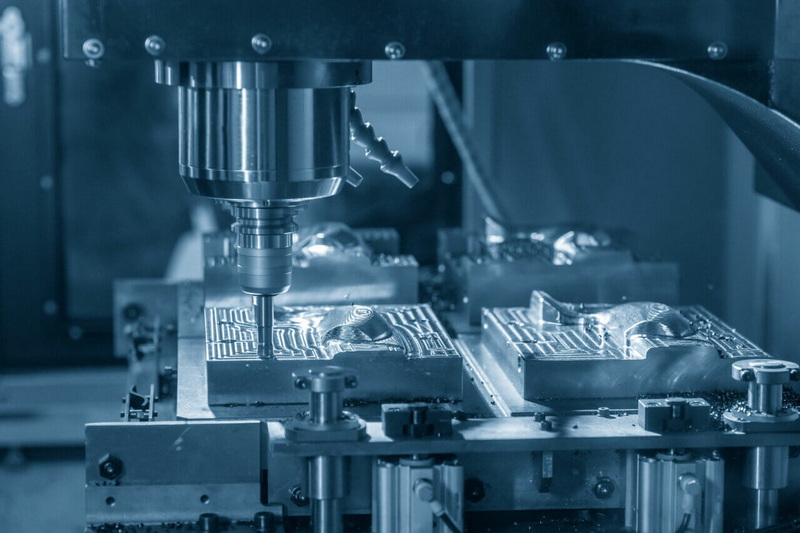
CNC machining struggles with extremely complex internal features or undercuts due to tool access limitations. Conventional machining is even more constrained by manual tooling and operator skill. Additive manufacturing excels in creating complex, organic shapes, internal channels, and lightweight lattice structures impossible or very costly to produce with subtractive methods.
For medium to large production volumes, CNC machining is typically more cost-effective given its speed, automation, and repeatability. Conventional machining is best for low-volume or simple parts but becomes labor-intensive and costly at scale. Additive manufacturing offers low setup costs, making it economical for prototypes, one-off parts, or very small batches but currently lacks efficiency for mass production.
CNC machining achieves smooth surface finishes and precise edges, often requiring minimal post-processing. Conventional machining surface quality varies based on operator skill and tooling. Additive manufacturing often produces rougher finishes and requires additional processes like sanding, polishing, or machining to meet final specifications.
Additive manufacturing provides rapid turnaround for prototyping and custom parts. CNC machining is fast as well but typically requires programming and setup time, which pays off in larger series. Conventional machining tends to be slower due to manual operations.
- Aerospace: CNC machining is favored for critical components like turbine blades and structural parts requiring tight tolerances and durability. Additive manufacturing is increasingly used for lightweight, topology-optimized internal structures and custom tools.
- Medical Devices: Surgical instruments and implants with exacting specifications are CNC machined, while patient-specific implants and complex anatomical models are produced using additive manufacturing.
- Automotive: CNC machining serves high-volume manufacturing needs for engine components, brackets, and gears. Additive manufacturing supports rapid prototyping, tooling, and custom or limited-edition parts.
- Electronics: Both technologies are used, with CNC machining for precise enclosures and parts, and 3D printing for intricate prototyping and customized housings.
A growing trend among manufacturers is the hybrid use of both CNC machining and additive manufacturing. For example, a part may be initially built using 3D printing to create complex features, then finished with CNC machining to achieve precise dimensions and superior surface finishes. This combined approach offers the best of both worlds, reducing production time and cost while expanding design possibilities.
Selecting the ideal manufacturing method requires balancing multiple factors, including part complexity, production volume, material preferences, budget constraints, and delivery timelines. CNC machining stands out as a mature, highly precise, and versatile choice suitable for many industrial applications and production scales. Alternative methods such as conventional machining and additive manufacturing each have unique advantages that make them better suited for particular scenarios—conventional machining shines in simplicity and low volume, while additive manufacturing excels in design freedom and rapid prototyping.
Often, integrating these technologies provides a strategic advantage in manufacturing, enabling companies to optimize production efficiency, meet quality standards, and stay competitive in a fast-evolving market.
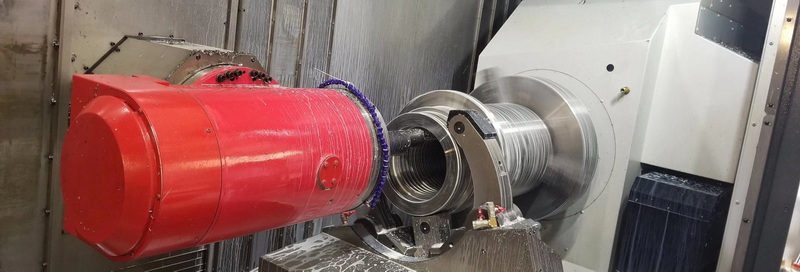
CNC machining supports a wide variety of materials, including metals like aluminum, steel, and titanium, as well as plastics such as ABS and polycarbonate. This makes it compatible with many industries that require durable and precise components.
CNC machining involves higher initial setup costs but becomes cost-efficient for medium to large volume production due to automation and speed. 3D printing, on the other hand, has lower setup costs, making it ideal for custom, low-volume, or prototype parts.
CNC machining generally yields superior surface finishes and tighter tolerances. 3D printed parts often require post-processing to achieve similar smoothness, while conventional machining depends on operator skill and tooling.
While CNC machining can create detailed and intricate parts, it is limited by tool access and the need for clear cutting paths. Additive manufacturing is better suited for producing complex internal features and highly intricate geometries.
Yes, many manufacturers combine these methods to leverage the strengths of both: additive manufacturing is used for complex shapes while CNC machining is employed for fine detailing, dimensional accuracy, and finishing.
[1] https://www.rapiddirect.com/blog/cnc-machining-vs-conventional-machining/
[2] https://cloud.tencent.com/developer/news/1274362
[3] https://yijinsolution.com/news-blog/cnc-machining-vs-additive-manufacturing/
[4] https://firstmold.com/zh/cnc-machining-service/
[5] https://watry.com/cnc-machining-vs-additive-manufacturing/
[6] https://www.sohu.com/a/586032372_120843863
[7] https://www.premiumparts.com/blog/cnc-machining-vs-conventional-machining-an-in-depth-comparison
[8] https://www.teamrapidtooling.com/zh-CN/cnc-rapid-prototyping-a-393.html
[9] https://www.kirmell.co.uk/cnc-machining-vs-traditional-machining-which-is-right-for-your-project/
[10] https://www.sohu.com/a/542429910_120645396

