
Views: 222 Author: Amanda Publish Time: 2025-12-10 Origin: Site


Content Menu
● Shangchen: Your First CNC Machining Partner
● Basic CNC Machining Cost Formula
● Main Cost Drivers in CNC Machining
● Material Choice and Its Impact
● Part Complexity, Tolerances, and Design
● Setup Time, Batch Size, and Economies of Scale
● Machine Type, Hourly Rate, and Machining Time
● Tooling, Wear, and Finishing Costs
● Quality, Inspection, and Certification
● Logistics, Lead Time, and Risk
● Practical Example: Putting the Elements Together
● How to Reduce CNC Machining Cost in Practice
● Where to Use Visuals and Videos in a Cost Article
● FAQ
>> 1. What is the easiest way to estimate CNC machining cost?
>> 2. Why does CNC machining cost vary so much between suppliers?
>> 3. Why are prototype CNC parts more expensive per piece?
>> 4. How can design changes reduce CNC machining cost?
>> 5. Why choose Shangchen for CNC machining OEM projects?
CNC machining cost is not a single fixed number but a combination of material, machine time, setup, labor, tooling, finishing, and overhead, all tied to your specific part design and order volume. By understanding each cost driver and using a clear calculation method, buyers can budget more accurately and optimize their designs for more economical CNC Machining projects.

Shangchen (sc-rapidmanufacturing.com) is a China-based factory focusing on CNC machining, rapid prototyping, precision batch production, turning, sheet metal fabrication, 3D printing, and mold manufacturing for overseas brands, wholesalers, and manufacturers. By centralizing CNC machining with Shangchen, buyers can combine engineering support, competitive pricing, fast lead times, and multiple manufacturing processes in one integrated OEM partner.
To help customers evaluate CNC machining costs, Shangchen's engineers usually start from the drawing and use a structured model that sums material, setup, machining time, tooling, finishing, and logistics into a transparent quotation. This approach makes cost negotiation easier and lets customers quickly see how design changes or order volumes influence their CNC machining cost.
In a practical project, Shangchen can provide side‑by‑side options, such as different materials, alternative tolerances, or modified geometries, and show how each scenario affects CNC machining time and total price. Combined with rapid prototyping and batch production capabilities, this allows customers to validate parts quickly and then switch to stabilized CNC machining production without changing suppliers.
Most CNC machining quotations can be approximated by the following structure:
Estimated Total Cost ≈
- Material Cost
- Setup Cost
- (Machining Time × Hourly Machine Rate)
- Tooling Cost
- Finishing Cost
Some factories also add separate lines for quality inspection, packaging, and shipping, but these are usually smaller percentages compared to the main CNC machining drivers.
- Material Cost: price of the raw block, bar, plate, or casting from which the part is machined.
- Setup Cost: programming, fixturing, first‑article trial, and machine preparation before stable CNC machining can start.
- Machining Time × Hourly Rate: the cycle time of the CNC machining operation multiplied by the machine's operating rate per hour.
- Tooling Cost: cutting tools, inserts, and their wear or replacement during CNC machining.
- Finishing Cost: additional processes like deburring, anodizing, painting, polishing, or coating when required.
When you request a quote from a supplier such as Shangchen, you can ask the sales engineer to share this breakdown or at least provide estimated machining time and hourly rate. This makes it easier to benchmark quotes from different CNC machining factories and to identify where the main savings potential lies.
Several technical and commercial factors directly affect CNC machining cost, even when the part looks relatively simple at first glance. Understanding them helps designers avoid unnecessary complexity and gives purchasing teams stronger arguments during negotiation.
Key drivers include:
- Material type and size
- Part geometry and complexity
- Tolerances and surface roughness requirements
- Setup and programming time
- Machine type (3‑axis vs 5‑axis, mill vs lathe)
- Batch size (prototypes vs series)
- Finishing, inspection, and logistics
Each of these parameters influences either machining time, risk, or required technology level, which then feeds directly into CNC machining cost. Factories like Shangchen support customers by reviewing drawings and suggesting changes that reduce cost without sacrificing function.
Material selection is often one of the largest components of CNC machining cost and also heavily influences machining time. Soft and easy‑to‑machine materials such as aluminum usually cut faster and cause less tool wear than stainless steel, titanium, or hardened alloys.
- Aluminum alloys generally offer low material cost, high machinability, and short CNC machining cycle times.
- Stainless steels and high‑temperature alloys require slower feeds and speeds and more robust tools, increasing machining time and tooling cost.
- Plastics can be cheap per kilogram, but thin‑wall structures may require careful CNC machining strategies and slower feeds to avoid deformation.
Material thickness and starting stock size also impact CNC machining cost because more material must be removed, and longer tool engagement can reduce tool life. When contacting Shangchen, providing flexibility on material grade or temper often allows engineers to propose alternatives that maintain performance but lower CNC machining time and raw material cost.
Part geometry and complexity strongly affect CNC machining cost because each additional feature can require more toolpaths, tools, and setups. Thin walls, deep pockets, tiny radii, undercuts, and complex 3D surfaces all add to programming time and extend machining cycles.
Tight tolerances and demanding surface finishes increase CNC machining cost because:
- The machine must run slower with lighter cuts.
- Additional finishing passes or polishing may be required.
- More inspection and quality documentation are needed.
Design for manufacturability is crucial for economical CNC machining, so simplifying pockets, adding generous radii, using uniform wall thicknesses, and avoiding unnecessary features can reduce cost significantly. Shangchen's engineers can analyze customer drawings and suggest small design changes that maintain fit and function while cutting CNC machining time by reducing complex setups and tool changes.
Setup cost covers all the steps before stable CNC machining starts, including workholding, fixture installation, tool loading, and first‑article qualification. Even if the production run is small, these setup tasks are still necessary and therefore must be amortized into the CNC machining price.
For very small batches or one‑off prototypes, setup cost per piece can be high, so per‑unit CNC machining cost is usually more expensive. As batch size increases, the fixed setup cost spreads over more parts, and more efficient use of machine time brings the cost per piece down.
This is why buyers often see different price tiers for 1, 10, 100, or 1,000 pieces in a CNC machining quote. Factories like Shangchen can combine rapid prototypes and low‑volume batches within the same setup plan, so the CNC machining program, fixturing, and tools can be reused when the customer places follow‑up orders, further reducing setup cost over time.
The hourly rate of CNC machining equipment varies widely depending on machine type, complexity, and region. For example, a basic 3‑axis vertical mill might be charged at a moderate rate, while advanced 5‑axis machining centers or Swiss‑type lathes can command significantly higher hourly prices.
Indicative hourly elements include:
- Machine depreciation and financing
- Operator wages and supervision
- Facility costs such as utilities and maintenance
- Software, programming, and quality systems
Machining time itself is calculated from the toolpath length, feed rate, spindle speed, and number of passes needed to achieve the required geometry. Longer CNC machining times almost always result in higher cost, so efficient programming and appropriate cutting parameters are critical.
Shangchen uses different classes of CNC machining equipment for different jobs so that simple parts are produced on cost‑effective machines while complex, multi‑face parts are handled on advanced equipment only when needed. This type of machine allocation strategy helps keep average CNC machining cost under control while preserving quality.
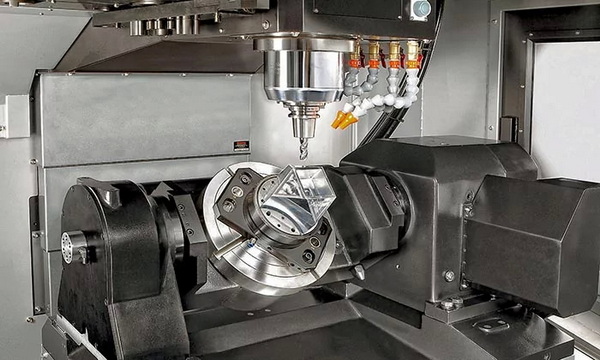
Tooling cost covers cutting tools, inserts, holders, and their replacement over time, which is particularly important in hard materials or long production runs. Tool wear not only introduces direct replacement cost but also downtime whenever the operator must stop CNC machining to change tools.
Extending tool life can significantly reduce tooling expenses and machine downtime, which translates into lower overall CNC machining cost. Strategies such as optimizing cutting parameters, using high‑quality inserts, and applying appropriate coolants can extend tool life and improve surface finish.
Finishing processes such as deburring, blasting, anodizing, painting, and coating add further cost but are often essential for functional or visual reasons. When calculating CNC machining cost, these finishing operations are usually quoted separately so that buyers can decide which ones are truly necessary.
Shangchen offers integrated finishing services together with CNC machining so that parts can be delivered ready‑to‑install, avoiding additional logistics and coordination with separate finishing vendors. This bundling can reduce total cost and lead time compared with organizing every process independently.
Quality and inspection requirements can also influence CNC machining cost, especially in regulated industries such as aerospace, medical, or automotive. Detailed inspection protocols, measurement reports, and traceability all require additional time and specialized equipment.
Examples of cost‑influencing quality elements include:
- First‑article inspection and dimensional reports
- In‑process checks for critical dimensions
- Final inspection and packaging verification
- Calibration and certification of measurement tools
Higher levels of documentation and traceability may add line items to a CNC machining quote, but they significantly reduce risk for high‑value projects. Shangchen can adapt its quality processes to customer requirements, from basic dimensional checks for general industrial parts to more rigorous protocols for high‑precision CNC machining work.
Although logistics does not change the pure CNC machining cost, it does impact the landed cost of parts for international buyers. Freight method, packaging level, customs handling, and local delivery all add to the total price you pay per part.
Shorter lead times sometimes require overtime, priority scheduling, or capacity reservation, which can increase the CNC machining rate or add rush fees. Conversely, flexible schedules allow factories to optimize machine loading and sometimes offer better pricing.
Working with a partner like Shangchen that already serves overseas brands helps reduce risks around communication, packing standards, export documentation, and delivery planning. This reliability is an important indirect factor when evaluating the true cost of CNC machining over the full life of a project.
Imagine an aluminum housing produced by CNC machining in a medium‑size batch:
- Material: The supplier estimates the total mass of aluminum stock required and multiplies it by the unit material price.
- Setup: Engineering time is allocated to CAM programming, fixture design, and first‑article qualification, then converted into a monetary setup charge.
- Machining time: Cycle time per part is calculated from the toolpaths and multiplied by the hourly machine rate and the number of parts.
- Tooling: The expected number of inserts and cutters consumed during the batch is priced and distributed per part.
- Finishing: Deburring, surface treatment, and marking are calculated per piece based on process time and chemicals or consumables.
Total CNC machining cost is the sum of these categories, which is then divided by the number of parts to get a per‑unit price. By comparing scenarios such as different materials, adjusted tolerances, or alternative setups, engineers and buyers can see how each decision affects CNC machining cost and choose the most economical route.
Shangchen can prepare such comparative quotations so that overseas customers see clearly how design and planning changes influence their CNC machining budget.
Reducing CNC machining cost usually combines design optimization, smart material choices, balanced tolerances, and appropriate batch planning. Instead of focusing only on unit price, buyers can cooperate with factories like Shangchen to redesign parts and production plans for overall cost efficiency.
Effective strategies include:
- Simplifying geometry: Avoid unnecessary pockets, undercuts, and complex 3D profiles when simpler alternatives meet the same function.
- Balancing tolerances: Reserve very tight tolerances for truly critical interfaces and allow looser values elsewhere to reduce CNC machining time.
- Selecting machinable materials: Choose alloys that machine efficiently while still meeting mechanical and environmental requirements.
- Planning volumes: Group orders together or plan buffer stock to reach more favorable batch sizes and amortize setup cost.
- Combining technologies: Use CNC machining together with turning, sheet metal, or molding when appropriate to reduce overall cost per function.
Shangchen's mix of CNC machining, sheet metal work, 3D printing, and tooling allows it to propose hybrid solutions—for instance, machining only critical surfaces on a pre‑formed part—to minimize both material wastage and cutting time.
For your blog or website, visuals and videos can make CNC machining cost concepts easier to understand and more engaging for readers. Typical placements that work well include:
- A process overview that visually shows each cost step from CAD to finished part, linked to the cost formula.
- Demonstrations of how feed rate and spindle speed changes affect cycle time, showing why machining time is central to CNC machining cost.
- Side‑by‑side comparisons of simple and complex parts, with annotations explaining why one is cheaper to machine than the other.
- Short factory tours or machine demonstrations that highlight how advanced equipment and automation improve consistency and cost control.
- Case‑style explanations where an original design is optimized and the resulting CNC machining cost reduction is clearly illustrated.
By embedding such content near the relevant sections, you can both educate potential customers and demonstrate Shangchen's real manufacturing capabilities and professional CNC machining experience.
CNC machining cost is determined by a combination of material choice, part design, required tolerances, setup time, machining time, machine type, tooling, finishing, quality requirements, and logistics. Rather than treating CNC machining cost as a fixed number, buyers should view it as the result of many controllable parameters that can be optimized through collaboration with their supplier.
By using a structured formula that adds material, setup, machining time, tooling, and finishing, businesses can estimate CNC machining cost early in the design stage and avoid late surprises. Close cooperation with a one‑stop factory like Shangchen (sc‑rapidmanufacturing.com) helps overseas brands, wholesalers, and manufacturers turn complex engineering drawings into competitive CNC machining quotes, combining rapid prototyping, precision batch production, and flexible volume scaling in a single supply chain partner.
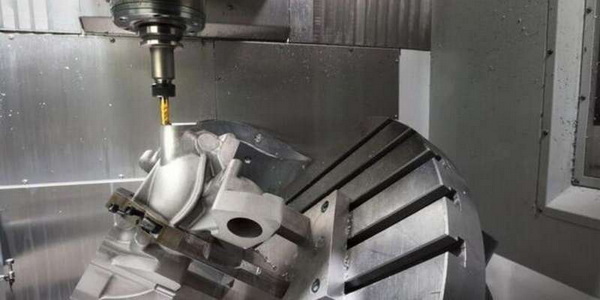
A practical approach is to treat CNC machining cost as the sum of material, setup, machining time multiplied by an hourly rate, tooling, and finishing. Once you know approximate cycle time and the machine rate, you can quickly generate a first estimate and then refine it with a detailed quote from your supplier.
Differences in equipment, labor rates, overhead, efficiency, and quality systems all influence the hourly cost of CNC machining. In addition, some suppliers may be more experienced with certain materials or part types, allowing them to use shorter cycle times or better tooling strategies, which directly lowers cost.
Prototype CNC parts carry the full weight of programming, fixturing, and first‑article inspection across only one or a few units. As there is no large batch to share the setup cost, the per‑piece price appears high even if the actual machining time is not very long.
Design changes that simplify features, increase radii, avoid deep narrow cavities, and relax unnecessary tight tolerances reduce CNC machining time and tool wear. This allows the supplier to run faster feeds and speeds, use fewer setups, and choose more economical tooling, all of which lower overall cost.
Shangchen (sc‑rapidmanufacturing.com) integrates CNC machining with rapid prototyping, turning, sheet metal fabrication, 3D printing, and mold manufacturing, giving overseas customers one partner for every stage from concept to mass production. This one‑stop model helps optimize CNC machining cost through better design advice, flexible machine allocation, and seamless transitions from trial runs to stable OEM production.

