
Views: 222 Author: Amanda Publish Time: 2025-12-10 Origin: Site


Content Menu
● Shangchen: Your CNC Machining OEM Partner
● What CNC Machining Hourly Rate Really Means
● Basic Formula for CNC Machining Cost Per Hour
● Step 1 – Machine Ownership Cost per Hour
● Step 2 – Labor Cost per Hour
● Step 3 – Overhead Cost per Hour
● Step 4 – Adding Profit Margin
● Typical CNC Machining Hourly Rates by Machine Type
● Typical CNC Machining Hourly Rates by Region
● From Hourly Rate to CNC Machining Part Price
● Factors That Change CNC Machining Cost Per Hour
● How Design Affects CNC Machining Hourly Cost
● How Volume Affects CNC Machining Cost Per Part
● Using Calculators and Estimation Tools
● How Shangchen Optimizes CNC Machining Costs
● Practical Tips to Reduce CNC Machining Cost
● FAQ
>> 1: What is a typical CNC Machining hourly rate?
>> 2: How do I estimate CNC Machining hours for a part?
>> 3: Why is 5-axis CNC Machining more expensive per hour?
>> 4: How can I reduce CNC Machining cost per part?
>> 5: Is CNC Machining in China always cheaper?
CNC Machining cost per hour is one of the most important indicators for both machine shops and overseas buyers who want transparent and competitive pricing. Understanding how to calculate a realistic hourly rate helps you quote projects correctly, control profit margins, and compare CNC Machining suppliers worldwide.
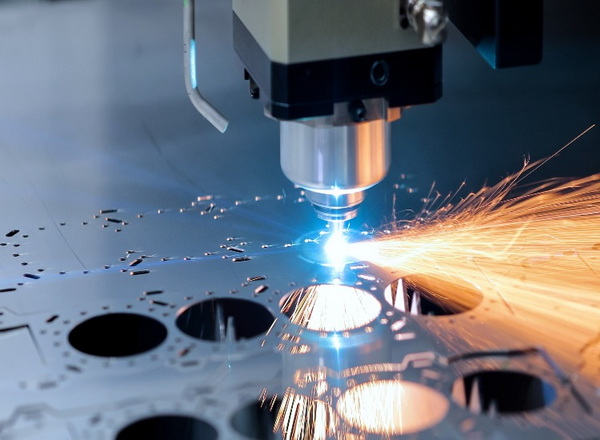
Shangchen (sc-rapidmanufacturing.com) is a China-based factory focused on rapid prototyping, CNC Machining, precision batch production, lathe turning, sheet metal fabrication, 3D printing, and mold manufacturing for overseas OEM customers. By combining modern CNC Machining equipment with experienced engineers, Shangchen helps brands, wholesalers, and manufacturers receive accurate quotations based on clear hourly cost structures.
To support global OEM projects, Shangchen usually breaks down quotations into machine time cost, labor, materials, finishing, and logistics, so overseas buyers can see exactly how each CNC Machining project is priced. Through optimized process planning and careful machine selection, the team balances high-quality CNC Machining with competitive hourly rates, especially for medium and large-volume production.
The CNC Machining hourly rate represents the total cost of running a machine for one productive hour, including machine ownership, maintenance, operator labor, overhead, and profit margin. Many CNC Machining shops convert all their annual machine and overhead expenses into a “shop rate” that is multiplied by machining hours to generate a job price.
In practice, hourly charges for CNC Machining vary widely, often from several tens to a few hundred US dollars per hour, depending on country, machine type, and complexity. In high-cost regions like the USA or Western Europe, advanced CNC Machining centers can be billed at high hourly rates, while Asian shops, especially in China, generally offer more competitive ranges for similar work.
At a simple level, many factories use the idea:
Total Cost=(Processing Hours×CNC Machining Hourly Rate)+Material Cost+Other Costs
The CNC Machining hourly rate itself is usually built from several components:
- Machine cost per hour
- Operator labor cost per hour
- Overhead cost per hour
- Profit margin per hour
A common method is to sum all relevant monthly or annual costs, then divide by the total number of productive machine or labor hours to get each element on an hourly basis. After that, the CNC Machining shop adds a suitable markup percentage to ensure a sustainable profit.
Machine ownership cost covers the purchase price, financing, depreciation, and expected maintenance over the machine's useful life. One practical approach for CNC Machining is:
Machine Cost per Hour=(Machine Purchase Cost+Lifetime Maintenance)/Expected Operating Hours Over Life
For example, if a CNC Machining center costs a significant amount and is expected to run a certain number of hours per year for a fixed number of years, you can divide total cost by total hours to get the machine cost per hour. More advanced 5-axis CNC Machining centers naturally generate a higher machine cost per hour than standard 3-axis machines, but they may cut total machining time for complex parts because they require fewer setups and can machine multiple faces in a single clamping.
Labor cost per hour includes the operator's base wage plus taxes, benefits, insurance, and paid time off. A typical formula is:
Labor Cost per Hour=Total Annual Labor Costs
/Effective Annual Working Hours
In high-wage countries, skilled CNC Machining operators significantly increase the hourly rate, especially when supervising complex setups or multi-axis machining centers. In lower-cost regions like China, lower labor costs help keep CNC Machining hourly rates more competitive, which is one of the main reasons many global buyers outsource machining work to Chinese factories such as Shangchen.
Overhead includes all indirect costs that cannot be tied to a single part: office staff, rent, utilities, software, tooling inventory, quality systems, and administration. To convert this into a CNC Machining overhead rate, factories calculate:
Overhead Cost per Hour=Total Annual Overhead/Total Annual Machine Hours or Labor Hours
For CNC Machining, overhead can be substantial because of specialized CAD/CAM software, advanced inspection equipment, climate control, tool management, and quality certifications. When a shop invests heavily in automation and measurement equipment, overhead per hour may increase, but that investment usually improves quality, consistency, and throughput.
After the sum of machine, labor, and overhead cost per hour is known, the CNC Machining shop adds a profit markup to build its final billing rate:
Final Hourly Rate=(Machine+Labor+Overhead)×(1+Profit Margin)
Profit margins vary depending on competition, risk, project complexity, and industry norms. High-risk CNC Machining jobs with demanding tolerances, special certifications, or tight delivery schedules often justify higher markups. Simpler, repeatable orders may have lower margins but can still be attractive because they keep machines fully utilized.

Different CNC Machining equipment types lead to different hourly ranges due to purchase cost, complexity, and productivity.
Many CNC Machining shops operate several machine types and choose the most economical equipment that can still meet the technical requirements. Shangchen follows this approach by assigning each project to 3-axis, 4-axis, 5-axis, or high-efficiency turning centers according to geometry, tolerance, and volume.
Location strongly affects CNC Machining hourly rates because wages, real-estate costs, taxes, and overhead differ between countries. In general, shops in North America and Western Europe tend to have higher hourly rates, while many Asian regions, including China, offer more cost-effective CNC Machining.
Because of these differences, many European and American brands cooperate with Chinese CNC Machining suppliers like Shangchen to find a balance between quality, lead time, and cost. By combining optimized hourly rates with efficient process flow, these suppliers help reduce total project cost without sacrificing precision or reliability.
Once a CNC Machining shop knows its internal hourly rate, it must estimate machining time for each operation. Using CAM software and engineering experience, programmers estimate cutting time, tool changes, repositioning, and potential deburring or finishing operations.
The estimated machining hours are then multiplied by the CNC Machining hourly rate and combined with material, finishing, inspection, packaging, and shipping to build the final quotation. For example, if a part requires several hours of machining at a given hourly rate plus material and finishing cost, the total price per piece is the sum of these individual elements divided by the ordered quantity.
Many technical and commercial factors influence the CNC Machining hourly rate visible in quotations:
- Machine type and axis count (3-axis vs 5-axis)
- Material type and machinability
- Part complexity and tolerances
- Surface finish and inspection requirements
- Production volume and repeatability
- Setup, fixture design, and programming effort
Hard-to-machine materials such as titanium, hardened steels, or special alloys often require slower cutting parameters, more robust tooling, and frequent tool changes. This increases effective CNC Machining time and may also demand more expensive equipment, which pushes up the hourly rate applied to the project. Parts with tight tolerances or critical surfaces may also require additional measurement, documentation, and process control, all of which add time and cost.
Design for manufacturability (DFM) is one of the most powerful levers for controlling CNC Machining cost per hour and per part. When a design uses unnecessarily deep pockets, tiny internal radii, extremely thin walls, or complex undercuts, it may force the use of long tools, special setups, or even 5-axis CNC Machining where 3-axis could have been sufficient.
Designers who cooperate with their CNC Machining supplier early can often simplify geometry, increase radii, standardize hole sizes, or relax tolerances where possible. These changes reduce machining time, tooling cost, and setup work, which leads to a lower effective hourly rate applied to the part. Shangchen frequently offers DFM suggestions to OEM customers to help them reach the best balance between performance and CNC Machining cost.
Per-part CNC Machining cost behaves differently at low and high volumes because setup and programming costs do not scale linearly. For prototype orders of just a few pieces, programming, fixturing, and first-article inspection can represent a large share of total cost, even if machining time is short.
As volume increases, the same setup and programming effort is spread over many parts, so effective CNC Machining cost per part drops. At this stage, cutting time, tool wear, and material usage become more dominant cost drivers. That is why many CNC Machining suppliers provide price breaks at certain quantity levels and why shifting from prototype to batch production with Shangchen usually delivers significant unit-cost savings for OEM clients.
Several software tools and online resources can help estimate CNC Machining hourly rates. These tools commonly ask for parameters such as machine purchase price, expected lifetime, annual operating hours, operator wage, and overhead estimates. They then output a recommended hourly rate for various CNC Machining operations.
Training videos and tutorials often walk through these calculations step by step, showing how changes in each assumption affect the final hourly rate. Even if you do not own a machine shop, understanding these methods helps you analyze quotations, compare suppliers, and negotiate more confidently with CNC Machining partners.
Shangchen integrates rapid prototyping, CNC Machining, turning, sheet metal processing, 3D printing, and mold making, allowing flexible process selection for each project. For some prototypes, Shangchen may combine additive processes with finishing CNC Machining to shorten lead time and lower cost. For series production, the engineering team may switch to fully optimized multi-axis CNC Machining with automated fixturing and tool management.
Because Shangchen is located in China and serves mainly overseas OEM customers, it can leverage relatively lower labor and facility costs while still investing in modern CNC Machining centers and quality-control systems. This combination helps overseas brands obtain competitive hourly machining rates with stable quality. Long-term customers often benefit from continuous cost optimization as Shangchen refines process routes and tooling strategies over time.
There are several practical ways for engineers and buyers to reduce CNC Machining cost per hour and per part:
- Simplify geometries to allow 3-axis CNC Machining where possible instead of 5-axis.
- Group similar parts or schedule repeat orders together to increase batch size and spread setup costs.
- Choose materials with good machinability unless performance demands more difficult alloys.
- Engage your CNC Machining supplier early for DFM feedback on tolerances, radii, wall thickness, and feature layout.
- Compare regional options and consider strategic sourcing from cost-effective CNC Machining hubs such as China, especially with experienced OEM suppliers like Shangchen.
Real project examples often show that small design changes, better process planning, or switching to a more suitable material can dramatically reduce machining hours without affecting function or reliability.
CNC Machining cost per hour is driven by a combination of machine ownership, labor, overhead, and profit margin, all converted into a single shop rate that is multiplied by machining time to determine part prices. By understanding these components and how machine type, region, material, design, and volume influence them, buyers gain much better control over CNC Machining budgets and supplier selection.
For overseas brands and OEMs, cooperating with a professional Chinese factory like Shangchen (sc-rapidmanufacturing.com) makes it easier to achieve competitive CNC Machining hourly rates while maintaining strong quality and reliable lead times. Through smart DFM support, flexible process selection, and transparent cost communication, Shangchen helps customers optimize CNC Machining costs from prototype through to mass production.
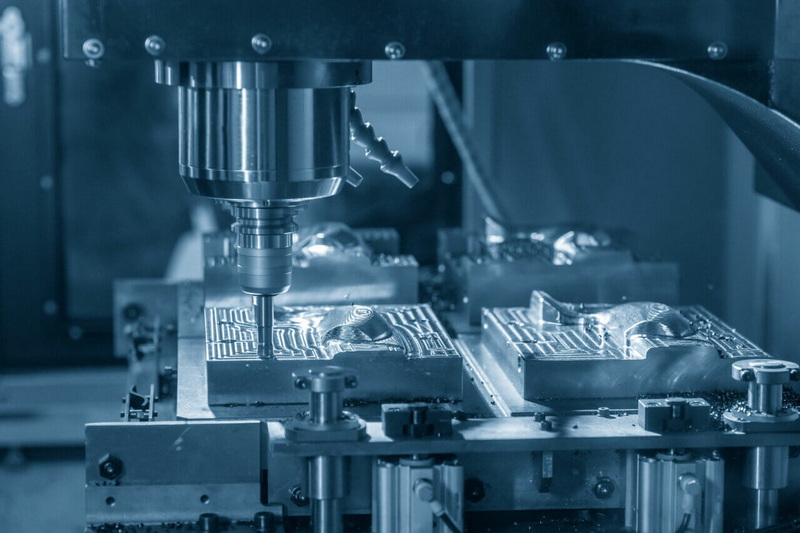
Typical CNC Machining hourly rates range widely depending on region, machine type, and shop capability. In general, shops in high-wage countries may charge significantly more per hour than shops in lower-cost regions such as China. The exact number depends on how each supplier calculates machine, labor, overhead, and profit.
CNC Machining hours are usually estimated using CAM software that simulates toolpaths, cutting speeds, and feed rates for each operation. Engineers then add time for setup, fixturing, tool changes, inspections, and handling, producing a realistic estimate that can be multiplied by the shop's hourly rate to form a quotation.
5-axis CNC Machining requires more expensive machines, more advanced control systems, and often more experienced programmers and operators. These factors increase both machine ownership and labor costs per hour. However, 5-axis CNC Machining can reduce setups and machining time for complex parts, which may lower total part cost even when the nominal hourly rate is higher.
To reduce CNC Machining cost per part, optimize part design for manufacturability, select materials that machine efficiently, and increase batch sizes where possible. Collaborating with your CNC Machining supplier on DFM, tolerances, and feature layout helps shorten machining time and reduce tooling and setup costs, all of which lower the final price.
CNC Machining in China is often more cost-competitive because of lower labor and overhead, but it is not automatically cheaper for every project. Total cost also depends on part complexity, quality requirements, logistics, communication, and supplier management. Working with an experienced OEM partner like Shangchen allows buyers to combine attractive hourly rates with consistent quality, engineering support, and reliable delivery.

