
Views: 222 Author: Amanda Publish Time: 2025-11-08 Origin: Site


Content Menu
● 1: Strategic Planning for Fast and Exact Moulding Production
● 2: Process Control Fundamentals for Speed-Quality Synergy
● 3: Equipment, Automation, and Workflow Integration
● 4: Quality Assurance as a Driver of Speed
● 5: Materials, Quality, and Sustainability
● 6: Scaling from Rapid Prototyping to Mass Moulding
● 7: Industry Trends and Best Practices
● 8: Practical Roadmap for Clients and Partners
● FAQ
>> 1) What is the best approach to balance speed and accuracy in initial moulding projects?
>> 2) How can process parameters be optimized without creating instability in production?
>> 3) What role does automated inspection play in maintaining speed and quality?
>> 4) How should material selection influence mould design for speed-focused production?
>> 5) What practical steps help transition from rapid prototyping to mass production efficiently?
In today's global manufacturing landscape, moulding production sits at the heart of delivering fast, reliable parts while maintaining exacting standards. For a Chinese OEM-focused operation like Shangchen, with capabilities spanning rapid prototyping, CNC machining, sheet metal fabrication, 3D printing, vacuum casting, and full mould production, the challenge is clear: accelerate time-to-market without sacrificing dimensional accuracy, surface quality, and functional performance. This article delves into actionable strategies that cover design for manufacturability, process control, tooling, automation, quality assurance, and integrated workflows. The aim is to help clients—from brand owners to wholesalers and contract manufacturers—achieve balanced outcomes where speed and precision reinforce each other, rather than compete for scarce attention and budget.
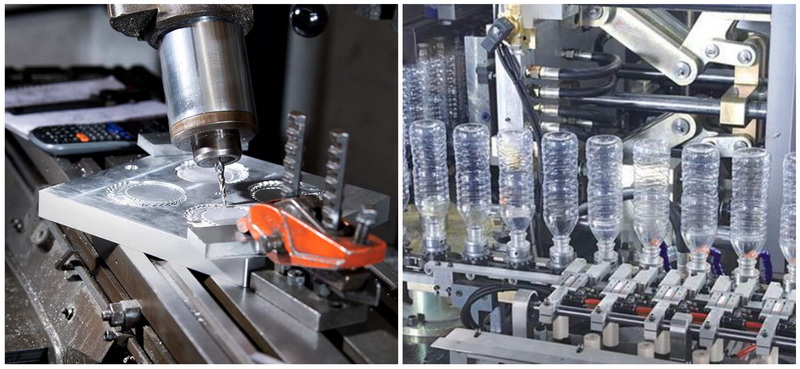
- Integrated project scoping: Establish a joint project charter that defines part function, required tolerances, surface finish, environmental exposure, regulatory considerations, and target lead times. For moulding production, the early agreement on these parameters reduces late-stage changes that derail timelines and inflate costs.
- Design for manufacturability (DFM) as a gatekeeper: Early collaboration during the part-design phase helps optimize features for mouldability, such as wall thickness uniformity, fillets to reduce stress concentrations, gate location to minimize cosmetic impact, and acceptable venting. A well-structured DFM review with the customer can preempt rework in later stages.
- Tolerance realism and material strategy: Distinguish between critical and non-critical features, and assign tolerances accordingly. Material selection should emphasize melt flow consistency, shrinkage predictability, and environmental stability (temperature, humidity, chemical exposure). Consistent materials translate to fewer process excursions and better predictability of both speed and accuracy.
- Tooling and production planning: Decide between single-cavity, multi-cavity, or family moulds based on part family volume and geometry. Consider modular tooling concepts, hot runner systems, and optimized cooling layouts to shorten cycle times without introducing variability. A clear plan for tool wear monitoring and preventive maintenance helps sustain speed over longer production runs.
- Controlled filling and packing strategies: Implement stepwise filling to reduce weld lines and air traps, then manage packing pressure to minimize sink marks. Fine-tuning the balance between fill speed, packing pressure, and hold time is core to achieving consistent part geometry across high-volume runs.
- Mold temperature management: Stabilize the mold temperature across cycles to minimize warpage and thickness variation. Uniform cooling and precise temperature control help ensure repeatable dimensions, better surface finishes, and fewer post-mould corrections.
- Thermal and rheological consistency: Moisture content in hygroscopic resins must be thoroughly dried before processing. Consistent melt viscosity reduces batch-to-batch variation, which in turn stabilizes cycle times and part quality.
- Real-time monitoring: Deploy sensors and inline inspection systems to track temperature, pressure, and cycle duration. Real-time analytics enable rapid corrective actions, ensuring that speed gains do not come at the expense of quality.
- Post-mould quality gates: Implement a tiered QC approach—visual inspection for cosmetic defects, dimensional checks for critical features, and functional testing for parts with motion or fit requirements. Early gating prevents defective lots from entering downstream assembly.
- Mould design and maintenance excellence: Employ simulation tools to assess fill patterns, shrinkage, and potential demolding challenges before production begins. High-precision moulds with balanced cooling channels, optimized venting, and durable inserts contribute directly to repeatability and shorter cycle times.
- Automation and handling: Integrate robotics for part ejection, post-processing, and packaging to reduce manual handling, which often limits speed and introduces variability. Automated quality checks at the exit of the moulding cell catch defects earlier in the cycle.
- Hybrid manufacturing capabilities: Leverage rapid prototyping and 3D-printed tooling during development to validate design decisions quickly, then transition to durable steel moulds for mass production. This approach preserves speed during development while preserving accuracy as volumes grow.
- Data-driven production floor: Centralize process data from moulding, trimming, and assembly into a single digital platform. Data visibility enables proactive maintenance, parameter optimization, and continuous improvement across all shifts.
- First Article Inspection (FAI) and initial validation: A rigorous first-run evaluation confirms that the tool, materials, and process parameters meet the required specifications. Early detection of deviations minimizes risk in later production batches.
- Statistical process control (SPC): Collect and analyze key process metrics such as wall thickness, gate weld strength, and surface roughness. SPC helps identify subtle drifts before they escalate into quality defects, enabling faster, safer scale-up.
- Process capability and control plans: Determine Cpk values for critical dimensions to quantify process capability. A target Cpk above 1.33 (and ideally above 1.67 for high-stakes components) provides statistical assurance that parts consistently meet tolerances, which in turn supports faster acceptance by customers.
- Containment and traceability: Implement strict traceability for materials, mould tools, and process settings. In the event of a defect, this enables rapid root cause analysis and minimizes the blast radius of recalls or costly reworks.
- Material consistency as a reliability anchor: Rely on resin suppliers with tight lot-to-lot consistency, verified moisture content, and documented material certifications. Reliable materials reduce the need for reprocessing or re-design, supporting sustained speed.
- Surface quality and finishes: For applications requiring high aesthetics, such as consumer electronics or automotive interiors, focus on gate design, cooling effectiveness, and post-mould finishing techniques to achieve the desired surface without delaying production.
- Environmental footprint and waste minimization: Design for minimal waste with runner segmentation and efficient parting line placement. Reuse scrap and runners where feasible, and invest in recycling streams for moulding waste to align with sustainability goals without compromising throughput.
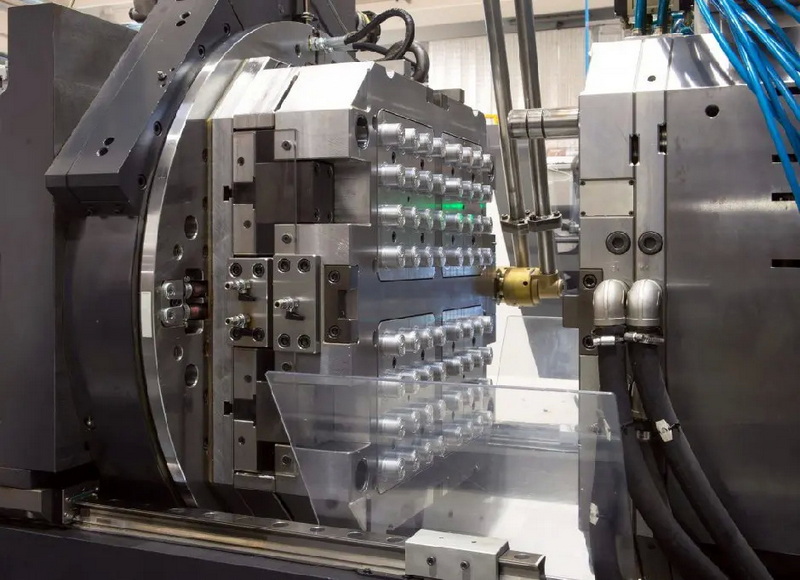
- transition plan: Use rapid prototyping to validate function and fit, then incrementally scale to production-grade tooling with defined changeover procedures. A clear handoff protocol minimizes downtime and ensures parameters remain stable during scale-up.
- Process validation across volumes: Validate at multiple scale points, from pilot runs to mid-size batches, to ensure that the control strategy remains valid as production ramps up. This reduces the risk of late-stage surprises that can slow timelines.
- Supplier and partner alignment: Maintain open lines of communication with resin suppliers, toolmakers, automation providers, and downstream assembly teams. Aligned expectations shorten decision cycles and keep the project on track.
- Conformal cooling and near-instantaneous temperature control: Emerging cooling channel designs improve heat transfer, shrinking cycle times and reducing thermal distortion for complex geometries.
- Digital twins for moulding production: Virtual simulations of mould filling, cooling, and ejection help pre-empt defects and optimize cycle times before physical runs begin.
- Advanced process control (APC): Real-time adaptive control adjusts process parameters on the fly, enhancing stability and consistency without sacrificing speed.
- Step 1: Define critical features and tolerances; select materials with predictable behavior.
- Step 2: Confirm tooling strategy and initial process parameters with rapid validation tests.
- Step 3: Implement inline quality checks and SPC dashboards; establish a robust data-management protocol.
- Step 4: Scale gradually with pilot production, validating process capability at each stage.
- Step 5: Transition to full production with a formal change-management process, including documentation, traceability, and supplier coordination.
- Step 6: Review and iterate quarterly to sustain improvements in speed and accuracy.
Balancing speed and accuracy in moulding production is a dynamic, cross-functional effort. For Shangchen, the ability to deliver rapid prototyping, precise CNC machining, sheet metal fabrication, 3D printing, vacuum casting, and end-to-end mould production creates a unique platform to meet the evolving needs of foreign brands, wholesalers, and manufacturers. By integrating DFMs with rigorously controlled injection moulding parameters, adopting automation and digital monitoring, and maintaining a relentless focus on quality assurance, the moulding production process can achieve shorter cycle times, lower costs per part, and, most importantly, consistent performance that end users can rely on. The approach outlined here supports a seamless path from concept to high-volume production, ensuring that speed and accuracy reinforce each other rather than compete for scarce resources.
- Start with a clear design-for-manufacturability assessment, set realistic tolerances, and validate with rapid prototyping and pilot runs before full-scale production to align speed and quality from the outset.
- Use a structured design of experiments to identify robust parameter windows, implement real-time monitoring to detect drift, and apply small, controlled adjustments to keep cycle times fast while preserving part consistency.
- Automated inspection provides rapid, repeatable quality checks that catch defects early, reducing rework and enabling higher throughputs without sacrificing accuracy.
- Choose materials with predictable flow, shrinkage, and moisture behavior, then adapt tooling and gating accordingly to minimize variability and maximize cycle efficiency.
- Implement a formal handoff process from prototype to production, including updated tool designs, validated process parameters, and robust change-control and documentation to sustain speed and precision.
[1](https://zetarmold.com/injection-mold-production/)
[2](https://www.yizumi.com/en/news/product/industry-trend/tips-for-process-optimization-in-injection-molding)
[3](https://atienzaycliment.com/en/tips/plastic-injection-molding-process-optimization/)
[4](https://www.engelglobal.com/en/blog/tips-for-process-optimisation-in-injection-moulding)
[5](https://www.kaysun.com/blog/steps-to-optimizing-the-injection-molding-process)
[6](https://rjginc.com/the-8-key-parameters-in-injection-molding-process-optimization-to-avoid-defects/)
[7](https://www.mks.com/mam/celum/celum_assets/resources/SenselinkQMDOE-AppNote.pdf)
[8](https://www.sciencedirect.com/science/article/abs/pii/S0959652624032840)

