
Views: 222 Author: Amanda Publish Time: 2025-07-22 Origin: Site


Content Menu
● Benefits of Rapid Prototyping for OEM Quality
● Key Processes in Rapid Prototyping
>> 3D Printing
● Critical Factors for Product Consistency
>> Material Selection and Traceability
>> Process Control and Monitoring
● Developing a Quality-Driven Prototyping Workflow
>> Step 1: Design for Manufacturability
>> Step 2: Iterative Prototyping and Testing
>> Step 3: Detailed Documentation
>> Step 4: Integrated Quality Assurance Systems
>> Step 5: Customer Collaboration
● Common Quality Challenges (and Solutions)
● Case Study: Success in Consistency Through Rapid Prototyping
● Best Practices for Maintaining Quality at Scale
● FAQ
>> 1. What industries benefit most from rapid prototyping for quality consistency?
>> 2. How can manufacturers ensure material consistency during rapid prototyping?
>> 3. Which rapid prototyping technologies best support consistent quality production?
>> 4. Is rapid prototyping scalable for large volume production with consistent quality?
>> 5. What is the typical turnaround time for prototyping and quality validation?
The competitive global market demands that manufacturers consistently deliver high-quality products. As innovations accelerate and customer requirements evolve, maintaining uniform standards across every product batch becomes more challenging. Rapid prototyping, leveraging cutting-edge technologies like CNC machining, 3D printing, and precision batch production, empowers manufacturers to refine design, optimize workflows, and guarantee repeatable, reliable outcomes. For OEM service providers and their international partners, harnessing rapid prototyping enables not just speed, but robust quality assurance at scale.
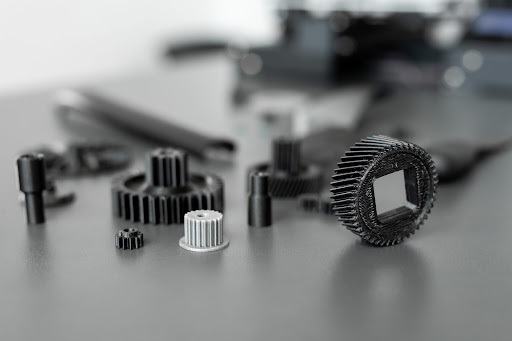
Rapid prototyping refers to a suite of advanced techniques—such as 3D printing, CNC machining, and computer-aided design—that enable manufacturers to create accurate physical models of products rapidly and affordably. Unlike slow, labor-intensive traditional methods, rapid prototyping allows for accelerated iterations, easy design modifications, and faster feedback loops, ensuring every concept is thoroughly vetted before mass production.
Rapid prototyping transforms digital designs into tangible components, letting engineers and decision-makers evaluate aesthetics, fit, and function early in the development cycle. This swift process minimizes costly product recalls, compresses time-to-market, and, most importantly, standardizes quality from prototype to mass production.
By integrating rapid prototyping into their workflow, OEM manufacturers and their brand partners can realize numerous quality benefits:
- Accelerated Iteration: Rapid prototyping speeds up design refinements, allowing swift corrections and enhancements of quality before mass production. Numerous iterations can be produced quickly without incurring excessive costs.
- Early Fault Detection: Rapid prototype models reveal design flaws or manufacturability issues early. Detecting these problems at the prototype stage prevents downstream quality defects in bigger batches.
- Cost Efficiency: Rapid prototyping reduces waste and tooling costs by perfecting designs before large-scale runs. This strategic step decreases expensive rework or recalls post-launch.
- Consistent Results: Through standardized dimensions, materials, and finishing processes, rapid prototyping helps guarantee repeatable product quality across every unit.
- Enhanced Collaboration: Rapid prototyping strengthens communication between designers, engineers, manufacturers, and clients by providing clear physical models to evaluate and discuss.
Understanding the primary processes used in rapid prototyping builds clarity around how consistent quality is achieved.
CNC (Computer Numerical Control) machining translates precise digital designs into finished parts with outstanding accuracy. Automated toolpaths and machining sequences minimize human error and variability, ensuring every component meets strict tolerances vital for OEM customers.
CNC machining is versatile, capable of producing complex geometries and smooth finishes on various metals and plastics. Its repeatability enables batch production with minimal dimensional deviation, a foundation of quality consistency.
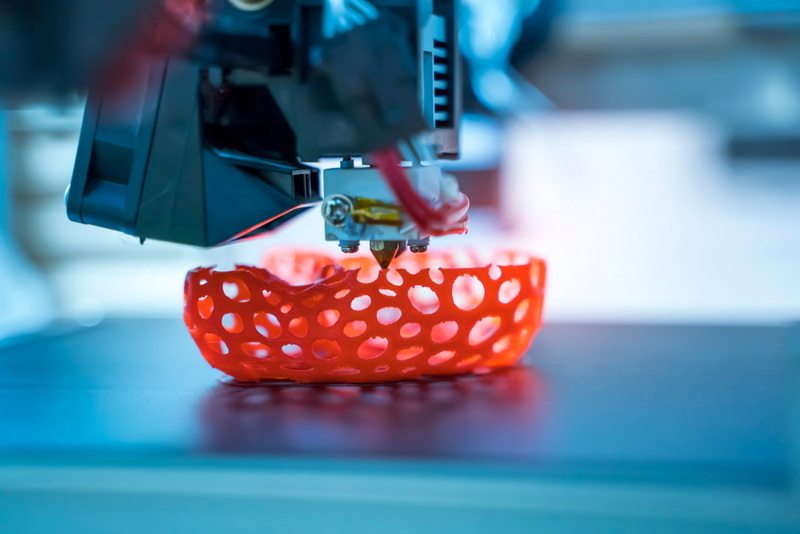
Additive manufacturing, or 3D printing, constructs objects layer by layer from digital files. This technology supports rapid turnaround using diverse materials including thermoplastics, resins, and metals.
3D printing excels at creating highly detailed prototypes and complex internal structures that traditional manufacturing struggles with. It allows for rapid design iteration and testing, accelerating validation cycles and bringing to light potential production flaws early.
For industrial enclosures, brackets, frames, and other structural parts, sheet metal fabrication plays a pivotal role. Techniques such as laser cutting, bending, stamping, and welding are integrated into rapid prototyping workflows to confirm design feasibility and enforce quality benchmarks.
Early sheet metal prototypes validate fit and finish, and repeated small-batch production ensures process parameters produce consistent components before scaling.
Bridging the gap between prototypes and full-scale manufacturing, precision batch production emphasizes automated control and repeatability. Using robotics and advanced monitoring during prototyping helps realize flawless product runs, increasing confidence when moving to mass quantities.
Real-time quality control embedded in batch processes promptly flags deviations, supports sorting of defective parts, and maintains overall production line quality.
Achieving consistency in product quality using rapid prototyping depends on several crucial factors:
The foundation of quality consistency lies in the original CAD (Computer-Aided Design) files. Standardized design procedures, disciplined version control, and clear documentation prevent design errors or unauthorized changes that can propagate through production.
A robust digital model ensures uncompromised communication of specifications during both prototyping and final manufacturing.
Material choice affects product performance, durability, and aesthetics. Selecting certified suppliers and rigorously testing incoming material batches maintain quality standards.
Maintaining traceability means every part's material origin is documented, allowing for quick issue investigation and resolution should defects arise.
Implementing automated sensors, digital dashboards, and machine monitoring software provides continuous feedback during rapid prototyping. Process data such as temperature, speed, pressure, and cycle time remain within set limits, preventing quality lapses caused by human oversight.
When anomalies appear, real-time alerts facilitate immediate intervention, protecting downstream production.
Precision inspection tools, like coordinate measuring machines (CMM), optical scanners, and surface profilometers, measure prototype dimensions and surface qualities. This high-resolution data verifies compliance with design specifications.
An effective feedback loop to designers and operators enables prompt adjustments, strengthening quality control for both prototypes and full production.

Implementing a workflow designed to maximize product quality through rapid prototyping requires strategic steps:
Integrate producibility considerations at the design stage. Engineering and manufacturing teams should collaborate early to ensure the design suits prototyping technologies. Simplifying assembly, allowing for required tolerances, and selecting optimal materials reduce downstream issues.
Create multiple prototype versions followed by rigorous functional and quality assessments. This iterative approach uncovers weaknesses or deviations, helping converge on a design that balances performance and manufacturability.
Recording every version change, machine setting, material batch number, and inspection result provides comprehensive traceability. Maintaining consistent records reduces errors and accelerates troubleshooting.
Deploy digital QA solutions such as Statistical Process Control (SPC), real-time monitoring, and automated inspections. These tools uncover trends before defects occur, enabling preventative action instead of reaction.
Maintain transparent communication between OEM providers and clients throughout prototyping. Sharing physical samples, digital reports, and process data builds trust and aligns quality expectations.
While rapid prototyping brings many advantages, manufacturers face several typical challenges when striving for consistent product quality:
- Inconsistent Material Properties: Variations in raw material lots can cause unexpected changes to product behavior or finish. Mitigate this by implementing stringent supplier audits and conducting batch-level certification tests.
- Dimensional Variance in Prototypes: Machine calibration and wear may lead to variations in prototype dimensions. Regularly calibrate CNC and 3D printing equipment and conduct frequent inspections using CMM or 3D scanners.
- Surface Finish Mismatches: Differences in surface texture or gloss can impact user perception. Establish standardized post-processing steps such as sanding, polishing, or coating and apply them consistently.
- Delayed Client Feedback: Slower response times during design reviews can lengthen development cycles. Use rapid digital prototyping and virtual collaboration platforms to accelerate client involvement and approvals.
- Design Drift Across Batches: Uncontrolled modifications or undocumented changes can cause inconsistencies. Enforce strict digital revision control, and maintain version integrity through centralized design management systems.
Consider an OEM manufacturing custom aluminum enclosures for a global electronics brand. The project required precise tolerances and a high-quality anodized finish to meet rigorous client standards.
By leveraging CNC machining and iterative 3D-printed prototypes, the manufacturer assessed design accuracy and functionality before final tooling. Each prototype cycle revealed tiny imperfections, allowing engineers to refine machining parameters and processing steps.
To ensure rapid quality verification, automated dimensional inspection using CMM technology was integrated into the production line. Surface treatment workflows were standardized and monitored to maintain finish uniformity.
The result was thousands of identical, high-quality enclosures that exceeded client expectations. Traceability and detailed documentation allowed quick root cause analysis for any identified anomalies during production.
This case illustrates how combining rapid prototyping with technology-enabled quality management fosters consistent excellence at scale.
To maintain consistent product quality while leveraging rapid prototyping, manufacturers should adopt these best practices:
- Leverage Advanced Technology: Use the latest CNC machines, 3D printers, and inspection tools to minimize errors introduced by manual processes.
- Documentation Discipline: Thoroughly document every step, from initial CAD files to final inspection results. This mitigates risks through traceability.
- Calibrate and Maintain Equipment: Regularly service machinery and perform preventive maintenance to ensure processes remain stable.
- Implement Quality Management Software: Centralize data collection, analytics, and corrective action tracking to proactively manage quality.
- Encourage Team Collaboration: Foster a culture where design, engineering, manufacturing, and quality control teams communicate openly and drive continuous improvement.
- Engage Clients Early and Often: Involve customers throughout the prototyping process to adjust course promptly and meet expectations.
Applying these approaches empowers OEM factories and production partners to achieve scalable, reliable, and consistent product outputs using rapid prototyping.
Rapid prototyping has revolutionized product development by enabling fast, flexible, and cost-effective creation of prototypes that reflect final production quality. For OEM manufacturers working with international brand owners and wholesalers, it offers a powerful tool to troubleshoot, validate, and standardize product designs before full-scale manufacturing begins.
Consistent product quality requires a combination of advanced technologies—including CNC machining, 3D printing, and sheet metal fabrication—complemented by rigorous process control, comprehensive documentation, and client collaboration. Integrating digital quality assurance and fostering continuous feedback ensure prototypes and batch production meet tight specifications without costly delays or recalls.
By embedding quality-focused workflows around rapid prototyping, manufacturers can confidently deliver products that satisfy global standards and customer expectations, fostering lasting partnerships anchored in trust and excellence.
Industries that demand high-precision, custom, or complex components derive significant value from rapid prototyping. Automotive, aerospace, consumer electronics, medical devices, and industrial machinery sectors particularly benefit because they require fast design verification, risk mitigation, and exceptional repeatability.
Material consistency is assured by carefully selecting certified suppliers, enforcing strict quality checks on incoming raw materials, conducting batch-level testing, and maintaining full traceability records. This process prevents variation that can affect prototype or batch quality.
CNC machining and metal or polymer 3D printing lead the sector in producing precise, repeatable parts. Advanced digital inspection tools and automated quality management systems further enhance process control and product uniformity.
Yes. With standardized digital workflows, quality assurance integration, and precision batch production techniques, rapid prototyping methodologies can scale from single prototypes to thousands of consistent units without sacrificing quality.
Turnaround varies depending on complexity, materials, and volume, but rapid prototyping typically compresses development from several weeks or months to just days. Fast iteration thanks to digital workflows and onsite equipment accelerates client feedback cycles.

