
Views: 222 Author: Amanda Publish Time: 2025-07-22 Origin: Site


Content Menu
● Understanding Rapid Prototyping
>> The Variety of Rapid Prototyping Methods
● The Importance of Precision in Rapid Prototyping
>> Consistency and Reliability
>> Customer Satisfaction and Quality Control
● Precision Measurement Tools in Rapid Prototyping
>> Coordinate Measuring Machines (CMM)
>> Optical Measurement Systems
>> Laser Scanners and 3D Measurement
● Integrating Measurement Tools with Digital Manufacturing
● Best Practices for Ensuring Prototyping Accuracy
>> Employ the Right Tool for Each Feature
>> Regular Calibration and Maintenance
>> Data Documentation and Traceability
>> Skilled Operators and Training
● FAQs
>> 1. What role do precision measurement tools play in rapid prototyping quality?
>> 2. Which is better for rapid prototyping inspection: CMM or laser scanning?
>> 3. How often should measurement tools be calibrated in a rapid prototyping environment?
>> 4. Can optical measurement systems replace manual tools for all rapid prototyping parts?
>> 5. How do integrated digital measurement systems improve rapid prototyping workflows?
In today's fast-paced manufacturing landscape, rapid prototyping has become indispensable. Delivering parts quickly and accurately, especially for international OEMs and brands, requires more than just advanced machinery—it demands unmatched precision at every stage. Central to this precision are high-quality measurement tools, which ensure that every rapid prototype—be it from CNC machining, 3D printing, sheet metal fabrication, or injection molding—meets exact specifications and is ready for seamless mass production.
This comprehensive guide explores how precision measurement tools underpin the accuracy and reliability of rapid prototyping, details the types of tools used, illustrates best practices, and addresses typical industry concerns to provide a thorough understanding of the importance of precision measurement in contemporary manufacturing.
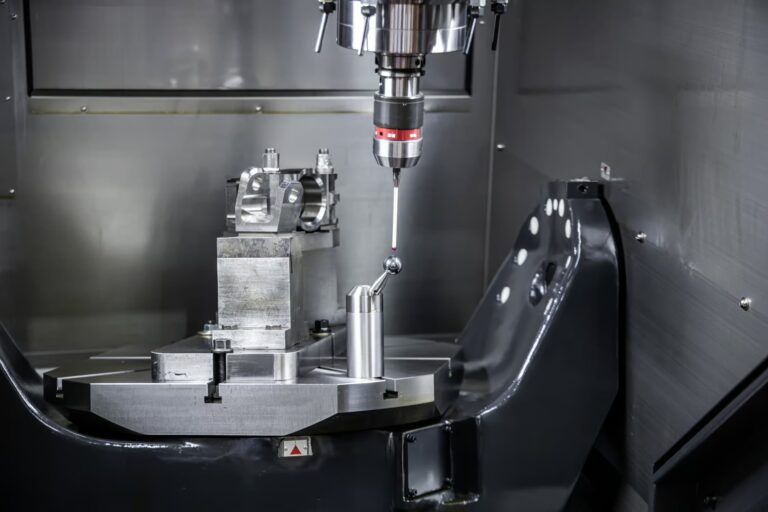
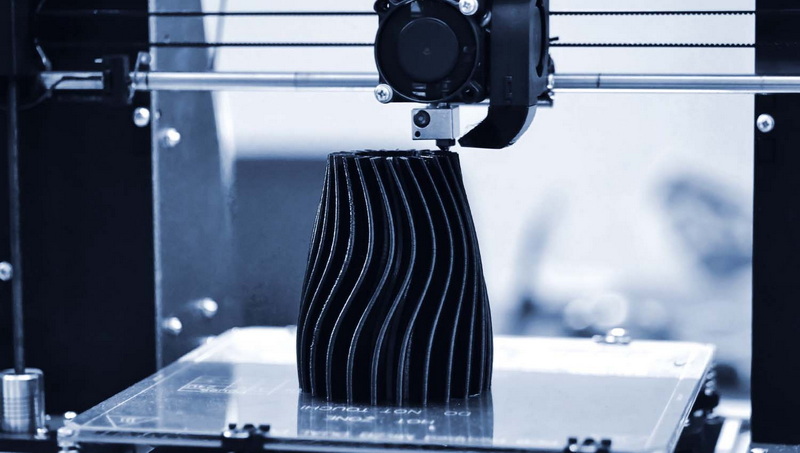
Rapid prototyping refers to the processes used to quickly fabricate a scale model or functional part using additive and subtractive manufacturing methods. These techniques include CNC machining, 3D printing, sheet metal fabrication, injection molding, and more. The primary goals are to accelerate design validation, enable iterative product development, reduce time to market, and minimize the risks associated with new product launches.
For companies serving as OEM suppliers or manufacturing partners, especially in China working with international clients, accuracy in rapid prototyping directly impacts downstream processes such as tool making, mass production, and final assembly. A prototype that faithfully replicates the intended design fosters confidence throughout the supply chain and helps secure larger production orders.
A diverse range of technologies qualifies as rapid prototyping. For example:
- CNC machining: Subtractive manufacturing that removes material from blocks with high precision.
- 3D printing: Additive manufacturing, including selective laser sintering (SLS), stereolithography (SLA), and fused deposition modeling (FDM).
- Sheet metal fabrication: Cutting and forming thin metal sheets into required shapes.
- Injection molding: Producing prototypes from polymer melts using molds, sometimes created with rapid tooling techniques.
Each method presents unique challenges for dimensional accuracy, making the choice and application of measurement tools critical.
Precision measurement verifies that the prototype matches its intended specifications, ensuring consistency from one iteration to the next. Even the smallest deviations—down to microns—can compromise fit or function, leading to increased costs, delayed timelines, and reduced customer confidence.
Rapid prototyping often serves as the final validation phase before launching mass production. Without accurate measurement, prototypes might pass unnoticed defects that later cause assembly problems or product failures, seriously impacting brand reputation.
Clients in competitive industries demand strict adherence to design and quality standards. Precision measurement tools guarantee that prototypes meet or exceed these expectations, reducing the need for redesign or corrective actions. Reliable measurement also supports product certifications, regulatory compliance, and warranty assurance.
For businesses operating globally, precision is a form of communication—proof that the supplier understands and values the client's quality requirements, promoting stronger partnerships.
The selection and use of measurement tools is a core component of any rapid prototyping workflow. The tools chosen depend heavily on the prototype's size, complexity, material, and required tolerance.
Calipers and micrometers are basic yet indispensable tools in rapid prototyping inspection.
- Digital calipers: Allow quick measurement of external, internal, and depth dimensions with accuracy typically within 0.01mm. They are particularly effective for small to medium-sized parts in CNC machining or 3D printing.
- Micrometers: Provide even finer resolution, down to the micron level, for thickness or diameter measurements. They are essential for checking critical features such as shaft diameters or wall thicknesses.
Their portability and ease of use make them favorable for initial or spot checking throughout the prototyping process.
CMMs are state-of-the-art equipment offering three-dimensional measurement capabilities with superior precision.
- They employ a touch or scanning probe to capture exact geometric properties.
- Ideal for complex shapes where multiple dimensions, angles, and offsets must be verified.
- Capable of comparing manufactured parts to CAD models directly, producing detailed reports on deviations.
CMMs are widely used in rapid prototyping to ensure that complex parts—often impossible to fully inspect manually—meet strict tolerances. The data from CMMs can feed into automated quality assurance routines, accelerating feedback loops.

Optical measurement devices such as vision systems and comparators provide rapid, non-contact inspection solutions.
- Utilize cameras and lighting to measure features accurately without touching or potentially deforming delicate prototypes.
- Particularly useful for transparent plastics, soft materials, or thin-walled parts produced by 3D printing or injection molding.
- Enable automated detection of surface defects, dimensional variations, and positional accuracy.
Optical systems contribute to efficiency by facilitating fast inspections and reducing operator dependency.
Laser scanning technology revolutionizes rapid prototyping by digitizing the entire surface of a prototype.
- Produces high-density point clouds representing the prototype's shape.
- Enables detailed comparisons with the original CAD model through software analysis.
- Supports complex quality control, reverse engineering, and prototype optimization.
Laser scanners are especially handy when prototypes involve organic shapes, freeforms, or ergonomic surfaces difficult to measure conventionally.
In addition to dimensional accuracy, surface finish plays a critical role in prototype functionality, aesthetics, and manufacturability.
- Surface roughness testers measure micro-level texture variations.
- Ensuring consistent surface finishes is vital for wear resistance, paint adhesion, sealing surfaces, or optical clarity.
- These measurements are critical when prototypes serve as direct tools for injection molding or metal casting.
Regular surface roughness inspection guarantees that not only geometry but also texture adheres to client specifications.
Modern rapid prototyping is increasingly supported by digitally integrated systems that unify measurement and production.
- Measurement data from CMMs, scanners, or calipers is streamed directly into quality management software.
- Closed-loop feedback allows immediate correction of machining parameters or 3D print settings.
- Cloud-based platforms enable collaborative review of prototype data by international stakeholders in real time.
- This digital integration accelerates problem detection, reduces waste, and optimizes iterative design improvements.
Factories equipped with smart measurement networks can deliver faster, cost-effective rapid prototyping services that meet the acute demands of overseas OEMs and production partners.
Clearly specifying dimensional and geometric tolerances during the design phase is crucial. This defines acceptable limits for variations and guides inspection criteria.
Complex or delicate parts require tailored measurement approaches:
- Use micrometers for thin or small features.
- Employ CMMs for multi-dimensional, complex profiles.
- Optical systems are ideal for fragile or transparent materials.
- Laser scanning can handle freeform or organic shapes efficiently.
All measurement equipment must be rigorously calibrated against certified standards frequently. Regular maintenance guarantees that instruments perform at their optimum precision.
Comprehensive records of all inspection results create transparency and allow retrospective analysis. This supports improvement efforts and ensures accountability.
Experienced operators who understand measurement principles and machine operation are essential for correct data collection and interpretation.
Implement automated inspection routines to minimize human error, enhance throughput, and maintain consistency across high volumes of rapid prototypes.
Precision measurement tools form the foundation of successful rapid prototyping. From simple calipers to advanced coordinate measuring machines and 3D laser scanners, each technology plays a pivotal role in validating prototypes to meet stringent client requirements. The integration of these tools into a digitally connected manufacturing environment amplifies their impact—speeding up development cycles, improving quality, and reducing costs.
For manufacturers serving international OEMs, wholesalers, and brands, mastery of precision measurement is a competitive advantage. It ensures that rapid prototypes are not only quick to produce but also impeccably accurate, allowing seamless transitions into mass production. Embracing measurement innovation and best practices ultimately drives superior product performance and customer satisfaction in the dynamic world of rapid prototyping.
Precision measurement tools verify that prototypes closely match digital models and client specifications. This accuracy prevents costly design errors and ensures functionality in actual use, supporting faster approval and production.
CMMs provide highly precise dimensional measurements ideal for complex, tolerance-critical features, while laser scanners capture comprehensive surface data quickly, useful for organic shapes and reverse engineering. The choice depends on prototype complexity and inspection goals.
Calibration frequency depends on usage intensity and environmental conditions but generally should occur at least quarterly. More frequent calibration might be necessary for tools under heavy use or in challenging environments to maintain accuracy.
Optical systems offer fast, non-contact inspections but may not suffice for internal features or extremely small tolerances. In practice, optical systems complement rather than replace manual tools to cover all key measurement aspects.
By integrating measurement data directly with manufacturing software, digital systems provide real-time feedback, allowing immediate process corrections and reducing prototype iteration cycles, enhancing overall quality and speed.

