
Views: 222 Author: Amanda Publish Time: 2025-11-22 Origin: Site


Content Menu
● Why Companies Invest in Rapid Prototyping
● Main Cost Drivers in Rapid Prototyping
>> Quantity and Batch Strategy
>> Tolerances, Surface Finish, and Post-Processing
● Typical Price Ranges for Rapid Prototyping
● How Shangchen Helps Optimize Rapid Prototyping Cost
● How to Prepare for a Cost-Effective Rapid Prototyping Project
● Ways to Reduce Rapid Prototyping Costs Without Sacrificing Quality
● Rapid Prototyping for Different Industries
● From Rapid Prototyping to Precision Batch Production
● FAQ
>> What information is needed for a Rapid Prototyping quote?
>> How can I reduce the cost of Rapid Prototyping for my project?
>> Is Rapid Prototyping suitable for small batch production?
>> Why should I work with a Chinese OEM factory for Rapid Prototyping?
>> Can Rapid Prototyping parts match production-quality standards?
Rapid Prototyping has become one of the most effective ways for companies to develop products faster, reduce risk, and optimize designs before mass production. For international buyers working with an OEM factory like Shangchen (sc-rapidmanufacturing.com)in China, understanding how Rapid Prototyping costs are calculated is essential for realistic budgeting and smarter decision-making.
This article explains what influences the cost of Rapid Prototyping, typical price ranges by process, and practical strategies to reduce expenses while still achieving high-quality, production-ready prototypes.
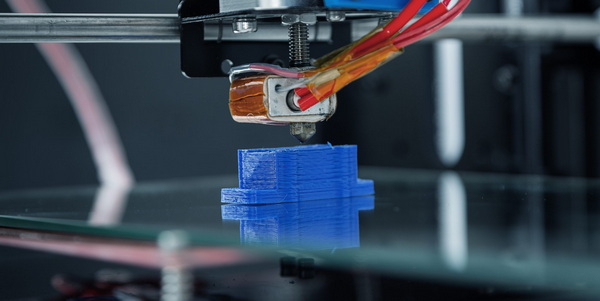
Rapid Prototyping is a set of manufacturing techniques used to quickly turn 3D CAD designs into physical parts for testing, evaluation, and low-volume production. It is widely used in industries such as automotive, aerospace, consumer electronics, medical devices, and industrial equipment.
Common Rapid Prototyping approaches include:
- CNC machining for precise metal and plastic parts
- 3D printing for fast concept models and functional components
- Sheet metal fabrication for enclosures and brackets
- Vacuum casting for small runs of plastic parts
- Rapid tooling and molding for near-production prototypes
By using Rapid Prototyping, engineers can validate form, fit, and function early in the development cycle, significantly reducing the cost and risk of later design changes.
The cost of Rapid Prototyping must always be viewed in relation to the value it generates. For most projects, the savings and benefits far outweigh the initial prototype costs.
Key reasons companies invest in Rapid Prototyping:
- Faster product development cycles and quicker time to market
- Early detection of design issues before tooling investment
- Better communication with stakeholders through physical samples
- Improved ergonomics, assembly checks, and functional testing
- More confidence when moving into precision batch production
For foreign brand owners, wholesalers, and manufacturers, working with an experienced Chinese OEM partner like Shangchen allows them to combine cost-effective production with engineering support and flexible manufacturing capacity.
Several technical and commercial factors influence how much Rapid Prototyping will cost for each project. Understanding these helps you read quotations more clearly and plan your design choices.
Different Rapid Prototyping processes have different cost structures, setup times, and material usage patterns.
- 3D printing (SLA, SLS, FDM, MJF):
Best for concept models, complex geometries, and low-volume functional parts.
Usually lower setup cost, but material and machine time can add up for large parts.
- CNC machining:
Ideal for tight-tolerance metal and plastic components.
Higher programming and setup costs, but excellent accuracy and mechanical performance.
- Vacuum casting:
Suitable for short runs of plastic parts that need higher cosmetic quality.
Involves creating a master model, silicone mold, and casting multiple copies.
- Sheet metal fabrication:
Used for housings, brackets, and industrial parts.
Pricing depends on cutting, bending, welding, and surface treatment steps.
- Rapid tooling and molding:
Used when you need parts very close to production quality.
Tooling cost is higher, but per-part cost becomes competitive for moderate volumes.
Material selection has a direct impact on Rapid Prototyping cost, performance, and lead time.
Typical categories:
- Engineering plastics (ABS, PC, PA, POM, PMMA):
Usually cost-effective and suitable for most prototypes.
- Metals (aluminum, stainless steel, steel alloys, brass, titanium):
More expensive per kilogram and often require longer machining times.
- Elastomers and flexible materials (TPU, rubber-like resins):
Used for seals, gaskets, and flexible components, with special process requirements.
When you choose materials, consider:
- Mechanical strength and stiffness
- Heat and chemical resistance
- Surface finish requirements
- Whether this material will be used in final mass production
Aligning prototype materials with production materials avoids redesigns and requalification later.
Even with the same material and process, two Rapid Prototyping designs can have completely different costs.
Complexity increases cost when:
- The part has deep pockets, thin walls, or internal channels
- Tight tolerances require multiple setups or slow machining speeds
- 3D printed parts need extensive support structures
- Undercuts demand special tooling or secondary operations
Size also matters:
- Large parts use more material and machine time
- Oversized prototypes may require special machines or segmented builds
- Shipping and packaging costs rise with part volume and weight
Design for manufacturability (DFM) is therefore essential to control Rapid Prototyping cost.
Rapid Prototyping is not only for “one-off” prototypes. Many companies now use it for bridge production and small batch manufacturing.
Quantity affects cost in several ways:
- Single-piece orders carry setup, programming, and preparation costs on only one part.
- Small batches share setup cost across more units, reducing cost per part.
- For higher volumes, it may be more economical to switch from 3D printing to CNC machining, or from machining to rapid injection molding.
A professional supplier like Shangchen can help you compare unit price versus total cost across different quantities and processes.
Every additional quality requirement adds cost to a Rapid Prototyping job.
Cost-increasing factors:
- Tight dimensional tolerances and geometric tolerances
- Fine surface finish (polishing, sanding, bead blasting)
- Cosmetic coatings (painting, powder coating, anodizing, plating)
- Laser marking, engraving, or logo application
- Assembly, threading, inserts, and special packaging
Clarifying which areas of the part truly need tight tolerances or perfect appearance can significantly reduce prototyping costs without affecting performance.
Rush orders often include priority fees, overtime labor, or dedicated machine scheduling. Planning reasonable lead times keeps Rapid Prototyping costs under control.
Other timing and logistics factors:
- International shipping method (air express vs. economy)
- Customs clearance and documentation
- Consolidated shipments for multiple projects
When possible, grouping several parts into one delivery can reduce total logistics cost.
Exact costs depend on your design and supplier, but the ranges below provide a useful starting point for budgeting.
Approximate ranges for common Rapid Prototyping scenarios:
- Simple plastic 3D printed prototypes:
Around tens to a few hundreds of US dollars per part, depending on size and material.
- Functional 3D printed parts in engineering plastics:
Typically higher because of stronger materials and longer build times.
- CNC machined metal prototypes:
Can range from low hundreds to well above one thousand US dollars per part for complex items.
- Vacuum casting plastic parts:
A silicone mold and a set of castings usually fall into a mid-range prototype budget.
- Rapid injection molded parts:
Tooling may start from a few thousand US dollars, but per-part cost can be very low at moderate batch sizes.
These values are only guideposts. For accurate quotes, you must provide detailed technical information to your Rapid Prototyping supplier.
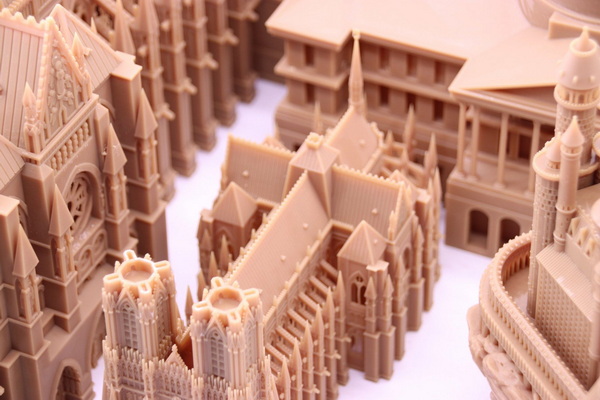
As a Chinese manufacturing factory providing OEM services, Shangchen specializes in:
- Rapid Prototyping and engineering validation
- CNC machining services for plastics and metals
- Precision batch production
- Lathe turning and complex turning-milling parts
- Sheet metal manufacturing
- 3D printing services
- Mold making and small-batch molding
Working with one integrated supplier offers several cost advantages:
- A single engineering team reviews your design across all processes.
- You can prototype, iterate, and then move into batch production without changing partners.
- Production feedback from CNC machining, sheet metal, and molding is used to optimize your Rapid Prototyping design.
By combining technologies, Shangchen can suggest the most economical route, such as starting with 3D printed prototypes and then moving to CNC machining or rapid molds for pre-production runs.
Well-prepared project data allows faster quoting, smoother communication, and better cost control.
Before sending a request:
- Provide complete 3D CAD files in standard formats (STEP, IGES, STL).
- Add 2D drawings with critical dimensions and tolerances.
- Clearly specify the material and any acceptable alternatives.
- Mark cosmetic surfaces and surfaces with functional importance.
- State the target quantity and whether it is a one-time batch or recurring order.
- Indicate required lead time and any key deadlines, like exhibitions or investor demos.
Discussing these points early with the engineering team helps identify whether Rapid Prototyping should use 3D printing, CNC machining, sheet metal, vacuum casting, or rapid tooling.
There are many intelligent ways to keep your Rapid Prototyping budget under control while still receiving high-value prototypes.
Practical strategies:
- Prioritize functions:
Use simpler, lower-cost versions for early concept checks, and reserve premium processes for final validation.
- Modularize testing:
Instead of prototyping a complete system, focus on critical sub-assemblies.
- Standardize features:
Use standard hole sizes, thread types, and thicknesses where possible.
- Relax tolerances where acceptable:
Only keep tight tolerances for features that truly require them.
- Optimize geometry:
Remove unnecessary undercuts, pockets, or purely decorative elements in early stages.
- Plan iteration steps:
Avoid rushing straight to near-production parts if the design is still changing.
Shangchen's engineers can review your design and suggest modifications specifically aimed at cost reduction in both Rapid Prototyping and subsequent batch manufacturing.
Rapid Prototyping is not limited to a single sector. Different industries use it in distinct ways, but the cost principles remain similar.
Examples:
- Automotive and transportation:
Components for engine bay tests, lighting housings, interior trim parts, fixtures, and jigs.
- Aerospace and UAVs:
Lightweight structures, brackets, ducting, and composite-friendly prototypes.
- Consumer products and electronics:
Housings, wearable devices, controllers, and visibility models for marketing.
- Medical and healthcare:
Device enclosures, surgical tool prototypes, and ergonomic mockups.
- Industrial machinery and automation:
Custom tooling, robotic grippers, safety covers, and interface panels.
In all these cases, Rapid Prototyping provides a bridge between CAD concepts and actual, testable hardware, giving decision-makers concrete evidence before scaling up.
The true value of Rapid Prototyping appears when a project transitions smoothly to low-volume and then full-scale manufacturing. Cost control in early phases helps free budget for tooling and production improvements later.
A typical path with Shangchen might look like:
1. Initial Rapid Prototyping using 3D printing for fast concept validation.
2. CNC machining of critical components for functional and mechanical tests.
3. Sheet metal or turning for structural and mounting parts.
4. Design refinement using data from tests and customer feedback.
5. Rapid tooling and small batch molding or machining for pilot runs.
6. Full-scale mass production with mature design and proven processes.
Because the same factory handles design validation and production, there is less risk of miscommunication, and cost and quality targets remain aligned.
Rapid Prototyping is a powerful tool for modern product development, allowing brands, wholesalers, and manufacturers to test designs, verify performance, and shorten time to market. The cost of Rapid Prototyping depends on process selection, material, part complexity, batch size, tolerances, surface finish, and lead time. With careful planning and expert support, these costs can be strategically managed and often reduced.
As a Chinese OEM factory, Shangchen provides a complete Rapid Prototyping service chain: 3D printing, CNC machining, turning, sheet metal, and mold manufacturing. By combining advanced equipment with practical engineering experience, Shangchen helps international customers achieve reliable, cost-effective prototypes that are ready to transition into precision batch production and long-term manufacturing.
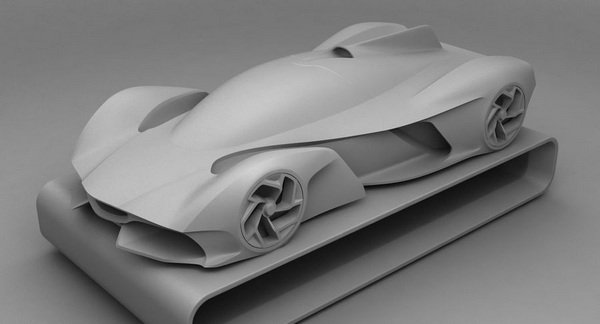
To receive an accurate quotation, you should provide 3D CAD files, material specifications, quantities, surface finish requirements, and lead time expectations. Adding 2D drawings with key tolerances and any special instructions helps your supplier evaluate feasibility and cost more quickly.
You can reduce cost by simplifying geometry, relaxing non-critical tolerances, choosing cost-effective materials, and grouping parts into one batch. Discussing different manufacturing routes—such as switching from 3D printing to CNC machining or from machining to rapid molds—also helps identify the most economical solution.
Yes. Rapid Prototyping is often used for bridge production and low-volume manufacturing, especially when demand is uncertain or designs are still evolving. Processes like CNC machining, 3D printing, vacuum casting, and rapid tooling support small to medium quantities without the full investment of traditional mass-production tooling.
An experienced Chinese OEM factory such as Shangchen can offer competitive pricing, flexible capacity, and a wide range of processes under one roof. This combination allows you to prototype, iterate, and scale up production efficiently, while benefiting from engineering feedback and strong cost control.
With the right process and material choice, many Rapid Prototyping parts can closely match final production quality in terms of mechanical performance, appearance, and accuracy. Using similar materials and processes to those planned for mass production ensures that test results are meaningful and reduces the need for later redesign.
[1](https://formlabs.com/blog/ultimate-guide-to-rapid-prototyping/)
[2](https://xometry.pro/en/articles/rapid-prototyping-manufacturing/)
[3](https://www.protolabs.com/resources/guides-and-trend-reports/rapid-prototyping-processes/)
[4](https://www.scan2cad.com/blog/cad/rapid-prototyping/)
[5](https://www.sciencedirect.com/science/article/abs/pii/S0007850607611366)
[6](https://prototek.com/article/rapid-prototyping-bridging-ideas-and-reality/)
[7](https://www.3erp.com/blog/aerospace-industry-prototyping/)
[8](https://www.vem-tooling.com/rapid-prototyping/)
[9](https://jiga.io/articles/rapid-prototyping-process-how-to-choose/)

