
Views: 222 Author: Amanda Publish Time: 2025-12-03 Origin: Site


Content Menu
● Shangchen: One-Stop CNC Machining OEM Partner
● Typical CNC Machining Cost Per Hour Worldwide
● Why CNC Machining Hourly Rates Differ So Much
● Core Cost Components Behind CNC Machining Per Hour
● Technical Factors That Change CNC Machining Cost
● Materials and Their Influence on CNC Machining Cost
● Batch Size, Setup, and CNC Machining Economics
● CNC Machining Cost Model: From Hourly Rate to Part Price
● Strategies OEMs Can Use to Reduce CNC Machining Cost
● How Shangchen Optimizes CNC Machining Cost for OEM Clients
● When Higher CNC Machining Hourly Rates Actually Save Money
● Lead Time, Capacity, and Risk Management in CNC Machining
● FAQ
>> 1. What is included in a typical CNC Machining hourly rate?
>> 2. How do design changes reduce CNC Machining cost?
>> 3. Why does batch size matter so much in CNC Machining?
>> 4. When should OEMs consider multi‑axis CNC Machining?
>> 5. What advantages does Shangchen offer overseas CNC Machining customers?
CNC Machining cost per hour usually falls within broad ranges rather than a single fixed number, because it depends heavily on machine type, complexity, material, region, and production strategy. For international OEM brands working with Chinese partners such as Shangchen (sc-rapidmanufacturing.com), the effective CNC Machining cost per part can be optimized by combining competitive hourly rates with smart design and production planning.
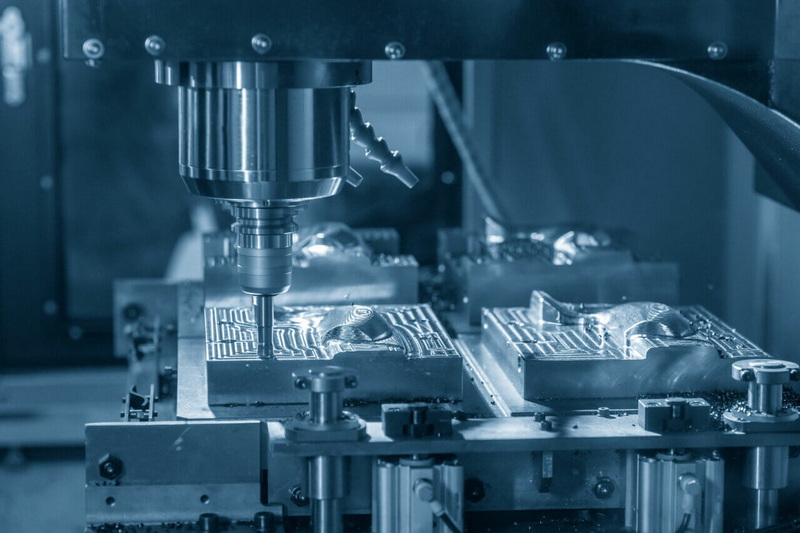
Shangchen (sc-rapidmanufacturing.com) is a dedicated Chinese manufacturing factory that integrates rapid prototyping, CNC Machining, precision batch production, CNC turning, sheet metal fabrication, 3D printing, and mold manufacturing in a single facility. This one‑stop OEM model helps overseas brands, wholesalers, and manufacturers move smoothly from concept to mass production using consistent CNC Machining workflows and a unified quality system.[11][12][13][14][15]
By operating 3‑axis, 4‑axis, and 5‑axis CNC Machining centers, as well as advanced CNC lathes and flexible sheet metal lines, Shangchen can choose the most suitable process route for each project instead of forcing every design onto the same machine type. This flexibility is crucial for balancing hourly CNC Machining cost with tolerance, lead time, and long‑term reliability of OEM parts.[12][13][14][15][11]
Across global markets, CNC Machining cost per hour is often presented as a range because local wages, energy prices, and overhead vary widely. Entry‑level or simpler 3‑axis CNC Machining may fall around tens of dollars per hour, while complex multi‑axis CNC Machining and high‑precision turning can cost several times more per hour.[16][17][18][19][20][21][22]
Industrial shops may quote relatively modest hourly rates for small or basic CNC Machining work, yet raise the hourly price significantly for projects demanding extreme tolerances, complex fixturing, or frequent inspection. As a result, the headline CNC Machining hourly rate is only the starting point; the real cost picture emerges when you factor in machining time, scrap risk, setup, and secondary operations.[5][17][21][22]
The biggest reason CNC Machining hourly rates differ is that each machine has its own cost structure and each factory has its own overhead profile. A small 3‑axis vertical mill in a low‑rent region can be operated fairly cheaply, while a large multi‑axis machining center in a high‑wage region must charge a high hourly rate just to cover its own depreciation, maintenance, and labor.[3][4][7][17][5]
Additionally, some shops include almost everything in the CNC Machining hourly price—such as basic inspection and tool wear—while others treat programming, fixtures, and certain types of inspection as separate items. Understanding what is included in the CNC Machining hourly rate is therefore just as important as the number itself, especially when comparing quotes from different suppliers around the world.[7][21][23][3][5]
Every CNC Machining hourly rate is built from a combination of several core cost elements. Knowing these components helps OEM buyers understand quotes and identify realistic opportunities for cost reduction.[1][8][17][3][5][7]
Key cost components driving CNC Machining per hour include:[4][17][3][5][7]
- Equipment cost and depreciation: Purchase price, financing, and expected lifetime of the CNC Machining equipment.
- Labor cost: Wages for machinists, programmers, inspectors, and support staff involved in CNC Machining.
- Overhead and facility cost: Rent, utilities, administrative expenses, and environmental or safety compliance.
- Tooling and consumables: Cutting tools, tool holders, inserts, coolants, filters, and other consumables consumed during CNC Machining.
- Energy and maintenance: Power consumption, routine maintenance, unplanned repairs, and calibration for CNC Machining centers.
- Quality and inspection: Measuring instruments, inspection time, documentation, and quality management systems that support CNC Machining.
Beyond basic overhead, several technical details of a part and its process route strongly influence effective CNC Machining cost. These factors affect both the time machines must spend on each part and the effort required from engineering and quality teams.[2][22][1][3][4][5][7]
The most important technical cost drivers in CNC Machining include:[22][1][2][3][4]
- Design complexity: Deep pockets, thin walls, tight radii, undercuts, and internal channels increase programming time and machine time.
- Tolerance and accuracy: Tighter tolerances require more precise CNC Machining, slower feeds, and more inspection, all of which raise cost.
- Surface finish: High‑end finishes or cosmetic surfaces may need lower cutting parameters, special tools, and extra finishing steps.
- Machining axis and workholding: Parts that require many orientations or continuous 5‑axis CNC Machining demand more sophisticated fixtures and machines.
- Tool accessibility: Features that are hard to reach may require special tooling, different setups, or slower cutting strategies.
Material choice is one of the most visible cost drivers for CNC Machining because it affects both raw material cost and machining behavior. Softer, free‑cutting materials can be machined faster and with simpler tooling, while hard or abrasive materials increase tool wear and cycle time.[1][2][3][4]
For instance, aluminum alloys and many plastics often enable relatively fast CNC Machining with longer tool life, which lowers time‑based costs per part. By contrast, stainless steels, hardened steels, titanium, and nickel‑based alloys usually prolong cutting time, require coated or specialized tools, and demand more experience from CNC Machining operators and programmers.[2][3][4][1]
In addition, material availability and bar or plate size influence offcut and waste, which indirectly affects the effective CNC Machining cost per hour by increasing the value of material consumed in each cycle.[3][7][2]
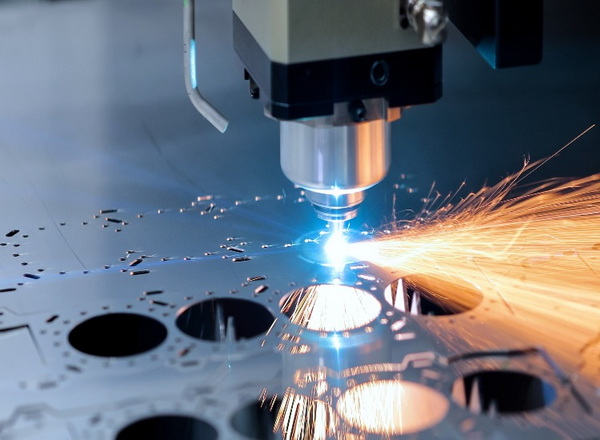
Setup time is essentially a fixed cost that must be recovered by the parts in each batch, which is why batch size is so critical in CNC Machining. Programming, fixture installation, trial runs, and first‑article inspection can all take significant time, even for comparatively simple parts.[6][4][7][1][3]
When an order consists of only a few parts, this setup time is divided among very few units, so the effective CNC Machining cost per part appears high even if the nominal hourly rate is fairly modest. As batch sizes grow, the same setup cost is spread across many pieces, so the CNC Machining cost per part falls sharply until it approaches a stable level dominated by pure cycle time and material cost.[8][5][6][1][3]
Most CNC Machining cost models follow a similar structure: material cost plus setup cost plus machining time multiplied by hourly rate plus finishing and logistics. Some factories also include tooling amortization and risk‑related contingencies when quoting complex or safety‑critical CNC Machining projects.[9][5][7][2][3]
A simplified way to think about CNC Machining pricing is:[7][8][3]
- Material cost: Quantity of stock multiplied by raw material price, adjusted for scrap and recovery.
- Setup cost: Programming, fixture design, machine setup, and first‑article validation time multiplied by a CNC Machining engineering rate.
- Machining time: Cycle time for roughing, semi‑finishing, and finishing, multiplied by the CNC Machining hourly rate.
- Secondary processes: Heat treatment, surface finishing, deburring, and assembly operations added on top.
- Overhead and profit: A margin applied so that the CNC Machining supplier remains sustainable and can invest in equipment and quality.
OEM buyers have significant influence over CNC Machining cost per part, especially during early design and supplier selection stages. Working collaboratively with a capable partner such as Shangchen enables practical design for manufacturability (DFM) improvements that don't compromise functional requirements.[13][14][15][4][5][8][11][22][1][2]
Effective strategies to reduce CNC Machining cost include:[4][5][22][1][2]
- Simplifying geometry: Avoiding unnecessary thin walls, deep pockets, or decorative features that add machining time.
- Aligning tolerances with function: Tightening tolerances only where they matter functionally, and relaxing others to ease CNC Machining.
- Choosing machinable materials: Selecting alloys and plastics that meet performance needs while machining efficiently.
- Increasing batch sizes: Grouping orders so that setup costs are distributed across more parts.
- Standardizing features: Keeping consistent hole sizes, corner radii, and thread forms that are friendly to CNC Machining tools.
- Combining operations: Using turn‑mill or multi‑axis CNC Machining to reduce handling and fixture changes where appropriate.
Shangchen supports OEM customers from RFQ through mass production by analyzing drawings, proposing CNC Machining‑friendly design adjustments, and recommending suitable materials and processes for each project. This early collaboration often reveals opportunities to switch from very complex setups to more streamlined CNC Machining routes without compromising product performance.[14][15][8][11][13]
Because Shangchen operates CNC Machining, CNC turning, sheet metal, 3D printing, and mold production in‑house, the team can select the optimal manufacturing method and batch strategy instead of relying on a single process. For example, prototypes might start with CNC Machining in small batches, then transition into molds or hybrid CNC Machining plus stamping routes as volume increases, which significantly reduces long‑term unit cost for OEM customers.[15][8][11][12][13][14]
It might appear that choosing the lowest CNC Machining hourly rate always saves money, but in many projects a higher hourly rate can produce a lower overall part cost. This happens when advanced machines or more experienced shops complete the CNC Machining in fewer setups, with shorter cycle times, and with fewer rejected parts.[17][5][9][22][3]
For example, using multi‑axis CNC Machining rather than multiple 3‑axis setups may cut total machining hours, reduce fixture complexity, and improve dimensional consistency, which is especially valuable for tight‑tolerance components. For OEM buyers, the key is to evaluate total landed cost—including yield, logistics, quality risk, and time‑to‑market—rather than focusing exclusively on the nominal CNC Machining cost per hour.[19][5][9][16][17][22][7]
Lead time is another hidden dimension tied closely to CNC Machining cost per hour, because it reflects how efficiently a supplier uses its equipment and manpower. A shop with properly planned workloads, standardized tooling, and robust maintenance may charge a competitive CNC Machining hourly rate while still delivering faster and more predictable lead times.[10][5][9][7]
For OEMs with strict launch schedules, partnering with a supplier that can maintain consistent lead times and transparent CNC Machining capacity often prevents costly delays in downstream assembly and market entry. Companies like Shangchen that combine multiple manufacturing processes and strong project management can better absorb demand fluctuations, reducing schedule risk for overseas customers.[5][8][11][12][13][14][15][7]
CNC Machining cost per hour is the result of many interacting factors, including machine type, design complexity, material, region, batch size, and quality requirements, rather than a single fixed rate. Understanding how equipment cost, labor, overhead, machining time, and post‑processing flow into the hourly rate allows OEM buyers to make more informed decisions and identify the most effective levers for cost reduction.[8][17][22][1][2][3][4][5][7]
By collaborating with an integrated Chinese manufacturer such as Shangchen (sc-rapidmanufacturing.com), overseas brands, wholesalers, and producers can combine competitive CNC Machining hourly rates with strong engineering support and flexible process options. Through careful design optimization, material selection, batch planning, and choice of machine type, it is possible to strike a smart balance between CNC Machining cost per hour, part quality, and delivery speed throughout the product lifecycle.[11][12][13][14][15][22][1][2][3][4][5]

A typical CNC Machining hourly rate usually includes machine depreciation, operator labor, basic tooling wear, utilities, and a portion of shop overhead, but may exclude programming, fixtures, and post‑processing. When comparing quotes, it is important to clarify whether inspection, special tooling, and finishing are charged separately or bundled into the CNC Machining hourly price.[21][23][17][3][5][7]
Design changes that simplify geometry, relax unnecessary tolerances, and improve tool access can significantly shorten CNC Machining time and reduce setup complexity. Such improvements reduce material removal, tool wear, and risk of scrap, which lowers both the required CNC Machining hours and the effective cost per part.[22][1][2][3][4][5]
Batch size determines how setup and programming costs are distributed over parts, so small batches carry a high share of fixed CNC Machining cost per unit. Larger batches spread these fixed costs over many pieces, causing the CNC Machining cost per part to drop rapidly until the price is dominated by cycle time and material.[6][1][3][7][8]
OEMs should consider 4‑axis or 5‑axis CNC Machining when parts require multiple orientations, complex surfaces, or tight tolerances that are difficult to achieve with several separate setups. Although multi‑axis CNC Machining often carries a higher hourly rate, it can reduce total machining hours, fixturing costs, and dimensional variation for complex components.[16][17][19][3][7][22]
Shangchen offers overseas CNC Machining customers a combination of competitive Chinese manufacturing costs, broad process coverage, and experience serving international OEMs. With integrated CNC Machining, turning, sheet metal, 3D printing, and tooling, Shangchen can propose cost‑effective production routes and support projects from prototype to mass production under a unified technical and quality framework.[12][13][14][15][11]
[1](https://jlccnc.com/blog/the-true-cost-of-cnc-machining-services-what-are-the-main-factors-affecting-price)
[2](https://www.komacut.com/blog/how-much-does-cnc-machining-cost/)
[3](https://www.partmfg.com/cost-of-cnc/)
[4](https://firstmold.com/tips/cnc-machining-costs/)
[5](https://www.scan2cad.com/blog/cnc/cnc-machining-costs/)
[6](https://okdor.com/6-factors-affect-cnc-turning-costs/)
[7](https://www.xometry.com/resources/machining/cnc-machining-cost-calculation/)
[8](https://www.protolabs.com/en-gb/resources/blog/understanding-cnc-manufacturing-costs/)
[9](https://www.steckermachine.com/blog/in-cnc-machining-you-get-what-you-pay-for-which-is-exactly-as-it-should-be)
[10](https://sendcutsend.com/blog/cnc-machine-costs/)
[11](https://www.sc-rapidmanufacturing.com/top-10-5-axis-cnc-machining-manufacturers-in-china.html)
[12](https://www.sc-rapidmanufacturing.com/top-10-cnc-milling-services-manufacturers-in-china.html)
[13](https://www.sc-rapidmanufacturing.com/cnc-machining.html)
[14](https://www.sc-rapidmanufacturing.com/top-10-metal-cnc-machining-manufacturers-in-china.html)
[15](https://www.sc-rapidmanufacturing.com/top-10-cnc-cutting-machine-manufacturers-in-china.html)
[16](https://www.premiumparts.com/blog/how-much-does-cnc-machining-cost-per-hour)
[17](https://cncmachines.com/cost-to-run-cnc-machine-per-hour)
[18](https://elimold.com/how-much-does-cnc-machining-cost-per-hour-in-the-usa/)
[19](https://www.symachining.com/cost-of-cnc-machining-per-hour/)
[20](https://hotean.com/blogs/hotean-blog/cnc-machining-shop-rates-in-2025)
[21](https://deburringtechnologies.com/job-costing-for-cnc-machining-centers-challenges-and-opportunities/)
[22](https://engmotion.com/tpost/0lxgx59mp1-in-depth-analysis-of-cnc-machining-costs)
[23](https://jcadusa.com/cnc-machining-milling-cost/)

