
Views: 222 Author: Amanda Publish Time: 2026-01-02 Origin: Site


Content Menu
● Typical Rapid Prototyping Workflow
● The 5 Core Rs of Rapid Prototyping
>> R1 – Reduce: Time, Cost, and Waste
>> R2 – Refine: Design Through Iteration
>> R3 – Rebuild: Learn Fast and Build Again
>> R4 – Reuse: Knowledge, Data, and Prototypes
>> R5 – Risk-Proof: De-Risk Before Tooling
● How Many Rs Does Rapid Prototyping Really Have?
● Where Rapid Prototyping Delivers the Rs
>> Industries Using Rapid Prototyping
>> Processes That Enable Rapid Prototyping
● Why Work With a Professional Rapid Prototyping Factory
>> FAQ 1: What is the main goal of Rapid Prototyping?
>> FAQ 2: How does Rapid Prototyping reduce time-to-market?
>> FAQ 3: Which manufacturing processes are most common in Rapid Prototyping?
>> FAQ 4: How does Rapid Prototyping support design thinking and lean product development?
>> FAQ 5: Can Rapid Prototyping be used for small-batch production?
Rapid Prototyping does not have a single, official set of “Rs,” but in modern product development practice at least five powerful Rs describe how Rapid Prototyping creates value: Reduce, Refine, Rebuild, Reuse, and Risk-proof. These Rs connect Rapid Prototyping with lean product development and design thinking, where teams use fast, iterative prototypes to turn ideas into validated products with less waste and shorter lead times.[1][2][3][4]
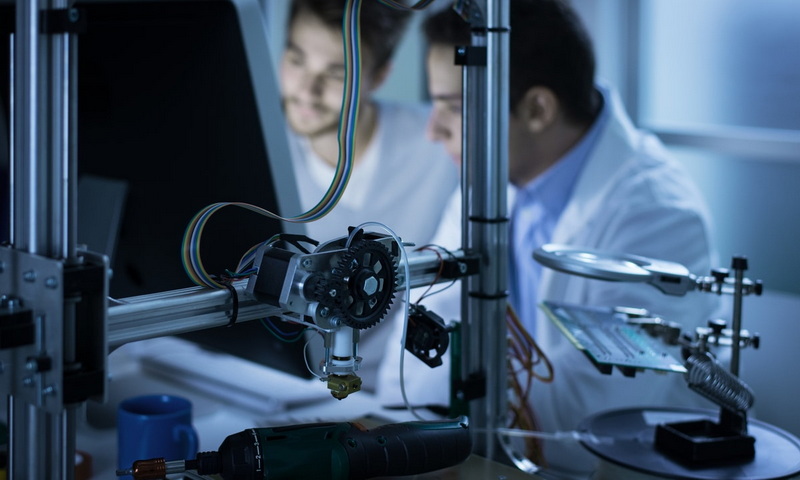
Rapid Prototyping is a development strategy and manufacturing approach that uses quick, iterative models to validate a product's design, function, and manufacturability before committing to full-scale production. Instead of waiting weeks or months for traditional tooling and slow manual samples, teams generate physical or digital prototypes using technologies such as 3D printing, CNC machining, sheet metal fabrication, and rapid molding to evaluate real design choices in a compressed timeline.[3][5][1]
In design thinking and lean product development, Rapid Prototyping is a core activity that transforms abstract concepts into tangible models that stakeholders can touch, test, and critique very early in the project. These prototypes can be low-fidelity mock-ups for overall form and user flow or high-fidelity functional parts for precise mechanical and performance tests, depending on the maturity of the project and the current design questions.[6][7][1][3]
A typical Rapid Prototyping project in a manufacturing factory offering CNC machining, turning, sheet metal fabrication, 3D printing, and mold making follows a structured yet extremely fast cycle.[5][1]
- Step 1 – Concept and CAD
Product managers and designers convert market needs into requirement documents and 3D CAD models, defining key features, materials, and performance targets.
- Step 2 – Process selection
Engineers evaluate the design and choose the most suitable Rapid Prototyping process—3D printing, CNC machining, sheet metal, vacuum casting, or rapid tooling—based on quantity, tolerances, and materials.[1][5]
- Step 3 – First prototype build
The first Rapid Prototyping run focuses on validating basic geometry, appearance, and critical features rather than perfection, often using faster or less expensive materials to accelerate learning.[3][1]
- Step 4 – Test and feedback
Mechanical tests, assembly trials, ergonomic reviews, and user evaluations generate concrete feedback long before mass production begins.[7][3]
- Step 5 – Iteration and refinement
The design is modified according to lessons learned, and another Rapid Prototyping cycle is executed, repeating until the team is confident enough to move into tooling, pilot production, or small-batch manufacturing.[4][1]
Throughout this loop, Rapid Prototyping allows close collaboration between overseas customers and the manufacturing factory, making engineering changes much easier to implement and verify.
From a practical perspective, five core Rs summarize how Rapid Prototyping supports fast, reliable, and cost-effective product development. These Rs serve as a management framework for measuring the impact of Rapid Prototyping projects and aligning them with business goals.[2][8]
The first R is Reduce, because Rapid Prototyping clearly reduces development time, engineering cost, and physical waste compared with traditional prototyping.[9][1]
- Time reduction
By avoiding long tooling lead times and using digital manufacturing technologies, Rapid Prototyping compresses the design-validation phase from months to days or weeks. This faster loop enables brands to catch market windows, refresh product lines more often, and respond quickly to competitor moves.[2][1]
- Cost and waste reduction
Rapid Prototyping focuses material usage only where needed and allows engineers to find design problems at a much earlier stage, reducing scrap, tooling rework, and warranty claims. Early detection of issues in Rapid Prototyping saves significant cost compared with discovering them after molds, fixtures, and assembly lines are already in place.[8][9][1][2]
For international brands working with an experienced Rapid Prototyping factory, “Reduce” becomes visible in shorter project timelines, fewer engineering change orders, and leaner inventory during development.
The second R is Refine, because Rapid Prototyping makes continuous design refinement normal, not exceptional.[7][3]
- Design refinement
Each Rapid Prototyping cycle transforms user feedback and test findings into concrete design improvements, such as adjusted wall thickness, better fillets on stress points, or modified snap-fits for easier assembly. With Rapid Prototyping, refinement happens on real objects, not only in CAD models or slides, which makes design decisions more grounded.[3][7]
- Manufacturability refinement
When Rapid Prototyping uses production-like processes (e.g., CNC machining or sheet metal fabrication), process engineers refine toolpaths, fixture designs, bend sequences, and welding schemes while still in the prototype stage. This ensures that when the project moves into batch production, the design is already optimized for stable, repeatable manufacturing.[5][1]
In many OEM projects, Rapid Prototyping starts with 3D-printed parts for early visual review and then shifts to CNC-machined or sheet metal prototypes to refine performance and manufacturability.
The third R is Rebuild, expressing the idea that Rapid Prototyping promotes quick, low-risk failures followed by faster rebuilds instead of seeking a theoretically perfect design from the beginning.[10][4]
- Fast learning cycles
Each Rapid Prototyping iteration is treated as a temporary learning platform rather than a final product, which frees teams to experiment more aggressively with features, materials, and user interfaces. Rapid rebuilds help identify which ideas truly add value and which can be removed to simplify the design.[4][6]
- Cross-functional collaboration
When designers, engineers, marketing teams, and even end users review Rapid Prototyping samples together, their feedback is merged into the next rebuild, reducing misalignment and late-stage conflicts. This collaborative rebuild rhythm is much easier to manage when prototypes can be produced in days.[11][4]
Rebuild cycles are particularly useful in international collaboration: overseas clients can test a Rapid Prototyping sample locally, send detailed feedback, and then receive a rebuilt version that reflects all requested modifications within a short timeframe.
The fourth R is Reuse, and it captures how Rapid Prototyping builds reusable assets for future products and variants.[12][2]
- Reuse of engineering knowledge
CAD models, tolerance studies, simulation data, Rapid Prototyping toolpaths, and fixture concepts created during one project can be reused, adapted, or copied for later designs within the same product family. This cumulative knowledge base means each new Rapid Prototyping project starts from a more advanced point than the previous one.[12][5]
- Reuse of physical and digital assets
Prototype molds, fixtures, and even some Rapid Prototyping parts can be reused in pilot or low-volume production, providing a bridge between pure prototypes and full tooling. In addition, test plans and validation protocols from earlier Rapid Prototyping campaigns can often be reused or lightly modified for new versions.[9][12]
For OEM customers managing multiple SKUs or annual refreshes, the reuse dimension of Rapid Prototyping significantly reduces workload and risk when launching derivative products.
The fifth R is Risk-proof, reflecting how Rapid Prototyping systematically reduces technical, user, and supply-chain risk before large investments are made.[8][1]
- Technical risk reduction
Functional Rapid Prototyping validates structural strength, fatigue behavior, sealing performance, thermal behavior, and assembly clearances under realistic conditions, often using production-like materials or equivalent alternatives. This helps engineers verify that the design can meet its performance targets before cutting hard tooling.[1][5]
- Market and user risk reduction
Prototypes shown to target customers, distributors, and internal stakeholders generate early, market-level feedback about aesthetics, ergonomics, and perceived value. Rapid Prototyping makes it possible to adjust the product concept, feature set, or price positioning based on real reactions instead of assumptions.[6][2]
For foreign brands, using Rapid Prototyping with a reliable manufacturing partner means potential issues are discovered while changes are still affordable and fast, rather than during expensive mass production or, worse, in the field.
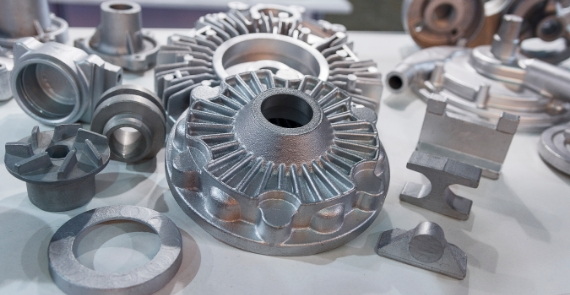
Strictly speaking, formal engineering literature usually describes Rapid Prototyping in terms of technologies, workflows, and applications rather than “Rs.” However, when Rapid Prototyping is integrated with lean product development and design thinking practices, at least five meaningful Rs—Reduce, Refine, Rebuild, Reuse, and Risk-proof—accurately describe how organizations benefit from it.[2][5][8][1]
Different companies or consultancies sometimes define their own internal Rs, especially when they want to emphasize sustainability, continuous improvement, or customer experience in combination with Rapid Prototyping. Yet, these different sets still revolve around the same ideas: faster learning, less waste, better manufacturability, and closer alignment with real user needs through intensive use of Rapid Prototyping.[8][12][1][2]
From a practical engineering and OEM perspective, thinking in terms of multiple Rs offers a useful way to measure the success of Rapid Prototyping projects, using indicators such as cycle-time compression, iteration counts, scrap rate, tooling changes, and post-launch failure rates.
Rapid Prototyping is widely adopted across industries because it scales from single proof-of-concept prototypes to pre-production runs for complete mechanical assemblies. In each industry, the five Rs show up in slightly different forms, but they always support faster learning, better decision-making, and more reliable launches.[6][9][1][2]
- Automotive and mobility
Rapid Prototyping helps validate interior trim, structural brackets, housings, and under-hood components before committing to large stamping dies and injection molds. This allows automotive companies to refine ergonomics, safety, and manufacturability while controlling cost and program timing.[9][1]
- Consumer electronics
Rapid Prototyping is essential for designing housings, buttons, connector interfaces, and cooling systems that satisfy both industrial design and engineering constraints. Quick prototypes let teams test assembly sequences, drop resistance, and thermal performance before mass production.[5][1]
- Medical and healthcare
Complex shapes such as anatomical models, surgical guides, implants, and device housings are frequently developed via Rapid Prototyping, often using advanced 3D printing technologies. Clinicians and engineers can simulate procedures, test ergonomics, and refine designs with realistic models.[1][9]
- Industrial and machinery equipment
Rapid Prototyping of machined components, sheet metal enclosures, and fixtures helps OEMs improve functionality and serviceability before they invest in casting, forging, or high-volume fabrication tooling.[7][5]
In many of these sectors, multinational companies choose Chinese Rapid Prototyping suppliers for their combination of process depth, cost competitiveness, and experience with export-oriented OEM requirements.[5][1]
Modern Rapid Prototyping relies on several flexible manufacturing processes that can efficiently transform CAD data into functional parts.[1][5]
- 3D printing (additive manufacturing)
Methods such as SLA, SLS, and FDM build parts layer by layer, making them very effective for Rapid Prototyping of complex internal channels, lattices, and organic shapes. They are especially strong for visual models, ergonomic samples, and some functional tests.[3][1]
- CNC machining and turning
CNC milling and turning produce high-precision metal and plastic parts with tight tolerances and excellent surface quality, closely matching final production components. As a result, CNC-based Rapid Prototyping is ideal for functional testing, assembly trials, and verification of critical interfaces.[5][1]
- Sheet metal fabrication
Laser cutting, punching, bending, welding, and surface finishing support Rapid Prototyping of enclosures, brackets, racks, and structural parts, particularly in electronics, telecom, and industrial products. Sheet metal Rapid Prototyping enables quick iteration on stiffness, weight, and assembly.[3][5]
- Soft tooling and rapid molds
For products that require injection-molded materials during validation, rapid molds or soft tooling allow small series of near-production parts to be produced at significantly lower cost and lead time than conventional hardened tooling.[1][5]
A multi-process factory that integrates these capabilities can choose the best Rapid Prototyping route at each stage, balancing speed, precision, and cost while keeping the five Rs in focus.
Partnering with a specialized Rapid Prototyping factory in China that offers CNC machining, precision turning, sheet metal fabrication, 3D printing, and mold manufacturing gives overseas brands a single, integrated platform from idea to production. This end-to-end capability makes it much easier to apply the five Rs of Rapid Prototyping consistently across the entire product development cycle.[12][2][5][1]
- Integrated services
One partner can manage concept review, engineering advice, Rapid Prototyping builds, soft tooling, and small-batch production without hand-offs that create delays and quality risks.
- Engineering and DFM support
Skilled engineers familiar with Rapid Prototyping and mass-production processes help optimize designs for both prototype performance and serial manufacturing, minimizing later changes.[8][5]
- Export and OEM experience
Factories that specialize in OEM projects for overseas markets understand packaging, documentation, compliance, and communication standards, which ensures that Rapid Prototyping outputs smoothly transition into commercial products.[12][5]
When Rapid Prototyping is handled by such a partner, the five Rs—Reduce, Refine, Rebuild, Reuse, and Risk-proof—are not just abstract ideas but measurable project advantages.
From a practical product-development viewpoint, the question “How many Rs does Rapid Prototyping has?” can be answered with at least five meaningful Rs: Reduce, Refine, Rebuild, Reuse, and Risk-proof. Together, these Rs describe how Rapid Prototyping shortens development time, lowers cost, improves design quality, leverages reusable knowledge, and de-risks tooling and production for manufacturers and OEMs worldwide. When international brands collaborate with an experienced Rapid Prototyping factory that integrates CNC machining, turning, sheet metal, 3D printing, and mold manufacturing, these Rs translate into faster launches, higher-quality products, and a stronger competitive position in global markets.[2][8][12][5][1]

The main goal of Rapid Prototyping is to convert design ideas into tangible models quickly so that teams can test, evaluate, and improve them before investing in full-scale tooling and mass production. This approach reduces risk, accelerates decision-making, and helps ensure that the final product aligns with both user expectations and manufacturing constraints.[6][2][3][1]
Rapid Prototyping reduces time-to-market by compressing long design validation steps into short, iterative cycles that use fast manufacturing methods such as 3D printing and CNC machining. Because feedback from physical models arrives earlier and more frequently, teams can finalize designs faster and avoid late-stage engineering changes that delay product launches.[9][2][8][1]
The most common Rapid Prototyping processes include 3D printing methods (SLA, SLS, FDM), CNC milling, CNC turning, sheet metal fabrication, and rapid tooling for injection molding. Each process has different strengths in terms of speed, accuracy, cost, and material performance, so many projects combine several processes across multiple prototype iterations.[3][5][1]
Rapid Prototyping supports design thinking by making ideas tangible early, enabling co-creation, and encouraging frequent testing with real users. In lean product development, Rapid Prototyping underpins short learning cycles, reduces waste from over-engineering, and focuses resources on features that deliver the greatest value to customers and the business.[2][6][8][3]
Yes, many Rapid Prototyping methods such as CNC machining, turning, sheet metal fabrication, and some 3D printing technologies are suitable for small-batch or bridge production. This allows OEMs to supply early adopters, run field tests, or validate market demand while final tooling and large-scale manufacturing systems are still being prepared.[12][2][5][1]
[1](https://bigrep.com/posts/rapid-prototyping-3d-printing/)
[2](https://lumenalta.com/insights/what-is-lean-product-development)
[3](https://design-thinking.in/rapid-prototyping)
[4](https://easy-software.com/en/newsroom/rapid-prototyping-processes-and-design-thinking-as-the-basis-for-successful-software-development/)
[5](https://www.easpublisher.com/get-articles/2436)
[6](https://www.designkit.org/methods/rapid-prototyping.html)
[7](https://wac.colostate.edu/docs/books/design/chapter4.pdf)
[8](https://journal.hep.com.cn/fem/EN/10.15302/J-FEM-2015007)
[9](https://www.nature.com/articles/s40494-016-0097-y)
[10](https://designthinkingtoolkit.co/content/the-rapid-prototyping-mindset)
[11](https://www.sei.com/insights/article/the-perfect-union-design-thinking-rapid-prototyping-and-agile/)
[12](https://www.lean.org/explore-lean/product-process-development/)

