
Views: 222 Author: Amanda Publish Time: 2025-12-10 Origin: Site


Content Menu
● Shangchen: Your CNC Machining Learning and Production Partner
● What “Learning CNC Machining” Really Covers
● Typical Timelines: From Beginner to Confident CNC User
● How Long to Learn Different CNC Machining Levels?
>> 1. Basic CNC Machine Operation (Days to Weeks)
>> 2. Setup and Proficient Machinist Skills (6–24 Months)
>> 3. CNC Programming and Advanced Process Control (Months to Years)
● Key Factors That Affect CNC Machining Learning Time
>> 1. Background in Math, Engineering, and IT
>> 2. Type of Training: Formal Program vs. On-the-Job
>> 3. Complexity of Parts, Materials, and Machines
>> 4. Learning Intensity and Practice Frequency
● Using Real Projects With Shangchen to Accelerate Learning
● Practical Learning Roadmap for CNC Machining
>> 1. First 1–3 Months: Fundamentals and Basic Operation
>> 2. Months 3–12: Setups, Drawings, and Simple Programming
>> 3. Years 1–3: Professional Machinist and Entry-Level Programmer
>> 4. Beyond 3 Years: Advanced CNC Machining Expertise
● Realistic Answer: How Long Does It Take?
● Why OEM Buyers Don't Need to Master CNC Before Sourcing
● How Shangchen Supports CNC Machining Learning for Clients
● FAQs
>> 1. How long does it take to learn basic CNC Machining?
>> 2. How long to become a proficient CNC Machining technician?
>> 3. How long to learn CNC Machining programming?
>> 4. Is CNC Machining hard to learn without prior experience?
>> 5. Can I learn CNC Machining while outsourcing production to Shangchen?
CNC Machining is a skill that can be started in weeks, made productive in a few months, and refined over several years of continuous practice and improvement. For overseas OEM buyers, working with an experienced partner like Shangchen (sc-rapidmanufacturing.com) lets your team learn CNC Machining concepts while relying on a mature manufacturing system for real projects.[1][2]
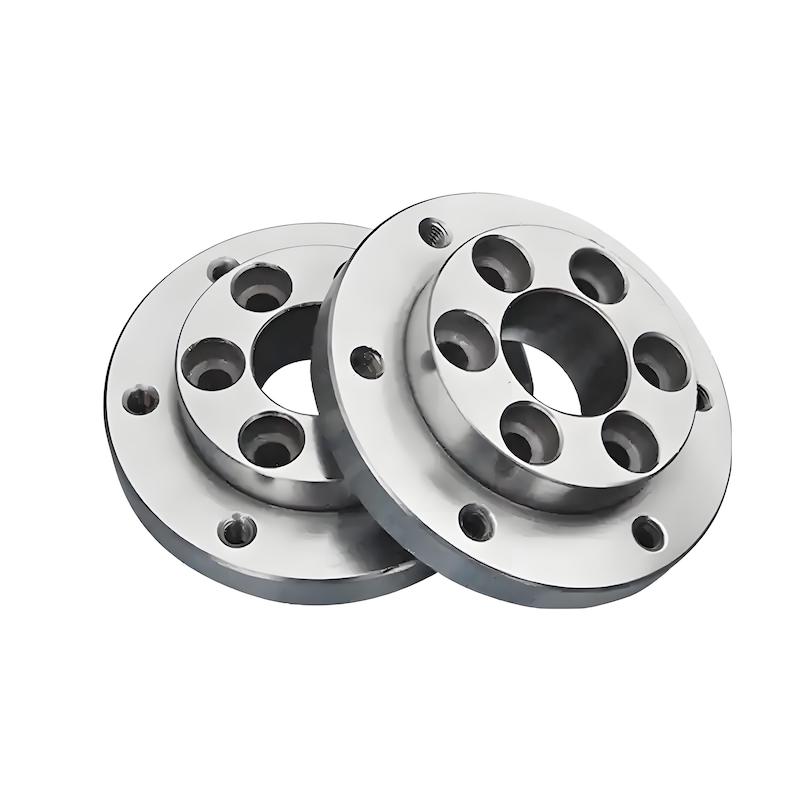
Shangchen (sc-rapidmanufacturing.com) is a China-based OEM factory specializing in rapid prototyping, CNC Machining services, precision batch production, turning, sheet metal fabrication, 3D printing, and mold making for global brands, wholesalers, and manufacturers. This integrated capability allows overseas engineers and buyers to learn CNC Machining by directly working on real parts, prototypes, and assemblies instead of only theoretical exercises.
To support learning, Shangchen's engineers can share process suggestions, DFM feedback, and practical CNC Machining tips on materials, tolerances, and surface finishes during each project stage. Buyers can observe how the factory chooses tools, cutting parameters, and fixturing methods, which shortens the learning curve for teams new to CNC Machining.
When people ask “How long does it take to learn CNC Machining?”, they usually mix several different skill layers into one question. In practice, learning CNC Machining covers at least four dimensions: basic operation, setup, programming, and full-process machining engineering.[3]
- Basic CNC machine operation includes loading parts, calling up programs, setting work offsets, touching off tools, and safely running existing CNC Machining jobs.[4][5]
- Setup-level CNC Machining includes choosing and installing tools, clamping parts, adjusting work coordinates, performing prove-outs, and correcting offsets to hit tolerance.[3]
- Programming-level CNC Machining includes writing or editing G-code, using CAM software, optimizing toolpaths, and selecting appropriate speeds and feeds for different materials.[6][7]
- Full-process CNC Machining engineering connects material selection, fixture design, cycle-time optimization, and quality control into a repeatable, scalable production system.[3]
Most professionals move gradually from basic operation to advanced CNC Machining engineering over several years of structured learning and shop-floor practice.[2][3]
Industry sources suggest that basic CNC Machining operation can be learned in a matter of days or weeks, especially with focused hands-on training on a limited range of parts. Many formal CNC Machining programs are designed to make students job-ready operators or entry-level machinists in about 4 to 9 months.[5][8][9][10][4]
- A representative full-time CNC Machining course lasts around 36 weeks (about 9 months), covering core operational and programming fundamentals.[8]
- Other training schools offer CNC Machining or CNC machinist programs that run about 4 months (16 weeks) of hands-on, part-time instruction before students can work in entry-level roles.[9]
- Online CNC Machining or CNC machinist courses commonly give learners up to 12 months of access, allowing them to complete the material at their own pace within roughly a year.[10][11][12][13]
Expert estimates indicate it usually takes 6 months to 2 years to become “proficient” in CNC Machining—meaning a person can independently set up jobs, solve common problems, and consistently produce within tolerance. Mastery of advanced CNC Machining, including complex multi-axis programming and process optimization, often requires several years of experience beyond initial training.[14][1][2]
With a structured introduction and guidance from an experienced machinist, a motivated beginner can understand basic CNC Machining operation in one to four weeks of regular practice. This includes loading and unloading workpieces, calling and running existing programs, setting simple work offsets under supervision, and responding to basic alarms.[4][5]
Some shops report that a newcomer can become reasonably independent as a CNC operator after about one month of consistent hands-on CNC Machining exposure, handling repetitive parts and standard workflows. At this stage, the learner still relies on senior machinists for troubleshooting, tool changes, and complex adjustments but is already adding real production value.[15]
Moving from simple operation to setup-level CNC Machining usually takes 6 months to 2 years, depending on the complexity of the work and the intensity of practice. Formal vocational or community college programs for machinists typically last 1–2 years and include blueprint reading, measurement, tool selection, and practical CNC Machining sessions.[16][2][3]
During this period, learners advance through responsibilities such as:
- Interpreting technical drawings and tolerances for CNC Machining jobs.[16]
- Selecting tools and holders suitable for metals, plastics, or composites.[3]
- Performing first-article setup, prove-outs, and offset corrections.
- Implementing basic quality checks with calipers, micrometers, and CMMs.[3]
Many experienced machinists estimate that it takes 2–3 years of real CNC Machining work to consistently perform full setups, adjust programs safely, and handle a wide range of parts without constant supervision.[3]
Learning the basics of CNC programming, including G-code editing and simple CAM workflows, often takes several months of focused practice. For many beginners, three to six months of regular effort is enough to confidently write simple programs, understand toolpaths, and operate a CNC machine without relying solely on pre-written code.[17][6]
However, becoming a full CNC programmer—with the ability to design efficient toolpaths for complex 3D parts, multi-axis CNC Machining, and high-speed roughing—typically requires a combined pathway of several years of education and on-the-job experience. Many professionals suggest a 4–5 year timeline from zero experience to a strong CNC programming role, including technical training and shop-floor practice.[14][3]
A solid foundation in mathematics and basic engineering greatly speeds up CNC Machining learning, especially at the programming and process levels. Trigonometry and geometry are used frequently for calculating bolt circles, compound angles, and precise cutter positions in CNC Machining, where tolerances can be as tight as ±0.01 mm.[3]
Comfort with computers and digital tools helps learners adapt quickly to CNC Machining control interfaces, CAD software, and CAM systems. People with prior experience in programming, 3D modeling, or traditional manual machining usually progress through CNC Machining concepts faster than complete beginners.[6][17][16][3]
Formal CNC Machining training programs offer structured curricula, standardized skill progression, and certification pathways, usually over 4–24 months. They cover theory and practice in a controlled environment, reducing trial-and-error risk but sometimes limiting the variety of real production parts.[8][9][3]
On-the-job CNC Machining learning can be faster in specific areas but more uneven overall, because it depends heavily on the types of parts, machines, and mentors available in the shop. Some learners become competent on a narrow set of CNC Machining tasks within a few weeks, while full cross-functional skills take much longer without a formal structure.[5][15][4]
Entry-level CNC Machining focused on 2-axis turning or 3-axis milling of simple prismatic parts is much easier and faster to learn than high-mix, tight-tolerance, multi-axis work. Multi-axis CNC Machining, complex fixtures, advanced surface finishes, and exotic materials demand deeper process knowledge and longer practice time.[7][3]
Shops serving aerospace, medical, and high-precision equipment sectors typically require longer CNC Machining training and a higher baseline of math and engineering knowledge to handle the complexity and risk of their parts. This raises the time required to reach independent machinist or programmer level.[7][3]
Full-time immersion in CNC Machining, such as a 36-week intensive course or a full-time entry-level job, compresses learning compared to sporadic training. Learners who program and run CNC Machining jobs daily, receive continuous feedback, and solve real production problems develop competence far faster than those who only practice occasionally.[9][8]
Consistent repetition of core CNC Machining tasks—setup, measurement, tool changes, and inspection—helps build muscle memory and intuition. This is particularly important when working with tight tolerances and complex surface requirements in CNC Machining.[7][3]
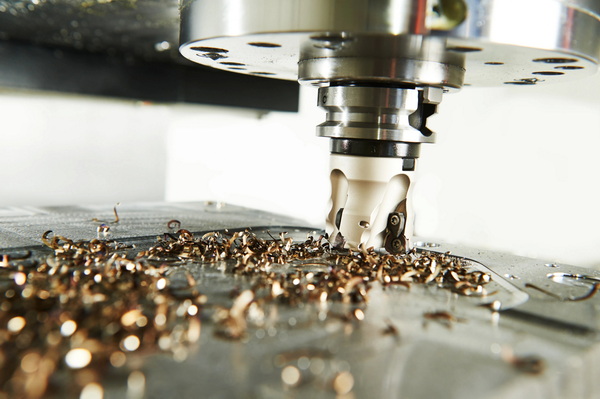
Shangchen gives overseas teams a practical environment to learn CNC Machining by combining training with real OEM projects. Instead of only studying theory, clients can send CAD models, discuss manufacturability, and review how Shangchen translates designs into CNC Machining processes, fixtures, and tooling.
During rapid prototyping, clients can compare different CNC Machining strategies, materials, and surface finishing options and see the real impact on cost and lead time. For precision batch production, Shangchen can share insights on cycle-time optimization, tolerance management, and inspection plans, showing how professional CNC Machining workflows are structured for repeatability.
By reviewing process feedback, setup notes, and inspection reports from Shangchen's projects, engineering teams quickly build intuition for how CNC Machining decisions are made in a real factory environment. This hybrid model lets clients “learn CNC Machining” while still enjoying professional production quality for their products.
In the early stage, learners should focus on CNC Machining safety, basic machine operation, and foundational shop skills. Typical milestones include:[15][4][5]
- Understanding machine components (spindle, axes, toolchanger, workholding) and basic CNC Machining terminology.
- Running pre-written programs, loading tools, and managing simple offsets under supervision.
- Practicing measurement techniques with calipers, micrometers, and gauges to verify CNC Machining results.[3]
Working with suppliers like Shangchen during this period allows learners to connect theoretical understanding with the production of real CNC Machining parts for actual products.
From three months to one year, learners can expand their CNC Machining responsibilities into setup and basic programming. Key goals during this phase include:[2][6]
- Reading technical drawings and GD&T symbols to understand CNC Machining tolerance requirements.[16]
- Performing simple setups, adjusting tools and fixtures, and reducing reliance on senior machinists.
- Learning CAM fundamentals or editing simple G-code for drilling, facing, and contouring tasks in CNC Machining.[6]
Many vocational and technical programs aim to bring students to this level within one academic year, making them employable as CNC Machining operators or junior machinists.[8][9][3]
After about 1–3 years of combined training and shop-floor experience, many professionals can handle a wide range of CNC Machining tasks independently. They can:[2][3]
- Plan tools, fixtures, and CNC Machining sequences for moderate-complexity parts.
- Optimize feeds and speeds based on material, tool life, and surface finish requirements.[7]
- Troubleshoot chatter, tool wear, dimensional drift, and other CNC Machining process problems.[3]
At this stage, some machinists transition into full CNC programming roles, managing CAM workflows and multi-axis CNC Machining projects. Others move toward process engineering, quality engineering, or supervisory roles within CNC Machining and manufacturing environments.[14][3]
Beyond three years, the focus shifts from operational competency to optimization and innovation in CNC Machining. Experienced professionals start to:[7][3]
- Implement advanced strategies like high-speed machining, trochoidal milling, and multi-axis synchronization.
- Design specialized fixtures and tooling for difficult CNC Machining tasks and high-volume production.
- Integrate CNC Machining with automation, in-process probing, and statistical process control for higher consistency and lower costs.[17][7]
This stage has no fixed end date, because CNC Machining technology continues to evolve with new cutting tools, coatings, machine capabilities, and software improvements.[17][7]
Different sources converge on a similar pattern for learning CNC Machining:
- Basic CNC Machining operation: a few days to several weeks of focused, hands-on practice.[4][5]
- Proficient operator/setup machinist: roughly 6 months to 2 years, often through vocational programs and shop experience.[9][2][8]
- Skilled CNC Machining programmer or process engineer: approximately 4–5 years of combined education and practical work.[14][3]
Continuous learning is essential because CNC Machining technologies, materials, and digital tools keep evolving. Even experienced machinists and programmers regularly update their skills in new CAM strategies, tooling, and automation to stay competitive in global CNC Machining markets.[2][17][7]
For international brands, wholesalers, and manufacturers, it is not necessary to master CNC Machining all the way to programmer or process engineer level before sourcing precision parts. Working closely with a specialist factory like Shangchen gives your team access to mature CNC Machining expertise, while you only need to understand:
- The basic principles of CNC Machining capabilities, tolerances, and limitations for design decisions.
- How to communicate requirements clearly in drawings and 3D models, and how to interpret machining feedback and inspection reports.[16]
By outsourcing to a proven CNC Machining partner, you reduce risk, shorten development timelines, and can still learn the technology step by step through real project collaboration rather than delaying projects for long internal training cycles.
Shangchen can support overseas clients in building internal CNC Machining understanding through several cooperation methods. These include:
- Joint DFM reviews for new projects, explaining how design choices affect CNC Machining processes, costs, and lead times.
- Sharing process descriptions and records of setups, toolpaths, and inspection results, so engineers can see exactly how parts are produced.
- Offering prototype iterations that demonstrate how small changes to geometry or tolerances influence CNC Machining feasibility and pricing.
This approach turns every project into a learning opportunity, helping teams understand CNC Machining much faster than through isolated classroom study alone. At the same time, it ensures that production quality, lead time, and cost targets are met.
Learning CNC Machining is a staged journey rather than a single milestone: basic operation can be picked up in weeks, proficiency typically takes 6–24 months, and advanced programming or process engineering can require several years of practice. For overseas brands and OEM buyers, partnering with Shangchen (sc-rapidmanufacturing.com) allows teams to absorb CNC Machining knowledge through real projects while relying on a mature manufacturing system for quality, cost, and delivery.[1][8][2][14]
Instead of waiting until every engineer is an expert in CNC Machining, companies can start by collaborating on prototypes and small batch orders, learning through feedback and technical communication from Shangchen's production floor. Over time, this combined approach accelerates both internal understanding of CNC Machining and the ability to bring precise, high-quality products to global markets.
Many learners can handle basic CNC Machining operation—loading parts, running programs, and managing simple offsets—within a few days to several weeks of focused, hands-on training. Short intensive courses and supervised shop practice are usually enough to reach an entry-level operator level.[5][4]
Becoming a proficient CNC Machining technician who can perform setups, interpret drawings, and solve common process issues typically takes 6 months to 2 years. This timeline often includes formal vocational training plus substantial on-the-job CNC Machining experience.[8][9][2]
For most beginners, reaching a level where they can confidently write basic G-code and use CAM tools to support CNC Machining takes around three to six months of regular practice. However, developing into a fully capable CNC programming professional who handles complex parts may require several years of education and shop-floor experience.[6][14][3]
CNC Machining is accessible to beginners, but progress depends heavily on math skills, technical curiosity, and practice time. People without prior machining or engineering experience can still succeed if they commit to systematic training, hands-on practice, and continuous learning in CNC Machining methods and tools.[1][2][3]
Yes. Many international clients learn CNC Machining concepts while outsourcing parts to Shangchen, using real projects as training cases. By reviewing technical feedback, samples, and discussions with Shangchen's engineers, teams gain practical CNC Machining understanding without needing to invest immediately in their own machinery.
[1](https://geomiq.com/blog/is-it-hard-to-learn-cnc-machining/)
[2](https://www.creatingway.com/how-long-does-it-take-to-learn-cnc-machining/)
[3](https://tirapid.com/cnc-machinist-skills/)
[4](https://www.reddit.com/r/CNC/comments/1gs51jn/how_long_does_it_take_to_learn_cnc_basics/)
[5](https://www.cnczone.com/forums/cnc-mill-lathe-control-software-nc-/30158-cnc.html)
[6](https://jetcrafted.com/how-long-does-it-take-to-learn-cnc-programming/)
[7](https://www.xometry.com/resources/machining/cnc-machinist-skills/)
[8](https://www.uti.edu/programs/cnc-machining/how-long-does-it-take-to-complete-cnc-machinist-training)
[9](https://www.symboltraining.edu/training-programs/cnc/)
[10](https://ed2go.tulsatech.edu/training-programs/cnc-machinist/)
[11](https://careertraining.conted.northseattle.edu/training-programs/cnc-machinist/)
[12](https://careertraining.online.colostate.edu/training-programs/cnc-machinist/)
[13](https://www.pennfoster.edu/programs/trades/cnc-operator-professional-training)
[14](https://caminstructor.com/certification)
[15](https://www.practicalmachinist.com/forum/threads/how-much-training-for-a-new-machinist.156147/)
[16](https://uk.indeed.com/career-advice/finding-a-job/how-to-become-cnc-machinist)
[17](https://www.cnccookbook.com/cnc-machine-operator-skills-machinist-skills-guide/)

