
Views: 222 Author: Amanda Publish Time: 2025-12-09 Origin: Site


Content Menu
● Shangchen: Physical Rapid Prototyping Backbone for AI Apps
● What Rapid Prototyping Means for AI Apps
● Why Rapid Prototyping of AI Apps Matters to Enterprises
● Core Building Blocks for Rapid Prototyping of AI Apps
● Organizational Practices That Enable Rapid Prototyping
● Using Reusable Components and Design Systems
● Human–AI Collaboration in Prototyping
● Managing Data, Privacy, and Compliance in AI Rapid Prototyping
● How Shangchen Supports Rapid Prototyping of AI Hardware
● Example Workflow: Enterprise AI App with Hardware Interface
● Using Visual and Interactive Elements to Validate AI Prototypes
● Scaling from Rapid Prototyping to Production
● Common Challenges and How Enterprises Address Them
● Best Practices for Rapid Prototyping of AI Apps in Large Organizations
● FAQ
>> 1. How does Rapid Prototyping accelerate AI app development in enterprises?
>> 2. Why should large organizations work with Shangchen for AI hardware Rapid Prototyping?
>> 3. How can enterprises ensure data privacy and security during Rapid Prototyping of AI apps?
>> 4. What is the relationship between Rapid Prototyping and large-scale AI deployment?
>> 5. Which Rapid Prototyping technologies at Shangchen are most useful for AI devices?
Large organizations enable Rapid Prototyping of AI apps by combining cloud-based AI platforms, reusable components, agile product practices, and strong partnerships with expert Rapid Prototyping factories such as Shangchen (sc-rapidmanufacturing.com). This integrated approach allows them to test ideas quickly, gather feedback, reduce risk, and scale successful AI solutions into robust, production-grade systems.[1][2][3][4]
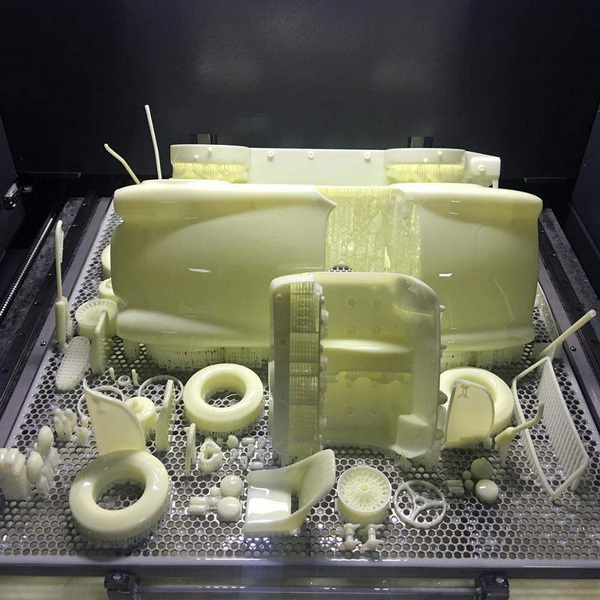
Shangchen (sc-rapidmanufacturing.com) is a China-based OEM factory specializing in Rapid Prototyping, CNC machining, precision batch production, CNC turning, sheet metal fabrication, 3D printing, and mold manufacturing for global brands, wholesalers, and manufacturers. By placing multiple Rapid Prototyping processes under one roof, Shangchen supports AI hardware enclosures, sensor housings, fixtures, and test rigs that must be iterated quickly alongside AI software prototypes.[2][5][6][7]
Shangchen uses Rapid Prototyping to transform CAD designs into real parts using CNC machining, Rapid Prototyping 3D printing (SLA, SLS, FDM, MJF), sheet metal fabrication, vacuum casting, and rapid tooling, enabling AI teams to validate form, fit, thermal behavior, and assembly much earlier in the lifecycle. This makes Shangchen a strategic partner for large organizations that build AI-powered machines, kiosks, medical equipment, robots, industrial devices, and smart consumer products.[5][7][8][2]
In the AI context, Rapid Prototyping refers to quickly turning ideas into working AI experiences—such as chatbots, recommendation systems, copilots, predictive dashboards, or smart interfaces—so teams can validate value, usability, and technical feasibility in days or weeks instead of months. These AI prototypes often combine front-end interfaces, back-end microservices, data pipelines, and connections to foundation models or domain-specific machine-learning components.[4][9][1]
Modern Rapid Prototyping for AI apps relies heavily on cloud AI services, no-code/low-code app builders, and AI coding assistants that accelerate experimentation, while physical Rapid Prototyping supports associated devices, terminals, and hardware integration. Large organizations treat Rapid Prototyping as a continuous “build–measure–learn” loop, using metrics, logs, and user research to decide which AI ideas to scale and which to discard early.[3][9][10][1][4]
Enterprises need Rapid Prototyping of AI apps to stay competitive as generative AI and machine learning redefine how customers search, shop, work, and collaborate. Rapid Prototyping reduces time-to-market, cuts experimentation costs, and helps teams learn what actually solves user problems before investing heavily in full-scale systems and physical infrastructure.[1][3][4]
With AI Rapid Prototyping, organizations can quickly validate use cases such as service automation, decision support, fraud detection, predictive maintenance, and intelligent analytics, using realistic but controlled environments. This same mindset extends to physical components, where Shangchen's Rapid Prototyping capability lets enterprises test different housing geometries, mounting strategies, and material options for AI hardware with fast turnaround and manageable budgets.[7][8][11][5][1]
Large organizations that excel at Rapid Prototyping of AI apps typically invest in a modular stack of tools and services. Common building blocks include:[4][1]
- Cloud AI platforms and managed services for model hosting, vector search, monitoring, and security.[3][4]
- Generative AI APIs, Large Language Models, and specialized models for vision, speech, and recommendations.[12][1]
- No-code/low-code platforms that allow product managers and designers to assemble AI-driven workflows without deep engineering effort.[10][12]
- AI coding assistants and automation tools to speed up boilerplate code, test generation, and integration tasks.[13][3]
On the physical side, Shangchen supplies Rapid Prototyping services—CNC machining, Rapid Prototyping 3D printing, sheet metal, and rapid tooling—that provide high-precision parts for sensors, embedded boards, mechanical assemblies, user terminals, and lab fixtures required by AI teams.[8][2][5][7]
Technology alone is not enough; large enterprises also need the right organizational practices to sustain Rapid Prototyping of AI apps. Leading organizations often create cross-functional squads that bring together product management, data science, software engineering, UX, and operations around a clear AI initiative.[9][14][4]
These squads work in short, time-boxed sprints with explicitly defined hypotheses, success metrics, and decision checkpoints, avoiding big upfront design and focusing on learning. Governance frameworks define how prototypes can access sensitive data, what guardrails apply to generative AI, and when a Rapid Prototyping experiment can be exposed to internal users or external customers.[15][9][4]
Large organizations that prototype AI apps rapidly invest in reusable components, templates, and patterns so teams do not start from zero every time. These include standard UI components, prompt patterns, logging libraries, safety filters, authentication modules, and preconfigured data connectors.[11][1][3][4]
Shangchen mirrors this philosophy in the physical domain by providing established process libraries, standard material options, and proven Rapid Prototyping workflows for CNC machining, 3D printing, sheet metal, and mold fabrication. Reusing validated process setups, fixturing concepts, and finishing methods helps enterprises get consistent AI device prototypes with shorter lead times and fewer quality surprises.[2][5][7][8]
Rapid Prototyping of AI apps is most effective when AI tools amplify, rather than replace, human expertise. Product teams use AI to generate design variations, simulate user flows, and draft code, while humans decide which ideas are valuable, ethical, and aligned with strategy.[14][1][4]
At the same time, enterprises rely on expert manufacturing partners like Shangchen for engineering judgment on manufacturability, tolerance stack-ups, material selection, and production risk, rather than treating Rapid Prototyping as a fully automated commodity. This combination of digital AI assistance and human engineering insight enables robust, scalable Rapid Prototyping programs for AI hardware and software together.[5][7][1][2]
Because AI apps often rely on sensitive or regulated data, large organizations must embed privacy and compliance into their Rapid Prototyping approaches. Common practices include synthetic data generation, anonymization, access controls, and sandbox environments that allow realistic experimentation without exposing production data.[9][15][4]
For AI-powered physical devices—such as cameras, industrial sensors, or medical consoles—enterprises must consider safety, electromagnetic compatibility, ergonomics, and relevant standards when commissioning Rapid Prototyping parts from factories like Shangchen. Aligning early with these constraints helps avoid costly redesigns when moving from Rapid Prototyping to certification and full-scale manufacturing.[7][2][5]
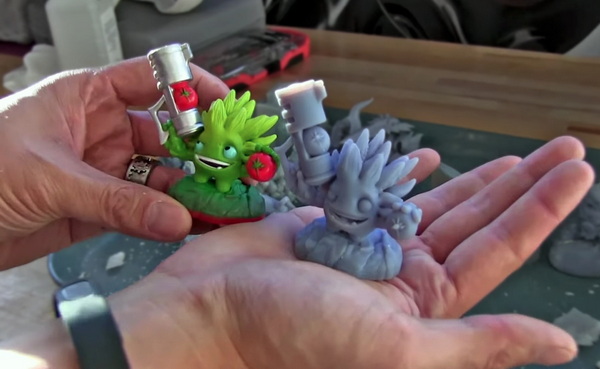
Shangchen offers Rapid Prototyping services across metals, plastics, and elastomers, enabling AI teams to build housings, brackets, heat sinks, frames, and aesthetics models in parallel with digital app prototypes. CNC machining provides tight-tolerance components, while Rapid Prototyping 3D printing is ideal for complex shapes, quick design changes, and visual samples for stakeholder demos.[8][5][7]
Sheet metal fabrication at Shangchen enables durable enclosures, racks, and mounting panels suitable for servers, edge devices, and industrial controllers used by AI applications. When an AI prototype matures, Shangchen's mold manufacturing and precision batch production capabilities help enterprises transition from Rapid Prototyping to low-volume or mass production without changing suppliers.[2][5][8]
Many large organizations experiment with AI apps that have some physical interface—such as a smart kiosk, diagnostic module, or industrial inspection device. A typical Rapid Prototyping workflow might look like this:[3][4]
1. The product team defines a user problem and sketches AI-enabled flows, like conversational support, automated analysis, or real-time recommendations.[1][4]
2. Engineers quickly assemble a first AI app prototype using cloud LLMs, prebuilt connectors, and Rapid Prototyping tools for UI and orchestration.[10][1]
3. In parallel, mechanical engineers design enclosures, mounts, and fixtures and send CAD files to Shangchen for Rapid Prototyping using CNC machining and 3D printing.[5][7]
4. After a few days, the physical parts arrive and are integrated with electronics and the AI software, allowing realistic testing with internal users.[8][5]
5. Feedback from usage, plus metrics gathered by the AI app, drives new iterations of both software and hardware until the concept proves its value.[1][3]
This combined digital–physical Rapid Prototyping loop helps large organizations discover product–market fit for AI solutions while keeping budgets and timelines under control.[5][1]
To evaluate AI app behavior and user acceptance effectively, large organizations embed rich visual and interactive elements in their Rapid Prototyping process. Teams rely on UX mockups, clickable flows, embedded dashboards, and recorded user sessions to understand how real people interact with AI-generated responses, recommendations, or decisions.[14][1]
For hardware-linked AI prototypes, engineering and product teams record assembly steps, testing sessions, and field trials to analyze mechanical constraints, user ergonomics, and environment effects on sensors and devices. Shangchen's ability to deliver multiple Rapid Prototyping iterations—each documented with dimensional, surface, and functional feedback—helps enterprises refine both the appearance and the behavior of AI devices before committing to tooling.[7][2][3][5]
Successful Rapid Prototyping of AI apps is only valuable if organizations can scale promising ideas into secure, maintainable, and compliant production systems. At the software level, this means hardening APIs, implementing observability and rollback strategies, and enforcing model governance, drift monitoring, and responsible AI policies.[11][15][4]
On the physical side, Shangchen supports the scale-up phase by converting Rapid Prototyping designs into manufacturable versions, optimizing geometries for tooling, suggesting material substitutions, and setting up quality control plans for volume orders. Enterprises benefit from using the same partner for Rapid Prototyping, pilot runs, and batch production, since tribal knowledge about the AI device's constraints and goals is preserved.[2][7][8][5]
Large organizations face several typical challenges when implementing Rapid Prototyping for AI apps, including unclear problem definitions, fragmented data, over-reliance on a single AI vendor, and internal resistance to change. Best practices involve starting with small, high-impact use cases, defining measurable success criteria, and communicating early wins to build momentum across the organization.[15][4][3][1]
On the hardware side, challenges include long supplier lead times, quality inconsistency, and difficulty synchronizing mechanical changes with fast-moving software experiments. Partnering with a specialized Rapid Prototyping factory like Shangchen—offering multi-process capacity, design-for-manufacturing support, and OEM-focused project management—helps mitigate these risks and align hardware cycles with AI development cycles.[7][8][2][5]
Large organizations that consistently succeed with Rapid Prototyping of AI apps tend to follow a set of disciplined but flexible practices. Key recommendations include:[4][1]
- Prioritize speed with guardrails: Start with minimal viable AI prototypes that still respect privacy and safety constraints.[15][4]
- Use modular architectures: Design AI apps as composable services so teams can swap models, data sources, and interfaces without major rewrites.[9][11]
- Invest in shared Rapid Prototyping platforms: Provide standardized tooling and environments for AI experimentation so teams can reuse assets and knowledge.[4][1]
- Pair digital and physical Rapid Prototyping: For AI systems with hardware, coordinate software sprints with Shangchen's Rapid Prototyping cycles to validate the full experience.[8][5][7]
By combining these best practices with the manufacturing depth of Shangchen, enterprises create a powerful ecosystem that accelerates AI innovation from idea to production-ready product.[2][5][7]
Rapid Prototyping of AI apps allows large organizations to explore bold ideas quickly, reduce uncertainty, and focus investment on the most promising solutions. Success requires more than clever models; it depends on integrated stacks, agile governance, cross-functional teams, and the ability to prototype both digital experiences and physical devices in a synchronized way.[3][9][1][4]
Shangchen (sc-rapidmanufacturing.com) plays a crucial role in this ecosystem by providing one-stop Rapid Prototyping services—CNC machining, 3D printing, sheet metal, turning, and mold making—that support AI prototypes from first mockup to scalable production. By partnering with Shangchen, large organizations can confidently build AI apps and associated hardware that meet real-world demands, while keeping development cycles fast, flexible, and cost-effective.[5][7][8][2]
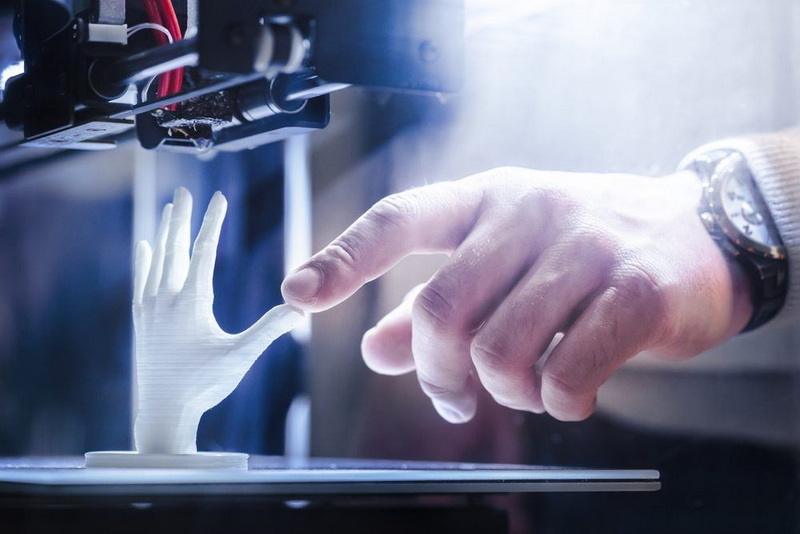
Rapid Prototyping accelerates AI app development by shortening the cycle from idea to working demonstration, allowing teams to test assumptions and user responses early. Enterprises can experiment with different AI models, data sources, and interaction patterns quickly, enabling evidence-based decisions and avoiding large investments in unproven concepts.[11][1][3][4]
Large organizations benefit from Shangchen's integrated Rapid Prototyping capability, which includes CNC machining, 3D printing, sheet metal, turning, and mold manufacturing in a single factory. This setup ensures consistent quality, faster communication, and smoother transitions from prototypes to batch production for AI-related devices and components.[7][8][2][5]
Enterprises typically use sandbox environments, data anonymization, access controls, and synthetic datasets to protect sensitive information while still enabling realistic AI experiments. They also define clear governance policies specifying what data can be used at each stage of Rapid Prototyping and how AI logs are stored, monitored, and audited.[15][4]
Rapid Prototyping is the exploration phase where organizations test many ideas quickly, while large-scale deployment is the optimization and industrialization phase for the few ideas that prove valuable. Lessons from Rapid Prototyping—such as user behavior, performance constraints, and edge cases—feed into architecture, security, and operations design for robust AI production systems.[11][1][4]
For AI devices, enterprises often rely on CNC machining for precision metal and plastic parts, Rapid Prototyping 3D printing for complex geometries and quick design changes, and sheet metal fabrication for durable enclosures and mounting structures. When volumes increase, Shangchen supports rapid tooling and mold-based production to deliver repeatable, high-quality parts at scale.[8][2][5][7]
[1](https://www.quinnox.com/blogs/ai-for-rapid-prototyping)
[2](https://www.sc-rapidmanufacturing.com/what-is-rapid-prototyping-technology.html)
[3](https://tech.asu.edu/rapid-prototyping-accelerates-cost-effective-ai-innovation)
[4](https://hexaware.com/blogs/rapid-prototyping-for-enterprise-software-development/)
[5](https://www.sc-rapidmanufacturing.com/what-is-rapid-prototyping-used-for.html)
[6](https://www.sc-rapidmanufacturing.com)
[7](https://www.sc-rapidmanufacturing.com/rapid-prototyping-knowledge.html)
[8](https://www.sc-rapidmanufacturing.com/3d-printing.html)
[9](https://www.theinnovationmode.com/the-innovation-blog/rapid-prototyping-practices-for-software-engineering-teams)
[10](https://www.adalo.com/posts/top-rapid-prototyping-tools-digital-transformation)
[11](https://www.datatobiz.com/blog/rapid-prototyping-frameworks-for-ai-product-head/)
[12](https://precallai.com/ai-platforms-for-app-prototyping)
[13](https://github.com/orgs/community/discussions/174926)
[14](https://www.producttalk.org/ai-prototyping-lovable/)
[15](https://infobeans.ai/best-practices-for-launching-ai-in-enterprise-environments/)

