
Views: 222 Author: Amanda Publish Time: 2026-01-02 Origin: Site


Content Menu
● Core Technologies Behind Rapid Prototyping
>> 3D Printing for Rapid Prototyping
>> CNC Machining in Rapid Prototyping
>> Rapid Tooling and Mold-Based Prototyping
● How Rapid Prototyping Fits the Product Lifecycle
>> Concept Validation and Design Exploration
>> Functional Testing and Engineering Validation
>> User Feedback and Market Validation
>> Pre-Production and Small-Batch Manufacturing
● Where Rapid Prototyping Is Used
● Key Benefits of Rapid Prototyping
● How OEM Brands Work With a Rapid Prototyping Partner
>> Requirement Definition and NDA
>> DFM Review and Process Selection
>> Quotation and Lead Time Confirmation
>> Prototype Manufacturing and Inspection
>> Feedback, Iteration, and Small-Batch Production
● Best Practices When Using Rapid Prototyping
>> 1. What is Rapid Prototyping in simple terms?
>> 2. Which Rapid Prototyping process should I choose?
>> 3. How does Rapid Prototyping reduce costs?
>> 4. Is Rapid Prototyping only for low volumes?
>> 5. How fast can Rapid Prototyping deliver parts?
Rapid Prototyping is used to turn digital product ideas into physical parts quickly so engineers, designers, and buyers can see, touch, test, and improve designs before investing in full production. In modern manufacturing, Rapid Prototyping integrates 3D printing, CNC machining, sheet metal fabrication, and molding to shorten development cycles, cut costs, and reduce risk for brands in almost every industry.[1]
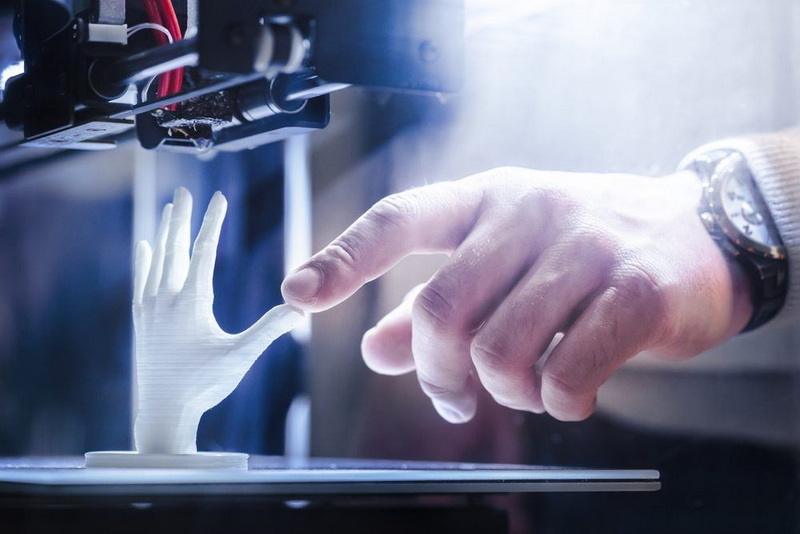
Rapid Prototyping is a product development method that uses fast, on-demand manufacturing technologies to produce parts or assemblies directly from 3D CAD data for hands-on evaluation. It allows teams to build multiple iterations in days instead of weeks or months, so they can test fit, function, ergonomics, and appearance before committing to mass production.[2][3]
In practice, Rapid Prototyping combines additive processes (3D printing), subtractive processes (CNC machining), and forming processes (sheet metal and rapid molding) to match different stages of development. Both large enterprises and startups now rely on Rapid Prototyping to accelerate innovation, reduce development risk, and respond faster to market feedback.[1][2]
3D printing is often the first choice for Rapid Prototyping because it can produce parts in one to three days at a very low cost per iteration. Common technologies include FDM, SLA, SLS, and other additive methods that build parts layer by layer from plastics, resins, or powders.[4][2]
3D printing in Rapid Prototyping is ideal for complex geometries, organic shapes, internal channels, and lightweight lattice structures that are difficult or impossible to machine. Engineers use 3D printing to create concept models, ergonomic mockups, functional prototypes, and even pilot-run parts for early field testing. As printers and materials improve, 3D printing Rapid Prototyping is also moving into end-use parts for low-volume applications.[5][4]
CNC machining is a key Rapid Prototyping technology when prototypes must be produced in real engineering materials such as aluminum, steel, copper alloys, and high-performance plastics. Milling and turning remove material from solid stock, achieving tight tolerances, good surface finish, and high structural strength for demanding applications.[6][1]
CNC-based Rapid Prototyping is widely used for housings, structural brackets, precision shafts, gears, and high-strength components that require accurate dimensions and durability. Many prototype CNC parts can be manufactured and shipped within about a week, especially when using digital quoting and automated scheduling to streamline Rapid Prototyping workflows.[7][1]
Sheet metal fabrication is another important pillar of Rapid Prototyping for enclosures, brackets, chassis, and structural frames in steel, stainless steel, or aluminum. Processes include laser cutting, punching, bending, forming, welding, and surface finishing such as powder coating or anodizing to achieve production-like quality.[8][1]
Sheet metal Rapid Prototyping allows flat and formed metal parts to be produced in a week or less, enabling engineers to test assembly, thermal performance, stiffness, and strength in real conditions. It is especially useful for telecommunication equipment, industrial control cabinets, and consumer electronics housings that need to be evaluated in final metal materials before mass production.[9][1]
Rapid Prototyping is closely linked to rapid tooling and short-run molding, which simulate final mass-production processes for plastic components. Soft steel molds, aluminum molds, or modular tooling inserts are created quickly to mold dozens to thousands of parts in production-grade plastics for realistic testing.[10][1]
This approach is valuable when teams must validate manufacturability, shrinkage, assembly fit, and cosmetic quality using the same process planned for mass production. While rapid molding is slower and more costly than 3D printing or CNC Rapid Prototyping, it provides realistic behavior and repeatability, which is critical for final design freeze decisions.[11][1]
During early concept phases, Rapid Prototyping helps turn sketches and CAD concepts into physical models that teams can review together in workshops and design reviews. Designers quickly evaluate size, proportion, ergonomics, and visual impact, avoiding expensive changes later in the project.[3][12]
Multiple design directions can be produced in parallel through Rapid Prototyping, enabling objective comparison and faster decision-making in cross-functional teams. Consumer electronics, consumer goods, automotive, and industrial equipment manufacturers regularly use Rapid Prototyping for these “looks-like” models that drive early consensus.[13][5]
Functional prototypes produced through Rapid Prototyping allow engineers to test mechanical performance, assembly, and usability before tooling. These prototypes can be used for fit-checks, load tests, leak tests, thermal tests, and motion or fatigue testing, depending on the design.[14][11]
Using Rapid Prototyping, teams identify weaknesses early, refine geometry, adjust wall thickness, and optimize material choices without high tooling costs or production delays. This significantly reduces the risk of product failure after launch and minimizes costly design changes at late stages, when modifications are most expensive.[12][3]
Rapid Prototyping is increasingly used to gather real user feedback before finalizing a product. Teams send low-volume series of prototypes to key customers, clinics, pilot projects, or internal stakeholders to understand how the product performs in real environments.[2][13]
This approach helps uncover usability problems, missing features, or design opportunities that are not visible in CAD simulations alone. By using Rapid Prototyping in iterative cycles, companies can refine the design to better match market expectations, improve user satisfaction, and reduce the chance of market rejection.[3][12]
When the design stabilizes, Rapid Prototyping transitions into pre-production and small-batch manufacturing using the same technologies: CNC machining, sheet metal, molding, and sometimes high-end 3D printing. These short runs are ideal for pilot builds, certification testing, regulatory approvals, and early marketing or sales demos.[1][2]
Rapid Prototyping at this stage provides realistic parts that can be used in full assemblies to validate supply chain, assembly processes, and packaging before volume ramp-up. For some applications, on-demand Rapid Prototyping even becomes a long-term production strategy for low-volume, high-complexity components that do not justify dedicated tooling.[8][10]
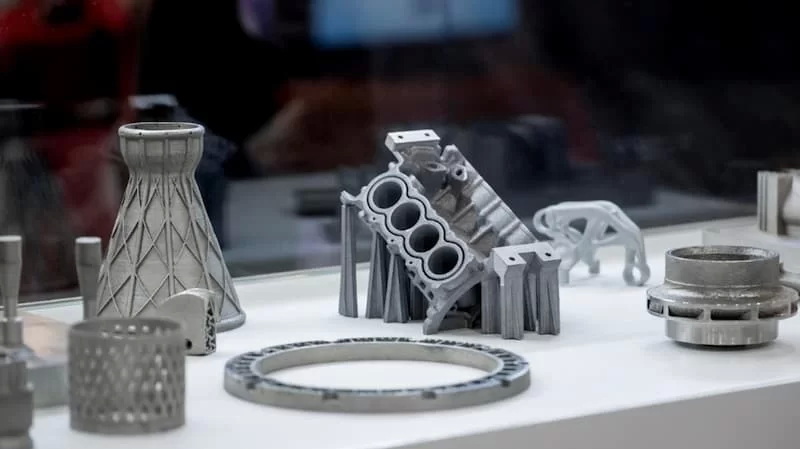
Rapid Prototyping is used in almost every sector where physical products are developed, from aerospace to consumer goods. Different industries use Rapid Prototyping to shorten development cycles, customize products, and support innovation while managing technical and commercial risk.[13][2]
In automotive engineering, Rapid Prototyping supports engine components, interior parts, aerodynamic models, and safety systems for design and performance testing. Aerospace companies rely on Rapid Prototyping for lightweight structural parts, complex ducting, and aerodynamic models, while medical and dental sectors use it for patient-specific devices, surgical guides, and instrument development.[15][9]
Rapid Prototyping delivers a combination of speed, flexibility, and cost-effectiveness that traditional methods cannot match in early and mid-stage development. Some of the most important benefits include both technical and business advantages across the full product lifecycle.[12][3]
- Faster time to market: Rapid Prototyping dramatically shortens development cycles, turning years into months or weeks, and allowing companies to launch products faster than competitors.[3]
- Cost savings and less waste: By avoiding multiple tooling changes and catching design errors early, Rapid Prototyping can reduce total costs and material waste significantly.[14]
- Design freedom and innovation: Rapid Prototyping supports complex geometries, internal channels, and organic structures, enabling creative designs that were previously difficult to manufacture.[4]
- Better communication and collaboration: Physical Rapid Prototyping models make design intent clear for engineers, designers, marketers, and stakeholders, improving alignment and decisions.[2]
- Lower risk of product failure: Functional Rapid Prototyping tests help identify weaknesses before full-scale production, reducing warranty claims and post-launch redesigns.[12]
For overseas brands, wholesalers, and manufacturers, partnering with a professional Rapid Prototyping factory is the most efficient way to realize new product ideas. A mature service provider combines engineering support, multiple manufacturing processes, and quality systems under one roof to deliver consistent Rapid Prototyping results.[7][8]
A typical cooperation flow for an OEM Rapid Prototyping project follows several stages from idea to small-batch production.
The client shares CAD data, target quantities, materials, and functional goals under strict confidentiality, so the Rapid Prototyping team can evaluate the project properly. Non-disclosure agreements and internal data security processes protect design files and business information throughout the Rapid Prototyping cooperation.[7][8]
Clear requirement definition at this stage helps the Rapid Prototyping partner select appropriate processes, estimate costs accurately, and propose realistic lead times. It also ensures that expectations for quality, inspection, and testing are aligned from the beginning.[10][1]
Engineers analyze the design for manufacturability and recommend the most suitable Rapid Prototyping combination: 3D printing, CNC machining, sheet metal, or rapid tooling. This design-for-manufacturing review helps identify undercuts, thin walls, sharp corners, or tolerance conflicts that could create problems in later production.[1][2]
During this phase, Rapid Prototyping specialists may propose design optimizations that maintain function while reducing cost, improving strength, or simplifying assembly. Because Rapid Prototyping offers flexibility, different processes can be selected for different components within the same assembly.[11][13]
Digital cost estimation is used to provide a competitive quotation and clear delivery schedule for each Rapid Prototyping phase. Automated pricing tools can rapidly calculate machining times, material consumption, and finishing costs for prototype batches.[7][1]
At this point, the client can compare different Rapid Prototyping options—such as 3D printing versus CNC or sheet metal—to balance speed, cost, and performance. Once the quotation is approved, an agreed delivery window is locked, and production planning for the Rapid Prototyping work begins immediately.[2][1]
Parts are produced using the selected Rapid Prototyping processes, then inspected dimensionally and tested for performance as requested. Common inspection methods include caliper and CMM measurements, surface roughness checks, and visual inspection for cosmetic features.[10][2]
Measurement reports, material certificates, and functional test results can be shared with the client to confirm that the Rapid Prototyping parts meet specifications. If deviations are discovered, the Rapid Prototyping supplier can rapidly adjust machining programs, print settings, or tooling to correct issues in subsequent iterations.[10][1]
Feedback from the client's engineering and marketing teams leads to design updates, and the Rapid Prototyping partner produces revised versions quickly. This loop may repeat several times until the design achieves the right balance of performance, cost, and aesthetics.[13][3]
Once the design is frozen, the Rapid Prototyping supplier moves into low-volume batch production using CNC machining, sheet metal fabrication, rapid tooling, or a mix of these processes. For OEM customers, this combined Rapid Prototyping and small-batch capability simplifies the transition from prototype to market-ready product.[8][1]
To gain maximum value from Rapid Prototyping, teams should combine good engineering practices with clear communication and realistic expectations. Proper planning prevents wasted iterations and helps each Rapid Prototyping phase support clear technical or commercial goals.[11][3]
Plan for multiple iterations and use Rapid Prototyping as an intentional learning cycle instead of expecting perfection in one step. Select the right technology for each phase, using low-cost 3D printing for early concepts, then shifting to CNC machining, sheet metal, or rapid tooling when functional accuracy matters.[3][1]
Specifying realistic tolerances is also essential because over-tight requirements can increase Rapid Prototyping cost and lead time without adding real value. Finally, combining visual, functional, and pre-production samples ensures that Rapid Prototyping supports appearance, performance, and manufacturability at the right times.[2][10]
Rapid Prototyping has become a central strategy in modern product development, enabling companies to move from idea to physical reality with unprecedented speed and flexibility. By integrating 3D printing, CNC machining, sheet metal fabrication, and rapid tooling, Rapid Prototyping supports everything from early concept models to functional prototypes and small-batch OEM production.[1][3]
Whether launching new consumer electronics, industrial machinery, or medical devices, brands that leverage Rapid Prototyping gain faster time to market, lower development risk, and greater design innovation. Working with an experienced Rapid Prototyping manufacturer helps overseas buyers access this full capability set—from design review and process selection to finished prototypes and precision batch production.[8][13]
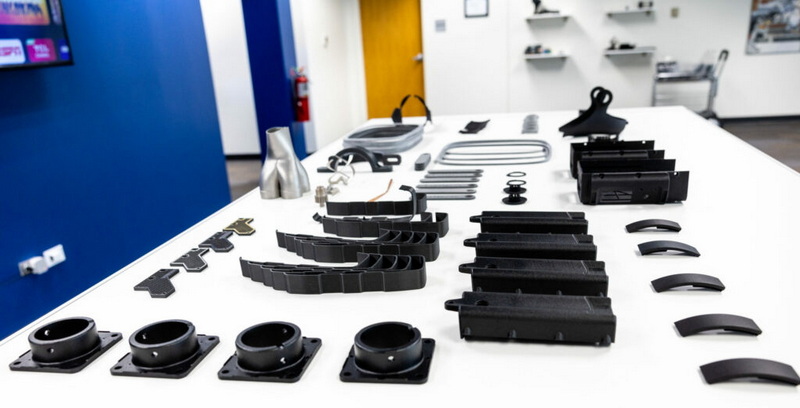
Rapid Prototyping is a method of quickly turning 3D CAD designs into real parts using technologies like 3D printing, CNC machining, sheet metal fabrication, and rapid molding. It lets engineers test fit, function, and appearance early, long before full production tooling is built, so design risks are greatly reduced.[3][1]
The best Rapid Prototyping process depends on your goals, materials, and required accuracy for each part. 3D printing suits early concept models and very complex shapes, while CNC machining, sheet metal fabrication, and rapid molding are better for functional prototypes and pre-production parts in final materials.[1][2]
Rapid Prototyping avoids repeated tooling changes and allows design errors to be caught early, which reduces rework, scrap, and engineering time. Because iterations are fast and affordable, teams can optimize the design before committing to expensive mass-production tooling and long lead-time investments.[14][12]
Rapid Prototyping is mainly used for low volumes, but in some cases it also supports ongoing production of specialized or customized parts. High-value components with complex geometries or frequent design updates may continue to be produced with Rapid Prototyping technologies instead of traditional tooling to maintain flexibility.[4][1]
Lead times vary by process and complexity, but many Rapid Prototyping projects ship parts within one to seven days. Simple 3D printed prototypes can be ready in one to three days, while CNC, sheet metal, and rapid tooling prototypes usually require several days to about a week for manufacturing and inspection.[7][1]
[1](https://www.xometry.com/rapid-prototyping-service/)
[2](https://formlabs.com/blog/ultimate-guide-to-rapid-prototyping/)
[3](https://www.stratasys.com/en/resources/blog/key-advantages-of-rapid-prototyping/)
[4](https://www.stratasys.com/en/industries-and-applications/3d-printing-applications/rapid-prototyping/)
[5](https://www.fictiv.com/articles/rapid-prototyping-guide)
[6](https://www.pcbway.com/rapid-prototyping/)
[7](https://www.protolabs.com)
[8](https://elimold.com)
[9](https://www.sitech-corp.com/blog/6-industries-can-benefit-rapid-prototyping/)
[10](https://www.stephengould.com/rapid-prototyping/)
[11](https://www.monarch-innovation.com/rapid-prototyping-in-product-development)
[12](https://breinerco.com/10-proven-benefits-of-rapid-prototyping/)
[13](https://www.phas.io/post/rapid-prototyping)
[14](https://prismier.com/8-benefits-of-rapid-prototype-manufacturing/)
[15](https://compositesuniversal.com/what-is-the-application-of-rapid-prototyping-in-aerospace-industry/)

