
Views: 222 Author: Amanda Publish Time: 2025-12-30 Origin: Site


Content Menu
● What Makes CNC Machining Seem Difficult?
● How Long Does It Take to Learn CNC Machining?
● Core Skills You Need for CNC Machining
>> Technical and Math Fundamentals
>> Machine Operation and Setup Skills
>> Attention to Detail and Problem-Solving
● Typical Learning Path for CNC Machining Beginners
>> Stage 1: Exposure and Basic Understanding
>> Stage 2: Formal Training or Apprenticeship
● Common Misconceptions About CNC Machining Difficulty
>> “You Must Be a Genius at Math”
>> “Programming Is Only for Coders”
>> “CNC Machining Is Completely Automated”
>> “Only Big Factories Need CNC Machining”
>> “Once You Learn It, There Is Nothing New”
● Factors That Influence How Hard CNC Machining Feels
>> Quality of Training and Mentorship
>> Type of CNC Machines You Learn On
● Career Opportunities and Earning Potential in CNC Machining
● Why Work with an Experienced CNC Machining Partner
● FAQ About Learning CNC Machining
>> 1. Is CNC Machining hard for complete beginners?
>> 2. How long before I can get a job in CNC Machining?
>> 3. Do I need a degree to work in CNC Machining?
>> 4. What tools or software should I learn first?
>> 5. Can I switch into CNC Machining from another trade?
Learning CNC Machining is not “impossible hard,” but it is not something you master in a weekend either. Most learners can make simple parts in a few days or weeks, while becoming a confident CNC machinist often takes months to several years of structured practice and real shop experience.[1][2]

CNC Machining combines digital programming, mechanical operation, materials, and quality control in one role, so beginners often feel overwhelmed at first. The learning curve is steep because you must understand machines, G-code, tooling, cutting parameters, and safety standards at the same time.[2]
- Multiple knowledge domains: machine operation, programming, fixturing, cutting tools, materials, measuring tools, and inspection.[3][4]
- High precision requirements: errors measured in hundredths of a millimeter can decide whether a part is scrap or acceptable in CNC Machining.[5][3]
- Real consequences: wrong setups can crash a CNC Machining center, damage tools, or waste expensive material.[6][3]
To reassure beginners, many training programs and machinists confirm that CNC Machining becomes manageable once you break it into small, structured steps and practice consistently.[7][2]
The time required to learn CNC Machining depends on your goal: basic operation, full machining, or expert-level programming. Some people only need basic operator skills, while others aim to become advanced CNC Machining programmers and process engineers.[2]
- Basic machine operation: with focused training, learners can understand basic CNC Machining setup and simple operations within a few weeks or a short certificate program.[8][9]
- Job-ready CNC machinist skills: many vocational or college programs in CNC Machining run from 6–12 months for intensive training, or up to two academic years for a full degree.[9][8]
- Professional mastery: building advanced CNC Machining skills (complex programming, multi-axis machining, process optimization) usually takes several years of daily, real-shop experience.[1][3]
Apprenticeship pathways in CNC Machining often run three to four years and combine classroom theory, programming, and hands-on machine work to build deep competence.[8][9]
Strong basic math and geometry skills make CNC Machining easier, especially when calculating offsets, coordinates, and tolerances. Trigonometry is used frequently in CNC Machining for bolt circles, angles, and taper calculations in both milling and turning.[10][5][9]
- Essential math: arithmetic, fractions, decimals, unit conversion, geometry, and basic trigonometry for CNC Machining setups.[5][9]
- Blueprint reading: interpreting engineering drawings, GD&T symbols, and tolerances to translate designs into CNC Machining steps.[9][8]
- Spatial reasoning: imagining 2D drawings as 3D parts and visualizing toolpaths around the workpiece during CNC Machining.[10][5]
Operating a CNC Machining center safely and efficiently means understanding the entire workflow from raw material to finished part. This includes both routine tasks and problem-solving under production pressure.[11][3]
- Machine controls: using CNC Machining control panels, jogging axes, loading programs, and debugging alarms.[3][11]
- Workholding and fixturing: clamping parts, setting vises, chucks, soft jaws, and fixtures to keep parts secure in CNC Machining.[12][11]
- Tool setup: loading tools, setting tool lengths, establishing work offsets, and checking spindle runout for accurate CNC Machining.[11][12]
- Inspection: using calipers, micrometers, gauges, and CMMs to verify CNC Machining tolerances and surface quality.[4][13]
Modern CNC Machining relies heavily on digital workflows, combining CAD models and CAM software to generate toolpaths. Even operators who do not write full programs benefit from understanding the logic behind CNC Machining code.[12][1]
- G-code basics: understanding linear and circular moves, feeds, speeds, coordinate systems, and canned cycles in CNC Machining.[7][2]
- CAD/CAM proficiency: using software such as Fusion 360, Solidworks CAM, Mastercam, or similar packages to create CNC Machining toolpaths.[1][12]
- Simulation: using CAM simulation to detect collisions, optimize toolpaths, and reduce trial-and-error in CNC Machining.[2][7]
Although programming can seem intimidating, many learners find that structured tutorials and progressive practice make CNC Machining code and CAM workflows understandable over time.[7][2]
Successful CNC Machining depends on careful observation and the ability to solve process problems quickly. In a production environment, small improvements in setup or parameters can save significant time and cost.[3][10]
- Attention to detail: monitoring vibrations, tool wear, chip formation, and coolant flow to protect CNC Machining quality and efficiency.[10][3]
- Troubleshooting: adjusting feeds, speeds, or tool paths when CNC Machining produces chatter, poor surfaces, or dimensional errors.[12][3]
- Continuous learning: staying current with new CNC Machining tooling, coatings, machines, and software updates.[3][12]

The first stage of learning CNC Machining focuses on safety and basic concepts. The goal is to become comfortable around machines, terminology, and fundamental workflows.[8][9]
- Intro courses: entry-level CNC Machining classes cover basic machine types, safety practices, and simple operations.[9][8]
- Online resources: many learners start CNC Machining with online tutorials, videos, and simulator software to understand G-code and machine behavior.[2][7]
- Shop visits: observing experienced machinists running CNC Machining centers helps beginners understand day-to-day workflow and expectations.[11][3]
Many people choose organized education routes to accelerate CNC Machining learning. Structured programs give a balanced mix of theory and practice.[8][9]
- Technical school programs: structured CNC Machining curricula often combine math, blueprint reading, machine tool theory, and hands-on lab work.[9][8]
- Certificates and diplomas: short CNC Machining programs (often under a year) focus on job-ready skills like setup and operation.[8][9]
- Apprenticeships: long-term paid training where learners gradually take on more complex CNC Machining tasks while supervised by experts.[9][8]
Real mastery in CNC Machining is built on the shop floor, one problem at a time. Each new project adds more understanding of materials, tooling, and process limits.[11][3]
- Starting as operator: beginners often start by loading parts, pressing cycle start, and checking dimensions in daily CNC Machining work.[4][3]
- Progressing to setup: as skills grow, technicians handle tool changes, fixturing, and more complex CNC Machining jobs.[12][11]
- Becoming a programmer or process engineer: with years of experience, some machinists specialize in CNC Machining strategy, multi-axis work, and process optimization.[3][12]
While CNC Machining does use math daily, you do not need advanced university-level mathematics. Instead, consistent practice with practical machining math and clear training materials are enough to handle most CNC Machining calculations.[5][9]
CNC Machining programming is specialized, but it is not the same as full-scale software development. Many successful machinists learned G-code and CAM step-by-step without any prior IT background, using structured tutorials and real projects in CNC Machining.[7][2][12]
Even with automation, CNC Machining still requires human judgment and skill. Human technicians choose tools, set parameters, diagnose issues, and ensure parts meet specs; automation simply helps them execute CNC Machining tasks faster and more consistently.[12][3]
Another misconception is that only large corporations benefit from CNC Machining. In reality, small design studios, hardware startups, and niche product brands use CNC Machining for prototypes, fixtures, jigs, and customized low-volume production because of the flexibility and repeatability it offers.[1][2]
Some people assume that once they learn basic CNC Machining, the field becomes routine. In practice, new tool materials, coatings, CAM strategies, machine configurations, and automation options constantly reshape what is possible in CNC Machining, so skilled machinists keep learning throughout their careers.[3][12]
People with previous experience in manufacturing, automotive repair, or metalworking usually find CNC Machining easier because they already understand tools and materials. Those coming from non-technical backgrounds may need more time to adapt to shop terminology, safety culture, and measurement practices in CNC Machining.[8][9]
Good instructors and supportive colleagues dramatically reduce the perceived difficulty of CNC Machining. Clear explanations, step-by-step exercises, and constructive feedback help beginners avoid bad habits and build confidence in CNC Machining much faster than trying to learn alone.[11][3]
Starting on simple 3-axis mills or 2-axis lathes is usually easier than jumping directly into 5-axis or mill-turn CNC Machining centers. As you gain experience with basic machines, you can gradually transition to more complex CNC Machining platforms without feeling overwhelmed.[2][3]
The field of CNC Machining offers more than one career path, which can make the effort of learning more attractive.[9][8]
- CNC operator: handles loading parts, basic setups, and running production jobs in CNC Machining.
- CNC setup technician: responsible for tooling, fixturing, offsets, and proving out new CNC Machining programs.
- CNC programmer: specializes in CAM, G-code, optimization of feeds, speeds, and toolpaths for CNC Machining.[8][9]
- Manufacturing engineer: designs processes that integrate CNC Machining with inspection, finishing, and assembly.[12][3]
Because CNC Machining is essential to aerospace, automotive, medical, energy, and consumer product manufacturing, demand for skilled machinists remains strong in many regions. Experienced CNC Machining professionals often command higher wages than general labor roles, especially when they combine programming, setup, and process improvement skills.[9][8]
For companies that do not want to build in-house capability, partnering with a specialist factory can remove most of the learning burden around CNC Machining. Experienced suppliers combine programming, machining, finishing, and inspection into a turnkey CNC Machining solution for OEM customers.[11][3]
A professional CNC Machining supplier can support:
- Rapid prototyping with CNC Machining, 3D printing, and sheet metal for design validation before mass production.[14][11]
- Precision batch production using multi-axis CNC Machining, turning, and secondary processes to meet tight tolerances.
- Engineering feedback on materials, geometry, and manufacturability to optimize parts for CNC Machining cost and quality.[3][11]
For overseas brands, wholesalers, and manufacturers, this kind of partnership allows you to focus on product design and market development while the technical complexity of CNC Machining is handled by an expert shop.[14][3]
Learning CNC Machining is challenging but very achievable for motivated learners who approach it step-by-step. Foundational skills in math, blueprint reading, machine operation, and programming can be learned within months, while true CNC Machining mastery comes from years of structured practice and real-world problem-solving. Whether you choose to build in-house CNC Machining skills or work with an experienced OEM partner, this technology opens the door to precise, repeatable parts for modern manufacturing projects.[1][2][12][3]
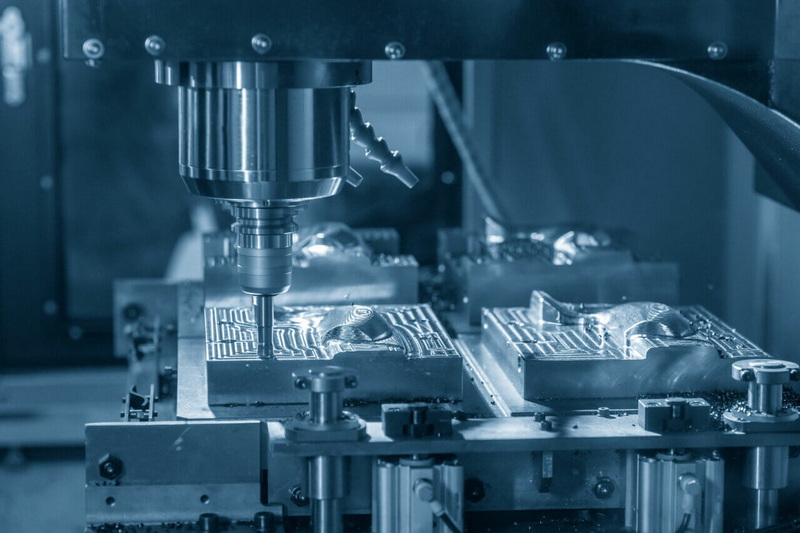
For complete beginners, CNC Machining may look complex, but structured training and good mentoring make it manageable. Most new learners can safely run basic CNC Machining operations after a short introduction course and several weeks of supervised practice.[7][2][8][9]
Many vocational and technical programs prepare learners for entry-level CNC Machining roles in 6–12 months, sometimes even faster with intensive courses. Additional on-the-job training and apprenticeships then refine CNC Machining skills and open better career opportunities.[8][9]
A degree is not mandatory for CNC Machining, but postsecondary training, certificates, or diplomas significantly improve job prospects. Employers often look for hands-on CNC Machining experience, industry-recognized credentials, and strong math and blueprint-reading skills rather than only formal degrees.[9][8]
Beginners in CNC Machining benefit from learning one mainstream CAD/CAM package and basic G-code. Popular options include Fusion 360, Solidworks CAM, Mastercam, and similar software that support modeling, toolpath generation, and simulation for CNC Machining.[1][12]
Yes, many people move into CNC Machining from welding, general machining, automotive, or mechanical maintenance roles. Prior experience with tools, machines, or technical drawings makes the transition into CNC Machining faster, especially when combined with focused training.[3][9]
[1](https://geomiq.com/blog/is-it-hard-to-learn-cnc-machining/)
[2](https://www.3erp.com/blog/is-cnc-machining-hard/)
[3](https://www.cloudnc.com/blog/is-becoming-a-cnc-machinist-difficult)
[4](https://www.actiongrp.net/2018/06/25/important-skills-needed-to-be-a-cnc-machine-operator/)
[5](https://tirapid.com/cnc-machinist-skills/)
[6](https://www.practicalmachinist.com/forum/threads/how-hard-is-cnc-machining.403856/)
[7](https://taigtools.com/blog/is-cnc-machining-hard-to-learn/)
[8](https://www.uti.edu/blog/cnc/how-to-become-a-cnc-machinist)
[9](https://www.indeed.com/career-advice/finding-a-job/how-to-become-a-cnc-machinist)
[10](https://www.autodesk.com/products/fusion-360/blog/cnc-machining-5-skills-that-make-the-best-operators/)
[11](https://ntmamcc.org/mastering-the-basics-essential-fundamentals-for-cnc-machinists-in-the-manufacturing-industry/)
[12](https://content.fanucworld.com/the-top-five-cnc-skills-every-technician-should-master/)
[13](https://www.practicalmachinist.com/forum/threads/basic-skills-for-the-cnc-operator-machinist.75542/)
[14](https://jarctraining.org/programs/computer-numerical-control/)

