


Content Menu
● Shangchen: Your CNC Machining OEM Partner
● What Makes CNC Machining “Hard”?
● CNC Machining Workflow Step by Step
● Skills Required in CNC Machining
● Technical Challenges in CNC Machining
● When CNC Machining Becomes Easier
● Why Brands Outsource CNC Machining
● Shangchen's CNC Machining and Related Services
● CNC Machining vs. Other Manufacturing Processes
● How Shangchen Reduces CNC Machining Difficulty for Clients
● Common CNC Machining Challenges in Production
● FAQ
>> 1) How hard is CNC Machining for beginners?
>> 2) Do I need deep CNC Machining knowledge to work with Shangchen?
>> 3) What tolerances can CNC Machining usually achieve?
>> 4) When should I choose CNC Machining instead of 3D printing?
>> 5) How does Shangchen ensure consistent CNC Machining quality?
CNC Machining can look intimidating from the outside, but the real difficulty depends on who you are and what you need to achieve. For overseas brands, wholesalers, and manufacturers, the key is not learning every technical detail, but finding a trusted OEM partner that turns complex CNC Machining work into stable, repeatable production.

Shangchen (sc-rapidmanufacturing.com) is a China-based factory focused on rapid prototyping, CNC Machining services, precision batch production, CNC lathe turning, sheet metal fabrication, 3D printing services, and mold manufacturing for global OEM customers. Shangchen works with foreign brands, wholesalers, and manufacturers, providing customized CNC Machining solutions that match international quality standards.
By integrating multi‑axis CNC Machining centers, experienced engineers, and strict quality systems, Shangchen helps overseas clients turn drawings and 3D models into real parts quickly and reliably. From one-off prototypes to medium and large batch CNC Machining, the team supports the full product life cycle, including engineering feedback, process optimization, and long‑term supply.
CNC Machining feels hard because it combines digital technology, mechanical engineering, and real‑world cutting behavior at the same time. A single CNC Machining project involves programming, fixturing, tool selection, cutting parameters, material characteristics, and inspection, and all of these must work in harmony.
Several common factors increase the difficulty of CNC Machining:
- Tight tolerances and small features that demand high precision and stable processes.
- Complex 3D surfaces, deep cavities, and undercuts that may need multi‑axis CNC Machining.
- Thin walls, long overhangs, and delicate structures that are easy to deform during CNC Machining.
- Hard‑to‑machine materials such as titanium, hardened steels, and superalloys that require special tools and strategies.
The more demanding the geometry and tolerances, the more knowledge and experience are required to make CNC Machining stable and cost‑effective.
Behind every finished part, CNC Machining follows a structured workflow from design to shipment. Understanding this flow helps you see where the technical challenges appear and how a factory like Shangchen reduces the risk.
A typical CNC Machining workflow includes:
1) Design and engineering
- Creation or review of 2D drawings and 3D CAD models.
- Design for Manufacturability (DFM) evaluation to see how well the part suits CNC Machining.
2) CAM programming and process planning
- Generating CNC Machining toolpaths in CAM software.
- Selecting tools, cutting strategies, and machining sequences.
3) Material selection and stock preparation
- Choosing the correct metal or plastic for CNC Machining based on strength, weight, cost, and finish.
- Cutting raw material into suitable blanks.
4) Workholding and fixture design
- Designing fixtures and clamps that keep the workpiece stable during CNC Machining.
- Planning multiple setups if the part requires machining from different sides.
5) CNC Machining operations
- Running milling, turning, drilling, boring, and tapping operations in a defined order.
- Adjusting feeds, speeds, and coolant to balance speed, tool life, and surface finish.
6) Deburring, finishing, and assembly support
- Removing burrs and sharp edges after CNC Machining.
- Applying anodizing, plating, painting, polishing, or other finishes if required.
7) Inspection and documentation
- Using calipers, micrometers, gauges, CMM, or optical measuring systems.
- Recording results and preparing inspection reports for OEM customers.
Shangchen handles this complete chain for your CNC Machining projects, so your team can focus on design and market requirements instead of daily shop floor details.
From the human side, CNC Machining is demanding because it requires both abstract and practical skills. Engineers and operators involved in CNC Machining need to read technical drawings, understand GD&T, and convert design intent into machining strategies that are repeatable and safe.
Important skill areas include:
- CAD/CAM and G‑code: setting up toolpaths, simulating CNC Machining, and adjusting programs to avoid collisions or defects.
- Process knowledge: choosing appropriate tools, toolholders, cutting parameters, and coolants for different CNC Machining materials.
- Metrology: understanding how to measure dimensions, form, and surface roughness and how to interpret tolerances and inspection results.
- Troubleshooting: identifying problems such as chatter, tool wear, thermal distortion, or burrs, and then optimizing CNC Machining settings to fix them.
Because these skills take time to develop, many companies prefer to outsource CNC Machining to experienced suppliers rather than build a full team from zero.
On the technical level, CNC Machining faces several recurring challenges that can affect cost, quality, and delivery time. These challenges become more serious as tolerance requirements tighten and parts grow more complex.
Typical CNC Machining challenges include:
- Tool wear and breakage: Cutting tools gradually lose sharpness, changing surface finish and dimensions. Managing tool life, offsets, and replacement is critical in CNC Machining.
- Material behavior: Different materials react differently during CNC Machining. Aluminum tends to burr if parameters are wrong, stainless steel can work‑harden, and titanium generates high cutting forces and heat.
- Workpiece deformation: Thin walls or long parts can bend or vibrate during CNC Machining, reducing accuracy. Proper fixturing, reduced cutting forces, and careful sequencing help reduce these issues.
- Programming complexity: Complex parts require advanced CAM strategies, multiple operations, and sometimes 4‑axis or 5‑axis CNC Machining. Small programming errors can lead to scrap or downtime.
- Quality consistency: Keeping thousands of CNC Machining parts within specification requires good process control, machine calibration, and systematic inspection.
A professional OEM factory like Shangchen builds standardized methods to handle these challenges, so the difficulty is hidden from the customer side.
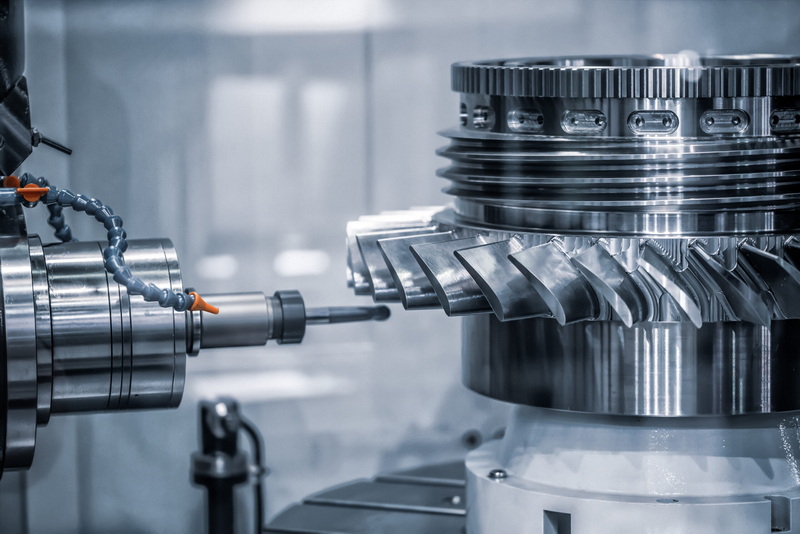
Despite these technical demands, CNC Machining becomes much easier when you work with experienced specialists and keep designs within a reasonable range. For many common brackets, housings, covers, blocks, and shafts, CNC Machining is a stable and highly repeatable process.
Several factors can make CNC Machining easier:
- Reasonable tolerances that match real functional needs instead of being overly tight without benefit.
- Clear drawings and 3D models with complete dimensions and tolerances.
- Good material selection, choosing alloys and plastics with proven CNC Machining performance.
- Early communication between designer and CNC Machining engineers to resolve issues before production.
Shangchen actively offers feedback to optimize designs for CNC Machining, helping clients avoid unnecessary complexity while maintaining function and appearance.
For many foreign brands and manufacturers, the biggest barrier to CNC Machining is investment and management, not technology itself. Modern CNC Machining equipment is expensive, and keeping it utilized, maintained, and properly staffed is a long‑term commitment.
Outsourcing CNC Machining to a factory like Shangchen provides:
- Lower capital risk: No need to purchase CNC Machining centers, metrology equipment, or tooling.
- Access to broad capabilities: Multi‑axis CNC Machining, turning, sheet metal, 3D printing, and mold making in a single supplier.
- Flexible capacity: Ability to ramp production up or down without worrying about internal machine load.
- Faster industrialization: Use of existing CNC Machining workflows, fixture libraries, and proven process windows to shorten lead time.
Instead of becoming a machining expert, your team can focus on product innovation and market growth while still using high‑quality CNC Machining in the background.
Shangchen positions CNC Machining at the core of a wider manufacturing ecosystem. This allows the company to support customers from early idea to stable mass production with a combination of technologies.
Main service areas include:
- CNC Machining for metal and plastic parts using 3‑axis, 4‑axis, and 5‑axis machining centers, plus CNC turning.
- Rapid prototyping with CNC Machining, 3D printing, and other methods to validate designs before investing in tooling.
- Precision batch and serial production for OEM customers that need ongoing supply of CNC Machining components.
- Sheet metal fabrication for enclosures, brackets, and frames, often combined with CNC Machining inserts or features.
- Mold manufacturing, where CNC Machining is used to create mold bases, inserts, and precision cores and cavities.
- Finishing and secondary operations such as anodizing, plating, painting, engraving, and light assembly.
Because all of these services connect around CNC Machining, Shangchen can coordinate processes, reduce handovers, and simplify sourcing for overseas clients.
CNC Machining is just one of several tools in modern manufacturing, and the “difficulty” of CNC Machining must be considered in context. It often offers a strong balance between precision, flexibility, and lead time.
Compared with other methods:
- CNC Machining vs. 3D printing: CNC Machining typically provides better mechanical properties, tighter tolerances, and superior surface finish in metals and many plastics. 3D printing is excellent for very complex shapes and very fast early prototypes but often needs CNC Machining for final functional parts.
- CNC Machining vs. casting or molding: CNC Machining is ideal for small to medium quantities, design changes, and high‑precision components. Casting and molding are better for very high volumes once the design is stable and tooling cost can be spread over many parts.
- CNC Machining vs. stamping and sheet processes: Stamping and forming are efficient for thin sheet parts in mass production, while CNC Machining excels at blocks, frames, and components with features that are not possible in simple sheet operations.
Shangchen evaluates each project and recommends the best mix of CNC Machining and other processes, so customers do not need to navigate all trade‑offs alone.
From the client's perspective, CNC Machining should feel simple: send drawings, confirm requirements, and receive parts that fit and function. Shangchen structures its workflow around this idea so that most of the complexity stays inside the factory.
Key ways Shangchen simplifies CNC Machining:
- Engineering communication: Early DFM feedback on drawings, materials, and tolerances to avoid unnecessary difficulty and cost.
- Transparent quotations: Clear cost breakdowns that show how CNC Machining parameters such as material, tolerance range, and batch size influence price.
- Process control: Standardized CNC Machining procedures, tool management, and inspection plans tailored to each part family.
- Quality documentation: Inspection reports, certificates, and traceability that help OEM customers integrate CNC Machining parts into their own quality systems.
- Long‑term support: Continuous optimization for recurring CNC Machining parts to reduce cycle time, improve yield, and stabilize supply.
Through this approach, CNC Machining becomes a reliable tool for your business rather than a source of uncertainty.
As production volumes grow, CNC Machining faces new challenges related to efficiency and consistency. High‑volume CNC Machining must maintain quality while keeping cycle times and costs under control.
Typical high‑volume CNC Machining issues include:
- Production speed: Balancing fast machining with tool life and part quality; overly aggressive parameters may increase scrap and downtime.
- Fixturing and setup: Designing modular fixtures to reduce changeover time and enable multiple parts to be processed in one setup.
- Data and programming: Managing large amounts of CNC Machining programs, revisions, and offsets while avoiding errors.
- Quality control: Implementing in‑process checks and statistical methods to stabilize dimensions over long runs.
Shangchen continuously refines processes and uses experience from many projects to manage these high‑volume CNC Machining challenges for OEM clients.
CNC Machining is inherently complex because it brings together advanced machines, digital programming, cutting tools, and precision measurement. For engineers and operators, mastering CNC Machining requires significant training, practice, and continuous improvement.
However, for brands, wholesalers, and manufacturers, CNC Machining does not need to be difficult. Partnering with a professional OEM factory like Shangchen (sc-rapidmanufacturing.com) allows you to leverage advanced CNC Machining, turning, sheet metal, 3D printing, and mold capabilities without carrying the technical and financial burden in‑house. By combining engineering support, integrated processes, and strict quality control, Shangchen makes CNC Machining a practical and powerful tool to turn your designs into high‑quality products for global markets.
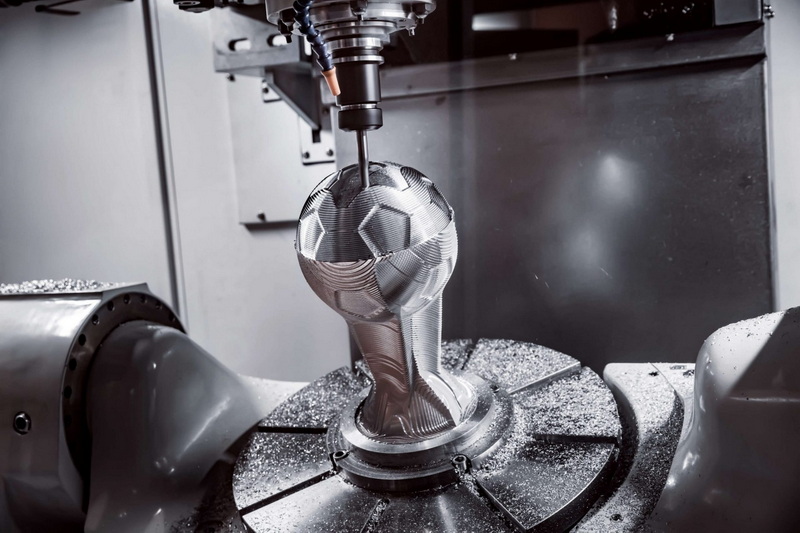
For beginners, CNC Machining is challenging because it involves understanding coordinate systems, G‑code, tooling, materials, and safety at the same time. New users must also learn how small changes in feeds, speeds, and fixturing can dramatically affect results. With proper training and mentorship the learning curve becomes manageable, but it still takes time to develop confidence and speed.
No. To work with Shangchen you mainly need clear drawings, 3D CAD files if available, and basic performance requirements such as material, quantity, and surface finish. Shangchen's engineers take care of process planning, CNC Machining programs, fixtures, and inspection, and they provide DFM feedback so you can adjust designs when necessary.
Standard industrial CNC Machining can often hold tolerances in the range of a few hundredths of a millimeter on many features when machines and setups are in good condition. With special processes, high‑precision equipment, and stable environments, even tighter tolerances are possible, but these often increase cost, cycle time, and inspection intensity.
Choose CNC Machining when you need strong, functional parts with accurate dimensions, tight fits, and good surface finish, especially in metals and engineering plastics. 3D printing is useful for fast conceptual models or complex internal structures, but CNC Machining is generally better for end‑use mechanical components, mating surfaces, and parts that must handle real load and wear.
Shangchen ensures quality by combining capable machines, controlled CNC Machining processes, and formal inspection methods. The team monitors critical dimensions, uses appropriate measuring tools, and documents results for each project. For OEM customers, Shangchen can follow specific standards, sampling plans, and reporting formats to integrate smoothly with their own quality systems.
[1](https://www.makerverse.com/resources/cnc-machining-guides/6-challenges-of-high-volume-cnc-machining/)
[2](https://www.3erp.com/blog/cnc-machining-challenges/)
[3](https://pathmachining.com/resources/articles/cnc-machining-oems-manufacturing-challenges/)
[4](https://www.reddit.com/r/AskEngineers/comments/176q13s/what_technical_challenges_prevent_steelcapable/)
[5](https://vertxmfg.com/cnc_challenges/)
[6](https://www.americanmicroinc.com/resources/advantages-limitations-cnc-machining/)
[7](https://www.pickenstech.org/blog/what-is-cnc-manufacturing/)
[8](https://www.practicalmachinist.com/forum/threads/challenge-to-machine-a-part.434467/)
[9](https://deburringtechnologies.com/xebec-guide-for-cnc-precision-manufacturing-overcome-obstacles-to-success/)
[10](https://www.manufacturingtomorrow.com/story/2024/05/the-manufacturing-talent-crunch-and-the-cnc-machining-knowledge-capitalization/22817/)

