
Views: 222 Author: Amanda Publish Time: 2025-12-29 Origin: Site


Content Menu
● What Is Google Ventures Rapid Prototyping?
● The Classic GV Sprint Structure
● Day-by-Day: How GV Uses Rapid Prototyping
>> Understand & Define (Day 1)
>> Decide & Storyboard (Day 3)
● Core Principles Behind GV Rapid Prototyping
● Tools and Media Used in GV Rapid Prototyping
● Why GV Rapid Prototyping Works for Startups
● Applying GV Rapid Prototyping to Hardware and Manufacturing
● How an External Factory Supports GV-Style Rapid Prototyping
● Best Practices for Running GV-Style Rapid Prototyping Sprints
● Using Rapid Prototyping Beyond the First Sprint
● Aligning Rapid Prototyping With Business Strategy
● Remote and Hybrid GV Rapid Prototyping
● How OEM Brands Benefit From GV-Style Rapid Prototyping
● FAQs
>> Q1. How long does a Google Ventures Rapid Prototyping sprint usually take?
>> Q2. Do GV Rapid Prototyping sprints need a fully functional product?
>> Q3. How many users are needed to test a Rapid Prototyping sprint prototype?
>> Q4. Can Google Ventures Rapid Prototyping be used for hardware products?
>> Q5. What skills are needed in a team to run GV Rapid Prototyping?
Google Ventures (GV) uses a structured Design Sprint process to achieve Rapid Prototyping in just a few days, turning abstract ideas into realistic prototypes that can be tested with real users. This approach compresses months of traditional product development into a focused week of Rapid Prototyping and user validation, dramatically lowering risk for startups and product teams.[1]
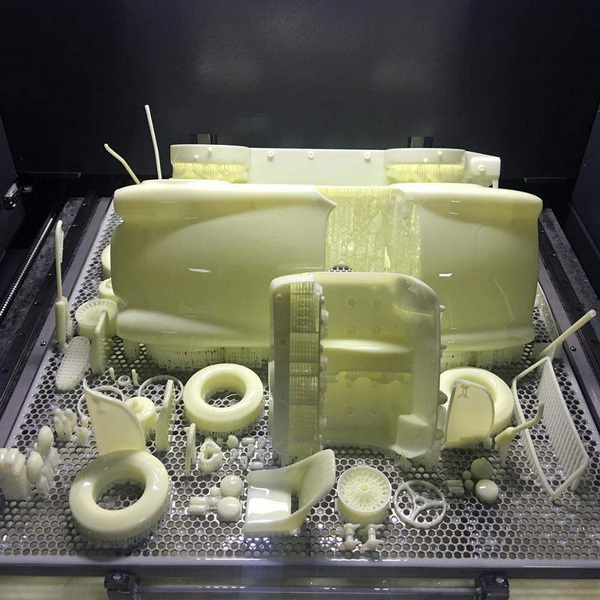
Rapid Prototyping at Google Ventures is centered on the Design Sprint, a time-boxed framework that moves from a problem to a realistic prototype and user feedback in 4–5 days. The goal is to use Rapid Prototyping to answer critical business questions quickly instead of building full products that might fail after months of investment.[2][1]
- GV Design Sprints combine strategy, design, Rapid Prototyping, and user testing into one integrated process.[1]
- A small, cross-functional team clears its schedule to focus completely on this Rapid Prototyping sprint.[2]
- The output is not a finished product but a high-fidelity prototype that looks real enough for target users to react to honestly.[2]
To illustrate the concept visually, teams often embed short explainer clips inside the sprint workspace to show how Rapid Prototyping will unfold day by day, helping stakeholders understand expectations before the sprint starts.[3]
Google Ventures originally defined a five-day sprint: Understand, Sketch, Decide, Prototype, and Test. Each day builds toward Rapid Prototyping so that by Thursday a realistic solution is on screen or on the table, and by Friday users are interacting with it.[1][2]
- Some updated versions describe six phases (Understand, Define, Sketch, Decide, Prototype, Validate), but Rapid Prototyping still concentrates on the second half of the sprint.[4]
- Variants like Design Sprint 2.0 condense the timeline while keeping the core Rapid Prototyping logic: define, generate many solutions, select, storyboard, prototype, and test.[5]
Teams frequently use internal dashboard screens to show a visual sprint schedule, with icons or short clips marking each day, helping everyone see how Rapid Prototyping fits into the whole week.[6]
On the first day, GV teams clarify the problem, business goals, and user journeys that Rapid Prototyping will later target. They map the customer experience, identify pain points, and set a clear sprint goal that Rapid Prototyping should help validate.[7][1]
- Activities include lightning talks, expert interviews, and user journey mapping to ensure the Rapid Prototyping effort focuses on the most critical moments of the experience.[7]
- The result is a shared understanding and a target area where Rapid Prototyping can deliver maximum learning in minimum time.[1]
A simple explanatory clip about journey mapping or customer interviews is often embedded in the team workspace, giving participants a quick refresher before workshops begin.[8]
On the second day, the team generates many competing solutions that will later feed into Rapid Prototyping. Individuals sketch user flows and interfaces on paper, focusing on key moments like onboarding, checkout, or core feature use.[2][1]
- Structured sketching exercises prevent groupthink and create multiple options for Rapid Prototyping.[2]
- Even at this stage, teams keep Rapid Prototyping in mind, drawing screens and interactions that can be stitched into a coherent prototype later in the week.[2]
Teams often record a quick overhead shot of sketches and share it in the sprint space, so remote stakeholders can see how ideas are evolving toward Rapid Prototyping.[3]
On Wednesday, GV teams converge on the best ideas and weave them into a storyboard that will guide Rapid Prototyping. Voting, dot stickers, and structured discussion help the team align on one solution path instead of diluting energy across many directions.[4][2]
- The storyboard usually shows 10–15 frames that map a realistic end-to-end user flow for Rapid Prototyping.[2]
- Every key interaction, screen, and content element is specified so that Rapid Prototyping can proceed without major open questions on the next day.[2]
Many GV sprint teams like to capture a quick walkthrough of the storyboard on video, so everyone can asynchronously review how the future prototype is supposed to behave.[3]
Thursday is where Google Ventures Rapid Prototyping comes to life: a realistic, testable model is built in one intense day. GV emphasizes that the prototype should create the illusion of a finished product, even though it is a disposable experiment.[1][2]
- GV calls this “Goldilocks quality”: the Rapid Prototyping output must look realistic enough that users focus on the idea, not on missing details, but not so polished that the team wastes time.[2]
- The team “fakes” functionality by linking screens, pre-loading data, and using carefully scripted interactions—classic Rapid Prototyping techniques that cut weeks off development.[2]
GV design partners often share demonstration clips showing how to use presentation software, design tools, or simple HTML mockups to build impressive Rapid Prototyping outcomes in a single day.[9]
On Friday, GV teams run one-on-one usability tests with real users interacting with the Rapid Prototyping output. The goal is to capture honest reactions, observe behavior, and confirm whether the prototype solves the defined problem.[1][2]
- Research guidelines often suggest five users as a good balance between depth and efficiency for Rapid Prototyping tests.[7]
- Sessions are recorded on video so stakeholders can watch users struggle or succeed with the Rapid Prototyping design, leading to clear next steps on Monday.[1]
Some teams also create highlight reels that stitch together the most important test moments, turning raw Rapid Prototyping data into a persuasive internal story for decision-makers.[10]
Google Ventures Rapid Prototyping is guided by a handful of principles that shape every sprint. These principles ensure Rapid Prototyping produces insight, not just attractive mockups.[1][2]
- Fake it, don't build it: Rapid Prototyping solves the learning problem with minimal engineering, avoiding sunk costs in features that might be discarded.[2]
- Build just enough to learn: The prototype should answer specific questions, not implement every edge case, keeping Rapid Prototyping lean and focused.[2]
- Time-box everything: Strict daily schedules and clear deliverables keep Rapid Prototyping moving, preventing endless debates.[1]
- Cross-functional collaboration: Designers, product leaders, engineers, and marketers all contribute so Rapid Prototyping reflects real constraints and opportunities.[4]
In many GV case studies, short documentary-style clips show teams following these principles in practice, giving other organizations a concrete model for Rapid Prototyping culture.[3]
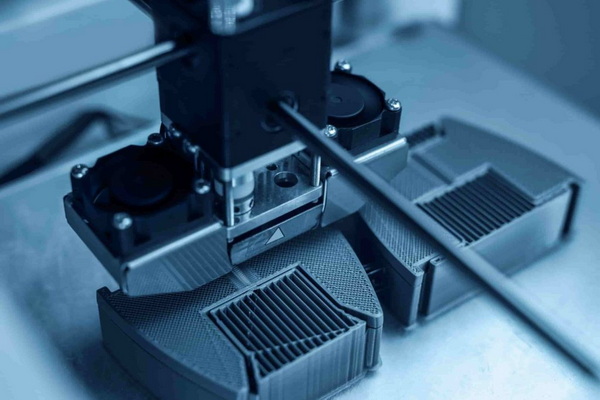
Google Ventures Rapid Prototyping is tool-agnostic, but certain patterns appear again and again across sprints. The key is speed: teams choose tools that allow Rapid Prototyping outputs to be created and changed quickly without heavy engineering.[2]
- For digital products, GV teams often rely on slide decks, design software, or simple HTML to produce clickable Rapid Prototyping flows.[2]
- For physical products, cardboard, foam, 3D prints, or simple mechanical rigs stand in for finished parts, enabling Rapid Prototyping in hardware, packaging, and devices.[4]
Sprint guides from GV frequently embed tutorial clips that show how to transition from sketches to interactive Rapid Prototyping assets in under a day, reinforcing the idea that perfection is not required.[11]
Startups typically face high uncertainty, limited budget, and intense time pressure, which makes Rapid Prototyping the perfect fit. GV Design Sprints give founders and product teams a way to validate ideas quickly before committing scarce resources.[12]
- By using Rapid Prototyping to test risky ideas in a week, teams can kill weak concepts early and double down on those that resonate with users.[12]
- The shared experience of building and observing a Rapid Prototyping solution aligns stakeholders and reduces political conflict over product direction.[2]
Videos from events like Google I/O and GV workshops show how Rapid Prototyping changed the trajectory of products in fields like fintech, health, and consumer apps.[3]
Although Google Ventures initially focused on digital products, the same Rapid Prototyping logic applies to hardware, enclosures, and mechanical parts. Instead of shipping fully engineered devices, teams build appearance models, functional rigs, and low-volume components that imitate the final experience.[4]
- A hardware sprint might combine on-screen Rapid Prototyping for the interface with physical shells produced by CNC machining, 3D printing, or sheet-metal fabrication.[4]
- Early iterations can be outsourced to specialized Rapid Prototyping factories that provide fast turnaround on plastic, metal, and mixed-material parts, enabling more cycles per month.[5]
In many hardware design sprint case stories, teams share short clips of unboxing and handling early models, showing how Rapid Prototyping parts help them capture real-world ergonomics and assembly issues before mass production.[3]
For global brands, wholesalers, and OEM product makers, partnering with a dedicated Rapid Prototyping factory makes GV-style sprints easier to run repeatedly. Instead of building internal machining and 3D printing capacity, teams can plug their sprint schedule into a supplier that already specializes in fast, precise physical parts.[5]
A full-service Chinese factory like Shangchen (sc-rapidmanufacturing.com) can support GV-style Rapid Prototyping through an integrated mix of services.
- Rapid prototyping of housings, brackets, fixtures, and functional parts to match digital sprint outputs with real components.
- CNC machining services for metals and plastics, delivering high-tolerance Rapid Prototyping parts that behave like production components.
- Precision batch production for bridge runs between sprint prototypes and full mass production.
- Lathe turning and turning-milling for shafts, connectors, and rotational parts used in Rapid Prototyping assemblies.
- Sheet-metal fabrication for panels, chassis, and frames that need to be evaluated in early Rapid Prototyping builds.
- 3D printing services for complex geometries, internal channels, and lightweight parts that must be tested quickly during Rapid Prototyping.
- Mold production for soft tooling and rapid injection samples once a sprint-validated design moves toward larger volumes.
By aligning sprint calendars with factory lead times, overseas OEMs can synchronize design reviews, on-site tests, and customer demos around a continuous Rapid Prototyping pipeline.
Organizations that adapt Google Ventures methods often refine them to match team size, product complexity, and market speed, but core Rapid Prototyping best practices remain consistent. These practices help teams avoid common pitfalls and get reliable learning from each sprint.[4][2]
- Define a clear, high-stakes problem that Rapid Prototyping will explore; avoid trivial topics that do not justify a sprint.[13]
- Choose participants who can decide and who understand constraints so Rapid Prototyping outputs are realistic and actionable.[4]
- Prepare logistics—research recruiting, recording setups, and prototyping tools—before the sprint so Rapid Prototyping days are not lost to setup and troubleshooting.[2]
- After testing, translate Rapid Prototyping insights into concrete next steps: iterate design, pivot concept, or green-light implementation.[5]
Many teams publish internal training clips that walk through these habits, building a culture in which Rapid Prototyping sprints are treated as strategic tools rather than one-off experiments.[14]
While GV made the five-day event famous, Rapid Prototyping becomes more powerful when teams treat it as a repeatable pattern rather than a one-time workshop. Product organizations increasingly schedule cycles of Rapid Prototyping at major decision points, such as new feature concepts, pricing experiments, or UX redesigns.[13][7]
- Running multiple sprints in a product's life lets teams use Rapid Prototyping to refine the same idea from rough concept to detailed interaction and then to market positioning.[13]
- Over time, teams build libraries of patterns, components, and test findings that make each new Rapid Prototyping sprint faster and more informed than the last.[7]
Many companies also introduce “mini-sprints” of one or two days that keep the spirit of Rapid Prototyping while fitting into busy calendars, especially for incremental improvements.[5]
Without strategic alignment, even elegant Rapid Prototyping outputs can fail to matter. GV emphasizes attaching every sprint and Rapid Prototyping effort to a measurable business risk, such as activation rate, retention, or revenue per customer.[10][13]
- Teams frame a hypothesis like “If we redesign onboarding using Rapid Prototyping insights, activation will increase by a specific percentage,” and then test it.[13]
- Decision-makers agree in advance how Rapid Prototyping results will influence roadmaps, which prevents stakeholders from ignoring user evidence when it contradicts intuition.[10]
This tight connection between business metrics and Rapid Prototyping outcomes turns design sprints into a core decision mechanism rather than a side project.[13]
As distributed work has grown, many teams have adapted GV methods to remote and hybrid formats while preserving Rapid Prototyping speed. Online whiteboards, video conferencing, and cloud design tools now support each step of the sprint.[7]
- Remote teams schedule shorter, high-energy sessions for mapping, sketching, and deciding, then use asynchronous work blocks for Rapid Prototyping.[7]
- User interviews are conducted via video calls, where participants interact with Rapid Prototyping mockups on shared screens or links, and sessions are easily recorded.[7]
These adaptations maintain the benefits of Rapid Prototyping while opening participation to stakeholders, experts, and customers in multiple regions and time zones.[14]
OEM brands, wholesalers, and industrial product makers can combine GV Design Sprints with manufacturing partners to bring Rapid Prototyping into their full product lifecycle. Instead of committing to large tooling investments, they can iterate through multiple physical and digital prototypes while still in the discovery phase.[5][4]
- Early industrial design, enclosure shapes, mounting features, and interface layouts can all be validated using Rapid Prototyping before engineering and certification.[4]
- When a concept proves successful in user tests, Rapid Prototyping gradually transitions into low-volume bridge production that supports pilot launches and field trials.[5]
This approach reduces time to market and improves the odds that each new OEM-branded product meets both functional requirements and user expectations on its first full launch.[13]
Google Ventures popularized a powerful approach to Rapid Prototyping by packaging design, decision-making, and user testing into a structured sprint that finishes in about a week. The heart of this approach is building realistic yet disposable prototypes that answer big questions quickly, before serious money is spent on engineering and tooling.[1][2]
By combining clear goals, cross-functional collaboration, and disciplined schedules, GV Design Sprints turn Rapid Prototyping into a repeatable habit rather than an occasional activity. When digital sprints are supported by manufacturing partners that can quickly produce CNC, sheet-metal, 3D-printed, and molded parts, global brands can extend this Rapid Prototyping mindset from software all the way to physical products and OEM supply chains.[5][1]
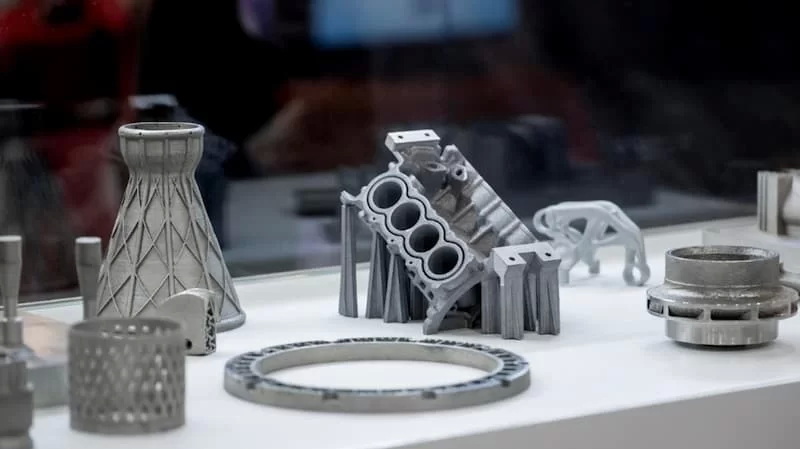
A classic GV Design Sprint for Rapid Prototyping typically runs for five consecutive days, from understanding the problem on Monday to user testing on Friday. Some newer variants compress certain phases but still keep Rapid Prototyping and validation within a one-week window.[5][1]
GV explicitly states that Rapid Prototyping does not require a fully functional product; the prototype is designed to appear real while being technically lightweight. Rapid Prototyping focuses on faking interactions and content just enough to test key assumptions with users.[2]
Most GV-style sprints rely on around five test users to evaluate Rapid Prototyping outputs, following UX research guidance on diminishing returns. This sample size is usually enough to reveal major usability problems and strong signals about product-market fit.[7]
Yes, GV methods can be applied to hardware by combining digital flows with physical Rapid Prototyping models, such as 3D prints, CNC-machined parts, and mockup enclosures. The same Rapid Prototyping principles—fake it, test it quickly, and learn before investing—still apply to devices, packaging, and mechanical systems.[4]
Effective GV Rapid Prototyping teams usually include a product or business decision-maker, a designer, an engineer, and sometimes marketing or customer support specialists. This mix ensures Rapid Prototyping outputs are desirable for users, feasible to build, and aligned with business goals.[4][2]
[1](https://www.gv.com/sprint/)
[2](https://zapier.com/blog/google-ventures-design-sprint/)
[3](https://www.youtube.com/watch?v=aWQUSiOZ0x8)
[4](https://www.designsprint.academy/blog/googles-design-sprint-evolution-a-deep-dive-into-their-methodology)
[5](https://designsprints.studio/design-sprint/)
[6](https://design.thoughtbot.com/sprint-guide/schedules/classic-gv/)
[7](https://webflow.com/blog/sprints-design)
[8](https://www.youtube.com/watch?v=MOKqb5_62Ws)
[9](https://www.youtube.com/watch?v=K2vSQPh6MCE)
[10](https://www.hunsicker.co/post/is-google-ventures-sprint-process-worthy-of-the-hype)
[11](https://www.youtube.com/watch?v=IGcwFV76t7o)
[12](https://www.userbrain.com/blog/google-ventures-design-sprint-startup/)
[13](https://www.thrv.com/blog/how-jobs-to-be-done-completes-your-google-ventures-design-sprint)
[14](https://design.google/library/design-sprints)

