
Views: 222 Author: Amanda Publish Time: 2025-12-04 Origin: Site


Content Menu
● About Shangchen CNC Machining Services
● What Really Determines CNC Machining Cost?
● Typical CNC Machining Hourly Rates
● Detailed Cost Factors in CNC Machining
>> Material Selection and Usage
>> Part Complexity and Geometry
>> Machining Time and Cutting Parameters
>> Production Volume and Economies of Scale
>> Surface Finish and Post‑Processing
● CNC Machining vs Other Manufacturing Options
● Why CNC Machining in China Is Often More Affordable
● How Shangchen Helps Reduce CNC Machining Costs
● Practical Tips to Get Better CNC Machining Pricing
● How Expensive Is CNC Machining—In Real Terms?
● FAQs
>> 1. How is CNC Machining cost usually calculated?
>> 2. Why do quotes from different CNC Machining suppliers vary so much?
>> 3. Is CNC Machining cheaper in China than in Europe or the USA?
>> 4. How can I reduce my CNC Machining cost without sacrificing quality?
>> 5. When is CNC Machining more cost‑effective than 3D printing or molding?
Shangchen (sc-rapidmanufacturing.com) is a China-based factory specializing in rapid prototyping, CNC Machining services, CNC turning, sheet metal fabrication, 3D printing, vacuum casting, and mold manufacturing for global OEM brands, wholesalers, and manufacturers. For overseas buyers asking “How expensive is CNC Machining?”, the honest answer is that CNC Machining cost depends on design, material, tolerances, machine type, volume, and the region where the work is done. By understanding these drivers and partnering with an integrated OEM supplier such as Shangchen, you can significantly reduce your CNC Machining budget while maintaining high quality and short lead times.
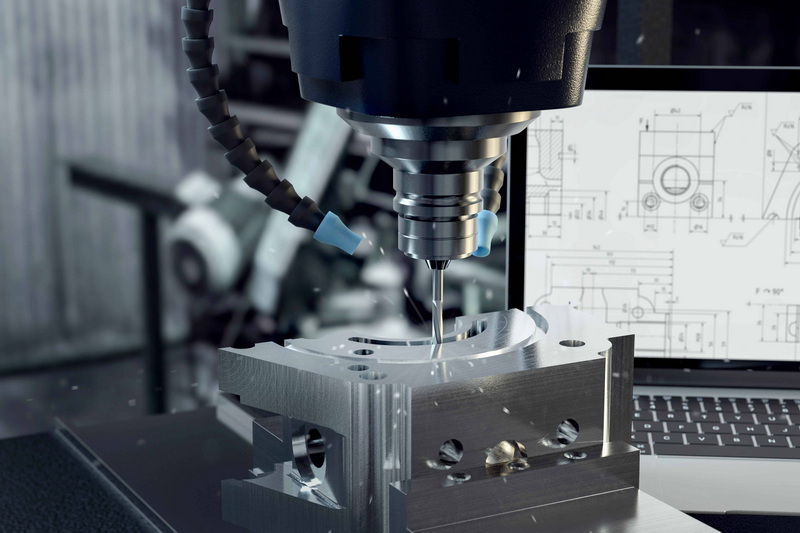
Shangchen (sc-rapidmanufacturing.com) provides end‑to‑end CNC Machining solutions, from rapid prototypes and small batches to long‑term precision production using CNC milling, CNC turning, and 5‑axis CNC Machining. The factory also integrates CNC Machining with sheet metal, 3D printing, and mold making, which allows global OEM customers to complete the entire project through one supplier instead of coordinating multiple vendors.
Shangchen focuses on both metal and plastic CNC Machining for industries such as automotive, aerospace, consumer electronics, medical devices, robotics, and industrial equipment. Overseas buyers benefit from flexible MOQ, fast DFM (Design for Manufacturability) feedback, and strict quality control, supported by advanced inspection equipment, experienced engineers, and export‑oriented project management.
CNC Machining cost is not just an hourly rate; it is the sum of multiple elements that are all influenced by your specific project. The most important cost items include raw material, machine setup and programming, machining time, labor, overhead, tooling consumption, and post‑processing such as surface finishing or assembly. Each item can vary widely depending on design complexity, material machinability, tolerances, and production volume.
Because of this, there is no universal “price per part” for CNC Machining that fits every scenario. A simple aluminum bracket with moderate tolerances may be very economical, while a complex titanium aerospace part with tight tolerances and multiple setups can be many times more expensive. Understanding how each cost component behaves is the key to answering the question “How expensive is CNC Machining?” in a realistic, project‑specific way.
Many CNC Machining suppliers translate their internal costs into an hourly “shop rate” for each type of machine. This rate usually includes the amortized purchase price of the machine, operator labor, programming, maintenance, utilities, rent, and a profit margin. Horizontal or vertical 3‑axis CNC Machining centers usually have lower hourly rates, while multi‑axis machining centers or high‑precision turning centers often have higher rates due to their complexity and investment cost.
In high‑cost regions, typical shop rates for CNC Machining can be quite high, especially for advanced multi‑axis equipment. In contrast, Chinese CNC Machining shops generally offer more competitive hourly rates because of more favorable labor and overhead structures and a very mature industrial ecosystem. This price gap is one of the main reasons many brands outsource CNC Machining and OEM production to China, using partners like Shangchen to balance cost, quality, and lead time.
Material is one of the most visible cost drivers in CNC Machining. Metals such as aluminum and common steels are often economical, while stainless steels, copper alloys, nickel alloys, and titanium can be significantly more expensive both to buy and to machine. Plastics like ABS, POM, and nylon are usually cheaper per kilogram, but may require different clamping and cutting strategies in CNC Machining.
Beyond the price per kilogram, material utilization also heavily affects CNC Machining cost. Parts that require removing a large volume of material from a solid block increase machining time and tool wear. Whenever possible, designing parts to start from near‑net shapes, or optimizing wall thickness and geometry, can reduce both raw‑material usage and CNC Machining cycle time.
Part geometry directly determines how challenging CNC Machining will be. Deep pockets, thin walls, tiny radii, small holes, undercuts, compound angles, and organic surfaces all add complexity to CNC Machining toolpaths and fixtures. Complex geometries can require more setups, more axes of motion, longer tools, and slower cutting parameters, all of which increase machining time and risk.
Multi‑surface 3D shapes and tight inside corners often need specialized tooling or 5‑axis CNC Machining, which pushes hourly costs higher. Conversely, parts with simpler profiles, consistent radii, and well‑thought‑out features are faster to program and cut. Therefore, when a designer asks “How expensive is CNC Machining for this part?”, the best answer often starts with “How complex is the geometry?”.
Tolerances strongly influence CNC Machining cost because they dictate both cutting strategy and inspection workload. Extremely tight dimensional tolerances, GD&T requirements, and close position or flatness callouts often force slower feed rates, more tool passes, and stricter process control. This not only extends CNC Machining time but also increases the likelihood of scrap and rework.
In addition, tight tolerances require more extensive in‑process and final inspection, sometimes using CMMs or other high‑precision measuring devices. If every feature is specified to aircraft‑grade precision even when it isn't functionally necessary, the cost of CNC Machining can be much higher than needed. A common cost‑saving strategy is to apply tight tolerances only to truly critical surfaces and loosen others to standard levels.
The type of machine used for CNC Machining—3‑axis mill, 4‑axis, 5‑axis, lathe, turn‑mill center—affects both the hourly rate and the complexity of setups. Multi‑axis machining centers can reduce the number of setups and allow more features to be cut in a single clamping, which can actually lower total time for very complex parts. However, these machines normally have higher acquisition and operating costs, so their base hourly rate is higher.
Setup time is another major component of CNC Machining cost. Each new part generally requires fixture design, part clamping, tool selection, tool length offset setting, program loading, and trial runs. For low‑volume CNC Machining jobs, setup time can be a large share of the total cost; for high‑volume production, the same setup time is spread over many parts, reducing the cost per piece.
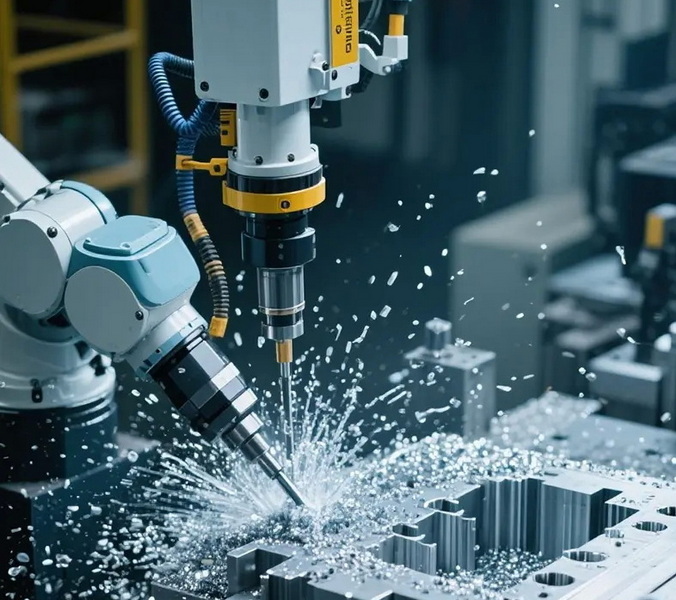
In CNC Machining, time truly is money: the longer the spindle runs, the more cost accumulates. Machining time is governed by cutting parameters such as spindle speed, feed rate, depth of cut, and toolpath strategy, all of which are limited by the material, tool, machine rigidity, and required surface quality. Harder materials and more delicate features require conservative cutting conditions, while soft materials and rigid setups allow more aggressive machining.
Efficient CAM programming and the use of modern toolpaths (for example, high‑speed trochoidal milling) can reduce CNC Machining time dramatically compared with outdated approaches. Proper selection of cutting tools and coolant strategies also helps, because better chip evacuation and heat management allow higher feeds and speeds without sacrificing tool life.
Cutting tools, inserts, holders, collets, coolant, and other consumables are often overlooked, but they contribute to CNC Machining cost in several ways. Hard‑to‑machine materials wear tools faster, increasing the number of tool changes and the cost of inserts or end mills. Specialized tools such as long‑reach cutters, custom form tools, or micro‑drills add direct cost and can slow operations because they are more fragile.
Tool management is critical to keeping CNC Machining economical. Good tool selection and optimized cutting parameters extend tool life and reduce downtime for tool changes. For long‑running mass production, even small improvements in tool life or cycle time can translate into major cost savings across thousands of CNC Machining cycles.
Production volume has a powerful effect on CNC Machining unit price. One‑off prototypes must carry the entire setup and programming cost on a single part, making the per‑piece price relatively high. As quantity increases, those fixed costs are divided across more units, so the CNC Machining price per part drops sharply.
Past a certain volume, it may be more cost‑effective to consider alternative processes like casting or molding with post‑machining. However, for many metal parts and complex geometries, CNC Machining remains competitive well into the thousands of units. For buyers, this means that asking for price tiers at different quantities is a smart way to understand how volume affects CNC Machining cost.
Desired surface finish and post‑processing steps also influence the total cost of CNC Machining. Fine finishes may require additional roughing and finishing passes, reduced feed rates, or special tooling, all of which increase machining time. After CNC Machining, many parts still need deburring, tumbling, polishing, bead blasting, anodizing, plating, painting, or laser marking.
Each post‑processing step adds direct cost and lead time, and some finishes demand particular base surface quality from the CNC Machining operation. When planning a budget, it is important to separate the pure CNC Machining cost from surface treatment and assembly, so you can see which part of the process is driving the final price.
When comparing CNC Machining with injection molding, die casting, forging plus machining, or industrial 3D printing, it is necessary to consider total project economics. CNC Machining stands out when you need high precision, good mechanical properties, and flexibility to change design without paying for new tooling. There is usually little or no upfront tooling cost, so CNC Machining is ideal for prototypes and small to medium‑size runs.
Injection molding, in contrast, demands substantial mold investment but offers very low per‑piece cost at large volumes for plastic parts. Die casting and forging excel at producing high‑volume metal parts, but they typically still require secondary CNC Machining for critical surfaces. Industrial 3D printing is powerful for highly complex or lightweight geometries, but material and machine costs can be relatively high, and tolerances may not match those achievable with CNC Machining. In practice, many successful OEM programs combine processes—for example, a molded or cast blank followed by selective CNC Machining on critical areas.
For overseas OEM brands, wholesalers, and manufacturers, sourcing CNC Machining in China often offers a strong balance of cost and quality. Competitive labor rates, high equipment density, and very mature supply chains for metals, plastics, tooling, and finishing all contribute to attractive CNC Machining prices. Chinese manufacturing hubs make it easy to connect CNC Machining with plating, anodizing, heat treatment, and logistics quickly and economically.
In addition, many Chinese CNC Machining factories are export‑oriented and familiar with international quality expectations, documentation, and shipping requirements. When you work with a partner like Shangchen that is used to handling global projects, you gain access to optimized CNC Machining processes and reliable logistics, which can lower both direct and indirect costs.
Shangchen focuses on cost optimization from the earliest stages of each CNC Machining project. By reviewing customer drawings and 3D models, Shangchen engineers provide DFM suggestions that simplify geometries, rationalize tolerances, and select cost‑effective materials without compromising function. This reduces CNC Machining cycle times, minimizes risk of deformation or chatter, and improves overall yield.
Because Shangchen integrates CNC Machining, CNC turning, sheet metal fabrication, 3D printing, and mold manufacturing, customers can manage mixed‑process projects through a single OEM partner. This consolidation reduces coordination overhead, packaging and shipping steps between separate suppliers, and time lost in communication gaps. The result is a shorter overall lead time and a lower total landed cost for CNC Machining‑based production.
From a buyer's perspective, the way you prepare and present your project has a direct impact on CNC Machining cost. Providing clean, accurate 3D CAD files and clear 2D drawings with only necessary tolerances allows the supplier to estimate machining time more precisely and avoid over‑engineering the process. When suppliers understand which surfaces are critical to function, they can focus CNC Machining resources efficiently instead of treating every feature as equally demanding.
It is also effective to ask for quotation breakdowns that separate CNC Machining, finishing, and assembly, so you can see where optimization will have the biggest effect. Being open to alternative materials, slightly adjusted radii, or minor dimension changes can unlock substantial savings without affecting performance. Finally, considering multiple quantity breaks helps you decide whether to adjust your order volume to benefit from lower per‑piece CNC Machining cost.
Putting all these elements together, CNC Machining may seem expensive when you look only at a unit price, especially for prototypes or very low volumes. However, CNC Machining eliminates or reduces tooling costs, supports rapid design iterations, and delivers high precision and excellent mechanical properties. When total project cost—including engineering time, risk of design changes, and product quality—is considered, CNC Machining often turns out to be a very cost‑effective solution.
For overseas OEM customers, working with a one‑stop supplier like Shangchen in China can further improve the cost equation. Competitive hourly rates, integrated services, and strong engineering support help ensure that CNC Machining not only fits within your budget but also accelerates your product development and time‑to‑market.
CNC Machining cost is driven by a combination of material, geometry, tolerances, machine type, volume, and post‑processing—not by a single flat rate. Designers and buyers who understand these factors can shape their projects in ways that reduce CNC Machining time, tooling wear, and scrap, while still meeting performance and quality requirements. This knowledge transforms the simple question “How expensive is CNC Machining?” into a structured cost‑engineering exercise.
For global brands, wholesalers, and manufacturers, partnering with Shangchen (sc-rapidmanufacturing.com) offers a practical path to cost‑effective CNC Machining. With integrated rapid prototyping, CNC Machining, turning, sheet metal, 3D printing, and mold making, Shangchen helps you move smoothly from concept to mass production while controlling costs, stabilizing quality, and shortening lead times. When leveraged correctly, CNC Machining becomes not just a cost, but a strategic asset in building competitive products and resilient supply chains.
CNC Machining cost is generally calculated by combining material price, setup and programming time, machine running time, tooling and consumables, labor, overhead, and any post‑processing. Many suppliers convert these into an internal hourly rate for each machine and then multiply by the estimated machining hours, adding material and finishing as separate line items. For customers, asking for a cost breakdown by these categories is the best way to understand and control the CNC Machining budget.
Quotes vary because each CNC Machining supplier has different labor costs, shop rates, machine capabilities, efficiency levels, and margin expectations. Factors such as factory location, degree of automation, engineer expertise, and included services (like detailed inspection reports or engineering support) can significantly change the final price. When you compare CNC Machining quotes, it is important to look beyond the number and check what level of quality, communication, and support is included.
In many situations, CNC Machining in China is cheaper on a per‑hour or per‑part basis than in high‑cost regions because of lower labor and overhead, dense supply chains, and strong competition among factories. However, the true comparison must also consider shipping costs, lead times, import duties, and the reliability of the supplier. Working with experienced export‑focused partners like Shangchen helps ensure that international CNC Machining projects achieve both cost savings and stable performance.
To reduce CNC Machining cost while maintaining quality, focus on simplifying geometries, using consistent radii, and avoiding unnecessary thin walls or deep pockets. Apply tight tolerances only to functional features and consider alternative materials that are easier and faster to machine. Collaborating with a capable CNC Machining supplier such as Shangchen during the design stage allows you to identify cost‑down opportunities—like consolidating parts, rethinking fixturing, or adjusting surface finish—before production begins.
CNC Machining is often more cost‑effective when you need metal parts, tight tolerances, high structural strength, or low‑to‑medium volumes where mold investment does not make sense. It is also attractive when you expect frequent design changes, because modifying a CNC Machining program is faster and cheaper than modifying a mold. For extremely complex geometries or very lightweight lattice structures, industrial 3D printing may be better, while for very high volumes of simple plastic parts, injection molding usually offers the lowest cost per unit—but CNC Machining remains essential for prototypes, tooling, and precision functional components.
[1](https://jlccnc.com/blog/the-true-cost-of-cnc-machining-services-what-are-the-main-factors-affecting-price)
[2](https://www.komacut.com/blog/how-much-does-cnc-machining-cost/)
[3](https://firstmold.com/tips/cnc-machining-costs/)
[4](https://www.steckermachine.com/blog/in-cnc-machining-you-get-what-you-pay-for-which-is-exactly-as-it-should-be)
[5](https://xometry.pro/en/articles/cnc-machining-cost/)
[6](https://www.scan2cad.com/blog/cnc/cnc-machining-costs/)
[7](https://okdor.com/6-factors-affect-cnc-turning-costs/)
[8](https://www.xometry.com/resources/machining/cnc-machining-cost-calculation/)
[9](https://sendcutsend.com/blog/cnc-machine-costs/)
[10](https://www.protolabs.com/en-gb/resources/blog/understanding-cnc-manufacturing-costs/)

