
Views: 222 Author: Amanda Publish Time: 2025-12-09 Origin: Site


Content Menu
● Shangchen: One-Stop Rapid Prototyping And Additive Partner
● Rapid Prototyping In The Product Lifecycle
● Where Additive Manufacturing Fits Inside Rapid Prototyping
● From Prototypes To End-Use Production
● Benefits Of Rapid Prototyping For OEMs
● Advantages And Limits Of Additive Manufacturing
● Hybrid Workflows: Additive, CNC, And Rapid Prototyping
● Design For Manufacturability In Rapid Prototyping
● Quality Control And Metrology In Rapid Prototyping
● Cost And Lead-Time Considerations
● When To Emphasize Rapid Prototyping Versus Additive Manufacturing
● How Overseas Brands Work With Shangchen
● FAQ
>> 1. Is Rapid Prototyping the same as additive manufacturing?
>> 2. Why do OEMs rely so much on Rapid Prototyping?
>> 3. When should additive manufacturing be used for end-use parts?
>> 4. How does Shangchen support Rapid Prototyping projects?
>> 5. What should buyers consider when choosing a Rapid Prototyping partner?
Additive manufacturing and Rapid Prototyping are closely related but not identical: additive manufacturing is a family of layer‑by‑layer production processes, while Rapid Prototyping is a broader development strategy that uses multiple processes to create prototypes quickly. Understanding the difference helps brands choose the right partner and technology for both early design validation and final part production.[1][2][3][4]
Shangchen (sc-rapidmanufacturing.com) is a China-based OEM factory providing Rapid Prototyping, CNC machining, precision batch production, CNC turning, sheet metal fabrication, 3D printing, vacuum casting, and mold manufacturing for overseas brands, wholesalers, and industrial manufacturers. Global customers rely on Shangchen to combine Rapid Prototyping and additive manufacturing with subtractive machining and tooling, so they can move from concept prototypes to stable mass production under one roof.[5]
To help engineering and purchasing teams visualize the workflow, many project introductions at Shangchen are supported by step‑by‑step process breakdowns, surface‑finish close‑ups, and machining sequence explanations that show how Rapid Prototyping and additive manufacturing are integrated for a given part. Overseas buyers often receive detailed online walkthroughs of sample parts, highlighting dimensional inspection, assembly checks, and material comparisons to support faster technical decisions and more confident supplier approval.[3][6][7]
Additive manufacturing is defined in international standards as a group of technologies that join material layer upon layer to create parts from 3D model data, in contrast to subtractive methods such as machining. These processes include polymer, metal, and composite systems that can produce functional components for end‑use applications as well as prototypes.[8][9][10][11]
Rapid Prototyping is a set of techniques used to create physical prototypes quickly so designers and engineers can test ideas, validate performance, and refine geometry early in the product development cycle. Rapid Prototyping can use additive manufacturing, CNC machining, casting, or hybrid routes, depending on the accuracy, material, and mechanical needs of the prototype.[2][4][12][1]
Additive manufacturing is fundamentally a fabrication process: it describes how material is added, typically layer by layer, to build a part directly from CAD without intermediate tooling. It is used both for one‑off components and for serial production where the technology and material meet end‑use requirements.[5][9][11][8]
Rapid Prototyping, by contrast, describes an application or goal: building prototypes fast to support design decisions, independent of the specific technology used. In practice, Rapid Prototyping may involve additive manufacturing for complex shapes, CNC machining for tight tolerances, or sheet metal processes for enclosure samples, all chosen pragmatically by the engineering team.[12][1][2][3]
Shangchen uses this distinction to design development plans where additive manufacturing is selected for parts with internal channels or organic forms, while CNC Rapid Prototyping is used for critical interfaces, mounting points, and sealing surfaces. This process‑versus‑application mindset ensures that every prototype is built with the most suitable method rather than forcing a single technology onto every part.[13][14][3]
Rapid Prototyping accelerates early‑stage concept exploration by allowing teams to build and test multiple physical variants before committing to expensive tooling. This shortens iteration loops, supports better communication among design, engineering, and marketing teams, and helps align the product with real user expectations.[4][6][7][3]
As designs mature, Rapid Prototyping shifts toward functional and pre‑production prototypes that closely mimic final materials and manufacturing processes. These prototypes enable performance testing, regulatory validation, and pilot builds, reducing risk before launching full‑scale production.[7][15][3][12]
Shangchen often structures Rapid Prototyping in phases: visual models for appearance and ergonomics, functional Rapid Prototyping parts for mechanical tests, and process‑representative samples for manufacturability checks and pilot assembly runs. Throughout these phases, engineering teams review tolerance stacks, assembly forces, and durability data to qualify the design before freezing it for tooling and volume production.[3][7][12]
Additive manufacturing is one of the most powerful tools inside the broader Rapid Prototyping toolbox because it can generate highly complex geometries without tooling, with minimal setup time. Engineers use additive processes for early form and fit models, internal fluid channels, lattice structures, and low‑volume functional parts where conventional methods would be slower or more expensive.[11][16][17][5]
However, not all Rapid Prototyping relies on additive manufacturing. For high‑precision metal parts, tight tolerances, or specific surface finishes, Rapid Prototyping might instead use high‑speed CNC machining, turning, or sheet metal fabrication to deliver prototypes that match the final process more closely.[14][2][12][13]
Shangchen supports this hybrid approach by offering polymer and metal additive processes side by side with CNC milling, turning, and sheet metal bending, so customers can choose the optimal Rapid Prototyping route per part. Many customer project overviews compare additive and subtractive Rapid Prototyping results for the same design, highlighting trade‑offs in accuracy, wall thickness, surface appearance, and cost per iteration.[16][13]
Historically, Rapid Prototyping was used primarily for visual or fit models, while production relied on casting, molding, or machining. Today, additive manufacturing has matured to the point where some polymer and metal systems can produce final‑use parts directly, eliminating tooling and enabling digital inventories with on‑demand production.[10][1][5][14]
This means additive manufacturing spans both Rapid Prototyping and end‑use manufacturing: in early stages it provides quick prototypes, and later it can serve as a full production method for suitable geometries and materials. Rapid Prototyping, in contrast, always maintains its focus on learning and iteration rather than on long‑run output, even when using identical machines and materials to production.[15][17][3][11]
Shangchen helps OEMs plan this transition by evaluating part families and deciding which components can remain on additive manufacturing for long‑term production and which should migrate into injection molds, pressure die casting, or multi‑axis CNC machining once demand increases. This staged approach allows customers to launch products quickly using Rapid Prototyping and additive manufacturing, then scale into cost‑optimized processes when volumes justify the investment.[5][12][16]
Rapid Prototyping dramatically reduces time‑to‑market by enabling more frequent design build–test–learn cycles early in development. This reduces the probability of discovering critical design problems only after tooling is built, saving both time and capital.[3][4][7][15]
Rapid Prototyping also improves cross‑functional collaboration because physical models make it easier for engineers, industrial designers, marketing teams, and end users to align around a shared, tangible target. For OEM buyers, integrating Rapid Prototyping into the sourcing strategy yields better technical specifications and fewer late‑stage engineering changes.[6][7][12][3]
Shangchen frequently supports customers with series of Rapid Prototyping builds that reflect incremental design changes, allowing teams to compare different versions side by side and collect feedback from stakeholders and pilot users. This structured iteration process reinforces evidence‑based design decisions, which ultimately simplifies qualification of the final product and reduces the risk of costly redesigns after launch.[7][15][3]
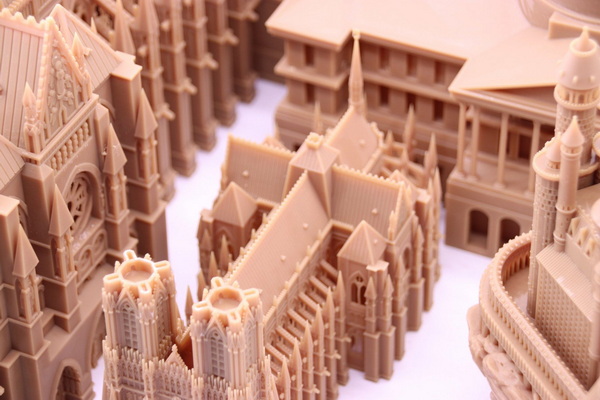
Additive manufacturing offers unmatched freedom for complex, organic, and topology‑optimized shapes, including internal channels and lattice structures that are difficult or prohibitively expensive to machine. It also minimizes material waste by using only what is required to build each part, which is particularly attractive for high‑value metals and specialty polymers.[5][8][11][16]
However, additive manufacturing can be slower per unit than high‑volume forming or machining processes, and not all materials or surface finishes available in traditional manufacturing are easily matched. In many industries, quality standards, mechanical properties, and cost per part still favor casting, molding, or CNC for medium‑ to high‑volume production once Rapid Prototyping is complete.[17][8][10][16]
Shangchen addresses these limitations by treating additive manufacturing as part of a broader technology matrix: additive is used where it offers clear geometric or lead‑time benefits, while conventional machining and tooling are used where repeatability, speed, and unit cost are critical. During project reviews, customers examine sample parts made by different processes and review property data and finishing options, helping them define where additive manufacturing should remain a Rapid Prototyping tool and where it can extend into production.[13][16]
The most powerful approach for modern OEMs is often a hybrid Rapid Prototyping workflow that blends additive manufacturing with CNC machining, turning, and sheet metal fabrication. Teams may start with additively manufactured form models, then move to CNC Rapid Prototyping for functional testing in production‑like materials, and finally into tooling‑based processes for volume.[6][12][13][3]
Shangchen's service model is designed around this hybrid concept: a single engineering team coordinates additive processes, Rapid Prototyping via CNC, sheet metal samples, and mold design to ensure consistent tolerances and material behavior across every stage. For complex assemblies, project engineers often validate interfaces using Rapid Prototyping parts produced by mixed methods, ensuring that snap‑fits, seals, and fasteners work reliably before committing to tooling.[15][3]
A key advantage of Rapid Prototyping is that it allows design for manufacturability (DFM) feedback to be incorporated early, while the design is still flexible. By building prototypes with processes similar to the eventual production route, engineers can discover which features are difficult or costly to manufacture and adjust them before releasing drawings.[4][7][12][3]
Shangchen's engineers routinely review customer models and propose DFM improvements such as adjusting wall thicknesses, adding draft angles for molds, simplifying undercuts, or modifying fillets and radii to suit specific cutting tools. When Rapid Prototyping parts are built with these recommendations applied, customers see tangible evidence of improved manufacturability and can update their internal standards accordingly.[12][13][3]
As Rapid Prototyping becomes more integrated into formal development processes, quality control and metrology also become more important. Dimensional inspection, surface roughness checks, and basic mechanical testing on Rapid Prototyping parts help ensure that results are representative of what can be achieved in production.[7][8][10][4]
Shangchen supports this requirement with measurement reports, inspection summaries, and, where needed, comparative data between Rapid Prototyping parts and later production samples. This data‑driven approach gives OEMs confidence that decisions made at the Rapid Prototyping stage will remain valid once they move into volume manufacturing.[10][3][7]
In Rapid Prototyping, the focus is usually on total development cost and speed rather than on the lowest possible unit price. Additive manufacturing often wins in the earliest stages because it eliminates tooling and setup complexity, even if the per‑part cost is higher than machined or molded equivalents.[15][16][3][5]
As designs stabilize and volumes rise, the economics shift toward CNC machining, casting, and molding, where larger batches amortize setup and tooling costs. A balanced Rapid Prototyping strategy uses additive manufacturing where it saves time and risk and then transitions to conventional processes when volumes and design maturity justify that move.[13][14][3][12]
Shangchen helps customers understand this transition with cost and lead‑time comparisons that show how many Rapid Prototyping iterations are sensible before freezing the design and launching tooling. This transparency enables purchasing and engineering teams to agree on clear criteria for when to remain in Rapid Prototyping mode and when to commit to long‑term manufacturing investments.[3][7][12]
Aspect | Additive manufacturing | Rapid Prototyping |
Core idea | Layer-by-layer process that joins materials to build parts from 3D model data. | Strategy and set of techniques to create physical prototypes quickly for design validation. |
Scope | Used for prototypes and end-use production components. | Focused on prototypes and learning, not on long-run production as such. |
Technologies | Polymer, metal, and composite three-dimensional build systems. | Additive, CNC machining, casting, sheet metal, and hybrids. |
Main benefit | Freedom of geometry and minimal tooling, enabling complex shapes. | Fast iteration, reduced risk, and better product-market fit. |
Typical users | OEMs needing complex parts, spare parts, or low-volume production. | Design and engineering teams across all industries during development. |
Role at Shangchen | One of the core production and prototype options for complex geometries. | Overall development framework combining additive, CNC, sheet metal, and tooling. |
Companies should focus on Rapid Prototyping when the main objective is to learn quickly, explore multiple design directions, and de‑risk the product before investing in tooling and supply chains. Here, the choice of technology is flexible, and factors like cost‑per‑iteration, feedback speed, and ease of modification matter more than pure unit price.[3][4][7][12]
Additive manufacturing becomes the central discussion when part geometry, customization needs, or supply‑chain strategy suggest producing final parts digitally rather than through traditional methods. That decision depends on material properties, certification requirements, and long‑term cost models, not just on the needs of Rapid Prototyping.[8][5][16][17]
Shangchen helps overseas OEMs make this distinction by presenting scenarios where Rapid Prototyping continues with conventional machining, while additive manufacturing is reserved either for early prototypes or, in other cases, extended into low‑volume production of complex parts. Scenario planning often includes cost projections, lead‑time estimates, and risk assessments to show how each route performs across the product lifecycle.[12][16][3]
Overseas brands, wholesalers, and manufacturers usually begin by sending 3D models and basic requirement documents, after which Shangchen recommends a Rapid Prototyping plan that specifies which components should use additive manufacturing and which should use CNC or sheet metal. This first phase often includes a series of concept and functional prototypes that are documented through online technical sessions and inspection reports, giving customers full visibility into each Rapid Prototyping iteration.[4][6][3]
Once Rapid Prototyping has confirmed the design, Shangchen can support customers in transferring to batch production using multi‑axis CNC machining, turning, stamping, and custom mold fabrication, still keeping additive manufacturing available for future engineering changes or spare‑parts strategies. Many customers maintain ongoing Rapid Prototyping streams for new variants while regular production runs continue from the same partner, simplifying communication and quality control.[5][12][3]
Additive manufacturing and Rapid Prototyping are interlinked but distinct: additive manufacturing is a family of layer‑by‑layer production processes, while Rapid Prototyping is a broader strategy that uses those processes—together with CNC, sheet metal, and tooling—to accelerate learning and reduce risk in product development. Successful OEMs use additive manufacturing as one tool among many inside their Rapid Prototyping workflows and then choose the right mix of processes for end‑use production based on performance, cost, and regulatory needs.[1][2][5][3]
For overseas brands, wholesalers, and manufacturers, working with Shangchen (sc-rapidmanufacturing.com) means having a single technical partner that understands both the Rapid Prototyping mindset and the full spectrum of additive, subtractive, and tooling technologies. By combining fast, flexible Rapid Prototyping with robust production capabilities, Shangchen helps customers move from first concept through validation to stable mass production with shorter lead times, lower overall risk, and higher product quality.[12][3]
No. Rapid Prototyping is a product‑development approach that uses various processes to build prototypes quickly, while additive manufacturing is a specific group of layer‑by‑layer fabrication technologies that can be used for both prototypes and final parts. Additive processes are often a key enabler of Rapid Prototyping, but Rapid Prototyping also includes CNC machining, casting, and sheet metal methods.[14][2][1][3]
OEMs rely on Rapid Prototyping because it enables faster iterations, early detection of design flaws, and more accurate validation of performance and user experience before committing to expensive tooling. This leads to reduced development costs, shorter time‑to‑market, and products that better match customer needs.[6][7][15][3]
Additive manufacturing is best suited for end‑use parts when the geometry is complex, the required volumes are relatively low or variable, or when customization and digital inventory provide strategic advantages. In such cases, the benefits in flexibility and design freedom can outweigh limitations in speed, surface finish, or material choice compared with traditional processes.[5][8][16][17]
Shangchen supports Rapid Prototyping by combining additive manufacturing, CNC machining, turning, sheet metal fabrication, vacuum casting, and mold design under one project team for overseas OEMs. Customers receive coordinated engineering feedback, prototype planning, and process recommendations that help them evolve from early concept Rapid Prototyping to reliable volume production efficiently.[3]
Buyers should look at the range of processes offered (additive, CNC, sheet metal, molds), engineering support capabilities, quality systems, communication responsiveness, and experience with international OEM standards. A partner such as Shangchen, which integrates Rapid Prototyping with full‑scale manufacturing, can simplify supplier management and reduce risk throughout the entire product lifecycle.[10][12][5]
[1](https://www.tth.com/blog/what-is-the-difference-between-3d-printing-additive-manufacturing-and-rapid-prototyping)
[2](https://www.hlhprototypes.com/what-are-the-different-types-of-rapid-prototyping/)
[3](https://www.openbom.com/blog/rapid-prototyping-accelerating-new-product-development)
[4](https://www.autodesk.com/solutions/rapid-prototyping)
[5](https://luxcreo.com/what-is-3d-printing-additive-manufacturing-and-rapid-prototyping-lc/)
[6](https://avidpd.com/prototyping/how-rapid-prototyping-with-3d-printing-is-transforming-product-development-at-every-stage/)
[7](https://www.gtvinc.com/the-importance-of-rapid-prototyping-in-the-product-development-lifecycle/)
[8](https://blog.ansi.org/ansi/additive-manufacturing-standards-iso-astm-3d/)
[9](https://www.iso.org/obp/ui/)
[10](https://www.astm.org/products-services/standards-and-publications/standards/additive-manufacturing-standards.html)
[11](https://wohlersassociates.com/terminology-and-definitions/additive-manufacturing/)
[12](https://xometry.pro/en/articles/rapid-prototyping-manufacturing/)
[13](https://www.datron.com/resources/blog/rapid-prototyping-subtractive-vs-additive/)
[14](https://www.cmac.com.au/blog/difference-between-3d-printing-rapid-prototyping)
[15](https://www.stratasys.com/en/resources/blog/key-advantages-of-rapid-prototyping/)
[16](https://nstxl.org/using-additive-manufacturing-for-rapid-prototyping/)
[17](https://www.padtinc.com/2012/11/05/3d-printing-rapid-prototyping-additive-manufacturing-what-is-the-difference/)

