
Views: 222 Author: Amanda Publish Time: 2025-09-01 Origin: Site


Content Menu
● Introduction to CNC Lathe Turning
● The Technology Behind CNC Lathe Turning
● How CNC Lathe Turning Enhances Product Quality
>> Precision and Tight Tolerances
>> Consistent Material Properties
>> Ability to Handle Complex Geometries
● Ensuring Consistency with CNC Lathe Turning
>> Streamlined Workflow with Digital Integration
>> Scalability for Batch Production
● CNC Lathe Turning Applications in Manufacturing
● Best Practices to Maximize CNC Lathe Turning Benefits
>> Regular Machine Calibration and Maintenance
>> Skilled Programming and Simulation
>> Tool Selection and Maintenance
>> Process Optimization and Continuous Improvement
>> Use of High-Quality Raw Materials
● FAQ
>> 1. What is CNC Lathe Turning?
>> 2. How does CNC lathe turning ensure product consistency?
>> 3. What industries benefit most from CNC lathe turning?
>> 4. Can CNC lathe turning handle complex part geometries?
>> 5. What are the key maintenance practices for CNC lathe machines?
In today's competitive manufacturing industry, ensuring product quality and consistency is paramount to meeting client demands and maintaining a reputable brand image. Among the many advanced machining processes, CNC lathe turning stands out as a critical technology that significantly enhances product quality while delivering consistent results. This article explores in depth how CNC lathe turning improves manufacturing outcomes, the technologies involved, and practical advantages for businesses, particularly in sectors reliant on precision machining.
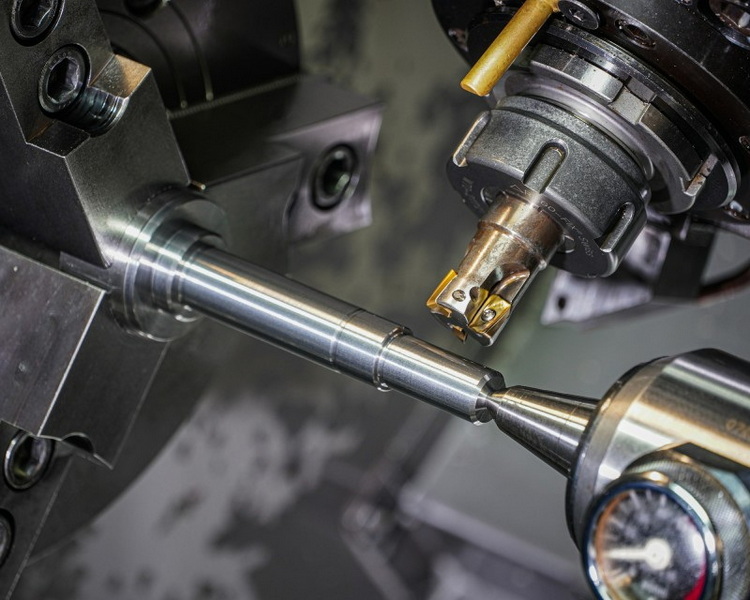
CNC Lathe Turning is a subtractive manufacturing process where a cutting tool removes material from a rotating workpiece to create parts with precise dimensions and smooth finishes. Unlike manual lathe operations, CNC (Computer Numerical Control) utilizes computer programs to control machine movements with extreme accuracy and repeatability.
This technology is widely used in industries such as automotive, aerospace, electronics, and medical device manufacturing. At our factory, Shangchen, we leverage CNC lathe turning to deliver high-quality prototypes, precision batch production, and OEM services for international brands.
The core of CNC lathe turning lies in advanced mechanical design and software integration. Here is an overview of its main components:
- Computer Numerical Control (CNC) System: The "brain" that reads the digital design files (G-code) and controls tool paths.
- Spindle and Chuck: Rotates the workpiece at programmed speeds ranging from a few hundred to several thousand RPM.
- Cutting Tools: These are precisely positioned to shape the rotating material.
- Servo Motors and Linear Guides: Ensure exact positioning of tools based on programmed coordinates.
- Sensors and Feedback Systems: Continuously monitor machine parameters for real-time adjustments.
Together, these components allow for:
- High precision machining with tolerances often below microns.
- Automated multi-step machining without human intervention.
- Flexibility to switch between jobs rapidly through software adjustments.
The advancement in software, such as CAD/CAM integration and simulation tools, plays an essential role in CNC lathe turning operations. They enable engineers to create optimized machining strategies beforehand, avoiding costly trial-and-error on the shop floor.
One of the most significant quality advantages of CNC Lathe Turning is the level of precision achieved. The ability to control cutting tools with mathematical accuracy ensures every component meets exact specifications. This reduces human error and produces parts that fit and function perfectly in assemblies. For example, in aerospace or medical device manufacturing, even the slightest dimensional deviation can lead to product failure or safety risks. CNC lathe turning mitigates these issues by consistently achieving tight tolerances.
Through optimized tool paths and controlled cutting parameters, CNC lathe turning creates fine surface finishes critical for components requiring minimal post-processing. Surface smoothness directly affects functionality, especially in parts subject to friction or sealing. Practices such as using sharp cutting tools, applying optimal feed rates, and controlling spindle speeds ensure the finished product minimizes roughness and defects.
By carefully programming cutting speeds, feeds, and tool engagement, CNC lathe turning prevents overheating and material stresses, preserving the integrity of the workpiece material. Thermal damage or work hardening can compromise product strength and durability. CNC machining's controlled environment helps maintain consistent microstructures, important for parts made from metals like titanium, stainless steel, or aluminum alloys.
CNC lathe turning can execute complex contours, threads, grooves, and tapers that would be challenging with manual machining. This capability improves product design scope and innovation without compromising precision. Complex designs that integrate functional grooves or multiple diameters along a single workpiece can be accurately produced without additional secondary operations.
Manual lathe turning depends heavily on the operator's skill, which introduces variability and potential mistakes. CNC controls remove much of that variability, automating machining paths and critical functions. This drastically reduces the chances of defects caused by inconsistent setups or operator fatigue.

Once a program is written and validated, it can be reused indefinitely to produce parts with the same exact specifications. This means less variation between units and improved reliability. For OEM manufacturers, this kind of repeatability is essential for maintaining brand standards and fulfilling orders in high volumes.
Many modern CNC lathes are equipped with in-process inspection systems that measure critical features during machining. These can include laser scanners, touch probes, or vision systems that verify dimensions without removing the part from the machine. If deviations are detected, the machine can adjust toolpaths dynamically or alert operators, preventing defective parts from continuing down the line.
Manual setups are prone to inconsistencies caused by operator differences. CNC setups, using precise fixtures and digital calibration, ensure each batch starts with identical parameters. Some setups are even fully automated with robotic loading, further enhancing repeatability and throughput.
CNC lathe turning integrates seamlessly with other digital manufacturing processes like CAD/CAM, enabling quick transitions from design changes to production, with minimal downtime and errors. Design iterations can be uploaded as new programs instantaneously, allowing companies to respond rapidly to market needs. Digital records also improve traceability and quality documentation.
Manufacturers can scale production up or down without re-training operators or resetting machines extensively. This flexibility allows efficient use of resources, reducing inventory costs and lead times while maintaining quality consistency.
Precision shafts, bushings, camshafts, and gears require high strength and dimensional accuracy. CNC lathe turning ensures these parts meet stringent specifications for performance and safety in vehicles.
Small, intricate parts used in devices, such as connectors or housings, demand exact tolerances and smooth finishes. CNC turning can achieve these without damaging delicate materials.
Surgical instruments, implants, and diagnostic components need biocompatibility and precise dimensions. CNC lathe turning's ability to produce highly accurate and clean parts supports strict regulatory requirements.
Components such as engine parts, fasteners, and structural elements require exacting standards and traceability. CNC turning produces parts able to withstand extreme conditions with stringent certification.
CNC lathe turning manufactures durable parts for household appliances, power tools, and lifestyle products in high volumes with consistent quality.
Industrial equipment components like rollers, shafts, and bushings benefit from CNC lathe turning for longevity and fit into large assemblies.
Maintaining the mechanical precision of CNC lathes through routine calibration ensures accuracy doesn't degrade. Preventive maintenance avoids unexpected downtime and costly repairs.
Experienced programmers optimize toolpaths to reduce machining time, minimize tool wear, and prevent defects. Running simulations virtually before actual cutting helps avoid collisions and inefficiencies.
Using appropriate cutting tools matched to material type improves quality and tool life. Tools must be regularly inspected and replaced when worn to prevent surface damage and dimensional drift.
Data from machining jobs, including cycle times and scrap rates, should be analyzed routinely to identify improvement opportunities. Integrating feedback loops accelerates quality enhancement and cost savings.
Starting with consistent and certified materials enhances machining results and product reliability.
Temperature and humidity control in the machining environment can reduce thermal expansion and dimensional variation during CNC lathe turning.
In conclusion, CNC Lathe Turning revolutionizes precision machining by elevating product quality and ensuring remarkable consistency. Its ability to combine automation, precision, and flexibility makes it indispensable for modern manufacturing environments. For businesses seeking to expand their OEM services and meet rigorous quality standards, CNC lathe turning provides the technological backbone to deliver superior products efficiently and repeatedly.
By optimizing every stage from programming, machine setup, process control, and quality inspection, manufacturers like Shangchen can ensure that customers receive products meeting or exceeding their exacting demands. The adoption of CNC lathe turning not only improves dimensional accuracy and surface finishes but also ensures operational efficiency and scalability. In an increasingly global production chain, CNC lathe turning is a fundamental process to maintain competitiveness and grow business through quality and consistency.

CNC Lathe Turning is a computer-controlled machining process where a rotating workpiece is shaped with stationary cutting tools. It offers precision, automation, and the ability to produce complex parts consistently.
By using pre-programmed tool paths and automated setups, CNC lathes reproduce the same operations with minimal variation, enhanced by in-process quality monitoring.
Industries like automotive, aerospace, electronics, medical devices, and consumer appliances utilize CNC lathe turning for its precision and batch production capabilities.
Yes, CNC lathes can create intricate shapes such as threads, tapers, and grooves accurately, making them suitable for complex design requirements.
Regular calibration, tool inspection and replacement, lubrication, and software updates ensure optimal performance and sustained product quality.

