
Views: 222 Author: Amanda Publish Time: 2025-12-29 Origin: Site


Content Menu
● From Prototype to Mass Production: The Big Picture
● Why Rapid Prototyping Matters for Production
● Using Rapid Prototyping to Validate Design
● Rapid Prototyping and Design for Manufacturability (DFM)
● Rapid Prototyping for Material and Process Selection
● Rapid Prototyping via CNC Machining
● Rapid Prototyping via 3D Printing
● Rapid Prototyping for Sheet Metal and Enclosures
● Rapid Tooling and Bridge Tooling: The Real Production Bridge
● Pilot Runs and Low-Volume Production Using Rapid Prototyping
● Scaling Rapid Prototyping Methods into Production
● Quality Control and Validation Through Rapid Prototyping
● Digital Collaboration and Documentation in Rapid Prototyping
● How Rapid Prototyping Partners Support Mass Production
● Practical Strategies to Integrate Rapid Prototyping into Your Production Plan
● Combining Rapid Prototyping with Supply Chain and Logistics Planning
● Cost Optimization Through Iterative Rapid Prototyping
● Regulatory and Certification Benefits of Rapid Prototyping
● Continuous Improvement After Launch Using Rapid Prototyping
● FAQ
>> 1. How does Rapid Prototyping reduce risk before mass production?
>> 2. Can Rapid Prototyping be used for low-volume production?
>> 3. What is the role of bridge tooling in Rapid Prototyping?
>> 4. How should materials be chosen during Rapid Prototyping for mass production?
>> 5. When can Rapid Prototyping methods be used directly as production methods?
Rapid Prototyping can do far more than create early concept models; when used correctly, Rapid Prototyping becomes a practical pathway into stable, repeatable mass production. For overseas brands, wholesalers, and manufacturers, Rapid Prototyping is a strategic bridge that reduces risk, shortens timelines, and prepares products and processes for full-scale manufacturing.[1][2]
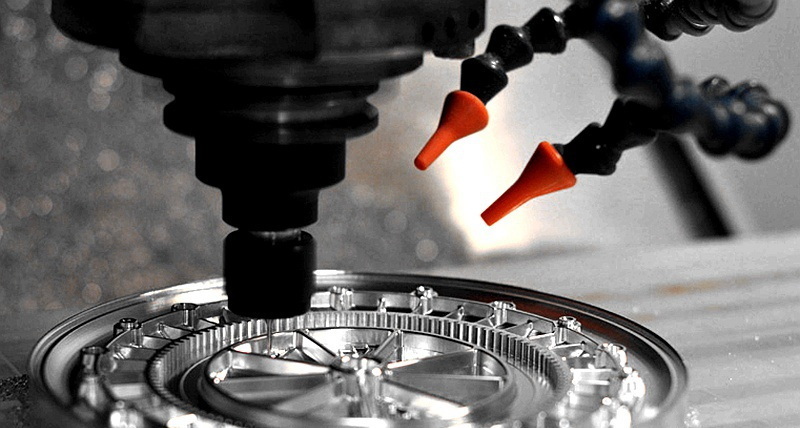
Rapid Prototyping covers a family of digital manufacturing methods—such as CNC machining, 3D printing, sheet metal fabrication, and rapid tooling—that create parts directly from CAD data in days instead of weeks or months. When aligned with design for manufacturability (DFM) principles, Rapid Prototyping can validate not only the product design but also the manufacturing process that will later be used in mass production.[3][4]
To use Rapid Prototyping effectively for mass production, OEM teams typically:
- Validate form, fit, and function with early prototypes.[3]
- Develop bridge tooling and pilot production.[2]
- Optimize materials, tolerances, and processes.[4]
- Scale to full-volume production with much lower risk.[5]
Rapid Prototyping dramatically accelerates design iterations, allowing engineers to test multiple design versions before locking specifications for production tooling. By catching design and manufacturability issues early, Rapid Prototyping can prevent costly changes later, when molds, fixtures, and assembly lines are already in place.[1][4]
Key benefits of Rapid Prototyping for mass production include:
- Speed: Faster iterations mean shorter development cycles and quicker time to market.[3]
- Cost control: Prototype and bridge tools are cheaper than full steel production tooling, reducing upfront investment.[2]
- Risk reduction: Functional Rapid Prototyping parts and pilot runs verify design, materials, and process capability before scaling.[6]
At the earliest stage, Rapid Prototyping focuses on form and ergonomics: looks-like models give stakeholders a realistic understanding of size, shape, and user interaction. Once the basic geometry is set, Rapid Prototyping supports functional tests, assembly trials, and basic performance checks using materials that approximate or match production properties.[7][3]
During this phase, Rapid Prototyping is used to:
- Test assembly stack-ups and tolerances so that production parts will fit correctly.[4]
- Evaluate usability, ergonomics, and aesthetics for marketing and end-users.[1]
- Identify weak points or over-engineered areas and adjust wall thickness, ribs, fillets, and supports.[4]
To support mass production, Rapid Prototyping must be combined with DFM, ensuring that prototypes reflect real-world production constraints. This means designing parts that can be molded, machined, bent, or assembled efficiently using production equipment and realistic process parameters.[5][4]
Using Rapid Prototyping with DFM, engineers can:
- Simplify geometries to reduce machining time, tooling complexity, and risk of defects.[4]
- Adjust draft angles, wall thickness, and radii to suit injection molding or die casting.[2]
- Set realistic tolerances, focusing tight tolerances only where absolutely necessary.[4]
A critical step between prototypes and mass production is choosing the right materials and processes, and Rapid Prototyping plays a central role in this decision. With process-specific Rapid Prototyping, engineers can run practical tests on candidate materials, including strength, stiffness, impact resistance, heat resistance, and chemical compatibility.[8][7]
Rapid Prototyping helps OEM teams:
- Compare different plastics, metals, and elastomers in realistic use conditions before committing to one material for mass production.[7]
- Test how selected materials interact with assembly methods, coatings, adhesives, and sealing solutions.[4]
- Understand how material changes will affect tolerances, shrinkage, warpage, and surface finish in production.[5]
CNC-based Rapid Prototyping is particularly powerful because it uses subtractive machining methods very similar to those used for production components. This makes CNC Rapid Prototyping highly relevant for metals, engineering plastics, and parts that will later be produced by machining or by processes requiring tight tolerances.[9]
CNC Rapid Prototyping supports mass production by:
- Providing accurate reference parts to fine-tune GD&T, tolerances, and inspection methods.[4]
- Validating critical features like bearing seats, sealing surfaces, and precision interfaces before production runs.[6]
- Demonstrating feasible machining strategies and cycle times that can be scaled with additional machines and optimized toolpaths.[9]
3D printing-based Rapid Prototyping, including SLA, SLS, FDM, and other technologies, enables complex geometries and internal features that might be difficult or impossible to machine. Even when the final mass production will rely on injection molding or die casting, 3D printing Rapid Prototyping offers fast and flexible iterations at low cost.[8][3]
3D printing in Rapid Prototyping is valuable for:
- Quickly exploring multiple design options, including lattice structures, organic shapes, and complex internal channels.[3]
- Producing functional prototypes for fit and functional testing using near-production materials.[7]
- Creating jigs, fixtures, and assembly aids that will support both pilot runs and mass production lines.[8]
For many industrial, electronics, and machinery products, housings and brackets are made from sheet metal, and Rapid Prototyping can replicate these components using laser cutting, bending, and welding. Because the same or similar machines can be used later for production batches, Rapid Prototyping of sheet metal parts gives a realistic picture of manufacturability, tolerances, and cost.[8][4]
Sheet metal Rapid Prototyping supports mass production by:
- Validating flat patterns, bend lines, bend radii, and clearance for connectors, cables, and fasteners.[4]
- Testing assembly sequences and access for tools, wiring, and maintenance.[1]
- Allowing quick design changes before expensive stamping dies are ordered for large-scale production.[5]
One of the most direct ways Rapid Prototyping supports mass production is through rapid tooling and bridge tooling—intermediate tools that produce parts in production-like materials before final heavy tools are built. Bridge tooling, often made from aluminum or soft steel, can produce hundreds to tens of thousands of parts, acting as a stepping stone between early Rapid Prototyping and full steel production molds.[10][2]
With rapid tooling and bridge tooling, Rapid Prototyping:
- Confirms that a part can actually be molded, cast, or formed according to the chosen process.[2]
- Uses production-grade thermoplastics or metals, enabling accurate performance testing and regulatory approvals.[7]
- Supplies early market parts while the final high-volume molds are still being manufactured.[11]
Before committing to full mass production, most OEMs conduct pilot runs to validate quality, process stability, and logistics, and Rapid Prototyping is ideal for this stage. Process-capable Rapid Prototyping, such as rapid injection molding or CNC runs, can serve as low-volume production for initial launches, market testing, and early customer feedback.[11][1]
Using Rapid Prototyping for pilot runs allows teams to:
- Detect and correct process issues like sink marks, warpage, flash, or dimensional drift.[6]
- Establish control plans, process capability indices, and inspection routines that will later be used in mass production.[4]
- Start generating revenue and market traction while optimizing the product and planning higher-volume tooling.[10]
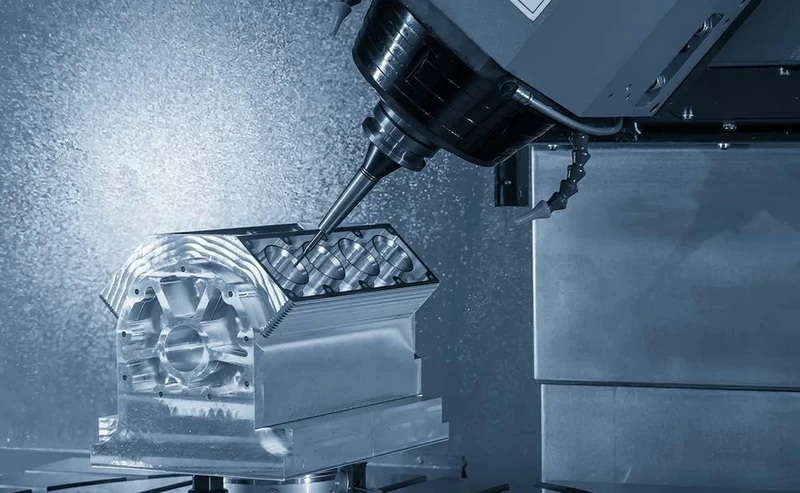
In some cases, Rapid Prototyping processes can directly become mass production methods, especially for low to medium volumes or highly customized products. For example, CNC machining and 3D printing are often used not only for Rapid Prototyping but also for ongoing production of complex or high-value components.[9][3]
Scaling Rapid Prototyping into production typically involves:
- Standardizing setups, toolpaths, and process parameters to ensure consistency across batches.[4]
- Adding machines, shifts, or automation to increase throughput while maintaining quality.[12]
- Integrating Rapid Prototyping stations into production workflows for continuous improvement and quick design updates.[8]
Rapid Prototyping plays a major role in developing and validating the inspection strategy that will be used in mass production. By measuring Rapid Prototyping parts with the same metrology tools planned for production—CMMs, optical measurement systems, gauges—engineering teams can fine-tune drawings, control characteristics, and sampling plans.[12][4]
Quality benefits of Rapid Prototyping include:
- Early confirmation of critical dimensions, tolerances, and functional performance criteria.[6]
- Refinement of inspection fixtures and test setups before they are deployed on the production line.[4]
- Reduction of scrap and rework in mass production by stabilizing the design and process ahead of time.[1]
Modern Rapid Prototyping workflows rely on digital tools—CAD, CAM, PLM, and data management—that streamline communication between design teams, manufacturing partners, and quality departments. These digital platforms maintain complete traceability from prototype to production, making it easier to track design changes, test results, and process adjustments.[3][8]
For OEMs and their Rapid Prototyping partners, this digital infrastructure supports:
- Clear version control across multiple iterations of geometry, materials, and tolerances.[3]
- Faster feedback loops and decision-making through shared 3D models, markup tools, and digital reports.[1]
- Smooth handover from engineering to production by preserving all learnings from the Rapid Prototyping phase.[5]
An experienced partner that specializes in Rapid Prototyping and production—combining CNC machining, 3D printing, sheet metal fabrication, rapid tooling, and molding—can manage the entire journey from concept to mass manufacturing. Such partners help global clients transform Rapid Prototyping insights into robust high-volume processes with predictable quality and cost.[12][8]
Strong Rapid Prototyping partners typically offer:
- Engineering support for DFM, material choice, and process selection based on mass production needs.[4]
- In-house rapid tooling and bridge tooling to supply early production and pilot run quantities.[2]
- Integrated quality systems and certifications that align Rapid Prototyping and production standards.[12]
To gain maximum benefit, Rapid Prototyping should be planned from the beginning as part of the overall product development and production strategy, not as a separate or optional step. This means aligning design milestones, prototype builds, and tooling decisions with a clear roadmap that leads from initial concept to target production volume and cost.[5][1]
Useful strategies to integrate Rapid Prototyping include:
- Defining clear learning objectives for each Rapid Prototyping stage, such as validating ergonomics, evaluating mechanical performance, or confirming manufacturability.[4]
- Setting decision gates where data from Rapid Prototyping must confirm readiness before moving to the next investment step, such as ordering bridge tools or final production molds.[2]
- Involving manufacturing, quality, and supply-chain teams early so that Rapid Prototyping results directly inform production planning and sourcing.[5]
Rapid Prototyping can also help test not only the part and process but the broader supply chain and logistics model that will support mass production and distribution. By running limited pilot shipments using Rapid Prototyping and bridge-produced parts, companies can evaluate packaging, transportation, customs, and warehouse handling before full-scale launch.[1][5]
When Rapid Prototyping is tied to supply chain planning:
- Packaging configurations and protective features can be optimized based on real trial shipments, reducing damage and returns later.[5]
- Lead times, reorder points, and safety stock strategies can be refined using data from early production runs.[1]
- Communication workflows with manufacturing partners are stress-tested before high-volume demand begins.[8]
Beyond risk reduction, Rapid Prototyping is a powerful tool for cost optimization, especially when teams systematically compare design variants, materials, and processes. Because Rapid Prototyping cycles are relatively inexpensive and fast, it becomes realistic to explore multiple cost-reduction paths before committing to production tooling.[7][3]
Cost-focused Rapid Prototyping can:
- Identify design simplifications that reduce part count, assembly time, or material usage without sacrificing performance.[4]
- Compare different production processes, such as machining versus molding or stamping versus laser-cut sheet metal, for total cost over the product life.[5]
- Reveal where investing in more advanced tooling or automation will produce the best long-term savings.[2]
In regulated industries such as medical devices, automotive, and aerospace, Rapid Prototyping is often essential for testing and documentation required for approvals. Building and testing multiple Rapid Prototyping units allows teams to gather performance, reliability, and safety data under controlled conditions that mirror the final use environment.[6][5]
Through systematic Rapid Prototyping:
- Validation protocols and test methods can be refined before running costly formal certification tests.[6]
- Regulatory bodies may accept data generated from production-equivalent Rapid Prototyping parts, accelerating approval timelines.[5]
- Design history files and technical documentation are strengthened by having clear evidence of how each design decision was validated.[4]
Even after mass production starts, Rapid Prototyping continues to add value by supporting engineering changes, product upgrades, and cost-down programs. Instead of disrupting production lines, design improvements can be tested using Rapid Prototyping and small controlled batches before being rolled into full-scale manufacturing.[3][8]
Post-launch Rapid Prototyping helps brands:
- Evaluate customer feedback and failure data by creating improved designs and testing them quickly.[1]
- Implement engineering change orders more safely, with validated solutions in hand before modifying major tooling.[2]
- Develop derivative models or customized variants for specific customers without interrupting existing production flows.[8]
Rapid Prototyping is far more than a way to create early mock-ups; it is a structured, data-driven method for preparing products and processes for mass production with less risk, lower cost, and faster launch. By combining Rapid Prototyping with DFM, material selection, rapid tooling, bridge tooling, CNC machining, 3D printing, sheet metal work, disciplined quality control, and solid supply-chain planning, OEM teams can build a smooth, reliable bridge from first idea to stable high-volume manufacturing.[2][1]
Rapid Prototyping reduces risk by revealing design, material, and process problems early, when changes are still inexpensive and fast to implement. Functional Rapid Prototyping parts, pilot runs, and rapid tooling trials highlight issues with fit, strength, manufacturability, and assembly before committing to full production tooling.[2][4]
Yes, many Rapid Prototyping methods, such as rapid injection molding, CNC machining, and some 3D printing technologies, are ideal for low-volume production and bridge quantities. These Rapid Prototyping approaches supply market-ready parts in production-grade materials while long-life tools or automated lines are still being prepared.[10][11]
Bridge tooling, often created with Rapid Prototyping principles, provides temporary molds or tools that can produce hundreds to tens of thousands of parts before final tooling is ready. This allows companies to validate design and process, launch products earlier, and adjust specifications without the high cost of full production molds.[13][2]
Material selection in Rapid Prototyping should reflect both prototype needs and the intended production process, to avoid major redesigns later. Whenever possible, Rapid Prototyping should use the same or similar materials planned for mass production so that tests of strength, durability, and performance are meaningful.[7][4]
Rapid Prototyping methods such as CNC machining and industrial 3D printing can be used directly for production when volumes are relatively low, parts are complex, or frequent design changes are expected. In these cases, scaling Rapid Prototyping means standardizing processes and adding capacity rather than switching to different production technologies.[3][8]
[1](https://rapidpro.com/rapid-prototyping-bridging-the-gap-between-design-and-manufacturing/)
[2](https://www.protolabs.com/resources/design-tips/bridging-the-gap-between-prototyping-and-production/)
[3](https://www.fictiv.com/articles/rapid-prototyping-guide)
[4](https://www.modusadvanced.com/resources/blog/design-for-manufacturability-in-rapid-prototyping-engineering-your-path-from-concept-to-production)
[5](https://www.protolabs.com/en-gb/resources/guides-and-trend-reports/prototype-to-production/)
[6](https://protoshopinc.com/blog/understanding-rapid-prototyping/)
[7](https://advancedplastiform.com/rapid-prototyping-injection-molding/)
[8](https://xometry.pro/en/articles/rapid-prototyping-manufacturing/)
[9](https://jiga.io/cnc-machining/cnc-prototyping/)
[10](https://us.arrk.com/bridge-tooling-a-solution-that-accelerates-access-to-market/)
[11](https://www.fictiv.com/articles/rapid-injection-molding-the-ultimate-guide)
[12](https://www.norck.com/collections/bridge-tooling)
[13](https://formlabs.com/blog/rapid-tooling/)

